Why is my house so dusty even with clean air ducts?
Because ducts are only one of many sources of household dust. EPA notes that much of the dirt in ducts sticks to duct surfaces, and that pollutants from outdoors and from cooking, cleaning or just moving around can cause greater exposure than dirty ducts. The usual culprits are a dirty or bypassed filter, a system that rarely runs, leaky return ducts in an attic or crawl space, and dry dusting.
Free to ask. Local shops send quotes, and you pay only when you book one.
By Kasra Taheri, Founder, LoclisPublished
Researched and drafted with AI, then checked claim by claim against the sources listed below before it was published. Prices and rules change; the dates beside each source say when it was last checked.
Step by step
Read when to stop and call a pro, further down this page, before you start.
Step 1: Check the filter
Pull the filter, replace it if it is dirty, and confirm it is the size the slot calls for.[5]
Step 2: Look for gaps around it
With the filter in, look for gaps around the holder or a missing filter door that let air bypass it.[1]
Step 3: Consider a better filter
Choose at least a MERV 13 filter, or the highest rating your system fan and filter slot can take.[4]
Step 4: Note how long the system runs
Remember that a central filter only cleans air while the system is running, so mild weeks mean little filtering.[3]
Step 5: Check the register boots
Take a few covers off and look for gaps where the duct meets the floor, wall or ceiling.[6]
Step 6: Look at accessible ducts
From the basement or crawl space hatch, look for torn, kinked or disconnected ducts and gaps at joints, without crawling into tight spaces.
Step 7: Change how you dust
Dust with a damp cloth and vacuum carpets and furniture weekly, ideally with a HEPA vacuum.[2]
Step 8: Wash bedding hot
Wash sheets and pillowcases in hot water once a week to cut dust mite debris.[8]
Step 9: Measure humidity
Put a humidity meter in the main living area and aim for 30 to 50 percent.[9]
Step 10: Use the range hood
Run the kitchen range hood whenever you cook and leave it on for a while afterwards.[2]
Step 11: Add a room air cleaner
For the room that bothers you most, use a portable air cleaner with a clean air delivery rate sized for the room.[3]
Clean ducts often change little about how dusty a house feels, because ducts are only one of many sources of dust. EPA notes that much of the dirt in air ducts adheres to duct surfaces and does not necessarily enter the living space,[1] and that Pollutants that enter the home both from outdoors and indoor activities such as cooking, cleaning, smoking, or just moving around can cause greater exposure to contaminants than dirty air ducts.[1] Dust keeps coming because the things that make it are still there. The fixes are mostly cheap.
Where household dust comes from
EPA describes indoor dust as a mix of:
- Outdoor soil and dust that has been blown or tracked indoors[2]
- Biological particles: pollen, mold spores, pet dander, dust mites, and human skin flakes and hair[2]
- Particles from human activities, such as cooking, cleaning, and burning candles[2]
Outdoor air is always mixing in through doors and windows, and PM can also enter through small openings and cracks in walls and foundations.[2] In a rural or gravel-road part of Virginia, or a house with dogs going in and out, that alone can keep surfaces dusty.
The usual causes, in the order to check them
1. The filter is dirty, the wrong size, or being bypassed
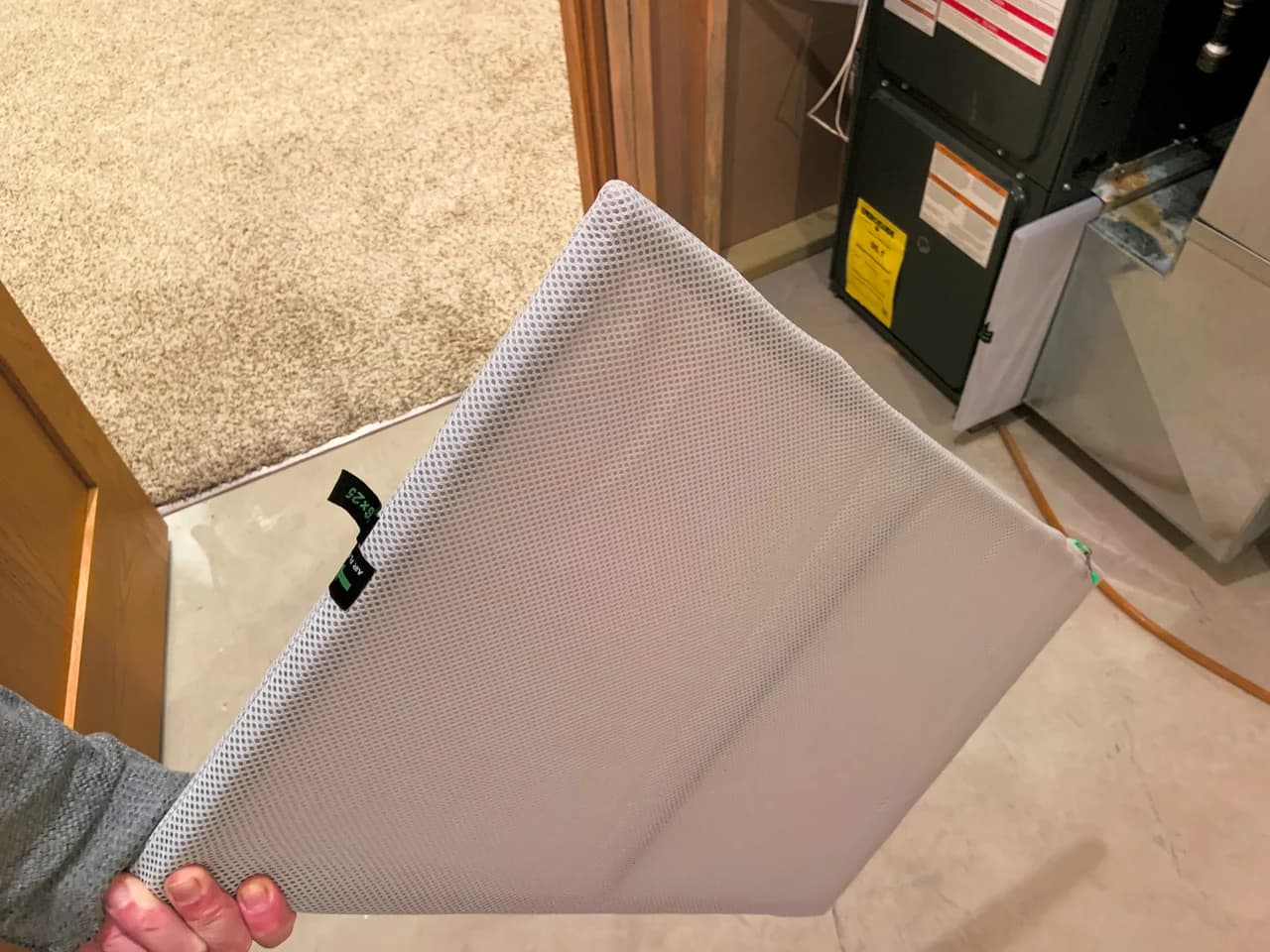
A clogged filter lets dust past or chokes airflow. ENERGY STAR's rule is to Change your filter if it's dirty—or at least every three months.[5] Fit matters as much as the filter: EPA says to make sure air cannot bypass filters through gaps around the filter holder.[1] A filter one size too small, or a missing filter-slot cover, lets dusty air skip it entirely.
If the filter is fine, a better one may help. EPA suggests that you choose a filter with at least a MERV 13 rating, or as high a rating as your system fan and filter slot can accommodate.[4] See which MERV rating to use.
2. The system is not running much
Even a good filter only works part of the day. EPA explains that Furnace and HVAC filters work to filter the air only when the system is operating,[3] and that most systems run only when heating or cooling is needed, usually less than 25% of the time during heating and cooling seasons.[3] In mild spring and autumn weeks, the central filter barely runs at all.
3. Leaky return ducts are pulling in attic or crawl space air
This is the duct problem cleaning does not fix. ENERGY STAR says that in a typical house about 20 to 30 percent of the air that moves through the duct system is lost due to leaks, holes, and poorly connected ducts,[6] and lists this among the warning signs of poorly performing ducts: your ducts are located in an attic, crawlspace, or the garage.[6] Leaks on the return side pull air in from those spaces, and ENERGY STAR notes that Fumes from household and garden chemicals, insulation particles, and dust can enter your duct system.[7]
Start at the registers. ENERGY STAR points to the joints where vents meet floors, walls and ceilings: These are common locations to find leaks and disconnected ductwork.[6] Dust streaks on the carpet edge or ceiling around a register often point to a gap there. Leaks deeper in the system need a duct sealing quote rather than a cleaning.
4. Dusting moves dust around
Settled dust does not stay put. EPA says It can be easily kicked up into the air by cleaning, vacuuming, and other activities like walking and crawling.[2] Its advice: Dust often with a damp cloth,[2] and Vacuum carpets and furniture every week, or more often.[2] A HEPA filter can help keep some vacuumed dust from escaping the vacuum cleaner back into the air.[2]
5. Fabrics, bedding and dust mites
Every home has dust mites,[8] and they live in mattresses, pillows, carpet and upholstery. EPA's advice is to wash bedding in hot water once a week, and dry completely.[8] Fewer throws, cushions and heavy curtains in a room also means less fabric shedding lint.
6. Humidity is off
EPA's target is to keep indoor humidity below 60 percent (ideally between 30 and 50 percent) relative humidity.[9] Too damp feeds mold and dust mites; too dry has its own cost, and Virginia Cooperative Extension notes that Dry air can often aggravate respiratory problems.[10] A cheap humidity meter tells you which side you are on.
7. Cooking, candles and renovation
Cooking smoke settles as film and dust. EPA recommends running the range hood while you cook: Leave it on for 10-20 minutes after you are done cooking.[2] During sanding or drywall work, EPA says to seal off supply and return registers and do not operate the heating and cooling system until after cleaning up the dust.[1] Black or greasy marks are a different problem; see why black dust appears around vents.
A room air cleaner for the worst room
For a bedroom or home office, a portable unit can help. EPA's advice is to choose a portable air cleaner that has a clean air delivery rate (CADR) that is large enough for the size of the room or area in which you will use it,[3] and to Avoid portable air cleaners and furnace/HVAC filters that intentionally produce ozone.[3]
Stop and call a pro if
- Dust or debris visibly blows out of the supply registers, the situation where EPA says duct cleaning is worth considering: particles are actually released into the home from your supply registers.[1]
- Dust got worse right after a duct cleaning. EPA warns that an inadequate vacuum collection system can release more dust, dirt and other contaminants than if you had left the ducts alone.[1] Ask the company back to show you its work.
- You find torn, crushed or disconnected ducts in the attic, crawl space or basement.
- Insulation or wrap on a duct or register boot is damaged or crumbling. Leave it alone. EPA lists asbestos-containing materials (e.g., insulation, register boots, etc.)[1] among the things to check for, and says such materials should not be disturbed or removed except by specially trained and equipped contractors.[1]
- You see mold, smell a musty odour, or find wet duct insulation. EPA says if the insulation gets wet or moldy it cannot be effectively cleaned and should be removed and replaced,[1] and that insulation that is wet or visibly moldy (or if an unacceptable odor is present) should be removed and replaced by a qualified heating and cooling system contractor.[1]
- The filter is clean but rooms still run dusty and uncomfortable, which points to duct leakage an HVAC company can test for.
- Black, greasy marks show up on registers and you heat with a fuel-burning furnace. Have a licensed HVAC technician inspect the furnace. EPA recommends that a fuel burning furnace, stove or fireplace be inspected for proper functioning and serviced before each heating season to protect against carbon monoxide poisoning.[1]
Related answers
See why a house gets dusty so fast, whether duct cleaning is worth it and how to clean vents and return grilles. Loclis lists DPOR-licensed businesses with their licence number and class: browse HVAC businesses in Blacksburg, duct cleaning services, or all heating and cooling answers.
If the ducts are leaking or loose, describe the job once and local HVAC businesses quote it.
Common questions
- I just had my ducts cleaned. Why is there more dust now?
- A poor job can stir up more than it removes. EPA warns that an inadequate vacuum collection system can release more dust than leaving the ducts alone. Change the filter, wait a few days for loose dust to settle and be filtered, and if debris keeps blowing from the supply registers, ask the company to come back and show you each component it cleaned.
- Should I run the HVAC fan all the time to filter out dust?
- It helps filtration, at a cost. EPA notes a central filter only cleans air while the system runs, which is usually less than a quarter of the time in heating and cooling seasons, and that longer run times raise electricity costs and can weaken humidity control in summer. A portable air cleaner in the dustiest room is the alternative.
- Does a higher MERV filter fix a dusty house?
- It catches more fine particles, but only from air that passes through it while the system runs. EPA suggests at least MERV 13 or the highest rating your system fan and filter slot can accommodate; ask an HVAC technician if you are unsure what your system can take.
- Why is dust worse in winter?
- Often several things stack up: windows stay closed, people spend more time indoors, indoor air tends to be drier, and blankets and throws come out. Keeping humidity in EPA's 30 to 50 percent range and keeping up with damp dusting and weekly vacuuming helps.
- Are ionizers or ozone air purifiers a good fix for dust?
- EPA tells consumers to avoid air cleaners and filters that intentionally produce ozone, a lung irritant, and notes some ionizers and similar devices can emit it. A portable HEPA air cleaner sized by its clean air delivery rate is the plainer choice for dust.
Sources
- [1] Should You Have the Air Ducts in Your Home Cleaned? (EPA 402-K-97-002), U.S. Environmental Protection Agency. Checked October 26, 2026.
- [2] Sources of Indoor Particulate Matter (PM), U.S. Environmental Protection Agency. Checked October 26, 2026.
- [3] Guide to Air Cleaners in the Home, U.S. Environmental Protection Agency. Checked October 26, 2026.
- [4] What is a MERV rating?, U.S. Environmental Protection Agency. Checked October 26, 2026.
- [5] A Guide to Energy-Efficient Heating and Cooling, ENERGY STAR (U.S. EPA). Checked October 26, 2026.
- [6] Duct Sealing, ENERGY STAR (U.S. EPA). Checked October 26, 2026.
- [7] Benefits of Duct Sealing, ENERGY STAR (U.S. EPA). Checked October 26, 2026.
- [8] Asthma Triggers: Gain Control, U.S. Environmental Protection Agency. Checked October 26, 2026.
- [9] A Brief Guide to Mold, Moisture and Your Home, U.S. Environmental Protection Agency. Checked October 26, 2026.
- [10] Energy Series: What about Moisture? (2908-9020), Virginia Cooperative Extension, Virginia Tech. Checked October 26, 2026.
Want a pro to handle it?
Describe the job once. Licensed local businesses send quotes, and you pay only when you book one.
Get a quote for HVAC Repair