Is air duct cleaning worth it?
Usually not as routine maintenance. EPA says duct cleaning has never been shown to prevent health problems and recommends it as needed, not routinely. It suggests considering a cleaning for substantial visible mold in hard-surface ducts, rodents or insects in the ducts, or ducts clogged with dust and debris or releasing particles from the supply registers. Then it is worth paying a careful company, once the cause is fixed.
Free to ask. Local shops send quotes, and you pay only when you book one.
By Kasra Taheri, Founder, LoclisPublished
Researched and drafted with AI, then checked claim by claim against the sources listed below before it was published. Prices and rules change; the dates beside each source say when it was last checked.
Step by step
Read when to stop and call a pro, further down this page, before you start.
Step 1: Look inside a register
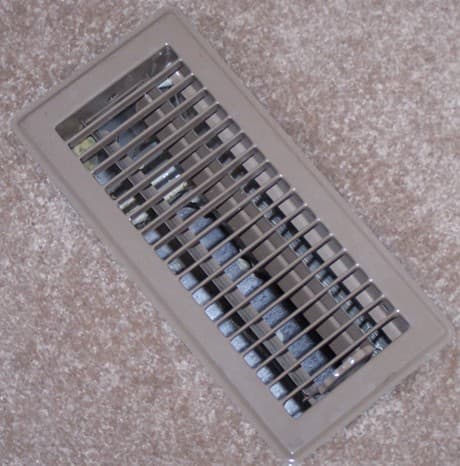
Take one supply register off and shine a flashlight into the duct to see whether there is a light film of dust or real debris, pests or growth.
Step 2: Check the filter
Pull the filter, replace it if it is dirty, and make sure air cannot slip around it through gaps in the holder.[1]
Step 3: Match what you see to EPA's list
Consider a cleaning for substantial visible mold in hard-surface ducts, vermin in the ducts, or ducts clogged with dust and debris or releasing particles from the supply registers.[1]
Step 4: Find the cause
Ask your HVAC company why the ducts got that way, whether a leak, a wet coil or an opening for pests, and get it fixed first.[1]
Step 5: Get three written estimates
Have at least three companies look at the system and price the work in writing.[1]
Step 6: Ask to be shown
Ask each company to show you the contamination that justifies the cleaning, including any mold it says it found.[1]
Step 8: Agree the scope in writing
Sign a written agreement that lists every component to be cleaned and the total cost before work starts.[1]
Step 9: Inspect the result
Before you pay, ask to see each part of the system and confirm it is visibly clean.[1]
For most homes, routine duct cleaning is not worth the money. EPA's position is that Duct cleaning has never been shown to actually prevent health problems,[1] partly because much of the dirt in air ducts adheres to duct surfaces and does not necessarily enter the living space.[1] EPA adds that there is no evidence that a light amount of household dust or other particulate matter in air ducts poses any risk to your health.[1] It is worth paying for when the ducts are genuinely contaminated, and then only once the cause is fixed.
When it is worth paying for
EPA does not recommend that the air ducts be cleaned routinely, but only as needed.[1] It names three situations where cleaning makes sense:
- Mold you can see. There is substantial visible mold growth inside hard surface (e.g., sheet metal) ducts or on other components of your heating and cooling system.[1] A substance can look like mold and not be; a positive determination of whether it is mold or not can be made only by an expert and may require laboratory analysis.[1]
- Pests. Ducts are infested with vermin, e.g. (rodents or insects).[1]
- Heavy debris. Ducts are clogged with excessive amounts of dust and debris and/or particles are actually released into the home from your supply registers.[1]
Each of those has a cause, and cleaning alone will not hold. EPA's rule: Prior to any cleaning, retrofitting, or replacing of your ducts, the cause or causes must be corrected or else the problem will likely recur.[1] That may mean fixing a sweating coil or a blocked drain pan, sealing the gap pests came through, or sealing leaky return ducts in a dusty attic or crawl space.
Outside those cases it is a judgment call rather than a mistake. EPA says you may consider an occasional cleaning simply because ducts get dirty over time, and adds: Provided that the cleaning is done properly, no evidence suggests that such cleaning would be detrimental.[1] The question is whether it is worth the money when nothing is wrong.
One case needs replacement rather than cleaning: If you have insulated air ducts and the insulation gets wet or moldy it cannot be effectively cleaned and should be removed and replaced.[1]
When it is not
A dusty return grille is not a reason. It is normal for the return registers to get dusty as dust-laden air is pulled through the grate,[1] and vacuuming it takes a few minutes (see how to clean vents and return grilles). Nor is a dusty house on its own: dirty air ducts are only one of many possible sources of particles that are present in homes,[1] as our answer on why a house stays dusty with clean ducts explains.
A bad job can leave you worse off. EPA warns that an inadequate vacuum collection system can release more dust, dirt and other contaminants than if you had left the ducts alone,[1] and that A careless or inadequately trained service provider can damage your ducts or heating and cooling system.[1]
What usually does more good for the money
- Clean the equipment, not just the ducts. Some research suggests cleaning heating and cooling system components (e.g., cooling coils, fans and heat exchangers) may improve the efficiency of your system,[1] but little evidence exists that cleaning only the ducts will improve the efficiency of the system.[1] ENERGY STAR's tune-up checklist includes the line Clean evaporator and condenser air conditioning coils.[2]
- Service fuel-burning equipment yearly. EPA recommends that if you have a fuel burning furnace, stove or fireplace, they be inspected for proper functioning and serviced before each heating season to protect against carbon monoxide poisoning.[1]
- Seal leaky ducts. ENERGY STAR notes that Fumes from household and garden chemicals, insulation particles, and dust can enter your duct system[3] through leaks, and sealing them keeps that air out.
- Change the filter on time. See how often to change the furnace filter.
How to hire well if you need it
EPA's advice is to Talk to at least three different service providers and get written estimates,[1] and to be blunt with the ones that oversell. Do not hire duct cleaners who make sweeping claims about the health benefits of duct cleaning,[1] and Do not hire duct cleaners who recommend duct cleaning as a routine part of your heating and cooling system maintenance.[1] Ignore claims of EPA certification too: EPA neither establishes duct cleaning standards nor certifies, endorses, or approves duct cleaning companies.[1]
Ask whether they comply with NADCA's air duct cleaning standards,[1] and what vacuum they use. EPA says the crew should Use vacuum equipment that exhausts particles outside of the home or use only high-efficiency particle air (HEPA) vacuuming equipment if the vacuum exhausts inside the home.[1] Before you pay, run through EPA's post-cleaning checklist, which includes a simple test for the coil: If you point a flashlight into the cooling coil, does light shine through the other side? It should if the coil is clean.[1]
Licences in Virginia. If a duct cleaning company says it holds a Virginia contractor or HVAC licence, ask for the number and check it on DPOR's License Lookup[4] before you sign. Our guide to checking a contractor's licence in Virginia walks through it.
In Fairfax County, Any contractor seeking work through home solicitation also must carry a solicitor license issued by the Fairfax County Department of Cable and Consumer Services.[5] Anywhere in Virginia, if you agreed to a qualifying sale at your door, the Home Solicitation Sales Act lets you cancel until midnight of the third business day after the day on which the buyer signs.[6] Do it in writing: Cancellation occurs when the buyer gives written notice of cancellation to the seller at the address stated in the agreement or offer to purchase.[6] To report a company, the Attorney General's office runs a Consumer Protection Hotline at 1-800-552-9963[7] for calls from inside Virginia. Read the warning signs of a duct cleaning scam and what a cleaning costs before you book.
Stop and call a pro if
- You see growth, droppings or nests inside a duct or on the coil.
- Dust or debris blows out of the supply registers when the fan starts.
- Duct insulation is wet or smells musty.
- Insulation around the register boot is damaged or crumbling. Leave it alone. EPA lists asbestos-containing materials (e.g., insulation, register boots, etc.)[1] among the things to check for, and says such materials should not be disturbed or removed except by specially trained and equipped contractors.[1]
- A duct is crushed, torn or disconnected in the attic, crawl space or basement.
- Black, greasy marks show up on registers and you heat with a fuel-burning furnace. Have a licensed HVAC technician inspect the furnace; EPA recommends that fuel-burning furnaces be inspected and serviced before each heating season to protect against carbon monoxide poisoning.[1]
Loclis lists DPOR-licensed businesses with their licence number and class: browse duct cleaning services, HVAC businesses in Blacksburg, or all heating and cooling answers. If your ducts need work, describe the job once and local businesses quote it.
Common questions
- Will duct cleaning help my allergies?
- It might if the ducts are badly contaminated, but there is no proof it prevents health problems. EPA says duct cleaning has never been shown to prevent health problems, and that cooking, cleaning, smoking, outdoor air and moving around can cause more exposure than dirty ducts. If someone in the house has unexplained symptoms, EPA's advice is to talk to a doctor.
- Should I get the ducts cleaned when I buy a house?
- Only if you find a reason. Take a register off and look inside: substantial mold, droppings or nests, or heavy debris justify a cleaning. A light film of dust does not. Changing the filter and booking a tune-up is a better first spend in a new house.
- Does duct cleaning lower energy bills?
- Not much on its own. EPA says little evidence exists that cleaning only the ducts improves efficiency, while cleaning coils, fans and heat exchangers may. Sealing leaky ducts is the step ENERGY STAR ties to energy savings.
- Is an EPA-certified duct cleaner better?
- There is no such thing. EPA neither sets duct cleaning standards nor certifies, endorses or approves duct cleaning companies, and it tells homeowners to be wary of any company that claims EPA certification. Ask instead whether the company follows NADCA's cleaning standards.
- What should a proper duct cleaning crew bring?
- Specialised brushes and a high-powered vacuum that either exhausts outside the house or uses HEPA filtration if it exhausts inside, plus covers for your floors and furniture. They should open access ports to reach the whole system and seal them airtight afterwards.
- Can I cancel a duct cleaning I agreed to at my front door?
- Often. Virginia's Home Solicitation Sales Act lets a buyer cancel a qualifying home solicitation sale until midnight of the third business day after signing. A phone call is not enough: you cancel by giving the seller written notice at the address in the agreement, and a mailed notice counts once it is properly addressed, stamped and in the mailbox. The main exception is an emergency job you asked for in a signed, dated writing that waives the right to cancel, once the company has made a real start on the work.
Sources
- [1] Should You Have the Air Ducts in Your Home Cleaned? (EPA 402-K-97-002), U.S. Environmental Protection Agency. Checked October 26, 2026.
- [2] Maintenance Checklist, ENERGY STAR (U.S. EPA). Checked October 26, 2026.
- [3] Benefits of Duct Sealing, ENERGY STAR (U.S. EPA). Checked October 26, 2026.
- [4] License Lookup, Virginia Department of Professional and Occupational Regulation. Checked October 26, 2026.
- [5] Hiring a Contractor, Fairfax County Department of Cable and Consumer Services. Checked October 26, 2026.
- [6] Code of Virginia § 59.1-21.3. Cancellation of sale, Virginia General Assembly (Legislative Information System). Checked October 26, 2026.
- [7] File a Complaint, Office of the Attorney General of Virginia, Consumer Protection Section. Checked October 26, 2026.
Want a pro to handle it?
Describe the job once. Licensed local businesses send quotes, and you pay only when you book one.
Get a quote for HVAC Repair