What does a chimney inspector look for?
A chimney inspector checks the parts that keep fire and smoke where they belong: the flue liner and mortar joints, cracks, creosote and blockages, the cap and crown, the firebox and damper, and the clearance between the chimney and anything that can burn. The report should say what is sound, what needs repair and what could not be reached.
Free to ask. Local shops send quotes, and you pay only when you book one.
By Kasra Taheri, Founder, LoclisPublished
Researched and drafted with AI, then checked claim by claim against the sources listed below before it was published. Prices and rules change; the dates beside each source say when it was last checked.
This is a job for a licensed pro in Virginia
This page explains what the work involves, the permits, what a licensed pro does and what drives the cost. It does not give step-by-step instructions, because this work needs a licence, a permit or both, and doing it wrong can injure someone. Before you hire, check the licence on Virginia's DPOR record.
A chimney inspector looks at everything that carries smoke out of the house and keeps heat away from the structure: the flue liner and its joints, cracks, creosote and blockages, the cap and crown at the top, the firebox and damper below, and the clearance to wood framing. The aim is to find the defects that cause fires and carbon monoxide before they do.
Fairfax County Fire and Rescue lists the causes of fireplace fires as a damaged fireplace with missing bricks, damaged flues, obstructed flues, ignition of nearby combustibles, sparks, an overloaded firebox, or an improperly installed built-in metal fireplace.[1] A good inspection is a walk through that list.
The flue and its liner
The flue is the passage the smoke travels through, and the liner is what protects the chimney walls from it. This is where inspectors spend most of their time. They look for:
- cracked, missing or shifted liner tiles, or a metal liner that is damaged or the wrong size for the appliance
- gaps in the mortar between tiles
- anything narrowing the passage, such as soot, fallen debris or a bird or animal nest
EPA describes an inspection as looking for any chimney cracks, which can allow smoke to enter your home, or can expose your chimney's components to high temperatures that may cause a fire.[2] A camera run up the flue is the usual way to see these; a flashlight from the fireplace shows only part of the flue.
The manufacturer Woodstock Soapstone summarizes the National Fire Protection code for a masonry chimney, and an inspector measures what they see against requirements like these: a fireclay flue liner 5/8 inch thick,[4] a 1/2 inch air space between the liner and the inside face of the chimney walls,[4] smooth mortar joints on the inside of the flue tiles,[4] and walls at least 4 inches thick.[4] An older chimney often has no liner at all, which is why what a chimney liner is and whether you need one is one of the first questions after an inspection.
Creosote and soot
Creosote is a highly combustible black or brown residue that forms when smoke condenses on the inside walls of the chimney, and EPA says enough of it could cause a chimney fire.[3] The inspector notes how much has built up and what it looks like. A light, dusty layer is routine and gets swept. A thick, shiny or tar-like layer means the chimney needs cleaning before the next fire, and it tells you something about how the appliance is being burned. See what a chimney sweep does for the cleaning visit.
The top: cap, crown and flashing
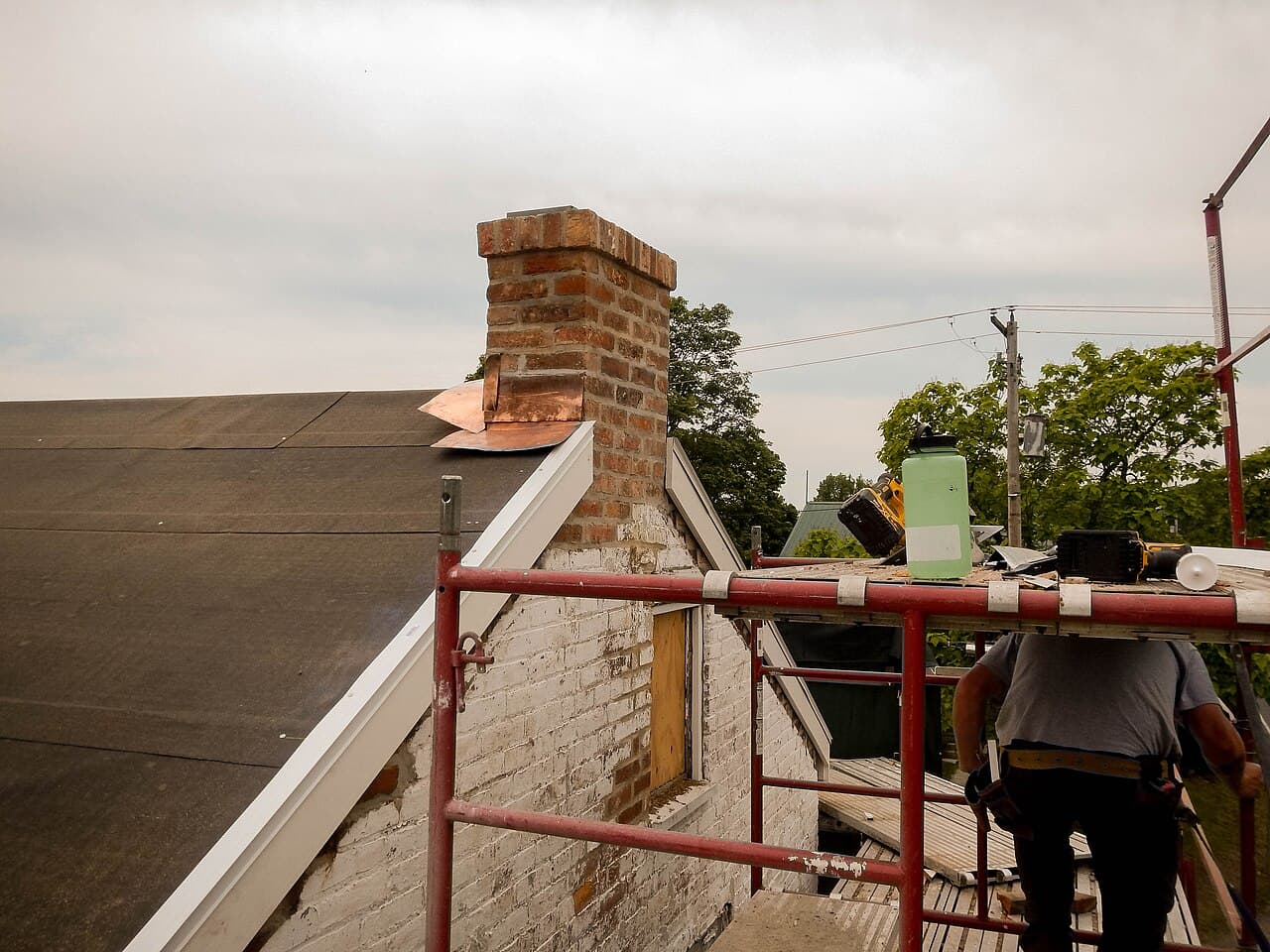
On the roof, the inspector checks the cap, the crown and the flashing. The cap keeps rain, birds and animals out, and Fairfax County advises a chimney cap to keep debris and animals out of the chimney.[1] The crown is the slab across the top of the masonry. Woodstock describes it as a crown of concrete or non-water-soluble refractory cement that slopes away from the chimney.[4] A cracked crown or failing flashing lets water into the masonry, which is how many leaks start; see why water leaks around a chimney. The inspector also looks for overhanging branches, and Fairfax County's advice is to keep the top of chimneys clear of tree limbs or debris.[1]
The fireplace, damper and smoke chamber
Inside the house, the inspector looks at the firebox for cracked or missing bricks, at the hearth and the damper that opens and closes the flue, and at the smoke shelf above the damper where debris collects. They also check any stove, insert or gas logs connected to the chimney, and the stovepipe or connector that joins them.
Clearance and the chimney's surroundings
Heat travels through masonry to nearby wood. Woodstock lists a minimum 2 inch clearance to combustible materials for an interior chimney and 1 inch for an exterior one.[4] The inspector looks in the attic, and wherever the chimney passes through floors and the roof, for framing too close to the masonry and for gaps that let sparks or smoke reach it.
Age is not a pass
A chimney that has worked for decades can still be failing. Woodstock puts it plainly: "Even a chimney that has been in use for years may have flaws that make it unsafe for use now."[4] The same goes for a chimney that has sat unused.
What the report should say
Ask for a written report that lists what was checked, what is sound, what needs repair, and what the inspector could not reach or scan. Photos of each problem make it easier to get comparable repair quotes. How deep the inspection goes, and whether a camera is included, is the main thing that changes the price; what a chimney inspection costs in Virginia covers how to compare quotes, and how often a chimney should be inspected covers timing. Buying a house? See whether you need a chimney inspection when buying a house.
When to call a licensed pro
Inspecting a chimney is pro-only. It means roof access, a camera scan of the flue and knowing what a failing liner looks like, and a missed crack or blockage can mean a house fire or carbon monoxide indoors. Do not light a fire in a chimney you suspect is damaged.
If the inspection finds repairs, they are contracting work in Virginia. The Code of Virginia says Class C contractors are those whose single contract or project is over $1,000 but less than $30,000, or whose total work in any 12-month period is less than $250,000,[5] so check the licence before you sign anything, and get more than one written quote for any significant repair.
Loclis lists DPOR-licensed businesses with their licence number and class. Browse chimney services or read more chimney and fireplace answers.
Book a chimney inspection by describing your chimney once, and local chimney businesses quote it.
Common questions
- What is the most important thing an inspector checks?
- The flue: its liner, joints and cracks, and whether creosote or debris is blocking it. Damaged and obstructed flues are both on Fairfax County Fire and Rescue's list of causes of fireplace fires.
- Can an inspector see inside the flue?
- A flashlight shows only part of it. Many companies also run a camera up the flue, which shows cracks and gaps a flashlight cannot. It is usually priced separately, so ask whether the quote includes it.
- Do I need to clean the chimney before the inspector arrives?
- No. Do not sweep it yourself first, because soot and creosote are part of what the inspector assesses. Clear the hearth, move furniture back from the fireplace and make sure the roof and attic are reachable.
- What should a chimney inspection report include?
- A written list of what was checked, what is sound, what needs repair or replacement, and anything that could not be reached or scanned. Ask for photos of any problem.
- Does an inspector check a gas fireplace or wood stove too?
- Usually yes, if you ask. EPA says gas stoves and inserts should be inspected annually as well, and a stove connected to the chimney is part of the system the inspector looks at.
- What happens if the inspector finds a problem?
- You get a list of repairs. Stop using the fireplace or stove until a problem with the liner, a crack or a blockage is fixed, then get written quotes from licensed businesses for the repair.
Sources
- [1] Fireplace Safety Tips and Can Your Ashes, Fairfax County Fire and Rescue Department. Checked October 28, 2026.
- [2] Wood-Burning Installation and Maintenance, U.S. Environmental Protection Agency, Burn Wise. Checked October 28, 2026.
- [3] Frequent Questions about Wood-Burning Appliances, U.S. Environmental Protection Agency, Burn Wise. Checked October 28, 2026.
- [4] Masonry Chimneys, Woodstock Soapstone Company (stove manufacturer). Checked October 28, 2026.
- [5] Code of Virginia § 54.1-1100. Definitions, Code of Virginia. Checked October 28, 2026.
Want a pro to handle it?
Describe the job once. Licensed local businesses send quotes, and you pay only when you book one.
Get a quote from a local pro