How often should my air conditioner be serviced?
Once a year for most central air conditioners, ideally in spring before the cooling season, by a licensed HVAC technician. ENERGY STAR recommends annual pre-season check-ups, and Carrier, Trane and American Standard say the same. Between visits, check the air filter monthly and keep the outdoor unit clear. A heat pump, which also heats your home, gets a fall check as well.
Free to ask. Local shops send quotes, and you pay only when you book one.
By Kasra Taheri, Founder, LoclisPublished
Researched and drafted with AI, then checked claim by claim against the sources listed below before it was published. Prices and rules change; the dates beside each source say when it was last checked.
This is a job for a licensed pro in Virginia
This page explains what the work involves, the permits, what a licensed pro does and what drives the cost. It does not give step-by-step instructions, because this work needs a licence, a permit or both, and doing it wrong can injure someone. Before you hire, check the licence on Virginia's DPOR record.
Once a year is the standard for a central air conditioner: one professional check-up by a licensed HVAC technician, ideally in spring before the cooling season. In between, the jobs that matter most are yours and take a few minutes: check the air filter every month and keep the outdoor unit clear. A heat pump, which heats as well as cools, also gets a check in the fall.
The yearly professional visit
ENERGY STAR, the federal efficiency program, recommends having a contractor do annual pre-season check-ups, the cooling system in the spring and the heating system in the fall, because contractors get busy once summer and winter come.[1] It suggests you plan the check-ups around the time changes in the spring and fall, so they are easy to remember.[1]
The equipment makers agree. Carrier recommends a professional maintenance inspection and tune-up once a year, ideally in the spring.[2] Trane says an annual air conditioner maintenance visit should be adequate,[3] and American Standard puts it simply: "Once a year should be fine."[4] Plan on a technician being there for a while. Carrier says: "A complete AC maintenance visit usually lasts 1-2 hours."[2]
What the visit should cover
ENERGY STAR's checklist for a typical check-up covers checking thermostat settings, tightening electrical connections and measuring voltage and current on motors, lubricating moving parts, checking the condensate drain, and checking the system's controls and its starting cycle.[1] For cooling it adds cleaning the evaporator and condenser coils, checking the refrigerant level and adjusting it if necessary, and cleaning and adjusting the blower.[1]
Not every "tune-up" includes all of that. Trane suggests you ask to see their AC maintenance checklist, so you know what's included and what's not,[3] and adds: "Some HVAC companies charge extra for certain tasks."[3] Coil cleaning is the usual one. American Standard notes that coil cleaning is not usually included in a routine AC tune-up.[5] For prices and what drives them, see what an HVAC tune-up costs in Virginia.
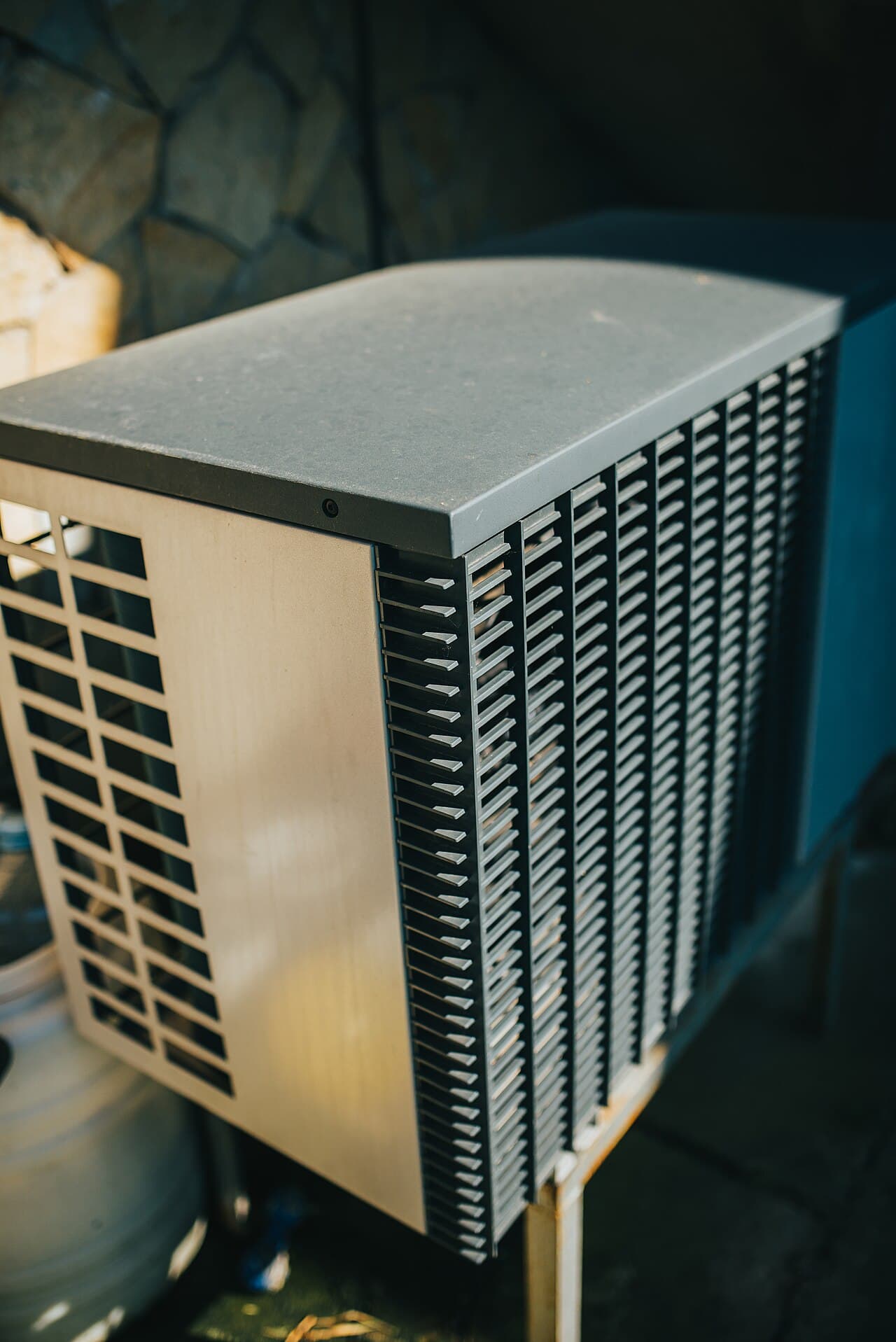
Heat pumps and furnaces
A heat pump does both jobs, so ENERGY STAR's spring-and-fall schedule applies to the same unit twice. If your central air shares ductwork with a gas or oil furnace, the fall visit is for the furnace, and ENERGY STAR's heating check means checking gas or oil connections, gas pressure, burner combustion and the heat exchanger.[1] That is gas-appliance work for a licensed technician, done before the heating season rather than in the first cold snap.
Your part between visits
These are upkeep jobs, not repairs, and none of them involves opening the equipment.
The air filter. ENERGY STAR's one task for homeowners is to inspect, clean, or change air filters once a month in your central air conditioner, furnace, and/or heat pump.[1] Bryant says a standard 1-inch filter may need replacing every 30 to 90 days, depending on conditions and how much the system runs.[6] It adds: "Homes with pets, allergies, or higher system usage may require more frequent filter changes."[6]
The space around the outdoor unit. Trane's rule of thumb is to keep plants out of a 2-foot radius around the outdoor unit.[3] American Standard suggests mowing with the mower discharge pointing away from the AC unit.[5] Virginia Cooperative Extension warns: "do not vent a clothes dryer within 10 feet of the outdoor unit as dryer lint will cling to the condensing coil".[7]
Covers. If you cover the outdoor unit for winter, Trane says to use a breathable cover only in winter when the AC is not operating, never to run the AC with the cover on, and not to use a tarp or other solid covering, which can trap moisture.[3]
Access. Virginia Cooperative Extension advises: "Make sure the inside coil can be reached for its annual cleaning."[7] Keep stored boxes clear of the indoor unit and its filter slot.
The condensate drain. Water near the indoor unit is a sign the drain is blocked. See how to clear a clogged condensate drain line.
Why skipping it costs more
ENERGY STAR explains the stakes: "Dirty coils reduce the system's ability to cool your home and cause the system to run longer, increasing energy costs and reducing the life of the equipment."[1] It also notes that airflow problems can reduce a system's efficiency by up to 15 percent.[1] Regular service also catches refrigerant problems early. EPA says: "Major leaks rarely develop in properly installed and regularly maintained units."[8]
There is a paperwork reason too. Carrier notes that many manufacturers state on warranty documentation that AC installation and maintenance by a licensed professional are required to keep your warranty valid.[2] American Standard warns: "Attempting DIY maintenance on critical parts may void your warranty if your air conditioner is still covered."[4] Read your warranty, keep every service invoice, and register the equipment if the maker asks you to.
Book a visit sooner if
- The air from the vents is warm or weak. See why an air conditioner blows warm air.
- You see ice on the copper lines or water around the indoor unit.
- The outdoor unit hums, squeals, grinds or will not start.
- A breaker trips again after it is reset.
When to call a licensed pro
Everything inside the equipment, from coil cleaning and electrical checks to the refrigerant charge, is work for a licensed HVAC technician. Virginia's Code says no individual may do HVAC work as a tradesman without a licence, unless working under the supervision of a tradesman licensed in that specialty.[9][10] You can check a business on DPOR's License Lookup.[11] If you are weighing a yearly contract instead of paying per visit, read whether HVAC maintenance plans are worth it.
Booking service in Virginia
Loclis lists DPOR-licensed HVAC businesses with their licence number and class. Look up HVAC businesses in Blacksburg or another town, browse heating and cooling services, or read more heating and cooling answers.
If your air conditioner already has a problem, describe it once and licensed local HVAC businesses quote it.
Common questions
- Is once a year enough for a central air conditioner?
- For most homes, yes. ENERGY STAR recommends an annual pre-season check-up of the cooling system in spring, and Carrier, Trane and American Standard all recommend one professional visit a year, ideally before the cooling season. Book sooner if the system starts cooling poorly, making new noises or leaking water.
- How often should a heat pump be serviced?
- A heat pump both heats and cools, and ENERGY STAR's schedule checks the cooling system in spring and the heating system in fall, so many owners have a heat pump checked at both times of year. Ask the business whether its maintenance price covers one visit or two.
- How often should I change the air filter?
- ENERGY STAR says to inspect, clean or change filters once a month. Bryant says standard 1-inch filters may need replacing every 30 to 90 days depending on conditions and use, and more often in homes with pets, allergies or heavy use. Follow the filter and equipment makers' instructions for your size and type.
- Will skipping maintenance void my warranty?
- It can. Carrier notes that many manufacturers state on warranty documentation that installation and maintenance by a licensed professional are required to keep the warranty valid. Read your own warranty, keep the service invoices, and register the equipment if the maker asks you to.
- Is a maintenance plan worth it?
- It depends on how many systems you have and what the plan includes. Compare the plan price with two separate visits, and check what is excluded, such as refrigerant or coil cleaning. Loclis has a separate answer on whether HVAC maintenance plans are worth it.
Sources
- [1] Maintenance Checklist, ENERGY STAR, U.S. Environmental Protection Agency. Checked October 26, 2026.
- [2] AC Maintenance Guide: 5 Essential Tips & Service Costs, Carrier. Checked October 26, 2026.
- [3] Central AC Maintenance: Routine Tasks and Tips, Trane. Checked October 26, 2026.
- [4] Air Conditioner Maintenance Tips, American Standard Heating & Air Conditioning. Checked October 26, 2026.
- [5] Why is My Home AC Not Blowing Cold Air?, American Standard Heating & Air Conditioning. Checked October 26, 2026.
- [6] Why Is My AC Blowing Hot Air?, Bryant. Checked October 26, 2026.
- [7] ENERGY SERIES: What about the Air Conditioning System?, Virginia Cooperative Extension, Virginia Tech. Checked October 26, 2026.
- [8] Homeowners and Consumers: Frequently Asked Questions, U.S. Environmental Protection Agency. Checked October 26, 2026.
- [9] Va. Code § 54.1-1129, Necessity for licensure, Code of Virginia, Virginia General Assembly. Checked October 26, 2026.
- [10] Va. Code § 54.1-1128, Definitions, Code of Virginia, Virginia General Assembly. Checked October 26, 2026.
- [11] License Lookup, Virginia Department of Professional and Occupational Regulation. Checked October 26, 2026.
Want a pro to handle it?
Describe the job once. Licensed local businesses send quotes, and you pay only when you book one.
Get a quote for HVAC Repair