How often should I have pest control service?
There is no required schedule. Many Virginia homes need no routine treatment, and integrated pest management, the approach Virginia Tech and the EPA describe, treats when monitoring shows a real problem rather than every time a bug appears. A recurring plan can make sense for a pest that keeps returning, if each visit includes an inspection, treatments are timed to the pest and the contract is easy to cancel.
Free to ask. Local shops send quotes, and you pay only when you book one.
By Kasra Taheri, Founder, LoclisPublished
Researched and drafted with AI, then checked claim by claim against the sources listed below before it was published. Prices and rules change; the dates beside each source say when it was last checked.
Step by step
Read when to stop and call a pro, further down this page, before you start.
Step 1: Walk the outside each spring and fall
Look for gaps around windows, doors, vents, pipes and the foundation, and seal what you find.[3]
Step 2: Seal up before September
Plug openings in windows and vents before September, when stink bugs start gathering on houses.[3]
Step 3: Keep sticky traps out
Leave a few sticky traps in the basement, garage and kitchen and check them monthly to see what is moving in.
Step 4: Fix leaks and damp spots
Repair leaky plumbing and dry out damp areas, since even dampness or high humidity can attract pests.[7]
Step 5: Store food sealed
Keep dry goods and pet food in sealed glass or plastic containers and empty the trash often.[7]
Step 6: Pull mulch and debris back
Keep mulch, leaves and grass clippings away from the foundation and store firewood away from the house.[4]
Step 7: Check the outdoor lights
Leave outdoor lights off when not needed, or use lower-intensity or motion-activated ones.[5]
Step 8: Identify before you treat
When something shows up in numbers, identify it first so any treatment fits the pest.[2]
Step 9: Review any plan once a year
Before a service plan renews, compare what the visits found with what you paid and decide whether to keep it.[9]
There is no set schedule that every house needs. Under the approach Virginia Tech and the EPA recommend, integrated pest management, you treat when monitoring shows a pest problem worth acting on, and you time any treatment to the pest, not to the calendar. For many homes that means mostly prevention, plus a professional visit when something shows up in numbers. A recurring plan earns its cost only if each visit finds and fixes something.
Treat when there is a problem, not just because
The EPA's description of integrated pest management starts with a threshold: IPM first sets an action threshold, a point at which pest populations or environmental conditions indicate that pest control action must be taken.[1] Sighting a single pest does not always mean control is needed,[1] and not all insects, weeds, and other living organisms require control.[1] When treatment is needed, targeted methods come first, and Broadcast spraying of non-specific pesticides is a last resort.[1]
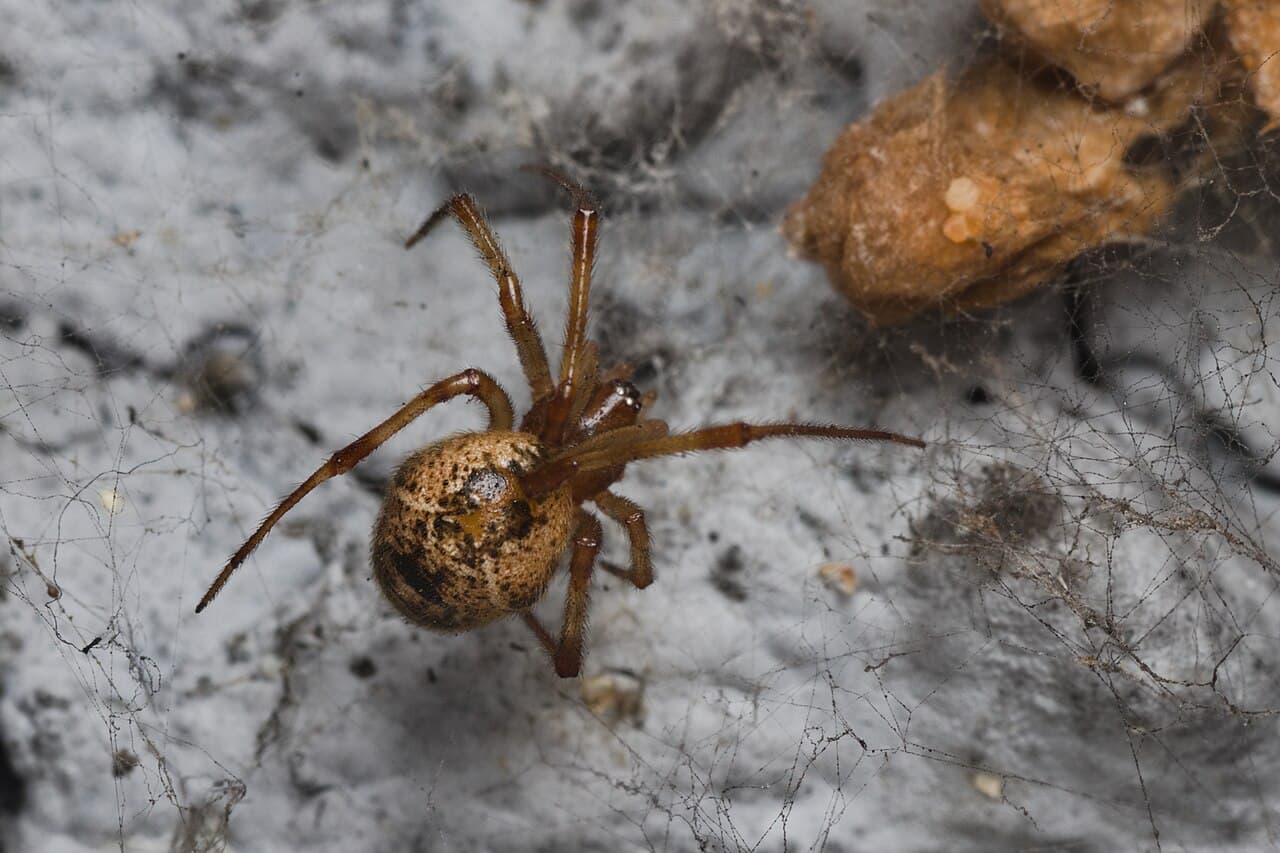
Virginia Tech applies the same thinking to houses. It says IPM should be used in the home, garden, or wherever a pest problem occurs,[2] and that the goal is often to reduce a pest population to an acceptable level rather than to eliminate it.[2] A few spiders in the garage or a beetle by the back door is not, by itself, a reason for monthly spraying. Virginia Tech's ground beetle fact sheet makes the point directly: Foundation or perimeter treatments with residual insecticides are not necessary unless large numbers of ground beetles are found consistently inside a house.[6]
What keeps pests down between visits
Improving the sanitation and maintenance in and around the home is the best way to prevent household insect and spider pests.[3] In practice, Virginia Tech's home pest guide says to seal holes and cracks around plumbing lines and windows, remove outdoor clutter and debris that harbor pests, and indoors keep up sanitation, food storage, clutter control and waste removal.[3] Those jobs are cheap, and they make any professional treatment work better. A walk around the house in spring and fall, with a tube of caulk and an eye on moisture, covers much of what a routine exterior visit checks.
If you do treat, timing is everything
Seasonal invaders are only worth treating before they arrive. Virginia Tech's guide calls for a preventive perimeter spray for boxelder bugs in mid to late August,[3] perimeter applications for brown marmorated stink bugs in the first week of September,[3] and an early autumn perimeter application for cluster flies.[3] For Asian lady beetles, applications at lady beetle entry points need to be made the first week of October to be effective.[3] Perimeter sprays around foundations work best if applied before millipedes begin migrating.[4]
Miss the window and the money is mostly wasted. If lady beetles are already entering the home, pesticide applications will not prevent their entry.[3] A plan with fixed quarterly dates may or may not land on those weeks, so ask the company when its visits fall and why.
The rules have tightened too. Virginia Tech notes perimeter pesticide application laws have recently changed to protect ground water and pollinating insects,[3] and pesticide can no longer be applied along concrete surfaces where there is risk of storm run-off, and it cannot be applied when pollinators are present.[3] A careful company will explain how it handles that around your foundation, patio and flower beds.
When a recurring plan makes sense
A plan can be worth it when the same pest keeps coming back despite your own sealing and cleanup, when you rent out the home or are away for long stretches, or when the pest needs repeated follow-up visits. In those cases, ask for:
- An inspection at every visit, with a short written note of what was found.
- Treatments chosen and timed for the pests you actually have.
- Free callbacks between visits, in writing.
- A record of what was applied. Licensed pesticide businesses must keep a record of each pesticide applied, including the product, its EPA registration number, the amount and the site treated,[8] so asking for the same on your invoice is reasonable.
Read the renewal terms before you sign. Under Virginia law, a seller of an automatic renewal or continuous service must give you an acknowledgment with the terms, the cancellation policy and how to cancel, and must offer a cancellation method that is easy to use.[9] For plans that renew automatically after more than 30 days and extend for more than 12 months, the seller must notify you of your option to cancel no less than 30 and no more than 60 days before the cancellation deadline or the end of the term.[9] See how much pest control costs in Virginia for what to compare between plans.
If you treat between visits yourself, follow the label. Use of any pesticide in any way that is not consistent with label directions and precautions is illegal.[7]
Stop and call a pro if
- You see cockroaches, bed bugs or signs of termites, such as winged insects swarming indoors or piles of shed wings.
- A pest keeps coming back after you have sealed gaps, fixed leaks and stored food properly.
- Insects show up in large numbers indoors week after week. See why you suddenly have so many bugs in the house.
- Anything is living in the attic or walls that is larger than an insect.
Getting help on Loclis
Read whether pest control companies need a license in Virginia, browse general pest control services, find pest control businesses around Blacksburg or see more pest control answers. When you are ready, describe the job on Loclis so licensed pest control businesses can quote it in writing.
Common questions
- Do I need monthly or quarterly pest control?
- Not as a rule. Treatment makes sense when monitoring shows a pest at a level you will not accept, and seasonal invaders need treatment timed to the season, not on a fixed calendar.
- Is a pest control subscription worth it?
- It can be if a pest keeps coming back and every visit includes an inspection, not just a spray. Compare a year of plan payments with the cost of one or two targeted visits, and make sure you know when and how the plan renews.
- When is the best time to treat for fall invaders in Virginia?
- Before they start coming in. Virginia Tech's home pest guide gives mid to late August for boxelder bugs, the first week of September for stink bugs and the first week of October for lady beetles. Once the bugs are inside, an outside treatment will not keep them out.
- Can I cancel a pest control plan that renews automatically?
- Virginia law requires sellers of automatic renewal services to give you the terms and cancellation information in a form you can keep and to offer an easy way to cancel. Plans that renew for more than 12 months also require a reminder 30 to 60 days before the deadline.
- What should a pest control visit include?
- An inspection, a note of what was found, and a record of anything applied. Licensed businesses must record each product, its EPA registration number, the amount and the site treated, so ask for that on every invoice.
Sources
- [1] Integrated Pest Management (IPM) Principles, U.S. Environmental Protection Agency. Checked October 26, 2026.
- [2] An Introduction to Integrated Pest Management, Virginia Cooperative Extension, Virginia Tech. Checked October 26, 2026.
- [3] 2026 Pest Management Guide: Home Grounds and Animals, Nuisance Insects of the House and Yard, Virginia Cooperative Extension, Virginia Tech. Checked October 26, 2026.
- [4] Greenhouse Millipedes, Virginia Cooperative Extension, Virginia Tech. Checked October 26, 2026.
- [5] Click Beetles, Virginia Cooperative Extension, Virginia Tech. Checked October 26, 2026.
- [6] Ground Beetles, Virginia Cooperative Extension, Virginia Tech. Checked October 26, 2026.
- [7] Citizen's Guide to Pest Control and Pesticide Safety, U.S. Environmental Protection Agency. Checked October 26, 2026.
- [8] 2VAC5-680-65. Recordkeeping of pesticide applications by licensed pesticide businesses, Virginia General Assembly, Legislative Information System. Checked October 26, 2026.
- [9] Code of Virginia § 59.1-207.46. Making automatic renewal or continuous service offer to consumer, Virginia General Assembly, Legislative Information System. Checked October 26, 2026.
Want a pro to handle it?
Describe the job once. Licensed local businesses send quotes, and you pay only when you book one.
Get a quote from a local pro