How do I get rid of spiders in my house?
Most spiders in Virginia homes are harmless and eat other insects, so the lasting fix is fewer ways in and less to eat: seal gaps around doors, windows and pipes, clear clutter, vacuum webs and egg sacs, and turn off outdoor lights that draw insects. Sticky traps show where spiders travel. Call a pro for repeated black widows or a suspected brown recluse infestation.
Free to ask. Local shops send quotes, and you pay only when you book one.
By Kasra Taheri, Founder, LoclisPublished
Researched and drafted with AI, then checked claim by claim against the sources listed below before it was published. Prices and rules change; the dates beside each source say when it was last checked.
Step by step
Read when to stop and call a pro, further down this page, before you start.
Step 1: Identify the spider first
Look for the shiny black body and red underside marking of a female black widow, or the violin marking and plain, unbanded legs of a brown recluse.[1]
Step 2: Vacuum spiders, webs and egg sacs
Vacuum them up, then seal and dispose of the bag immediately so nothing crawls back out.[5]
Step 3: Set sticky traps
Place traps along walls in the basement, garage and closets to see where spiders travel and how many there are.[1]
Step 4: Check screens and weather stripping
Repair torn window screens and replace worn weather stripping and door sweeps so doors and windows close tight.
Step 5: Seal cracks and gaps
Caulk cracks in the foundation and gaps where pipes and wires come through walls, from the basement up to the attic.[1]
Step 6: Clear clutter
Cut down stored boxes, papers and piles in closets, basements and garages, which hide spiders and the insects they eat.
Step 7: Move firewood away from the house
Stack firewood away from the walls rather than against them.[1]
Step 9: Vacuum behind furniture
Vacuum behind and underneath furniture and large appliances regularly, where webs build up out of sight.
Step 10: Wear gloves for stored items
Wear gloves and long sleeves when moving firewood, cardboard boxes or anything that has sat undisturbed for a long time.[3]
Step 11: Spot-treat only if needed
If you use an insecticide, choose one labeled for spiders indoors and follow the label exactly.[7]
To get rid of spiders for good, make the house a poor place to live and hunt: seal the gaps they walk in through, clear the clutter they hide in, vacuum up webs and egg sacs, and cut down on the insects they come to eat. Sprays matter much less than most people expect. Before any of that, take a close look at the spider, because the right response depends on which one it is.
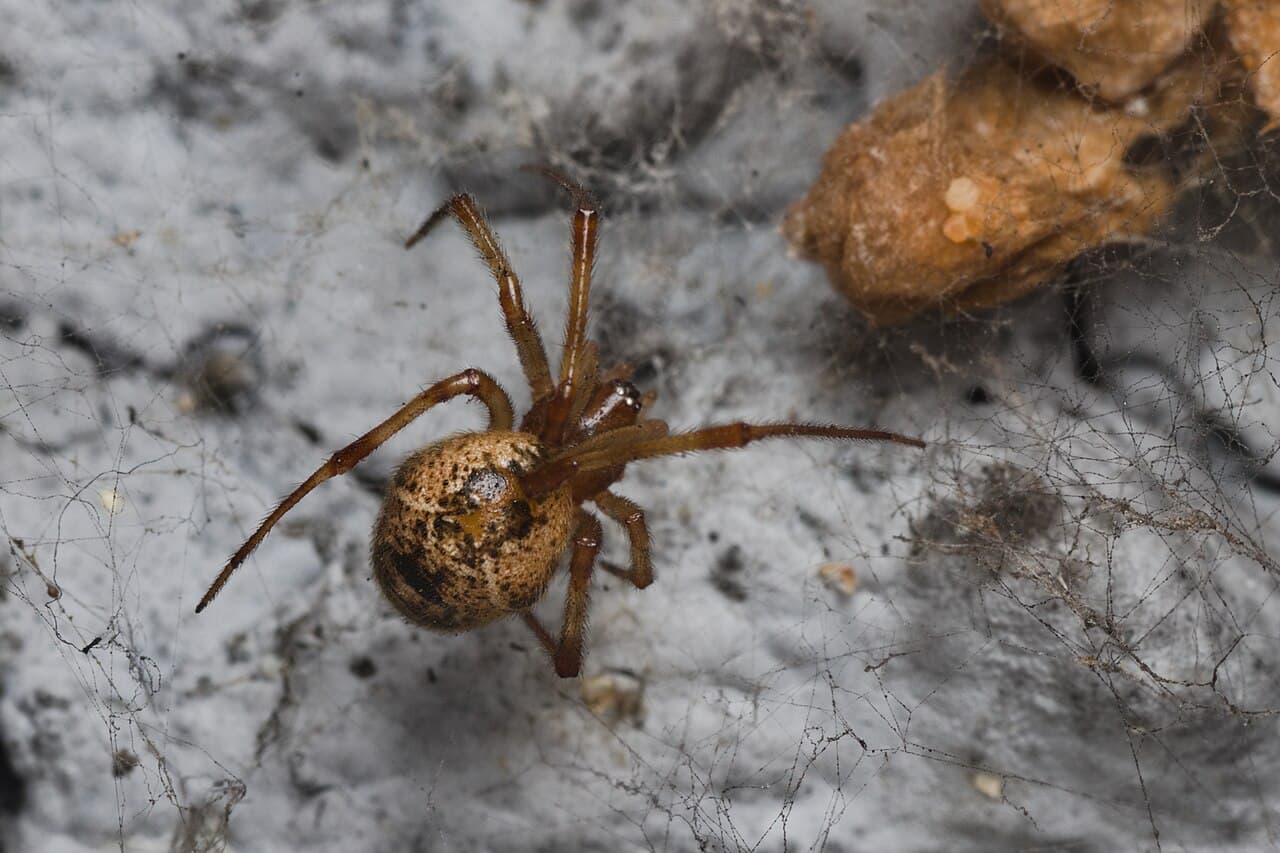
First, find out what kind of spider it is
Most spiders indoors are a nuisance, not a danger. According to Virginia Tech, in North America only two groups of spiders are of medical concern, the widow spiders and the recluse spiders,[2] and practically all spiders in Virginia are harmless.[5]
Black widows. Both the northern and the southern black widow are commonly found in Virginia.[1] Females have shiny black bodies with red markings on the underside of the abdomen.[1] The common house spider and spiders in the genus Steatoda are sometimes mistaken for black widows, but they are not considered dangerous.[1]
Brown recluse. This is the spider people worry about most and find least. Its natural range reaches the very tip of southwestern Virginia, but isolated populations have been confirmed in several locations across the state, likely carried in with household goods or firewood.[3] It lives in basements and garages, often hides behind boards and boxes, and does not make webs out in the open.[3] A brown recluse never has stripes or bands on its legs,[3] and its surest sign is six eyes in three pairs, which takes a microscope to see.[3] If you think you have one, submit a suspected brown recluse in alcohol to your local Extension agent for identification.[3]
Wolf spiders. Wolf spiders, the large, hairy hunters that run across floors, are commonly found indoors in the fall when they are looking for a warm place for winter.[4] They look alarming, but they are not considered medically important in Virginia.[4]
Clear out the spiders you have now
The vacuum is the most useful tool you own here. Remove spiders, egg sacs and webs with a vacuum, then seal and dispose of the bag immediately.[5]
Individual spiders can be killed with a fly swatter or an aerosol insecticide,[1] or caught under a cup and carried outside. For wandering spiders that came in from the yard, a general spray for spiders is not recommended unless the infestation seems severe.[4]
Keep them from coming back
Spiders come indoors through gaps and stay where they find shelter and food. To keep them out, check that screens and weather stripping around doors and windows are secure, and seal cracks and crevices in the foundation, in the attic and around pipes.[1] A tube of exterior caulk and a few door sweeps go a long way.
Then take away their hiding places. Clear clutter from in and around the home, do not stack firewood beside the house, clean closets, attics, basements and storage areas regularly, and vacuum behind and underneath furniture and large appliances.[1] Consider removing bed skirts, slipcovers that reach the floor and long draperies that can hide spiders.[1]
Finally, cut their food supply. Turn off outdoor lights at night, because the lights attract the insects spiders feed on.[5] If you need lights for safety, lower-intensity or motion-activated lights are good choices.[6] A house with fewer moths, gnats and beetles around it will have fewer spiders too. If other bugs are showing up in numbers, see why you suddenly have so many bugs in the house.
Traps and sprays
Sticky traps are effective in monitoring spider populations and can help reduce their numbers inside buildings.[1] Put them flat along walls and behind furniture in the basement, garage and closets, and check them weekly. A trap that fills up quickly tells you where to seal and clean next.
Insecticides with residual activity can be applied for spider control, but sealing entry points and removing hiding places is a more effective strategy.[1] If you do use a product, read the whole label first. Using a pesticide in any way that is not consistent with its label directions and precautions is illegal,[7] and indoor treatments in particular need to stay away from food, children and pets as the label directs.
If someone is bitten
Spider bites usually happen when a spider is handled roughly or trapped against the skin,[1] which is why gloves and shaking out shoes and stored clothing help. Virginia Tech notes many bites are no worse than a bee sting, and most can be treated with just ice and a pain reliever.[1] If the person bitten is very young, elderly or has a weakened immune system, or the spider may be a black widow or brown recluse, apply ice, elevate the wound and seek prompt medical attention, and bring the spider along for identification if you can, even if it is smashed.[1]
Stop and call a pro if
- You keep finding black widows indoors, especially where children or pets play.
- You suspect brown recluse spiders. Populations of brown recluse spiders can be very high in infested buildings,[3] and controlling them takes thorough inspection and treatment of hidden spaces.
- Spiders keep returning in large numbers after you have sealed and cleaned, which usually means a bigger insect problem is feeding them.
- You want a treatment stronger than a labeled household product, or you are not comfortable applying pesticides around your family.
Getting help on Loclis
Browse general pest control services, find pest control businesses around Blacksburg, read about whether pest control companies need a license in Virginia, or see more pest control answers. When you are ready, describe the job on Loclis so licensed pest control businesses can quote it in writing.
Common questions
- Are the spiders in my house dangerous?
- Almost certainly not. Practically all spiders in Virginia are harmless; the two groups of medical concern are the widow spiders and the recluse spiders. The common house spider is often mistaken for a black widow but is not considered dangerous.
- Do I have brown recluse spiders in Virginia?
- Probably not, but it is possible. The brown recluse's natural range reaches only the far southwestern tip of Virginia, and isolated populations have been found elsewhere in the state. Many other spiders are mistaken for it. Your local Extension office can identify a specimen kept in alcohol.
- Should I spray the whole house for spiders?
- Usually not. Virginia Tech advises against a general spray unless an infestation seems severe. Sealing gaps, clearing clutter and vacuuming do more over time, and a fly swatter or vacuum handles the occasional spider.
- Why do I see more big spiders in the fall?
- Wolf spiders move indoors in the fall looking for a warm place to spend the winter. They are hunters, not web builders, and are not considered medically important in Virginia. Move them outside or vacuum them up, and check door and window seals.
- Do sticky traps get rid of spiders?
- They help. Sticky traps catch wandering spiders and show you where they come in, and they can reduce numbers indoors. They work best alongside sealing entry points and removing the clutter spiders hide in.
Sources
- [1] Spiders of Medical Concern in Virginia, Virginia Cooperative Extension, Virginia Tech. Checked October 26, 2026.
- [2] Spiders: An Undeserved Bad Reputation, Virginia Cooperative Extension, Virginia Tech. Checked October 26, 2026.
- [3] Brown Recluse Spider, Virginia Cooperative Extension, Virginia Tech. Checked October 26, 2026.
- [4] Wolf Spiders and Nursery Web Spiders, Virginia Cooperative Extension, Virginia Tech. Checked October 26, 2026.
- [5] 2026 Pest Management Guide: Home Grounds and Animals, Nuisance Insects of the House and Yard (ENTO-634-F), Virginia Cooperative Extension, Virginia Tech. Checked October 26, 2026.
- [6] Click Beetles, Virginia Cooperative Extension, Virginia Tech. Checked October 26, 2026.
- [7] Citizen's Guide to Pest Control and Pesticide Safety, U.S. Environmental Protection Agency. Checked October 26, 2026.
Want a pro to handle it?
Describe the job once. Licensed local businesses send quotes, and you pay only when you book one.
Get a quote from a local pro