How often should I test my pool water?
Test free chlorine and pH at least a few times a week in season, and daily in hot weather, after storms and after heavy use. Check total alkalinity, calcium hardness and stabilizer weekly. Portsmouth's rule for public pools is every two hours when open, which shows how quickly chlorine and pH can move.
Free to ask. Local shops send quotes, and you pay only when you book one.
By Kasra Taheri, Founder, LoclisPublished
Researched and drafted with AI, then checked claim by claim against the sources listed below before it was published. Prices and rules change; the dates beside each source say when it was last checked.
Step by step
Read when to stop and call a pro, further down this page, before you start.
Step 1: Get a kit that tests the right things
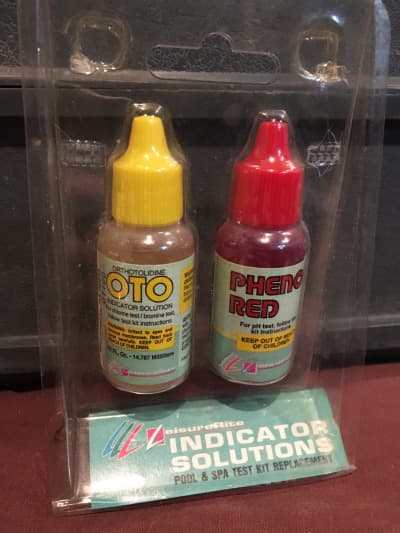
Use a kit that measures free chlorine, pH, total alkalinity and calcium hardness, plus stabilizer if you use stabilized chlorine.
Step 2: Test chlorine and pH often
Check free chlorine and pH before anyone swims, and again after any event that could change them.
Step 3: Sample correctly
Take the sample 12 to 18 inches below the surface, away from corners and return lines.[1]
Step 4: Test the slower readings weekly
Check total alkalinity, calcium hardness and stabilizer once a week.[1]
Step 5: Keep the kit fresh
Replace reagents at the start of each season and store the kit cool, dry and dark.[1]
Step 6: Write results down
Log each reading with the date, weather and what you added, so you can see trends before the water changes colour.
Step 7: Adjust one thing at a time
Correct a reading that is out of range with one product at a time, as its label directs, and retest before adding anything else.
The short schedule
Test free chlorine and pH on every day the pool is in use, or at least every few days when it is quiet, and test total alkalinity, calcium hardness and stabilizer once a week. That is a home version of what the Portsmouth Health Department's operator guide sets for public pools. It says that chlorine and pH levels should be checked every day before the pool is opened, and after that every two hours,[1] and that total alkalinity, calcium hardness and stabilizer (cyanuric acid) must be checked weekly.[1]
Portsmouth's code requires free chlorine and pH tests to be made and recorded at least once every two hours while a pool is in operation, and alkalinity and calcium hardness tests at least weekly.[1] A backyard pool does not need two-hour checks, but the numbers show what matters: chlorine and pH change fast, the other readings change slowly. The guide also makes the broader point that pool water testing is one of the most important maintenance tasks involved in operating a pool.[1]
What to test, and the target
Virginia's water quality standard for pools keeps free chlorine between 1.0 and 3.0 ppm and pH between 7.2 and 7.8.[2] That standard governs regulated pools, but it is a sensible target for a home pool too. The slower readings have targets in the Portsmouth guide: the acceptable range for total alkalinity is 80 to 120 ppm,[1] and the recommended cyanuric acid level is 40 to 60 ppm, and it should be checked weekly once the proper level is reached.[1]
If a reading is out of range, how to balance pool chemicals walks through what to add and in what order.
When to test more often
The guide's rule is that the more often pool water is tested, the more quickly, safely and easily improper levels can be corrected.[1] Add extra checks when:
- It is hot and sunny, since heat and sun use up chlorine quickly.
- There has been a storm or heavy rain.
- The pool has had a crowd, or a lot of children.
- The water looks even slightly hazy or green. Why a pool turns green explains what to do when it already has.
- You have just added a chemical, which calls for a retest before adding another.
Testing also decides how much chemical you buy; see what pool chemicals cost per season in Virginia.
Testing well
A frequent test is only useful if it is accurate. Take water samples from 12 to 18 inches below the surface, and not from corners or directly in front of return lines.[1] Corners are dead spots, and return lines give water that has just left the filter and chlorinator, which reads high.
Pool test kits are not 100% accurate, so use fresh reagents and replace them at the start of each season.[1] Sun and heat can drastically age and weaken reagents, so keep them in a cool, dry, dark place.[1] Rinse the tubes before and after each use, and cap them instead of covering them with your fingers.
Know the kit's limits. Some chemicals in the pool water, such as cyanuric acid, may cause problems with the accuracy of the alkalinity test.[1] Taking a sample to the store that sells you chemicals is a free cross-check in many shops, and a good idea at the start of the season.
Keep a log. Date, readings, weather and what you added take a minute and show a drift before it turns into a problem.
Stop and call a pro if
- Readings will not stay in range after you correct them and retest. That can point to a filtration, circulation or stabilizer problem.
- The water goes cloudy or green even though your tests look fine. Compare with a store test and see why pool water turns cloudy.
- You cannot test regularly. Whether a pool service is worth it depends on how much of the routine you want to hand off.
- The repair would cost $1,000 or more. If the work you are considering is valued at $1,000 or more, a valid Virginia contractor's license is required.[3]
Getting help in Virginia
Browse pool and spa services or more pool and spa answers.
When you want a pro to take over the routine, describe your pool and local pool companies quote it.
Common questions
- Is testing once a week enough for a home pool?
- Once a week is enough for total alkalinity, calcium hardness and stabilizer, but not for chlorine and pH. Those two move within hours in hot sun, rain or heavy use, which is why public pools in Portsmouth must test them at least every two hours while open. A home pool does not need that, but a few checks a week in season is a sensible minimum.
- Do test strips work as well as a drop kit?
- Strips are quick and fine for a routine check, but a drop kit gives finer readings when the water is already off. The Portsmouth guide notes that test kits are not 100% accurate, so fresh reagents matter more than the type. If a reading surprises you, retest or take a sample to a pool supply store.
- What time of day is best to test?
- Before swimming, and at roughly the same time each day so readings compare. Sun and heat age reagents, so keep the kit in a cool, dry, dark place.
- Should I test more in summer?
- Yes. Heat, sun and bathers use up chlorine faster, and a pool can turn green if chlorine runs out. Test daily during heat waves, after storms and after parties.
- What if my readings are always in range?
- Keep to the schedule anyway. A steady pool is the result of regular testing, and the guide's point is that the more often water is tested, the more quickly improper levels can be corrected.
Sources
- [1] Pool Operation and Maintenance Guide (compiled 2018), Portsmouth Health Department, Virginia Department of Health. Checked October 28, 2026.
- [2] 12VAC5-462-290. Water quality standards, Virginia Administrative Code, Virginia General Assembly. Checked October 28, 2026.
- [3] What You Should Know Before You Hire a Contractor, Virginia Board for Contractors, DPOR. Checked October 28, 2026.
Want a pro to handle it?
Describe the job once. Licensed local businesses send quotes, and you pay only when you book one.
Get a quote from a local pro