How do I balance pool chemicals?
Test the water, then adjust one thing at a time: free chlorine, total alkalinity, pH, then calcium hardness. Virginia sets 1.0 to 3.0 ppm free chlorine and a pH of 7.2 to 7.8 for regulated pools; the Portsmouth Health Department's guide gives total alkalinity of 80 to 120 ppm and calcium hardness of 200 to 300 ppm. Retest between additions.
Free to ask. Local shops send quotes, and you pay only when you book one.
By Kasra Taheri, Founder, LoclisPublished
Researched and drafted with AI, then checked claim by claim against the sources listed below before it was published. Prices and rules change; the dates beside each source say when it was last checked.
Step by step
Read when to stop and call a pro, further down this page, before you start.
Step 1: Test the water
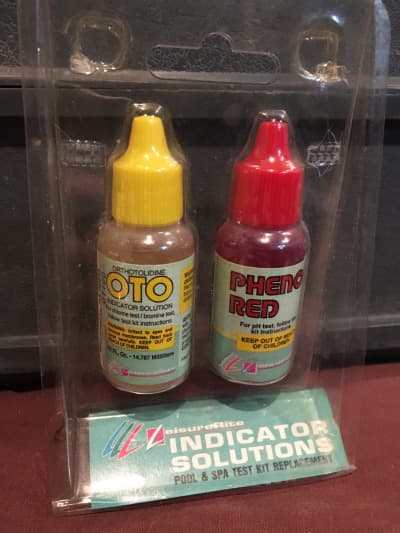
Test with a drop kit or fresh strips in daylight, and note free chlorine, pH, total alkalinity and calcium hardness.
Step 3: Adjust total alkalinity
Aim for 80 to 120 ppm: sodium bicarbonate raises it, muriatic acid or sodium bisulfate lowers it.[1]
Step 4: Adjust pH
Aim for 7.2 to 7.8: soda ash raises it, muriatic acid or sodium bisulfate lowers it.[1]
Step 5: Check calcium hardness
Aim for 200 to 300 ppm; calcium chloride raises it and only dilution with fresh water lowers it.[1]
Step 6: Add chemicals safely
Add one product at a time with the pump running and no one in the water, and never mix products.[1]
Step 7: Retest and record
Retest after the water has circulated, and write the readings down to spot trends.[1]
Test first, then fix one thing at a time, in this order: free chlorine, total alkalinity, pH, then calcium hardness. Balanced water in Virginia means free chlorine of 1.0 to 3.0 ppm and a pH of 7.2 to 7.8, the ranges the state sets for regulated pools,[2] plus, in the Portsmouth Health Department's pool guide, total alkalinity of 80 to 120 ppm and calcium hardness of 200 to 300 ppm.[1] Use them as targets for a home pool.
What each number does
Free chlorine is the disinfectant. Virginia's standard for regulated pools keeps it between 1.0 and 3.0 ppm.[2]
pH measures how acidic or basic the water is. A pH of 7.2 to 7.8 is the acceptable range, and the ideal is close to that of the human body, 7.4 to 7.6.[1] Outside the range, chlorine works less well and swimmers feel it in their eyes and skin.
Total alkalinity is the water's ability to resist a change in pH. The acceptable range is 80 to 120 ppm.[1] If alkalinity is low, the pH can swing sharply from small additions; if it is high, the pH is hard to move.[1]
Calcium hardness protects the pool and equipment. Soft water can corrode pipes and etch plaster, and very hard water can leave scale in pipes, heaters and filters.[1] The ideal range is 200 to 300 ppm, and the acceptable range is 150 to 400 ppm.[1]
Do it in the right order
Test with a drop kit or fresh test strips, and read the result in daylight. Then work down the list.
Chlorine comes first because a pool that is badly under- or over-chlorinated makes pH readings swing. The Portsmouth guide's rule is that pH should not be corrected until the other parameters are in range, because correcting too early leads to overcorrection.[1]
Then alkalinity. To raise it, add sodium bicarbonate (baking soda); to lower it, add muriatic acid or sodium bisulfate.[1] Adding acid also lowers pH, so retest.
Then pH. To raise it, the usual product is soda ash (sodium carbonate); to lower it, muriatic acid or sodium bisulfate.[1] If the pH drops and then bounces back above 8.0 after you add acid, the alkalinity is still too high.[1]
Calcium hardness comes last. Calcium chloride raises it; the only way to lower it is to drain some water and refill with water that is softer.[1]
What moves the numbers
Rain, bather urine, chlorine gas and bromine push pH down; liquid chlorine, new plaster, an algae bloom and sodium bicarbonate push it up.[1] Sunlight does not change pH.[1] Calcium hypochlorite chlorine raises pH, alkalinity and hardness over time.[1] That is why a pool drifts week to week and why testing weekly beats testing when the water looks wrong.
Cyanuric acid, the stabilizer that shields chlorine from sunlight, works at 40 to 60 ppm.[1] It stays in the pool until water is lost, and a pool with too much of it, called over-stabilized, can trap chlorine so it does not do its job.[1] Use stabilized chlorine tablets with that in mind.
Handle the chemicals safely
Read the label on each product and follow it. Wear chemical-resistant gloves and goggles, and measure on a day you have time to retest.
Never mix anything with chlorine except water, and add the chemical to a greater volume of water, not water to the chemical.[1] Liquid chlorine must not come in contact with any acid, because chlorine gas, which is highly poisonous, will be generated.[1] Keep each product in its own closed container, and never reuse a chlorine container to store another chemical.[1]
Add acids and bases only when no one is in the water, and keep the pool closed until the chemical has dissolved or dispersed.[1] Run the pump while you do it, and add one product at a time, with a wait and a retest between.
Stop and call a pro if
- You smell chlorine gas or two chemicals have mixed. Leave the area, get fresh air, and call 911 if anyone is coughing or has burning eyes. Chlorine and an acid together make poisonous gas.[1]
- The pH keeps bouncing back after you add acid. That points to high alkalinity,[1] or a problem a pool service can diagnose with a full water test.
- Calcium hardness is very high. The only fix is to drain part of the water,[1] and a large drain-down is a job to plan with a pool company, not to improvise.
- The plaster is rough or etched, or scale is building up on the heater or in pipes. Both are signs of long-term imbalance, and the equipment may need service.[1]
- The water stays cloudy or green after the numbers are in range. A full water test at a pool store or a pool company can show what is missing.
Getting help in Virginia
If chemistry is not how you want to spend weekends, read whether it is worth paying a pool service for chemicals and what pool chemicals cost per season. For routine care, see how to clean a swimming pool. Browse pool and spa services or more pool and spa answers.
When you want a pro to take it over, describe your pool and local pool companies quote it.
Common questions
- What order do I balance pool chemicals in?
- Chlorine first, then total alkalinity, then pH, then calcium hardness. The Portsmouth Health Department's guide says not to correct pH until the other parameters are in range, because correcting too early leads to overcorrection.
- What should my pool's pH be?
- Between 7.2 and 7.8. That is the range Virginia sets for regulated pools, and the guide calls 7.4 to 7.6 the ideal because it matches the human body.
- Why does my pH keep going back up after I add acid?
- Usually because total alkalinity is still too high. The guide says that after adding acid, the pH may drop and then bounce back above 8.0 until alkalinity comes down to the acceptable range of 80 to 120 ppm.
- Can I mix pool chemicals to save time?
- No. Never mix anything with chlorine except water, and keep liquid chlorine away from any acid, because chlorine gas, which is highly poisonous, will be generated. Add one product at a time and retest between.
- How do I lower calcium hardness?
- The only way is to drain some water and refill with water that has a lower hardness level. If the reading is very high, that can mean replacing a large share of the pool's water.
- How often should I test?
- The Portsmouth guide describes a city pool code that requires alkalinity and calcium hardness tests at least weekly, and pH and chlorine every two hours at a minimum, because those two change fast. A home pool needs far less, but test chlorine and pH often in summer.
Sources
- [1] Pool Operation and Maintenance Guide (compiled 2018), Portsmouth Health Department, Virginia Department of Health. Checked October 27, 2026.
- [2] 12VAC5-462-290. Water quality standards, Virginia Administrative Code, Virginia General Assembly. Checked October 27, 2026.
Want a pro to handle it?
Describe the job once. Licensed local businesses send quotes, and you pay only when you book one.
Get a quote from a local pro