How often should transmission fluid be changed?
It depends on the make, the transmission and how you drive, so follow the schedule in your owner's manual or maintenance monitor. Heavy use shortens it: manufacturers call out towing, hill driving, stop-and-go traffic, and extreme weather. Use only the specified fluid, and have leaks checked right away rather than waiting for the interval.
Free to ask. Local shops send quotes, and you pay only when you book one.
By Kasra Taheri, Founder, LoclisPublished
Researched and drafted with AI, then checked claim by claim against the sources listed below before it was published. Prices and rules change; the dates beside each source say when it was last checked.
This is a job for a licensed pro in Virginia
This page explains what the work involves, the permits, what a licensed pro does and what drives the cost. It does not give step-by-step instructions, because this work needs a licence, a permit or both, and doing it wrong can injure someone. Before you hire, check the licence on Virginia's DPOR record.
There is no single interval that fits every vehicle. The right answer is in your owner's manual or maintenance schedule, and it depends on the make, the transmission type and how you drive. If you tow, drive in hills or in stop-and-go traffic, or make lots of short cold trips, expect to change it sooner than someone who commutes on open roads.
Where the number comes from
Manufacturers publish the interval for each model, and they differ. Some list a fixed mileage, some use an onboard monitor, and some call the fluid "lifetime" while a shop will still advise a change. Rather than rely on a rule of thumb, look up your own schedule.
Honda's HR-V owner's manual lists replacing transmission fluid among the maintenance items its Maintenance Minder shows on the driver information interface.[1] In other words, on that vehicle the car tells you when it is due, rather than a fixed mileage printed in the book. Other makers use a mileage and time table instead.
Honda's older manual for a model with a dipstick says the transmission should be drained and refilled with new fluid according to the time and distance recommendations in the maintenance schedule.[2] That wording is typical: the schedule decides, not a generic number.
When to change it sooner
Heat is the main enemy of transmission fluid. Honda says driving in mountainous areas at very low vehicle speeds results in higher transmission temperatures.[1] If you regularly drive under those conditions, Honda says to have the transmission fluid changed every 25,000 miles (40,000 km).[1]
Toyota's scheduled maintenance supplement lists replacing automatic transmission and differential oil as an additional item for vehicles run under Special Operating Conditions.[3] Toyota's list of special operating conditions includes towing a trailer, repeated short trips of less than five miles in freezing temperatures, extensive idling or low-speed driving as in taxi or delivery use, and operating on rough, muddy, salt-covered, unpaved or dusty roads.[3] Toyota adds that if you only occasionally drive that way, the extra items are not needed. That supplement is an older one, so read your own model's current schedule.
If your driving matches any of these, look for a "severe service" or "special operating conditions" column in your schedule, because the interval is usually shorter there.
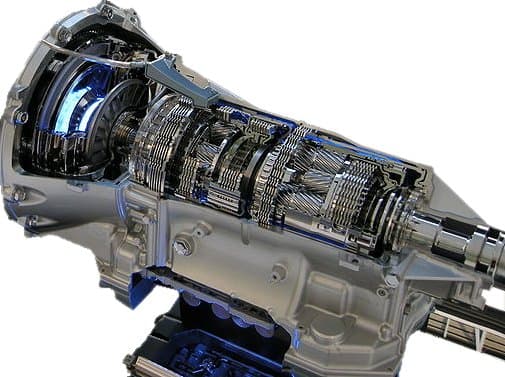
Use the right fluid
Transmission fluids are not interchangeable. An older Honda manual says to use Honda Premium Formula Automatic Transmission Fluid, and that a substitute used as a temporary replacement can affect shift quality with continued use.[2] Modern automatics, continuously variable (CVT) and dual-clutch units each want their own specification. Ask the shop to name the fluid it will use and to write it on the invoice.
Drain and refill, pan drop or flush
Shops use several methods: draining and refilling through the pan or plug, dropping the pan to change the filter as well, or a machine "flush" that pushes fluid through the cooler lines. Your manual or a shop that knows your transmission will say which suits it. On some units a fill needs a specific temperature and procedure, which is another reason to leave it to a shop. A change on a transmission that is already slipping or has burnt fluid will not always fix it, and a shop should say so before it starts.
Check for leaks between changes
Toyota says to inspect for signs of leakage when scheduled and, if you find any, to have it repaired by a qualified technician immediately.[3] A red or brown spot under the car, or fluid that is low or smells burnt, is a reason to book a visit instead of waiting for the interval. For what to look for, see the signs of transmission problems.
What a service costs
No Virginia source publishes a dated price for a fluid service, and it varies with the fluid, the capacity and the method. Ask for a written, itemized quote that names the fluid and says whether the filter is included. How much transmission repair costs in Virginia covers your rights to an estimate and an invoice.
When to call a licensed pro
A transmission service is best left to a shop. Fill levels, fluid types and procedures vary, the pan and fill points are under the car, and an over- or underfill can damage the unit. Ask the shop for a written estimate and keep the invoice. Under Virginia law you must get a written invoice that shows the work performed and the charges for parts and labor, separately stated.[4]
Browse automotive repair services or read more automotive repair answers.
To get quotes for your own car, describe the job once.
Common questions
- Is transmission fluid really lifetime fluid?
- Some makers use that wording, but it usually means the fluid is not on a routine schedule, not that it never ages. Check your manual and ask a shop about your driving, especially if you tow or drive in heat or hills.
- Should I change it sooner if I tow?
- Probably. Toyota lists towing a trailer among its special operating conditions, which add transmission oil replacement to the schedule. Look for a severe-service column in your own manual.
- Can I use any transmission fluid?
- No. Fluids are specified by vehicle. Honda warns that a substitute used as a temporary replacement can affect shift quality with continued use. Use the type in your manual and have it noted on the invoice.
- Does a fluid change fix a slipping transmission?
- Not reliably. It can help if the problem is old or low fluid, but worn internal parts will not be repaired by new fluid. Have a shop diagnose first.
- How do I know if the fluid is low?
- On a vehicle with a dipstick, the level should sit between the marks when checked as the manual describes. Many newer vehicles are sealed, so a shop checks them. Fluid on the ground is a sign to book a visit.
Sources
- [1] To Use Maintenance Minder (HR-V 2024 Honda Owner's Manual), American Honda Motor Co.. Checked October 28, 2026.
- [2] Transmission Fluid (Honda owner's manual), American Honda Motor Co.. Checked October 28, 2026.
- [3] Scheduled Maintenance supplement (98ALLMS_MS004), Toyota Motor Sales, U.S.A.. Checked October 28, 2026.
- [4] Va. Code § 59.1-207.5, Written invoice required upon completion of repair work, Code of Virginia, Virginia General Assembly. Checked October 28, 2026.
Want a pro to handle it?
Describe the job once. Licensed local businesses send quotes, and you pay only when you book one.
Get a quote for Automotive