How do I aerate and overseed my lawn?
For a cool-season lawn in Virginia, do it in early fall. Water the lawn a couple of days ahead so the soil is moist, make several passes with a core aerator, let the plugs dry and break them up, then spread about 2 to 3 pounds of tall fescue seed per 1,000 square feet and keep the seedbed lightly moist until the new grass is up.
Free to ask. Local shops send quotes, and you pay only when you book one.
By Kasra Taheri, Founder, LoclisPublished
Researched and drafted with AI, then checked claim by claim against the sources listed below before it was published. Prices and rules change; the dates beside each source say when it was last checked.
Step by step
Read when to stop and call a pro, further down this page, before you start.
Step 2: Test the soil first
Send a soil sample to the Virginia Tech lab so you know what lime and fertilizer the lawn needs before you seed.[6]
Step 3: Hold the crabgrass preventer
Do not put down a preemergence herbicide before seeding, and check the label of anything applied in the last few months for seeding waits.[5]
Step 4: Mark what the tines could hit
Flag sprinkler heads, shallow lines, edging and stones, and keep children and pets well away from the work area.[7]
Step 5: Moisten the soil
If it has not rained, water about an inch a couple of days before aerating so the soil is moist but not wet.[2]
Step 6: Mow and clear the lawn
Mow at your normal height and rake up sticks and leaves so the seed can reach the soil.
Step 8: Break up the plugs
Let the soil cores dry on the surface, then rake or mow over them to crumble them into the holes.[2]
Step 9: Spread the seed
Spread 2 to 3 pounds of turf-type tall fescue per 1,000 square feet in sun, or fine fescue in shade, in two crossing passes.[2]
Step 10: Feed by the soil test
Apply the lime and starter fertilizer the soil test report recommends, at the label rate.[1]
Step 11: Topdress if you can
A quarter inch of compost over the seed helps hold moisture and improves the soil.[3]
Step 12: Water lightly and often
Keep the seedbed moist without puddles until the grass is up, then water less often and more deeply.[1]
Step 13: Mow and weed with care
Mow new grass when it needs it with a sharp blade, and wait until it has been mowed twice before using a broadleaf weed killer.[1]
Aerating and overseeding is how a thin cool-season lawn gets thick again. The aerator opens the soil, the seed lands in the holes and on loosened soil, and steady moisture does the rest. Seed thrown on an untouched lawn rarely takes: simply applying seed over the top of an existing turf without any soil preparation usually does nothing more than feed birds and wildlife.[1]
It matters most for tall fescue. Tall fescue is the most common grass in Virginia home lawns,[5] and it has limited to no recuperative potential,[4] so it does not spread to fill thin spots on its own. New seed is the only way to add plants.
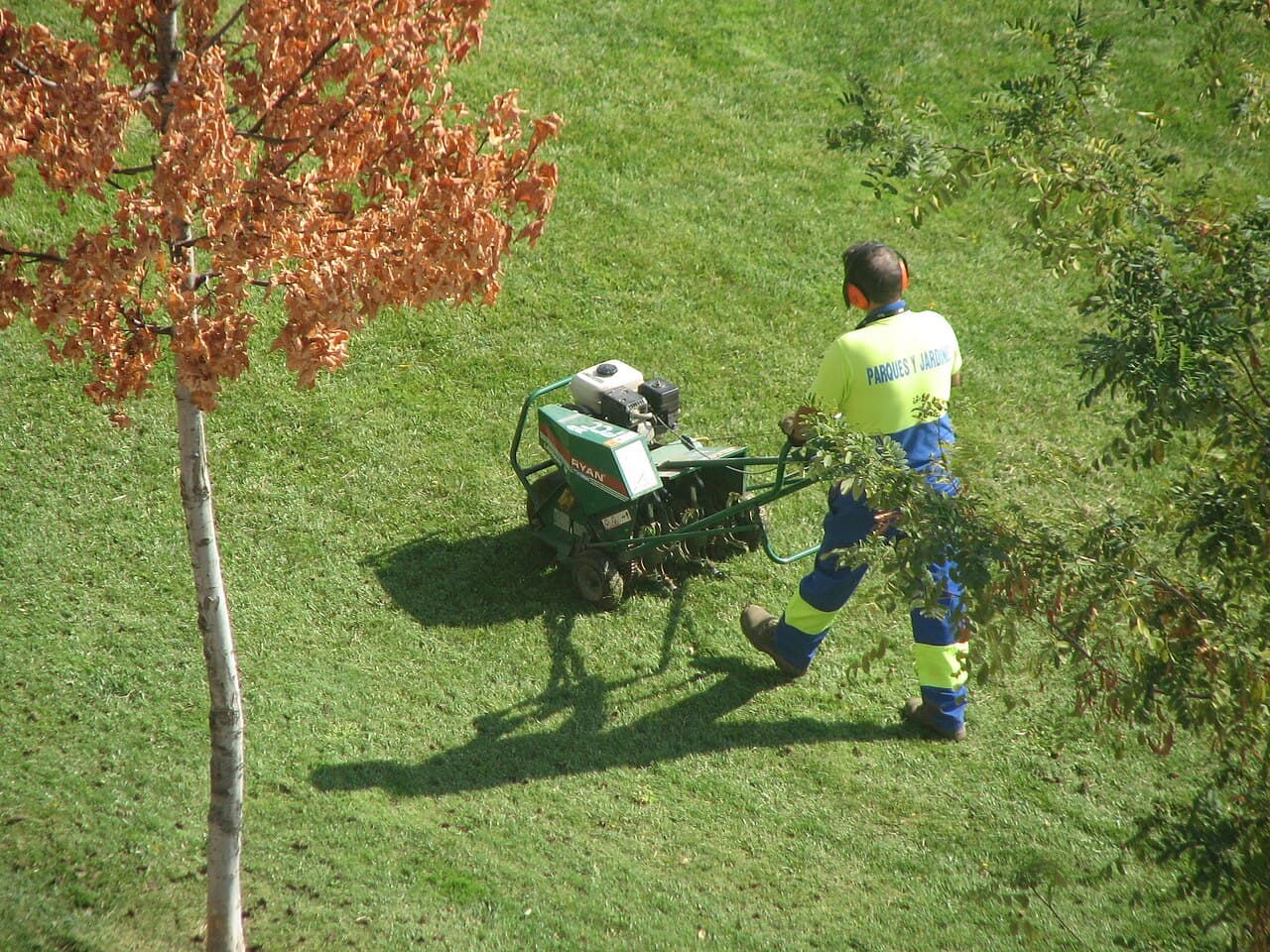
What core aeration does
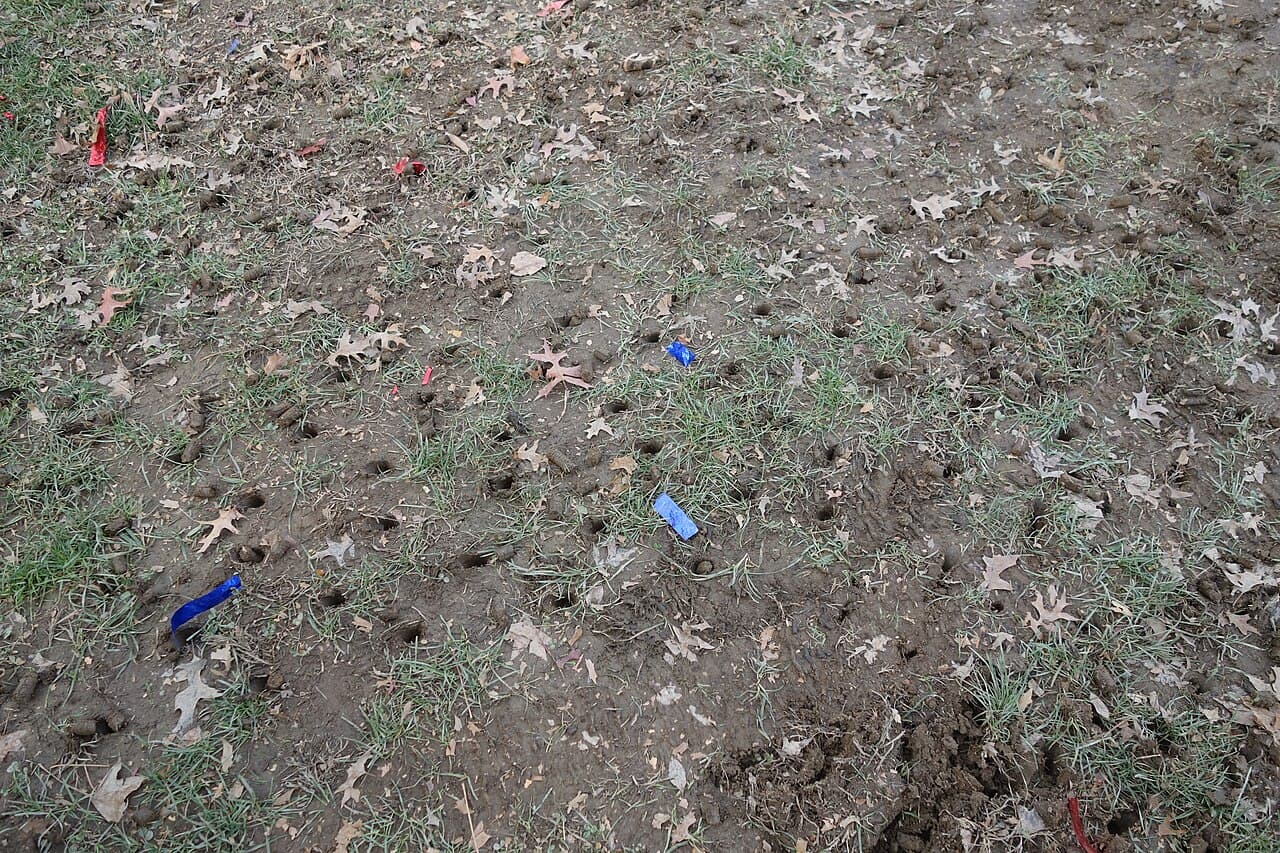
A core aerator pulls plugs of soil out of the ground and drops them on the surface,[2] and the holes let oxygen and water reach the root zone.[2] That relieves compaction from foot traffic and clay, and it gives seed a pocket of loose soil to root into. A spike aerator only pokes holes without removing any soil,[7] so it does less for compaction.
When to do it
For tall fescue, Kentucky bluegrass and fine fescue lawns, early fall is the window. Henrico County's Extension office tells homeowners to overseed between September 1 and October 15,[2] and Virginia Tech's turf specialists put it more broadly: Late summer to mid-fall is the best time to establish cool-season grass.[1] Warm days, cool nights and fall rain favor seedlings, and they have the winter and spring to root before summer heat.
Warm-season lawns are different. Fall is too late to aerate bermudagrass or zoysiagrass safely; do it in late spring or early summer while they are actively growing.[1] Bermudagrass can be overseeded with ryegrass for winter color, but Virginia Tech does not recommend overseeding other warm-season grasses because of competition during spring transition.[9] Our guide to the best time to overseed in Virginia covers the calendar in more detail.
Before you start
Test the soil. The Virginia Tech Soil Testing Lab's report tells you how much lime and which nutrients to add. The routine test cost $10.00 per sample for Virginia residents when we checked on October 27, 2026.[6] Your county Extension office has sample boxes and forms.
Check what has been sprayed. Most preemergence herbicides also stop grass seed from germinating.[2][1] Virginia Tech's pest management guide says seeding may be restricted for 60 to 120 days after a crabgrass preventer,[5] and seeding should be delayed two to four months after a fall preemergence herbicide for annual bluegrass.[5] Siduron and mesotrione are the exceptions: they control crabgrass without harming germinating cool-season grass.[5] If a lawn company treats your yard, ask what went down and when.
Get the soil moist. Aerator tines barely penetrate dry Virginia clay. If rain has been short, irrigate about one inch a couple of days before aerating.[2] The soil should be moist, but not wet.[2] Soggy soil smears and clogs the tines.
Mark the hazards. Flag sprinkler heads, valve boxes, low-voltage lighting cable, invisible pet fence wire and buried edging. Before running any power equipment, wear safety glasses, hearing protection and sturdy footwear, and keep pets and children well away.[7]
Aerating
Rent or borrow a walk-behind core aerator, read its controls before you start, and work in straight passes. Virginia Tech's turf specialist recommends that you make multiple passes with a core aerator[3] before seeding, so plan on two or more passes in different directions. Raise the tines out of the ground for tight turns and when crossing sidewalks, stones, pavers or other hard surfaces, which can damage them.[7]
Leave the cores where they fall. Once they dry, rake them or run the mower over them so they crumble back around the seed.[2]
Seeding
Henrico's SMART Lawns program uses 2 to 3 pounds of seed per 1,000 square feet when overseeding, with turf-type tall fescue in sunny areas and fine fescue in shade.[2] For bare patches you need more. A useful visual check from Virginia Tech is to aim for roughly 10 to 15 tall fescue seeds per square inch on bare soil and about half that where grass remains.[3] Set a broadcast or drop spreader low and go over the lawn twice in crossing directions so you do not leave stripes.
Buy named cultivars from Virginia Tech's turfgrass variety recommendations where you can, and look for tall fescue varieties with disease resistance: seedlings are more susceptible to gray leaf spot, and severe outbreaks have coincided with fall overseeding in recent years.[5]
Feed by the soil test. Starter fertilizers are higher in phosphorus, and up to 1 pound of phosphorus per 1,000 square feet can be justified at seeding.[1] A quarter inch of compost spread over the seed[3][2] is optional but helps hold moisture.
Aftercare
The first three weeks decide whether it works. Virginia Tech's advice is to water lightly and frequently until the seed has germinated, without so much water that seed washes away or drowns.[1] Newly seeded lawns need more frequent watering for the first three to four weeks;[10] after that, water less often and more deeply.
Mow when the grass needs it, with a sharp blade and firm soil, and never remove more than one-third of the leaf blade at a mowing.[1] Hold off on weed killers: most broadleaf herbicides can't go on until the new grass has been mowed at least twice.[1][5] Rake leaves off the new grass rather than letting them mat down over it. If seed does not come up, our guide to why overseeded grass fails walks through the usual causes.
Stop and call a pro if
- The lawn is mostly weeds, bermudagrass or bare soil. That is a full renovation, not an overseeding; see fixing a lawn that is mostly weeds and bare spots.
- Water stands on the lawn or runs toward the house. Drainage and grading come before seed.
- The yard is steep enough that you cannot control a heavy walk-behind machine across the slope.
- You cannot find where the irrigation lines, wires or other buried lines run.
- You want weeds sprayed as part of the job. In Virginia, a pesticide business license is required for any business that applies or recommends pesticides for compensation.[8]
Browse more lawn and landscaping answers, compare aeration and overseeding services, or find lawn businesses in the Blacksburg area. If you would rather have it done, describe the job once and local businesses quote it.
Common questions
- Do I have to aerate before overseeding?
- Some soil preparation is needed, and core aeration is the usual way to get it on an existing lawn. Seed spread over untouched turf mostly feeds birds. A vertical mower (dethatcher) or a power seeder can do the same job of getting seed into contact with soil.
- Should I pick up the plugs after aerating?
- No. Let them dry on the surface, then rake them or run the mower over them to break them up. The soil crumbles back into the holes and around the seed.
- How much grass seed do I need to overseed?
- Henrico County's Extension office uses 2 to 3 pounds of seed per 1,000 square feet for overseeding a fescue lawn. Measure the lawn, divide by 1,000 and multiply. Bare patches need a heavier rate than thin areas that still have grass.
- Can I aerate and overseed in spring?
- You can, but it is the second-best time for cool-season grass. Spring seedlings face crabgrass and summer heat before their roots are deep, and most crabgrass preventers would stop the seed. If you must seed in spring, do it early and use a product with siduron or mesotrione.
- How often should I aerate?
- Henrico County's SMART Lawns program suggests fall aeration every year for a high-maintenance lawn and every two to three years for a regularly maintained one. A screwdriver that is hard to push into moist soil is a sign an area needs it.
- Can I overseed a bermudagrass or zoysia lawn?
- Not with tall fescue to thicken it. Bermudagrass is sometimes overseeded with ryegrass for winter color, but Virginia Tech does not recommend overseeding other warm-season grasses because of competition during spring green-up.
Sources
- [1] Fall Lawn Care (430-520), Virginia Cooperative Extension, Virginia Tech. Checked October 27, 2026.
- [2] SMART Lawns: A Residential Lawn Care Program to Protect Water Quality (revised March 2022), Virginia Cooperative Extension, Henrico County Office. Checked October 27, 2026.
- [3] Cool-season Lawn Recovery Following Summer Stress (SPES-353), Virginia Cooperative Extension, Virginia Tech. Checked October 27, 2026.
- [4] Selecting Turfgrass for Virginia (SPES-748), Virginia Cooperative Extension, Virginia Tech. Checked October 27, 2026.
- [5] 2026 Pest Management Guide: Home Grounds and Animals, Chapter 5: Lawn (456-018, ENTO-634-E), Virginia Cooperative Extension, Virginia Tech. Checked October 27, 2026.
- [6] Sample Submission: Virginia Tech Soil Tests and Their Cost, Virginia Tech Soil Testing Laboratory. Checked October 27, 2026.
- [7] Aerators, Bobcat Company. Checked October 27, 2026.
- [8] Pesticide Business License, Virginia Department of Agriculture and Consumer Services. Checked October 27, 2026.
- [9] Maintenance Calendar for Warm-Season Turfgrasses in Virginia (430-522), Virginia Cooperative Extension, Virginia Tech. Checked October 27, 2026.
- [10] Summer Lawn Management: Watering the Lawn (430-010), Virginia Cooperative Extension, Virginia Tech. Checked October 27, 2026.
Want a pro to handle it?
Describe the job once. Licensed local businesses send quotes, and you pay only when you book one.
Get a quote from a local pro