Should I rent a core aerator or hire a lawn service?
Rent if the lawn is modest and fairly flat, you can move and steer a machine of about 300 pounds, and you have a free fall weekend to make several passes and seed. Hire if the lawn is large or sloped, you have no truck or helper, or you want seeding, fertilizer and weed control done together by a licensed company.
Free to ask. Local shops send quotes, and you pay only when you book one.
By Kasra Taheri, Founder, LoclisPublished
Researched and drafted with AI, then checked claim by claim against the sources listed below before it was published. Prices and rules change; the dates beside each source say when it was last checked.
Step by step
Read when to stop and call a pro, further down this page, before you start.
Step 1: Measure the lawn
Measure the turf area and note slopes, tight gates and beds, since all three decide how hard a heavy machine will be to handle.
Step 2: Check how you will move it
A walk-behind core aerator can weigh around 300 pounds with its drum filled, so line up a truck or trailer and a helper before you reserve one.[4]
Step 3: Book early in the season
Reserve the machine or the lawn company for early fall, when cool-season lawns are overseeded between September 1 and October 15.[3]
Step 4: Get the soil ready
Water about an inch a couple of days ahead if it has been dry, so the soil is moist but not wet on the day.[3]
Step 5: Learn the controls
Have the rental store show you the controls, and wear safety glasses, hearing protection and sturdy shoes while you run it.[5]
Step 6: Compare written quotes
If you hire, get itemized quotes that list passes, seed cultivar and rate, fertilizer and lime, and who waters afterward.
Step 7: Check chemical licences
If the service includes weed control, confirm it holds a VDACS pesticide business license before you agree.[6]
Both work. The choice comes down to the size and shape of your lawn, whether you can move and steer a heavy machine, and how much of the job you want done at once. Virginia Tech's turf specialist notes that do-it-yourselfers can often reserve core aerators or power seeders at equipment rental stores, and most lawn care operators offer renovation services with that specialized equipment.[1]
A good rule of thumb: rent for a modest, mostly flat lawn you can reach easily and seed yourself; hire for a big or sloped lot, if you have no way to move the machine, or when you want seed, fertilizer and weed control handled as one job.
What renting really involves
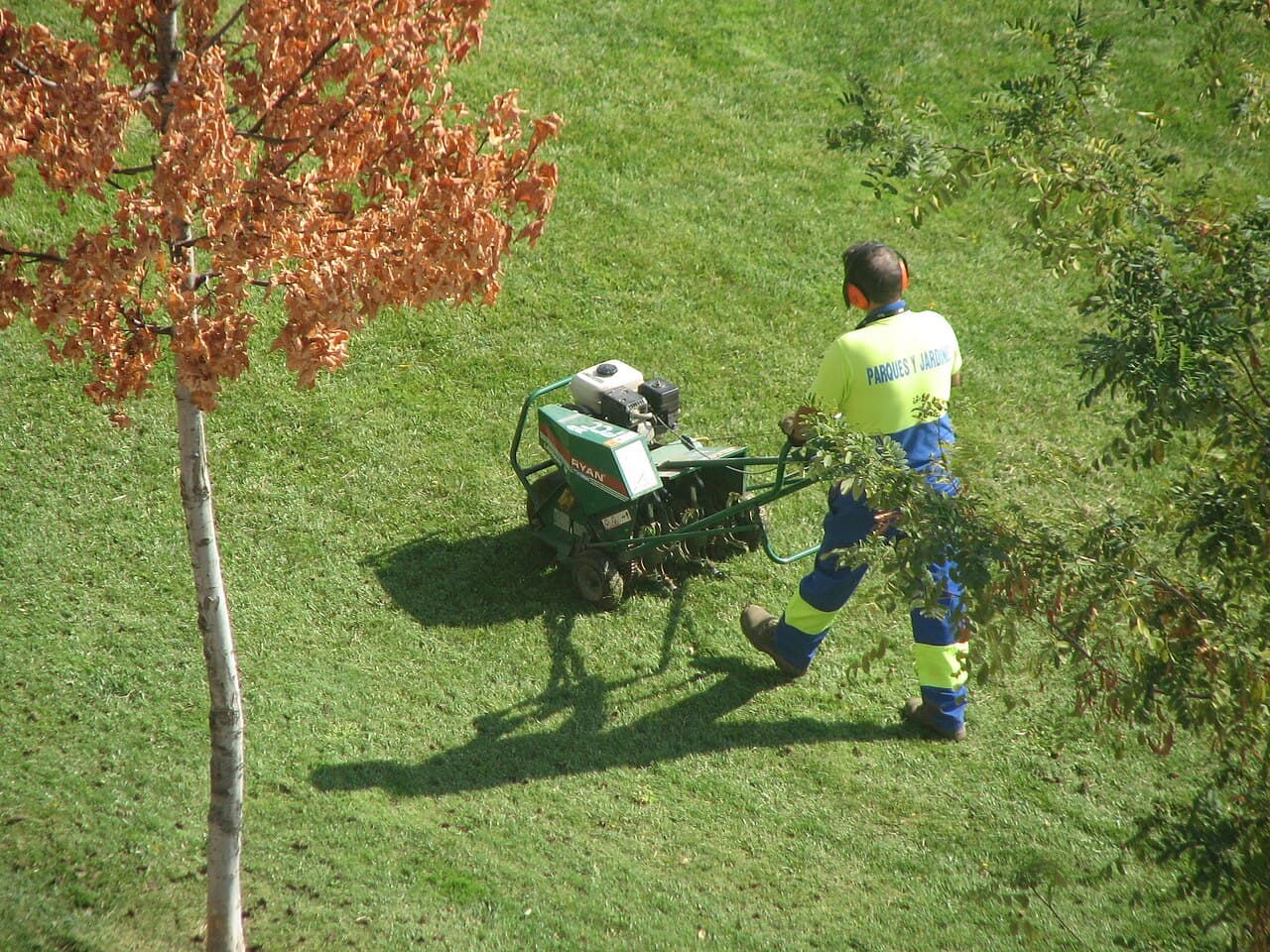
A walk-behind core aerator is heavier than it looks. Bobcat's AE19, a typical walk-behind model, weighs 260 to 270 pounds, and 296 to 306 pounds once its drum is filled with water.[4] It has a 19-inch aeration width and pulls cores up to 2.8 inches deep.[4] You need a pickup or trailer with a ramp, and usually a second person to load and unload it.
Speed on paper is not speed in a yard. Bobcat rates its maximum productivity at 28,975 square feet an hour,[4] but that assumes open ground at full speed. Beds, trees, turns and the gentle work around sprinkler heads slow you down, and Virginia Tech recommends making multiple passes with a core aerator[1] before seeding, which multiplies the time.
Operating one is straightforward once you know the controls. Bobcat's guidance is to wear safety glasses, hearing protection and appropriate footwear,[5] keep pets and children away, and raise the tines for tight turns and when crossing sidewalks, stones or pavers.[5] Slopes are where a heavy self-propelled machine is hardest to control, so leave anything steep to a crew.
Make sure you are renting a core aerator. Spike aerators only poke holes without removing soil,[5] and they do much less for compaction or seed contact.
What a lawn service brings
A crew does the passes, the seeding and often the fertilizer in one visit, and brings its own machine and trailer. Some use equipment you cannot easily rent: commercial applicators may also use a machine with vibrating solid tines, called an aeravator, to prepare a seedbed.[2]
The trade-off is scheduling. Cool-season lawns are overseeded between September 1 and October 15[3] in Henrico County's guidance, so good companies book up. Call in August.
Whoever does it, the soil needs to be moist. If rainfall has been short, Henrico's Extension office advises applying about an inch of water a couple of days before aerating,[3] and that is usually your job even when you hire.
Licences that apply
The licences to ask about are for the chemicals many lawn services bundle with aeration. Under Virginia law, "No person may apply or recommend for use any pesticide commercially without a pesticide business license and the employment of a certified commercial applicator"[7] responsible for the application. VDACS notes that this licence is separate from and in addition to any other commercial business license.[6] For fertilizer, Virginia requires certification for licensees and contractor-applicators engaged in the commercial application of fertilizers to non-agricultural lands.[8]
Ask, too, what the company has already put down if it treats your lawn on a program. Virginia Tech's pest management guide warns that seeding may be restricted for 60 to 120 days after a crabgrass preventer,[9] so a spring preventer from the same company can undo a fall overseeding.
Questions to ask before you hire
- How many aeration passes are included, and with what machine?
- Which grass species and cultivars, and how many pounds of seed per 1,000 square feet?
- Is starter fertilizer or lime included, and is it based on a soil test?
- Has anything been applied this year that would stop seed from germinating?
- Who waters, for how long, and what happens if areas fail to come up?
- Are you licensed by VDACS for any pesticide in the job?
How often you repeat it depends on the lawn. Henrico's SMART Lawns program suggests fall aeration every year for a high-maintenance lawn and every two to three years for a regularly maintained one.[3] If you hire, ask whether a multi-year plan is cheaper; if you rent, the machine skills you learn this year still count next time. For the full DIY method, see how to aerate and overseed a lawn, and for what a crew usually charges, see lawn aeration costs in Virginia.
Stop and call a pro if
- The lawn has slopes too steep to hold a heavy walk-behind machine across.
- You cannot safely load, unload or transport a machine of around 300 pounds.
- The lawn is mostly weeds or bare soil and needs a full renovation, not an overseeding.
- Standing water or erosion means the yard needs drainage or grading work first.
- You want weeds controlled, which needs a licensed pesticide business.
Browse more lawn and landscaping answers, compare aeration and overseeding services, or find lawn businesses around Blacksburg. To get prices from local crews, describe the job once and licensed businesses quote it.
Common questions
- Is a rented aerator hard to use?
- Not on flat, moist ground, but it is heavy and pulls itself forward once the tines engage. Turning, loading it into a vehicle and working on slopes are the hard parts. Ask the rental store to show you the controls before you leave.
- Can I use a spike aerator or aerator shoes instead?
- They poke holes without removing soil, so they do far less for compaction and seedbed preparation than a core aerator that pulls plugs. For overseeding, use a core aerator, a vertical mower or a power seeder.
- What licences should a lawn aeration company have in Virginia?
- The ones to ask about are for chemicals. A company that applies weed control for pay needs a VDACS pesticide business license and a certified commercial applicator, and a company applying fertilizer commercially needs Virginia fertilizer applicator certification. Ask which apply to the work in your quote.
- Should I share an aerator rental with a neighbor?
- It can spread the rental and transport cost over two lawns, as long as both lawns are ready on the same day: moist soil, sprinkler heads marked, and seed on hand.
- How long does it take to aerate a lawn myself?
- Longer than the spec sheet suggests. A machine's rated maximum productivity assumes open ground at full speed; turns, obstacles and the extra passes recommended before seeding can multiply the time.
Sources
- [1] Cool-season Lawn Recovery Following Summer Stress (SPES-353), Virginia Cooperative Extension, Virginia Tech. Checked October 27, 2026.
- [2] Fall Lawn Care (430-520), Virginia Cooperative Extension, Virginia Tech. Checked October 27, 2026.
- [3] SMART Lawns: A Residential Lawn Care Program to Protect Water Quality (revised March 2022), Virginia Cooperative Extension, Henrico County Office. Checked October 27, 2026.
- [4] AE19 Walk-Behind Aerator, Bobcat Company. Checked October 27, 2026.
- [5] Aerators, Bobcat Company. Checked October 27, 2026.
- [6] Pesticide Business License, Virginia Department of Agriculture and Consumer Services. Checked October 27, 2026.
- [7] Code of Virginia § 3.2-3924. Business license required, Virginia General Assembly, Legislative Information System. Checked October 27, 2026.
- [8] Certified Fertilizer Applicator (CFA) Program, Virginia Department of Agriculture and Consumer Services. Checked October 27, 2026.
- [9] 2026 Pest Management Guide: Home Grounds and Animals, Chapter 5: Lawn (456-018, ENTO-634-E), Virginia Cooperative Extension, Virginia Tech. Checked October 27, 2026.
Want a pro to handle it?
Describe the job once. Licensed local businesses send quotes, and you pay only when you book one.
Get a quote from a local pro