When is the best time to overseed a lawn in Virginia?
For tall fescue, Kentucky bluegrass and other cool-season lawns, which cover most of Virginia, overseed in late summer to mid-fall; Henrico County's Extension office uses September 1 to October 15. Spring is a second choice. Warm-season lawns such as bermudagrass and zoysia are seeded in late spring to midsummer instead, and are not overseeded with fescue.
Free to ask. Local shops send quotes, and you pay only when you book one.
By Kasra Taheri, Founder, LoclisPublished
Researched and drafted with AI, then checked claim by claim against the sources listed below before it was published. Prices and rules change; the dates beside each source say when it was last checked.
Step by step
Read when to stop and call a pro, further down this page, before you start.
Step 1: Know your grass
Confirm whether the lawn is a cool-season grass such as tall fescue or a warm-season grass such as bermudagrass or zoysia, because the calendars are opposite.[4]
Step 2: Test the soil first
Test the soil before seeding so lime and fertilizer match what the lawn needs; Virginia Tech suggests every three to four years.[8]
Step 4: Aerate in early fall
Core aerate cool-season grass in early fall on moist soil, ahead of seeding.[2]
Step 5: Seed by mid-October
Spread seed between September 1 and October 15 at 2 to 3 pounds per 1,000 square feet for a fescue lawn.[2]
Step 6: Feed in fall
Fertilize cool-season grass mainly in September, October and November, following your soil test, and never on frozen soil.[1]
Step 7: Keep leaves off new grass
Rake or mulch fallen leaves so they do not mat down over the seedlings through winter.[2]
Step 8: Plan spring weed control
In spring, use a crabgrass preventer only where you will not seed, or one containing siduron or mesotrione where you will.[6]
Step 9: Repeat on schedule
Aerate every year for a high-maintenance lawn or every two to three years for a regularly kept one, and overseed thin areas as needed.[2]
For most Virginia lawns the answer is early fall. Tall fescue, Kentucky bluegrass, fine fescue and perennial ryegrass are cool-season grasses, and Virginia Tech's turf specialists say, "Late summer to mid-fall is the best time to establish cool-season turfgrass."[1] Henrico County's Extension office gives homeowners a firmer window: overseed between September 1 and October 15.[2]
Spring works too, but less well. Virginia Tech's watering guide puts it simply: cool-season grasses are ideally established in late summer to early fall, with spring as the secondary time for planting.[3]
Warm-season lawns, mostly bermudagrass and zoysia, follow the opposite calendar, covered below.
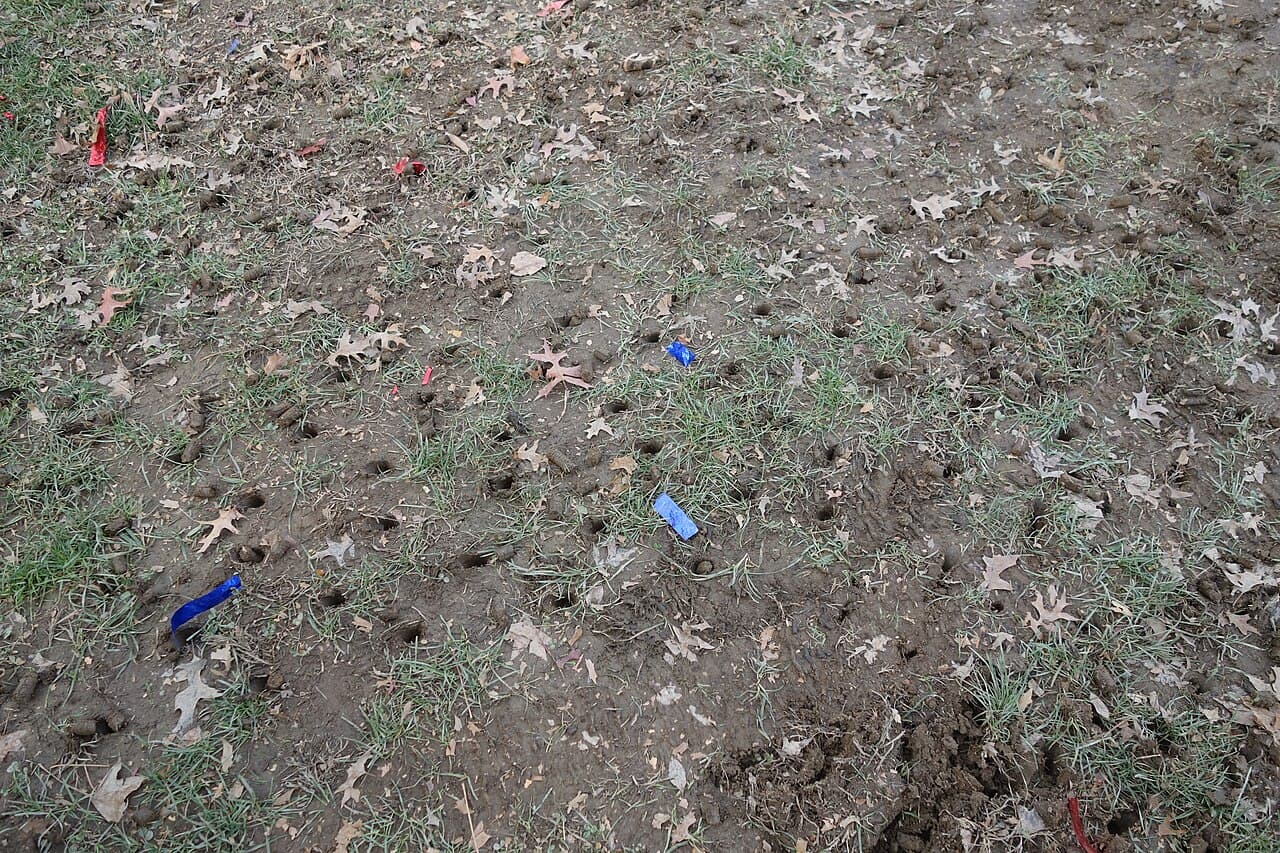
Why early fall wins
The weather suits seedlings. Warm days and cool nights provide ideal conditions for seed germination and establishment of tall fescue, Kentucky bluegrass, fine-leaf fescues, and perennial ryegrass.[1] Fall rain often helps with the watering.
Fewer weeds compete. Seeding in fall avoids summer annual weeds, like crabgrass, choking out turfgrass seedlings.[6]
The grass gets a long run before summer. Fall seedlings have the rest of fall, the winter and all of spring to root. That matters because seedlings and lawns less than a year old have little to no drought tolerance.[3] A lawn seeded in April meets July with shallow roots.
Tall fescue needs it. Turf-type tall fescue covers more Virginia lawn acreage than any other grass,[5] and it has limited to no recuperative potential.[4] It does not creep to fill bare spots, so regular fall overseeding is how a fescue lawn stays thick.
Spring seeding, if it cannot wait
The main problem with spring is weed control. Most crabgrass preventers also stop grass seed from germinating,[2] so you cannot use the usual products where you seed. Virginia Tech's advice for spring is to seed as early as possible and use a product containing siduron or mesotrione, applied the same day as seeding.[6] Expect to water more through the first summer.
Timing conflicts in late summer
Two late-summer habits can ruin a fall overseeding.
The first is the fall weed preventer. Some lawn programs apply a preemergence herbicide for annual bluegrass in late August, and seeding must be delayed two to four months after a preemergence herbicide for annual bluegrass.[6] On areas you plan to overseed, skip it. Our guide to why grass seed does not come up covers this and the other usual failures.
The second is disease. Virginia Tech warns that the timing of severe gray leaf spot outbreaks has coincided with fall overseeding in recent years.[6] Virginia Tech's guide says the disease has become increasingly problematic in late summer and early fall during prolonged rainfall with warm temperatures,[6] so in a hot, wet early September it can pay to wait a week or two within the window and to buy tall fescue cultivars with gray leaf spot resistance.
Warm-season lawns
Bermudagrass and zoysiagrass follow the heat: warm-season grasses are ideally established in late spring to mid-summer.[3] Aeration follows the same rule. Fall is too late in the growing season to safely aerify or vertical mow warm-season turfgrasses;[1] do it in late spring or early summer.
Fall overseeding of a warm-season lawn means something different. Perennial or annual ryegrass can be overseeded into bermudagrass at 5 to 10 pounds of pure live seed per 1,000 square feet for winter color,[7] but it is not recommended to overseed other warm-season grasses because of spring competition during transition.[7] Even on bermudagrass there is a cost: the ryegrass competes with the bermudagrass for nutrients, water and light, particularly in spring as the bermudagrass breaks dormancy.[1]
A year-round routine for a cool-season lawn
How often you aerate depends on how hard you push the lawn. Henrico's SMART Lawns program pairs high maintenance with "Fall aerate every year"[2] and regular maintenance with "Fall aerate every two to three years,"[2] overseeding as needed in both. For the seed, it uses 2 to 3 pounds of seed per 1,000 square feet,[2] with turf-type tall fescue in sun and fine fescue in shade.[2]
- Late summer: test the soil. Virginia Tech recommends you test home lawn soils every three to four years.[8] Skip late-summer weed preventers where you will seed.
- Early fall: core aerate, then seed. Our guide to aerating and overseeding walks through the job.
- September to November: keep new seed moist, then fertilize. Virginia Tech's fall nitrogen months for cool-season grass are September, October and November.[1] See when to fertilize a lawn in Virginia.
- Late fall: keep leaves from matting down on new grass.
- Spring: use crabgrass preventer only where you will not seed, and mow tall into summer.
Stop and call a pro if
- The lawn is mostly weeds or bare soil, which calls for a full renovation rather than an overseeding.
- You are converting from bermudagrass or zoysia to fescue, or the other way, which needs repeated weed control weeks ahead of seeding.
- Areas stay wet or wash out in rain and need drainage or grading first.
- You missed the fall window and the lawn cannot wait; a lawn company can advise on a spring plan.
Browse more lawn and landscaping answers, see aeration and overseeding services, or find lawn businesses in the Blacksburg area. To book a fall overseeding, describe the job once and local businesses quote it.
Common questions
- Is it too late to overseed in late October or November?
- Usually, for a reliable result. Henrico County's Extension office puts the overseeding window at September 1 to October 15, and seedlings sown later have little time to root before winter. Plan for next September, or for early spring if the lawn cannot wait.
- Can I overseed in spring instead?
- Yes, but it is the second-best time. Spring seedlings must compete with crabgrass and then face summer heat with shallow roots. Seed as early as you can and use a crabgrass product containing siduron or mesotrione, which do not stop cool-season seed.
- How often should I overseed a fescue lawn?
- When it is thin, not on a fixed schedule. Tall fescue does not spread to fill gaps, so lawns that see traffic, shade or summer drought often need some overseeding most falls, while a dense lawn may go several years.
- Should I overseed my bermudagrass lawn in fall?
- Only with ryegrass, and only if you want winter color and accept a weaker bermudagrass stand in spring. Virginia Tech does not recommend overseeding other warm-season grasses such as zoysia because of competition during spring transition.
- Does it matter where in Virginia I live?
- The season is the same statewide for cool-season grass, but local weather moves it. A hot, dry September may push seeding later; an early cold snap shortens the window. Your county Extension office can tell you what works locally.
Sources
- [1] Fall Lawn Care (430-520), Virginia Cooperative Extension, Virginia Tech. Checked October 27, 2026.
- [2] SMART Lawns: A Residential Lawn Care Program to Protect Water Quality (revised March 2022), Virginia Cooperative Extension, Henrico County Office. Checked October 27, 2026.
- [3] Summer Lawn Management: Watering the Lawn (430-010), Virginia Cooperative Extension, Virginia Tech. Checked October 27, 2026.
- [4] Selecting Turfgrass for Virginia (SPES-748), Virginia Cooperative Extension, Virginia Tech. Checked October 27, 2026.
- [5] Cool-season Lawn Recovery Following Summer Stress (SPES-353), Virginia Cooperative Extension, Virginia Tech. Checked October 27, 2026.
- [6] 2026 Pest Management Guide: Home Grounds and Animals, Chapter 5: Lawn (456-018, ENTO-634-E), Virginia Cooperative Extension, Virginia Tech. Checked October 27, 2026.
- [7] Maintenance Calendar for Warm-Season Turfgrasses in Virginia (430-522), Virginia Cooperative Extension, Virginia Tech. Checked October 27, 2026.
- [8] Maintenance Calendar for Cool-Season Turfgrasses in Virginia (430-523), Virginia Cooperative Extension, Virginia Tech. Checked October 27, 2026.
Want a pro to handle it?
Describe the job once. Licensed local businesses send quotes, and you pay only when you book one.
Get a quote from a local pro