How do I avoid roofing scams after a storm in Virginia?
Hire a roofer you contacted yourself and checked on DPOR's License Lookup, insist on a signed written contract, and pay as the work is done: 10 percent down or $1,000, whichever is less, and never cash. Be wary of door-to-door offers, pressure to sign today and requests to sign your insurance check over. Virginia law usually lets you cancel a door-to-door sale within three business days.
Free to ask. Local shops send quotes, and you pay only when you book one.
By Kasra Taheri, Founder, LoclisUpdated
Researched and drafted with AI, then checked claim by claim against the sources listed below before it was published. Prices and rules change; the dates beside each source say when it was last checked.
This is a job for a licensed pro in Virginia
This page explains what the work involves, the permits, what a licensed pro does and what drives the cost. It does not give step-by-step instructions, because this work needs a licence, a permit or both, and doing it wrong can injure someone. Before you hire, check the licence on Virginia's DPOR record.
The safest way through storm season is to hire only roofers you found and checked yourself, get everything in writing, and keep your money behind the work. Virginia's licensing agency warns that "scammers frequently attempt to profit from disasters by taking advantage of individuals who are rebuilding."[1] Here is what the common tactics look like, the checks that stop them, and the rights Virginia law gives you if you already signed.
The usual storm-chaser tactics
The pitch tends to arrive at your door soon after the storm. DPOR's advice: "Be wary of door-to-door solicitations promising repairs at a discounted price."[1] Its list of scam signals includes high-pressure or scare tactics such as an "offer good today only", over-friendly sales pitches, "material left-over" pitches, escalating prices, and deals that sound too good to be true.[1]
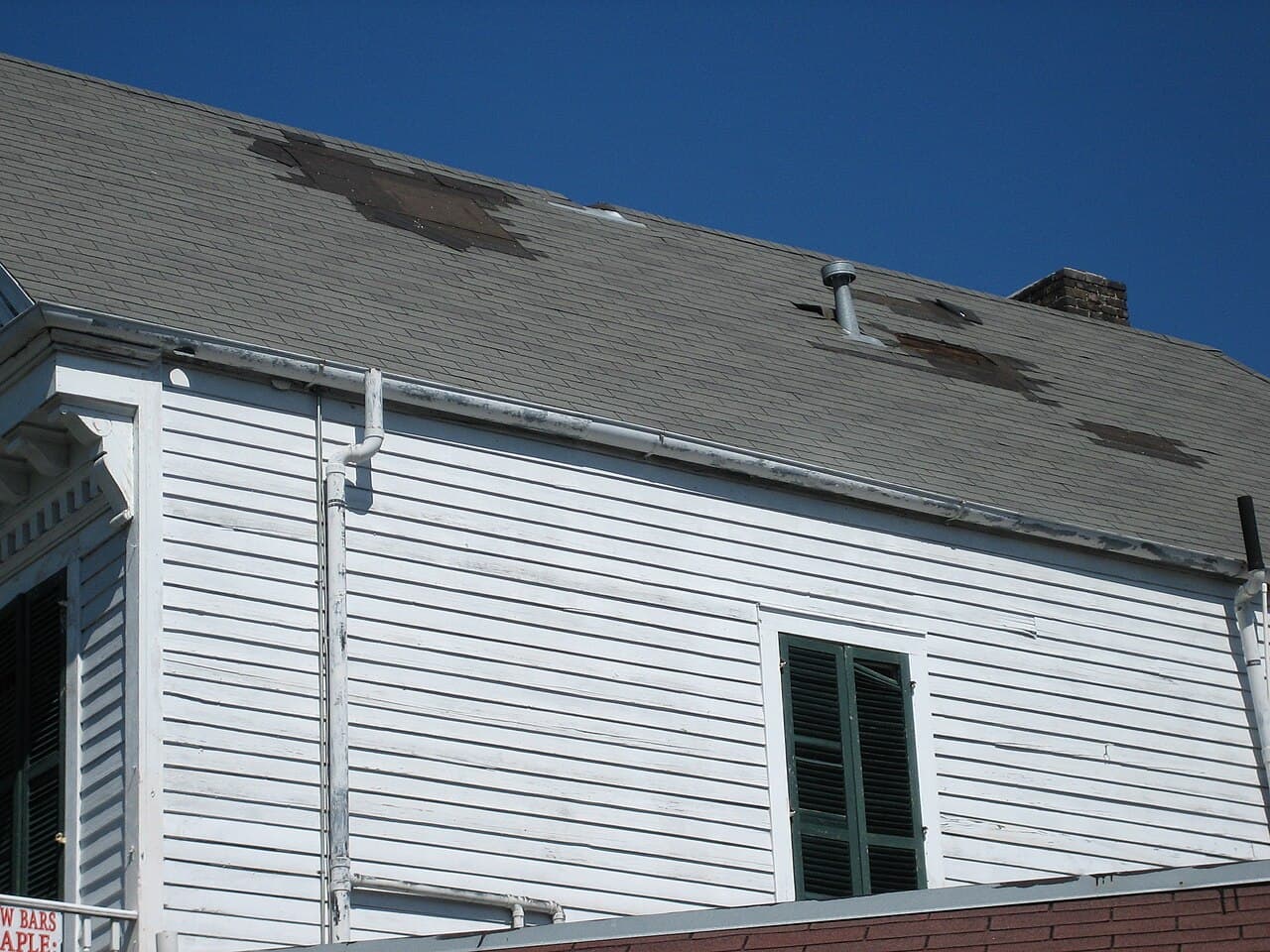
Wind damage like this is real and needs fixing, which is exactly why it attracts bad actors. Another warning sign is a contractor who wants the whole job paid up front. Virginia's Bureau of Insurance says "it is highly unlikely that a reputable contractor would request full payment in advance."[7]
Check the licence before anyone gets on your roof
Licensing is your main protection. In DPOR's words, "Consumers have very little recourse against unlicensed contractors."[1] In Virginia, work valued at $1,000 or more needs a valid Virginia contractor's licence in the category the contractor will work in,[2] and for roofing-only work you may want a contractor licensed in that specialty.[2]
Verify it yourself using DPOR's License Lookup or by calling (804) 367-8511.[1] Don't rely on what is printed: "A license number in an advertisement or on a business card does not necessarily mean the contractor's license is valid."[2] Ask for the business address and phone number and check them against the Board for Contractors' record.[2] A contractor working out of a truck with only a cell phone may be hard to find when a repair fails a month later. Our step-by-step on checking a contractor's licence shows where to look.
Get a real contract, and keep payments behind the work
Treat every signature as binding. DPOR warns that "any bid or estimate you sign may become the contract."[2] For residential work, Virginia's contractor regulations say the contract has to be signed by both you and the licensee before work starts or any payment is accepted,[3] and it has to include the start and estimated completion dates, the total cost, the payment schedule and down payment, the contractor's license number and class, your cancellation rights, and a statement that changes must be in writing and signed by everyone.[3]
Then hold the money back. DPOR's rule: "Pay 10 percent down or $1,000, whichever amount is less."[1] The cap rises to 30 percent of the contract when the job needs custom-made or special-order items.[1] Don't let payments get ahead of the work, don't pay cash, and don't pay 100 percent until the work is 100 percent complete.[1]
Your right to cancel a door-to-door sale
Virginia's Home Solicitation Sales Act covers the roofer at your door. A home solicitation sale is one where the seller personally solicits the sale at your home and you give your agreement there.[4] It does not cover cash sales under $25 and sales made after prior negotiations between you and the seller.[4]
For a covered sale, you can cancel until midnight of the third business day after the day you sign.[5] Cancellation is in writing to the seller's address in the agreement, in any wording that shows you do not want to be bound, and a mailed notice counts once it is properly addressed, stamped and in the mailbox.[5] The contract itself must state your rights in bold under the caption "BUYER'S RIGHT TO CANCEL",[6] and until the seller complies, you may cancel by any means.[6]
Watch for an "emergency" form. Under the Act, you cannot cancel if you asked for the work without delay because of an emergency, the contractor has made a substantial start in good faith, and you signed a dated writing saying you understand you are giving up your right to cancel.[5] Any other waiver of the right to cancel is void.[5]
Insurance claims and "free roof" offers
Slow down before signing anything tied to a claim. The Bureau of Insurance advises that you photograph the damage before any temporary repair, keep the receipts, and wait for final repairs until the insurer has seen the damage or told you in writing to go ahead.[7] It also says to "do not sign any contracts for major repair until the company representative has determined how much damage there is and how much the company will pay."[7]
Be careful with a roofer who offers to deal with your insurer for you. Under the Code of Virginia, negotiating or adjusting a property insurance claim on your behalf for compensation is public adjusting,[8] and no one may engage in the business of public adjusting without a license from the State Corporation Commission.[9]
Price gouging after a declared emergency
Virginia's Post-Disaster Anti-Price Gouging Act applies when the Governor or the President declares a state of emergency for a disaster.[11] It is unlawful to charge an unconscionable price for necessary goods and services in the area under a state of emergency,[10] and the Act's definition includes "building materials and services".[11] One test is whether the price grossly exceeds what the supplier, or others in the area, charged in the 10 days before the disaster.[10] The Attorney General's Consumer Protection Section takes complaints at 1-800-552-9963 from within Virginia.[12]
When to call a licensed pro
Call a licensed roofer you found yourself as soon as water is getting in or shingles are missing, and leave the roof, ladder and tarp to them. Get at least three estimates whenever possible, even after a storm,[1] compare the scope line by line, and keep copies of every contract, change order and payment.
Hiring licensed also keeps a safety net in place. By hiring a licensed contractor, you become eligible for compensation from the Contractor Transaction Recovery Fund in case of improper or dishonest conduct,[2] a protection you lose with an unlicensed roofer.
For what fair pricing looks like, read what roof repair costs in Virginia and when a roof can be repaired instead of replaced. Browse exterior answers, storm damage repair businesses or exterior contractors in Blacksburg.
Describe the storm damage and add photos, and licensed local roofers quote. Loclis's directory lists DPOR-licensed businesses with the licence number and a link to DPOR's lookup.
Common questions
- A roofer knocked on my door after the storm. Should I hire him?
- Not on the spot. Take a card, check the company on DPOR's License Lookup or at (804) 367-8511, and get quotes from roofers you find yourself. DPOR warns to be wary of door-to-door offers of discounted repairs.
- Can I cancel a roofing contract I signed at my door?
- Usually, yes. Under Virginia's Home Solicitation Sales Act you can cancel a sale solicited at your home until midnight of the third business day after you sign, by written notice to the address in the agreement. Signing a dated emergency waiver can give that right up once work has substantially begun.
- The roofer says he'll handle my insurance claim. Is that allowed?
- Be careful. Under Virginia law, negotiating or adjusting a property claim on your behalf for pay is public adjusting, and it needs a licence from the State Corporation Commission. Deal with your insurer directly, or hire a licensed public adjuster.
- How much deposit is reasonable for storm repairs?
- DPOR's guidance is 10 percent down or $1,000, whichever is less, or up to 30 percent when the job needs special-order items. Never pay the whole job up front, and never pay cash.
- Where do I report a storm-chasing roofer?
- Complaints about licensed or unlicensed contracting go to the Board for Contractors at DPOR. The Attorney General's Consumer Protection Section also takes complaints at 1-800-552-9963 from within Virginia.
Sources
- [1] Disaster Recovery: Avoiding Fraud, Virginia Department of Professional and Occupational Regulation. Checked October 26, 2026.
- [2] What You Should Know Before You Hire a Contractor, Virginia Board for Contractors, DPOR. Checked October 26, 2026.
- [3] 18VAC50-22-260, Filing of charges; prohibited acts, Virginia Board for Contractors (Virginia Administrative Code). Checked October 26, 2026.
- [4] § 59.1-21.2. Definitions (Virginia Home Solicitation Sales Act), Code of Virginia. Checked October 26, 2026.
- [5] § 59.1-21.3. Cancellation of sale, Code of Virginia. Checked October 26, 2026.
- [6] § 59.1-21.4. Receipt or written agreement, Code of Virginia. Checked October 26, 2026.
- [7] Disaster Strikes: Insured Homeowners Loss, Virginia State Corporation Commission, Bureau of Insurance. Checked October 26, 2026.
- [8] § 38.2-1845.1. Definitions (public adjusters), Code of Virginia. Checked October 26, 2026.
- [9] § 38.2-1845.2. License required of resident public adjusters, Code of Virginia. Checked October 26, 2026.
- [10] § 59.1-527. Prohibitions (Virginia Post-Disaster Anti-Price Gouging Act), Code of Virginia. Checked October 26, 2026.
- [11] § 59.1-526. Definitions (Virginia Post-Disaster Anti-Price Gouging Act), Code of Virginia. Checked October 26, 2026.
- [12] File a Complaint, Office of the Attorney General of Virginia, Consumer Protection Section. Checked October 26, 2026.
Want a pro to handle it?
Describe the job once. Licensed local businesses send quotes, and you pay only when you book one.
Get a quote for Roofing