How much does roof repair cost in Virginia?
Roof repair prices in Virginia depend on the job more than on any average: how much of the roof is damaged, the material, how steep and high the roof is, whether flashing or decking has to be replaced, and whether a temporary fix comes first. Get at least three written, itemized quotes from licensed roofers, and limit the deposit to 10 percent or $1,000, whichever is less.
Free to ask. Local shops send quotes, and you pay only when you book one.
By Kasra Taheri, Founder, LoclisUpdated
Researched and drafted with AI, then checked claim by claim against the sources listed below before it was published. Prices and rules change; the dates beside each source say when it was last checked.
This is a job for a licensed pro in Virginia
This page explains what the work involves, the permits, what a licensed pro does and what drives the cost. It does not give step-by-step instructions, because this work needs a licence, a permit or both, and doing it wrong can injure someone. Before you hire, check the licence on Virginia's DPOR record.
Roof repair prices in Virginia depend on the job far more than on any average, so the useful question is what will drive your price. A loose flashing or a few wind-lifted shingles on a walkable slope is a short visit; rotted decking under a leak on a steep two-storey roof is a different job. Below are the cost drivers to ask about, what insurance usually covers, and what a fair written quote should contain.
What drives the price
How much is damaged. Asphalt shingle repairs are often quick, because most parts of the roof can be repaired on their own without disturbing a large area. A dozen shingles costs more than three, but the trip, setup and safety gear are often a large share of a small job either way.
Matching the shingles. Matching is easiest when you have spares: shingles saved from the original job, or at least the color name and the year the roof went on so the roofer can find a close commercial match. Discontinued colors, slate, tile or specialty metal can mean more searching and higher material cost.
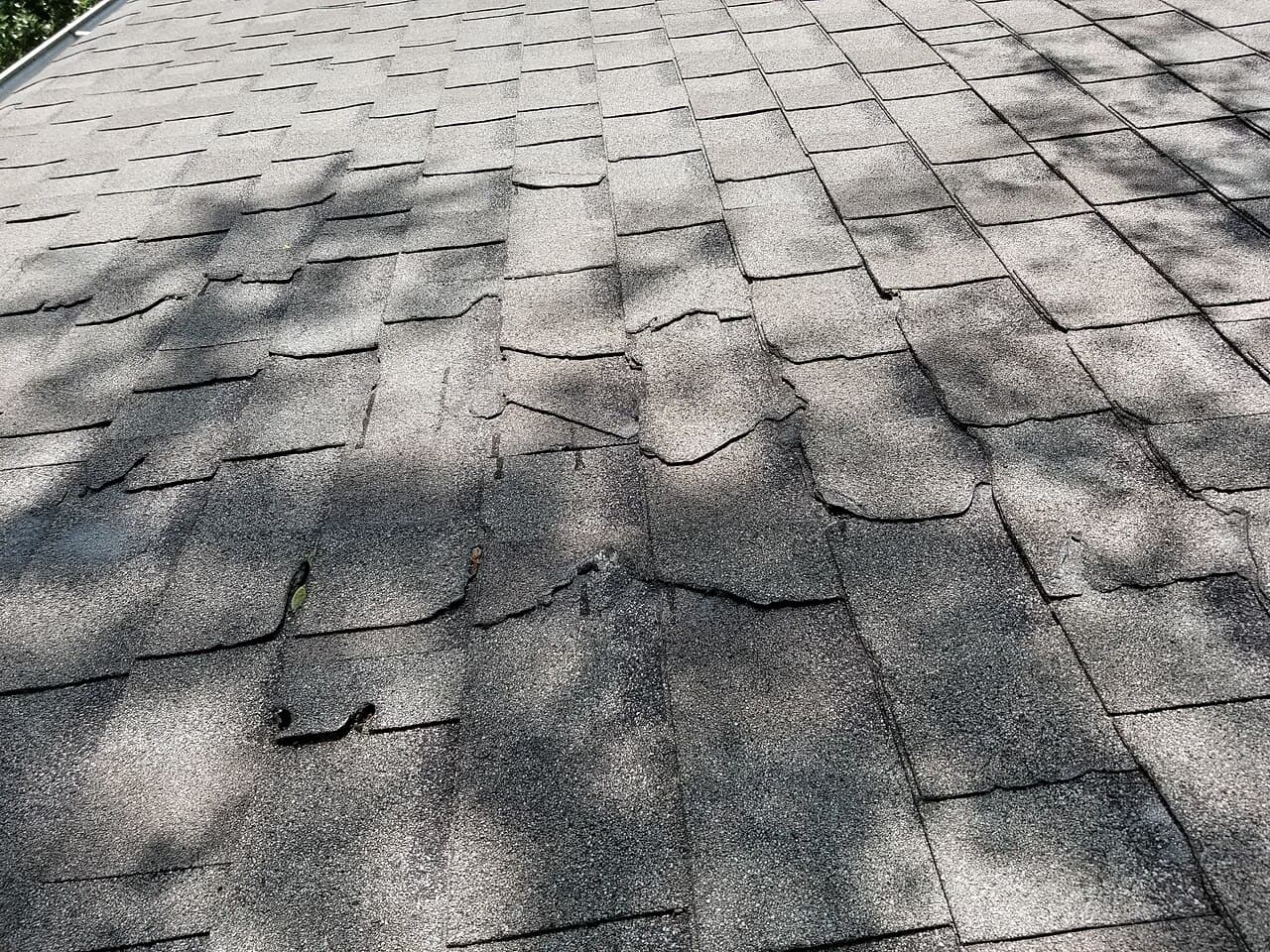
What is under the shingles. The quote you get from the ground may change once the roofer lifts the damaged area, and rotted decking has to be replaced before new shingles go on. When water gets underneath the roofing, it can work its way to the deck and rot the roof structure.[1] Ask in advance how decking is priced, per sheet or per board, so a surprise does not become a dispute.
Flashing and penetrations. Leaks at chimneys, vent pipes, skylights and wall joints are often flashing work rather than shingle work. Chimney flashing that ties into masonry often takes longer than a pipe boot.
Steepness, height and slope. A steep or high roof takes more safety setup and more time. Very low slopes have their own costs. The Department of Energy's Building America Solution Center says asphalt shingles should only be installed on roof slopes of 2 in 12 or greater, and that from 2 in 12 up to 4 in 12 a double underlayment application is required,[2] so a repair there may involve more than replacing the shingles.
Temporary work first. After a storm, a roofer may make a temporary repair to stop water while proper materials are sourced. That can mean two visits, and two charges, before the job is done. Virginia's Bureau of Insurance says insurers expect homeowners to protect their property from further damage and will pay the reasonable costs associated with protecting the property,[4] so keep the receipts.
Permits. Most small repairs need none. Under Virginia's Uniform Statewide Building Code, replacing 100 square feet or less of roof covering needs no permit in any wind zone,[3] and replacing 256 square feet or less of roof decking on most houses is exempt as well, unless that decking had to be fire-retardant-treated or otherwise protected when the house was built.[3] The building official may still require a permit for replacement roofing in a historic district a locality has designated, and for exempt work in a special flood hazard area.[3] An owner or the owner's agent can still ask for a permit on exempt work, and then the permit is issued and the inspections are required.[3] See roof permits in Virginia for larger jobs.
Insurance and your share of the bill
When the damage came from a storm or a falling tree, your cost may be the deductible rather than the whole bill. The Virginia Bureau of Insurance says: "Most homeowners policies cover the reasonable costs of emergency clean-up and temporary repairs."[4] It also advises you to take photographs before you clean up or repair anything, and keep every receipt.[4]
Check your deductible before you file. Some wind or hurricane deductibles are a flat amount, such as $1,000, while others are a percentage of the dwelling coverage.[4] The Bureau's own example: a 2% hurricane deductible on a house insured for $100,000 is $2,000, so on $3,000 of damage the insurer would pay $1,000.[4]
The Bureau also says to get written estimates before repairs begin, and do not sign a contract for major repair until the insurer has decided how much damage there is and how much it will pay.[4] If the contractor finds hidden damage or prices the job well above what the adjuster allowed, contact the insurer's representative first, and the Bureau of Insurance if you cannot resolve it.[4]
What a fair quote looks like
Ask for at least three quotes. Virginia's Board for Contractors advises that you get at least three written bids or estimates using identical plans and specifications so you can compare prices and contractors.[7] A bid substantially lower than the others probably means the contractor made a mistake or left out work the others included.[7]
For residential work, Virginia's contractor regulations require a written contract signed by both sides before work starts or money changes hands, and it has to cover, among other things:[5]
- when work will begin and the estimated completion date;
- the total cost, or for cost-plus and time-and-materials jobs, the fee and a cap or a fixed labor price;
- the amounts and schedule of payments, including the down payment;
- a list of the specified materials and work;
- a statement that the contractor will comply with local permit, inspection and zoning requirements;
- the contractor's name, address, license number, class of license and specialty;
- a statement that any change to cost, materials, work or completion date must be in writing and signed by everyone.
Keep the deposit small. DPOR's rule of thumb is plain: "Pay 10 percent down or $1,000, whichever amount is less."[6] That limit holds unless the job needs custom-made or special-order items, when the limit is 30 percent of the contract.[6] Beyond that, do not let payments get ahead of the work, do not pay cash, and do not pay the full bill until the work is complete.[6]
When to call a licensed pro
Every roof repair is a job for a roofer, not a ladder project. In Virginia, work valued at $1,000 or more needs a valid Virginia contractor's licence, and for roofing-only work you may want a contractor licensed in that specialty.[7] Under the Code of Virginia, a Class C contractor can take a single job over $1,000 but less than $30,000.[8] Check the licence using DPOR's License Lookup or by calling (804) 367-8511,[6] or see how to check a contractor's licence.
If the quotes start to approach the price of a new roof, read when a roof can be repaired instead of replaced and what a new roof costs in Virginia. Browse all exterior answers or roofing repair businesses.
Describe the repair and add photos, and licensed local roofers send quotes you can compare side by side.
Common questions
- Why do roof repair quotes vary so much?
- Roofers price different scopes. One may quote a few shingles, another the flashing and the decking under it as well. Ask each to list the materials, the area and what happens if they find rot, so you compare the same job.
- Does homeowners insurance pay for roof repair?
- It depends on the cause and your policy. Storm damage is often a covered claim, and most homeowners policies cover the reasonable costs of emergency clean-up and temporary repairs. Your deductible comes off first, and a wind or hurricane deductible may be a percentage of your dwelling coverage.
- How much should I pay up front for a roof repair?
- DPOR's advice is 10 percent down or $1,000, whichever is less, or up to 30 percent when the job needs special-order items. Don't pay cash, and don't pay the full bill until the work is done.
- Will a permit add to the cost?
- Usually not for a small repair. Replacing 100 square feet or less of roof covering needs no permit in any wind zone under the Virginia building code, and small decking replacements on most houses are exempt too. Ask your local building department about anything larger.
- Is a cheap patch worth it on an old roof?
- Sometimes, to stop a leak while you plan. But a repair on a roof near the end of its life may be followed by more. Ask the roofer to say in writing how much life the rest of the roof has left.
Sources
- [1] Overview of Roofing Materials for Forest Service Facilities (Tech Tip 0071-2314-MTDC, March 2000), USDA Forest Service, Missoula Technology and Development Center. Checked October 26, 2026.
- [2] Asphalt Shingle Roofs, Building America Solution Center, Pacific Northwest National Laboratory for the U.S. Department of Energy. Checked October 27, 2026.
- [3] 13VAC5-63-80, Virginia Uniform Statewide Building Code, Section 108 Application for permit, Virginia Department of Housing and Community Development (Virginia Administrative Code). Checked October 26, 2026.
- [4] Disaster Strikes: Insured Homeowners Loss, Virginia State Corporation Commission, Bureau of Insurance. Checked October 26, 2026.
- [5] 18VAC50-22-260, Filing of charges; prohibited acts, Virginia Board for Contractors (Virginia Administrative Code). Checked October 26, 2026.
- [6] Disaster Recovery: Avoiding Fraud, Virginia Department of Professional and Occupational Regulation. Checked October 26, 2026.
- [7] What You Should Know Before You Hire a Contractor, Virginia Board for Contractors, DPOR. Checked October 26, 2026.
- [8] § 54.1-1100. Definitions (contractor classes), Code of Virginia. Checked October 26, 2026.
Want a pro to handle it?
Describe the job once. Licensed local businesses send quotes, and you pay only when you book one.
Get a quote for Roofing