How do I find a hidden water leak in my house?
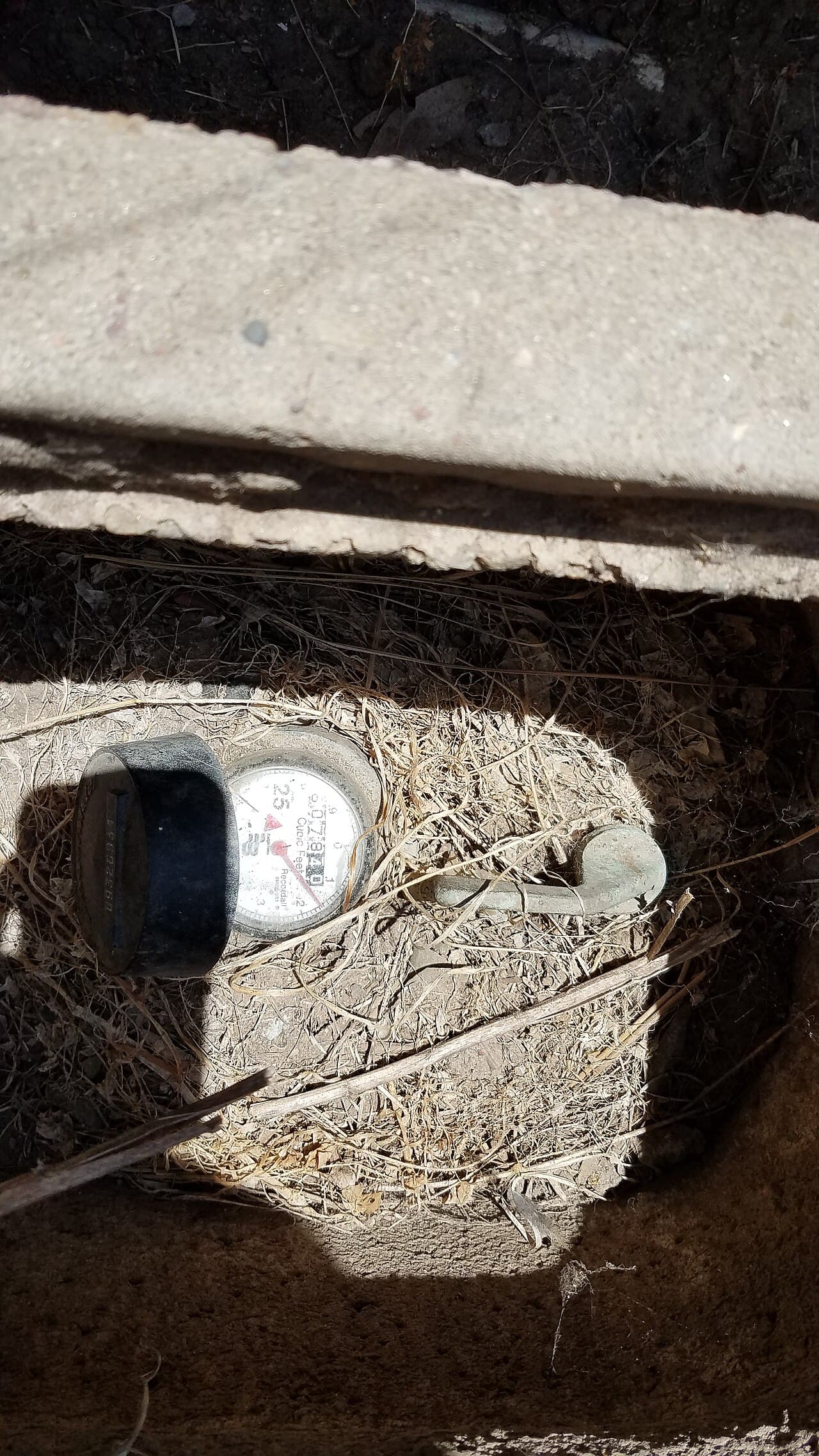
Start at the water meter. With every tap and appliance off, note the reading or watch the small leak indicator; if it moves, water is escaping somewhere. Then close the house's main valve: if the meter stops, the leak is inside the house, and if it keeps moving, it is probably in the underground line. Then dye-test the toilets and check under sinks, appliances and the water heater.
Free to ask. Local shops send quotes, and you pay only when you book one.
By Kasra Taheri, Founder, LoclisPublished
Researched and drafted with AI, then checked claim by claim against the sources listed below before it was published. Prices and rules change; the dates beside each source say when it was last checked.
Step by step
Read when to stop and call a pro, further down this page, before you start.
Step 1: Stop all water use
Make sure nothing in the house is using water: no toilet refilling, no washer, dishwasher, ice maker or sprinklers running.[1]
Step 3: Watch the leak indicator
Where your utility allows it, watch the small red triangle on a newer meter's dial, which turns whenever water passes and shows small leaks sooner than the sweep hand.[1]
Step 4: Close the main valve
Close the house's main shut-off and recheck the meter: if it stops, the leak is in the house; if it keeps moving, it is probably underground between the meter and that valve.[1]
Step 5: Dye-test every toilet
Put a few drops of food coloring in each toilet tank, do not flush, and check the bowl after 10 minutes; color in the bowl means the toilet leaks.[2]
Step 6: Isolate one fixture at a time
Close the small valve at one toilet or faucet at a time and watch the meter to see which one stops the movement.[1]
Step 7: Check the usual hiding places
Look under every sink, under the dishwasher and the refrigerator's ice maker line, behind the washer and beneath the water heater for pooling water or rust.[3]
Step 8: Read the walls and ceilings
Look for moisture or water stains on walls and ceilings near pipes, and notice any persistent musty or mildew smell with no visible water damage.[6]
Step 9: Check outside
Check outdoor spigots, the hose connection and any irrigation heads for leaks.[5]
Let the water meter tell you
A hidden leak usually shows up first as a number, not a puddle. Water standing in a yard, water in or around a meter box, or an unusually high bill may indicate a potential water leak.[1] Your water meter can confirm it, and then help you narrow down where the water is going.
Before you test, make sure nothing is using water. A refilling toilet, a washing machine, a dishwasher, an ice maker or a sprinkler timer will all move the meter and spoil the test.
Find the meter. For most homes on public water it is usually near the curb in front of your home, but it can be inside, in a basement for example, in cold climates.[3] Check your utility's rule before you open the box. Montgomery County's Public Service Authority, for example, says the meter box and meter are PSA property and should be entered by PSA personnel only.[4] If yours says the same, you can still do the rest of this test using the main valve and the usage reading on your bill or the utility's app.
Read the dial. On a typical dial, the sweep hand turns clockwise while water passes through the meter, and one full turn is 1 cubic foot of water, about 7.5 gallons.[1] Note where the hand sits, wait 15 minutes, and look again. A small leak can take several minutes to move it noticeably.[1] Newer meters also have a leak detector, a red triangle on the dial that turns when water passes and moves more noticeably than the sweep hand when only a little water is flowing.[1]
For a longer test, take a reading when no water is being used and check again two hours later. If it has changed at all, you probably have a leak.[2]
Inside the house or under the yard?
Next, find the house's main shut-off valve. It is often in a basement, a crawl space or a utility room, where the water line comes in. Close the main valve and check the meter. If it has stopped, the leak is somewhere in the house. If it keeps registering with the valve closed, the leak is probably underground between the meter box and the valve.[1]
If the leak is inside, keep using the meter to narrow it down. Faucets, toilets and outside taps usually have their own valve near the fixture, and closing them one at a time while watching the meter narrows the search.[1]
Check the toilets first
A toilet leak is the most common and overlooked type of water leak because it is not obvious.[1] An old or worn flapper can cause your toilet to flush on its own or silently leak thousands of gallons a year.[2]
Then dye-test each toilet: put a few drops of food coloring in the tank, wait 10 minutes without flushing, and if color shows up in the bowl, the toilet leaks.[2] Prince William Water suggests letting the dye sit for 3 hours, and says a clear tank afterwards is also a sign of a leak.[5] Flush when you are done so the dye does not stain.
Lift the tank lid and look as well. If water is flowing into the overflow tube in the tank, the valve may not be cutting off completely.[1] If the flapper valve that closes after the toilet is flushed fails to close, or doesn't close completely, water will leak from the tank to the bowl.[1] Either part can be replaced; take the old flapper, or a picture of it, to the store so the new one fits.[2]
Then the usual hiding places
Next, check the places water goes unnoticed: pooling water under sink pipes and rust around joints, pooling water under dishwashers and refrigerators with ice makers, which can mean a supply line leak, pooling water by the clothes washer, and pooling water, rust or other signs of leakage beneath the water heater.[3] Use a flashlight and your hand; a slow leak often shows as a damp cabinet floor or a stained board before it shows as a drip.
Walls and ceilings give their own clues. Moisture or water stains on walls or ceilings, a persistent musty or mildew smell without visible water damage, and an unexplained increase in the water bill are all signs of a leak.[6] Check the ceiling under every bathroom and the wall behind the washer.
Outside, check the outdoor spigots, the hose connection and any irrigation heads for leaks.[5]
When the leak is in a wall, slab or yard
Some leaks cannot be found with eyes and a meter alone. Plumbers can use tools like tracing dye or smoke to find silent leaks,[6] and thermal imaging cameras can detect temperature variations that point to a leak inside a wall or ceiling.[6] Listening rods help detect water leaks under a slab.[6]
Hidden water also feeds hidden mold. Mold can hide inside walls around leaking or condensing pipes, on the back of drywall, and under carpet and pad.[8] If you think mold may be hiding behind a finish, consider hiring an experienced professional.[8]
Your utility may help too. If you cannot find the cause, Prince William Water says its customer service staff can arrange for a technician to visit and help identify it.[5] Ask yours whether it offers the same.
Stop and call a pro if
- The meter keeps moving with the main valve closed. That points to the underground service line. Who fixes it depends on where it is: Chesterfield County Utilities repairs leaks in the meter box and on the street side of it; leaks at the plumber's connection on the house side, in the service line to the house and in the house plumbing are the customer's to fix.[1] Call your utility first, then a plumber for your side.
- You can see stains, soft drywall or mold, or smell mustiness with no visible source. The leak is behind a finish, and opening walls is a plumber's call.
- Water has reached outlets, the electrical panel or other electrical equipment. Do not touch electrical equipment if it is wet or if you are standing in water.[7]
- A ceiling is sagging or bulging with water. Leave opening it to a pro.
- The water is coming from the water heater. Leave water heater repairs to a plumber.
- You find the leak but it is in a pipe, not a fitting you can reach, such as a pinhole in copper or a joint inside a wall.
Next steps
If the leak turns out to be under a sink, how to fix a leaking pipe under the sink walks through it. If it is bigger than that, read when you need a plumber for a water leak and what fixing a water leak costs in Virginia. To catch the next one early, see how to check your house for leaks once a year. Loclis lists DPOR-licensed plumbers with their licence number and class: see plumbers in Blacksburg or more plumbing answers.
When you are ready, describe the leak once and licensed local plumbers quote it.
Common questions
- How long should I watch the water meter?
- Chesterfield County's utility suggests noting the sweep hand, waiting 15 minutes and checking again. The EPA suggests a longer test: a reading when no water is being used, then another two hours later. If the meter changed at all with nothing running, you probably have a leak.
- What is the red triangle on my water meter?
- On many newer meters it is a leak detector. It turns whenever water passes through the meter and moves more noticeably than the sweep hand when only a little water is flowing, so it is the quickest way to spot a small leak.
- Can I open the meter box myself?
- It depends on your utility. Chesterfield County tells customers to remove the cover and read the meter. Montgomery County's Public Service Authority says its meter boxes are PSA property and should be entered by PSA staff only. Check your own utility's rule, or use the main valve and a usage reading from your bill or the utility's app.
- The meter keeps moving with the main valve closed. What now?
- The leak is probably in the underground line between the meter box and the house's main valve. In Chesterfield County that line is the customer's to repair, while a leak in the meter box is the utility's. Call your utility first to see which side of the meter it is on, then a plumber for a leak on your side.
- Why is a toilet so often the hidden leak?
- Because it leaks silently into the bowl. Chesterfield County calls a toilet leak the most common and overlooked type of water leak. A worn flapper lets water seep from the tank into the bowl, and a fill valve that does not shut off sends water down the overflow tube; a dye test is the simplest way to catch it.
Sources
- [1] High Usage and Leaks, Chesterfield County, Virginia, Department of Utilities. Checked October 26, 2026.
- [2] Fix a Leak Week, U.S. Environmental Protection Agency, WaterSense. Checked October 26, 2026.
- [3] Detect and Chase Down Leaks at Home checklist, U.S. Environmental Protection Agency, WaterSense. Checked October 26, 2026.
- [4] Water/Sewer: PSA frequently asked questions, Montgomery County, Virginia, Public Service Authority. Checked October 26, 2026.
- [5] How to check for a leak, Prince William Water. Checked October 26, 2026.
- [6] How Do Plumbers Find Leaks? Professional Guide, Oatey. Checked October 26, 2026.
- [7] Floods, Ready.gov, Federal Emergency Management Agency. Checked October 26, 2026.
- [8] A Brief Guide to Mold, Moisture and Your Home, U.S. Environmental Protection Agency. Checked October 26, 2026.
Want a pro to handle it?
Describe the job once. Licensed local businesses send quotes, and you pay only when you book one.
Get a quote for Plumbing Repair