How do I check my pool for leaks each season?
Run a bucket test with the pump and auto-fill off each spring, summer and fall, and note any week the pool drops more than 2 inches. Walk the equipment pad for wet spots and bubbles, test the automatic fill every three months, and drain the equipment before freezing weather. Catching a small leak early keeps it from growing.
Free to ask. Local shops send quotes, and you pay only when you book one.
By Kasra Taheri, Founder, LoclisPublished
Researched and drafted with AI, then checked claim by claim against the sources listed below before it was published. Prices and rules change; the dates beside each source say when it was last checked.
Step by step
Read when to stop and call a pro, further down this page, before you start.
Step 1: Spring: test before the season
When you open the pool, run a bucket test with the pump, cleaner and automatic fill off for 24 hours.[1]
Step 2: Walk the equipment pad
Look at the pump, filter, valves and unions for drips and wet ground, and look for wet spots around the pool.[1]
Step 3: Look for air in the system
With the pump running, check the strainer and the water return line for air bubbles.[1]
Step 4: Log the weekly drop
Mark the water level weekly, and treat more than 2 inches in a week, or 3 inches in hot, dry weather, as a likely leak.[1]
Step 6: Summer: cover the pool
Use a cover when the pool is idle so evaporation does not hide or mimic a leak.[2]
Step 7: Fall: repeat the test
Run another bucket test before closing, so you start winter knowing the pool is tight.
Step 8: Winterize the equipment
Drain water from filters, pumps, heaters and piping before freezing weather.[1]
Step 9: Keep a log
Write down each test date, the numbers, and what you saw, and give the log to a pool pro if a leak shows up.
Check for leaks three times a year: a bucket test in spring, another in midsummer, and one in fall before you close the pool, with a weekly level reading and a walk around the equipment in between. A leak found in a day costs far less than one found after a season. The EPA says that small leaks can quickly turn into big leaks if they go unattended.[1]
Spring: test before the season starts
Once the pool is open and balanced, run the bucket test described in how to do a bucket test for a pool leak. The EPA's version starts here. On a day without rain or heavy winds, shut down all pool systems (filtration systems, pool cleaners, automatic fills, etc.), and close the pool for 24 hours.[1] Freezing water in equipment can crack it, so spring is a good time to find out.[1]
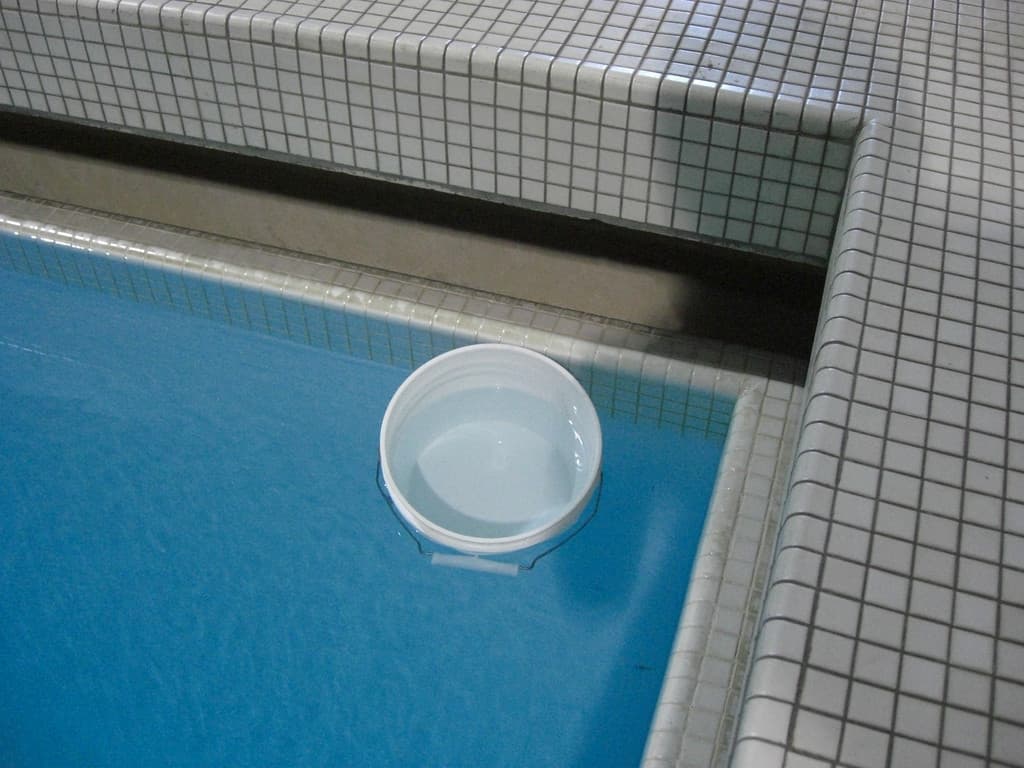
While you are at it, walk the equipment pad. The EPA says leaks can be found in the pool liner, the pump seal, pool piping, the pool-to-pipe connection, pool edges, and in pipe joints.[1] Look at the pump, filter, valves and unions for drips or staining. When you start the pump, watch it for a minute. Hayward's manual says: "If water leakage occurs from anywhere on the pump or filter, DO NOT start the pump."[4] If you see water, shut it off and call a pro.
Also check for the signs the EPA lists: wet spots around the pool, or air bubbles in the water return pipeline or in the pump strainer can also be signs of leakage.[1]
Summer: watch the level
Pick one day a week, mark the water level at the tile or skimmer, and write it down. The EPA says that if your pool is losing more than 2 inches of water per week, or 3 inches in hot, dry areas with high evaporation rates, then it is likely you have a leak.[1] For scale, the City of Tampa's water department says it takes about 600 gallons to fill up an average pool by 2 inches.[3]
A cover helps in two ways. The EPA says a pool cover can prevent up to 95 percent of pool water evaporation,[2] which cuts the water you lose and makes any leak easier to see. The EPA adds a tip for tracking use. Installing a water meter can help you actively monitor water consumption and identify potential leaks.[1]
Test the automatic fill
If your pool tops itself up, the fill can hide a leak. The EPA says that once every three months, the automatic fill should be shut off for 24 hours to test for leaks.[1] It also says to confirm the valve itself shuts off: "Periodically confirm your fill valve is shutting off properly by plugging the overflow drain and monitoring if the pool level is rising."[1] If the level rises, the EPA says the fill valve may be stuck in the open position and should be repaired or replaced.
Fall: close the pool tight
Run a final bucket test before you close up. If the pool is tight, you know any spring loss came over winter. Then prepare the equipment for the cold: the EPA says to drain water from equipment such as filters, pumps, heaters, and piping, as freezing water can cause cracks, which can later cause leaks.[1] Our guide to winterizing an above-ground pool covers the rest.
Keep a simple log
A page with the date, the test result and what you saw is enough. If a leak does turn up, a pool professional can use your numbers to narrow the search, which can shorten the visit. For what a search can cost, see how much pool leak detection costs in Virginia.
Stop and call a pro if
- The pool loses more than the bucket. That is the sign of a leak, and finding it is a job for a pool professional. A repair that costs $1,000 or more needs a licensed contractor: the Board for Contractors says if the work you are considering is valued at $1,000 or more, a valid Virginia Contractor's License is required for the license category in which the contractor is to work.[5]
- Equipment or the ground around it is wet. Pump motors and heaters carry mains voltage. Stay clear and do not touch wet equipment.
- The ground is soft or sinking, or the pool wall bulges. That can be structural. Stop using the pool.
- The pool loses water only while the pump runs. That points to the pressure side of the plumbing; see why a pool loses water only when the pump is running.
Getting help in Virginia
Browse pool equipment repair in Virginia or see more pool equipment repair answers.
When a check turns up a problem, describe the leak and licensed local pros can quote it.
Common questions
- How often should I check my pool for leaks?
- Run a bucket test at the start of the season, once in midsummer and again before closing, and read the water level weekly in between. If you have an automatic fill, the EPA says to shut it off for 24 hours once every three months to test for leaks.
- What counts as losing too much water?
- The EPA says that if your pool is losing more than 2 inches of water per week, or 3 inches in hot, dry areas with high evaporation rates, then it is likely you have a leak.
- Can a pool cover help me tell a leak from evaporation?
- Yes. The EPA says a cover can prevent up to 95 percent of pool water evaporation, so a covered pool that still drops steadily is losing water some other way.
- Why check again in fall?
- Cracks from freezing water in filters, pumps, heaters and piping can later cause leaks, the EPA says, so a tight pool going into winter and drained equipment give you a clean starting point for spring.
- Do I need to call a pro for a yearly check?
- Not usually. The bucket test and a walk around the pad cost nothing. Call a pool professional when the pool loses more than the bucket, when you find wet equipment, or when the level keeps falling after you top it up.
Sources
- [1] Jump Into Pool Water Efficiency (EPA-832-F-22-015, September 2022), U.S. Environmental Protection Agency, WaterSense. Checked October 27, 2026.
- [2] Pool Water Efficiency, U.S. Environmental Protection Agency, WaterSense. Checked October 27, 2026.
- [3] How to Check for Leaks, City of Tampa Water Department. Checked October 27, 2026.
- [4] Super Pump Series Owner's Manual (ISSPSERIES, Rev D), Hayward Industries (manufacturer's manual). Checked October 27, 2026.
- [5] What You Should Know Before You Hire a Contractor, Virginia Board for Contractors, DPOR. Checked October 27, 2026.
Want a pro to handle it?
Describe the job once. Licensed local businesses send quotes, and you pay only when you book one.
Get a quote for Pool Equipment