Why is my pool losing water only when the pump is running?
Water that disappears only while the pump runs usually points to a leak on the pressure side of the plumbing, the return lines, filter, heater or pump seal, that only shows when the system is under pressure. Look for wet ground at the equipment pad and bubbles at the return fittings, then run a bucket test with the pump on and off and call a pool pro.
Free to ask. Local shops send quotes, and you pay only when you book one.
By Kasra Taheri, Founder, LoclisPublished
Researched and drafted with AI, then checked claim by claim against the sources listed below before it was published. Prices and rules change; the dates beside each source say when it was last checked.
Step by step
Read when to stop and call a pro, further down this page, before you start.
Step 1: Run the bucket test with the pump off
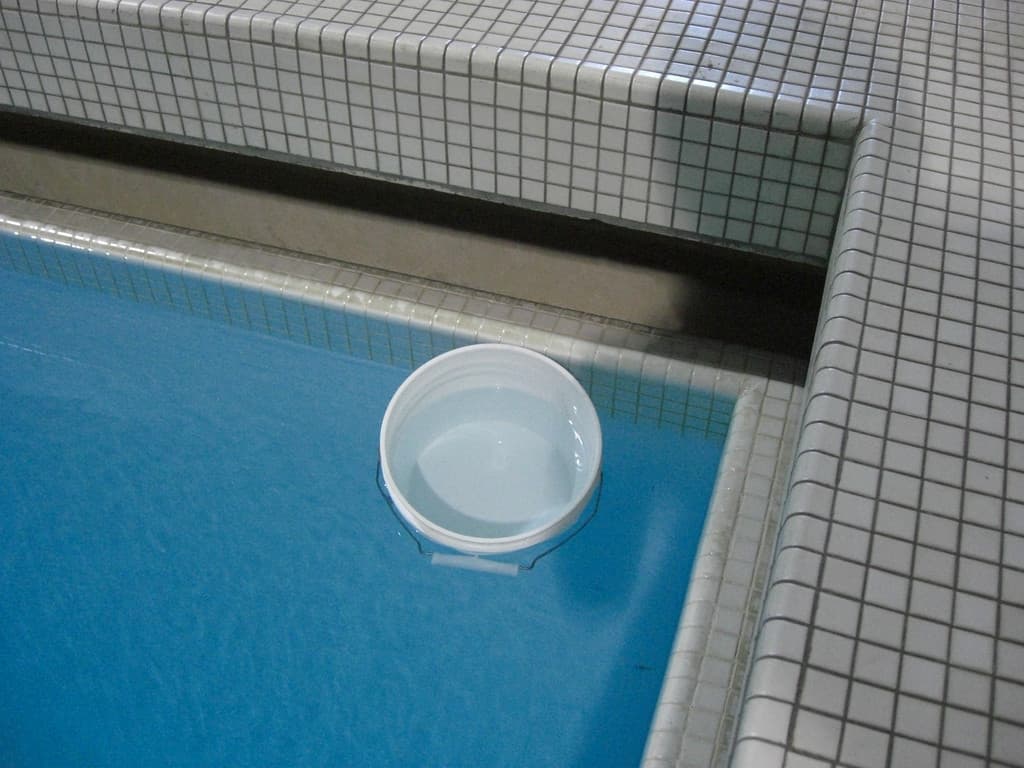
Do the bucket test with the pump and automatic fill off, so you know what the pool loses on its own.
Step 2: Repeat it with the pump running
Repeat the same test with the pump running for the full period and compare. If the pool loses more only while the pump runs, the leak is tied to the circulation system.[1]
Step 3: Watch the equipment pad
With the pump running, look at the pump, filter, valves and unions for drips, spray or wet ground. Wet spots around the pool are one sign of a leak.[1]
Step 4: Check the strainer for air
Look through the strainer lid for air bubbles. Air bubbles in the pump strainer can be a sign of leakage.[1]
Step 5: Watch the return fittings
Look at the return fittings on the pool wall. A steady stream of bubbles there suggests air is getting in on the suction side.[3]
Step 6: Look at the ground around the pad
Check for soft, soggy or sunken soil along the pipe run between the equipment and the pool, and for water that stays wet when it has not rained.
Step 7: Check the automatic fill
If the pool has an automatic fill, confirm it is not stuck open and sending water to the overflow drain.[1]
Step 8: Write it down and call a pro
Note the loss with the pump on and off, what you saw on the pad and where. Give those notes to a pool professional.
A pool that loses water only while the pump runs usually has a leak on the pressure side of the plumbing, between the pump and the pool. Those pipes and fittings only leak when the pump pushes water through them. When the pump stops, the pressure drops and the leak slows or stops, so the pool seems fine overnight. Some cases are not leaks at all, so test before you decide.
Why the pump matters
Pool plumbing has two halves. The suction side pulls water from the skimmer and main drain to the pump. The pressure side pushes it from the pump through the filter, the heater if there is one, and back to the pool through the return fittings. Water under pressure finds weak points that stay dry at rest: a cracked union, a worn pump seal, a split in buried pipe, a fitting at the filter.
The EPA says leaks can be found in the pool liner, the pump seal, pool piping, the pool-to-pipe connection, pool edges, and in pipe joints.[1] Several of those sit on the equipment pad and only leak with the pump on.
Rule out the non-leaks first
Not all water loss with the pump on is a leak. A running pump can splash more water out through waterfalls, spillways or fountains. A filter set to backwash or waste sends water out of the pool by design. A stuck automatic fill can overflow the other way. The EPA notes that "Automatic fill valves can sometimes malfunction and send water to a pool's overflow drain."[1] If the pool level is rising or holding when it should drop, the fill may be the problem rather than a leak.
Compare pump-on and pump-off loss
The bucket test gives you the numbers. If pool water loss is greater than bucket water loss, the pool may have a leak.[1] The steps are in how to do a bucket test for a pool leak. Run it once with the pump off and once with the pump on. The EPA says that if your pool is losing more than 2 inches of water per week, or 3 inches in hot, dry areas with high evaporation rates, then it is likely you have a leak.[1] If the pump-on run loses clearly more, the leak is in the circulation system.
For scale, the City of Tampa's water department says it takes about 600 gallons to fill up an average pool by 2 inches.[2] A few inches a week adds up fast.
What to look for while the pump runs
Stay out of the water and keep your hands dry around the equipment. Look and listen.
- Wet ground or a puddle at the pad. The EPA says wet spots around the pool, or air bubbles in the water return pipeline or in the pump strainer can also be signs of leakage.[1] Drips at the pump seal, filter, valves and unions are the usual finds. The pump seal is a wear part, and Hayward's manual warns that "Running pump dry may damage seals, causing leakage, flooding" and voids the warranty.[3]
- Bubbles in the strainer or at the returns. Hayward's manual says: "Any self-priming pump will not prime if there are suction air leaks. Leaks will result in bubbles emanating from return fittings on pool wall."[3] That is an air leak on the suction side rather than a water leak, but it points to a loose lid seal or fitting that is worth fixing.
- Soft or sunken ground between the pad and the pool. Buried return lines can split and soak the soil only when pressurised.
- A pump that stays wet or a filter that weeps. Hayward's manual says: "If water leakage occurs from anywhere on the pump or filter, DO NOT start the pump."[3] Treat that as a stop sign, not a quick fix.
Stop and call a pro if
- You see water on or near the equipment. Pump motors, timers and heaters carry mains voltage. Do not touch wet equipment, and switch off the pump at the breaker only if you can reach it dry. Have a licensed electrician or pool professional look at it.
- The pump-on test loses clearly more than the pump-off test. Pressure-side leaks are usually in buried pipe or under the equipment and need a pool professional to locate them.
- The ground is sinking or the pool wall is bulging. That can be structural or washed-out soil. Stop using the pool.
- A repair is going to cost $1,000 or more. The Board for Contractors says if the work you are considering is valued at $1,000 or more, a valid Virginia Contractor's License is required for the license category in which the contractor is to work.[4]
Give the pro your pump-on and pump-off numbers. A written note that says "loses about X inches a day with the pump on, nothing noticeable with it off" saves search time.
Getting help in Virginia
For what a leak search costs, see how much pool leak detection costs in Virginia, and for pump work, how much a pool pump repair costs. Browse pool equipment repair in Virginia or see more pool equipment repair answers.
When you are ready, describe the leak and licensed local pros can quote it.
Common questions
- Is my pool leaking or is this evaporation?
- Compare the pool to a bucket of pool water set on a step. If pool water loss is greater than bucket water loss, the pool may have a leak, according to the EPA. If both drop by about the same amount, it is evaporation.
- Why does the leak show up only when the pump is on?
- Water on the pressure side of the plumbing, after the pump, is pushed through the pipes and fittings. A crack or a worn seal that stays tight at rest can open under that pressure, so the pool loses water only while it circulates.
- Does a bubbly return mean a leak?
- It can. The EPA lists air bubbles in the water return pipeline or in the pump strainer as a sign of leakage, and Hayward's manual ties bubbles at the return fittings to suction air leaks. It is an air leak, not necessarily a water leak, but both are worth having checked.
- Can I fix a pump leak myself?
- A pump or filter that weeps involves electrical equipment and pressurised plumbing. Hayward's manual says not to start a pump that is leaking water. Switch it off and have a pool professional look at it.
- How much water loss is normal?
- The EPA says that if a pool is losing more than 2 inches of water per week, or 3 inches in hot, dry areas with high evaporation rates, it likely has a leak.
Sources
- [1] Jump Into Pool Water Efficiency (EPA-832-F-22-015, September 2022), U.S. Environmental Protection Agency, WaterSense. Checked October 27, 2026.
- [2] How to Check for Leaks, City of Tampa Water Department. Checked October 27, 2026.
- [3] Super Pump Series Owner's Manual (ISSPSERIES, Rev D), Hayward Industries (manufacturer's manual). Checked October 27, 2026.
- [4] What You Should Know Before You Hire a Contractor, Virginia Board for Contractors, DPOR. Checked October 27, 2026.
Want a pro to handle it?
Describe the job once. Licensed local businesses send quotes, and you pay only when you book one.
Get a quote for Pool Equipment