How do I keep my AC from struggling on hot days?
Give it less heat to fight and a clear path for air. Set the thermostat around 78°F when you are home and avoid dropping it sharply to catch up, keep blinds closed in the afternoon, run the dryer and oven in the cooler hours, check the filter monthly, keep plants and debris away from the outdoor unit, and have a licensed technician service the system in spring, before the heat.
Free to ask. Local shops send quotes, and you pay only when you book one.
By Kasra Taheri, Founder, LoclisPublished
Researched and drafted with AI, then checked claim by claim against the sources listed below before it was published. Prices and rules change; the dates beside each source say when it was last checked.
This is a job for a licensed pro in Virginia
This page explains what the work involves, the permits, what a licensed pro does and what drives the cost. It does not give step-by-step instructions, because this work needs a licence, a permit or both, and doing it wrong can injure someone. Before you hire, check the licence on Virginia's DPOR record.
An air conditioner struggles on hot days because it is being asked to remove more heat than usual, through coils and filters that may already be dirty. The fixes are to give it less heat to fight, keep air moving freely through it, and have it serviced before summer. Most of that is habit; the equipment work is for a licensed HVAC technician.
Set the thermostat with the outdoor temperature in mind
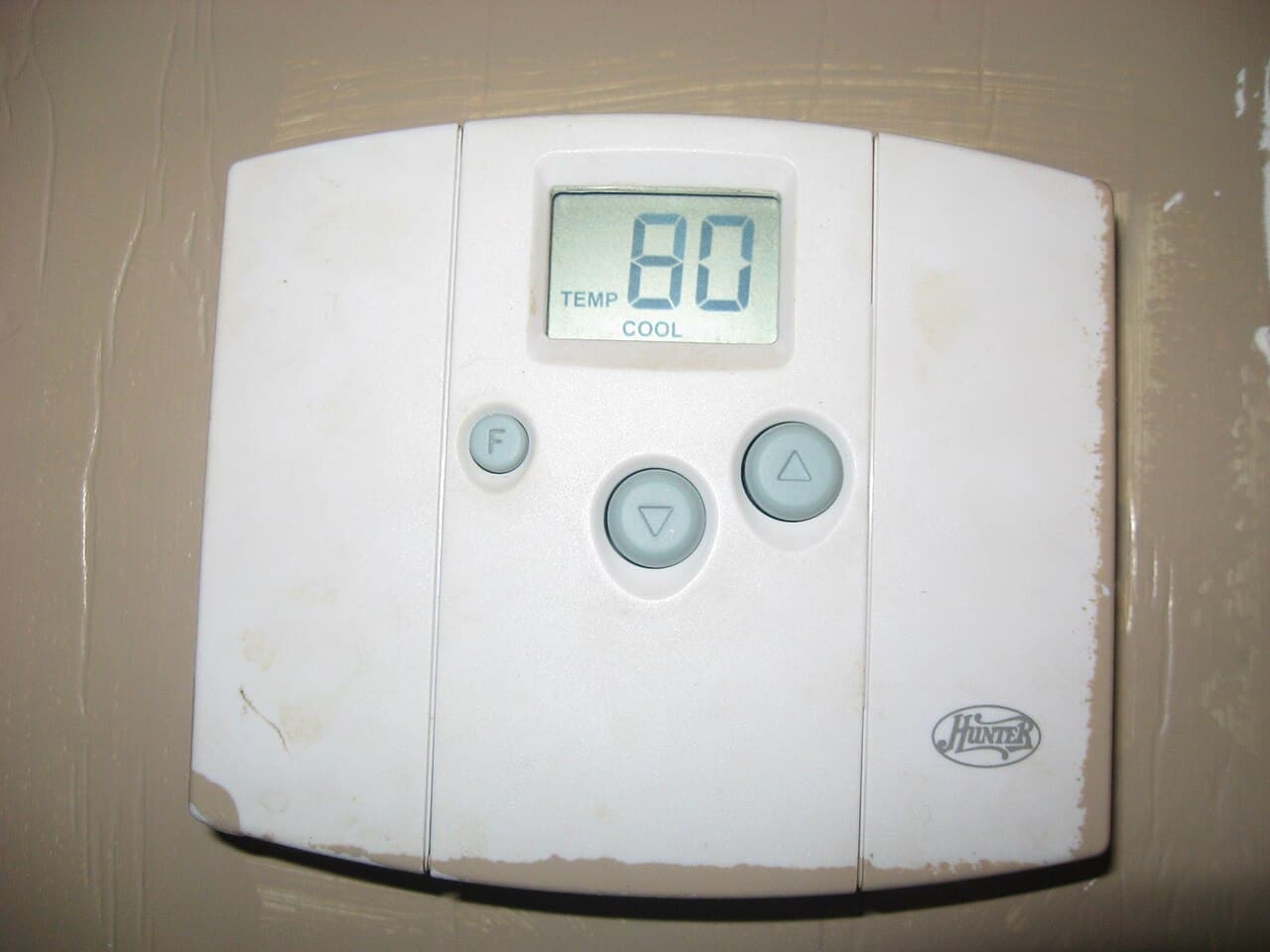
On a very hot day, the setting that makes sense depends on how hot it is outside. A common rule of thumb is that "your cooling set temperature shouldn't be more than 20 degrees lower than the outside temperature":[7] at 98°F outside, that means a setting of about 78°F.[7] The closer the indoor temperature is to the outdoor temperature, the more efficiently the unit will work.[6]
Pushing past that costs money without buying comfort: every degree the thermostat is lowered increases cooling bills 3% to 5%.[2]
Keep it high, and do not chase it down
The Virginia State Corporation Commission recommends 78: "Raise your cooling thermostat to 78 degrees during the summer."[1] When the house is empty for the day, Bryant suggests raising it to between 80°F and 85°F as a starting point, so the system is not cooling an empty house.[8] A programmable thermostat can make that change on a schedule you set.[6]
The bigger mistake is chasing the temperature down. Turning the thermostat down drastically when you come home won't cool the house any faster and can stress the system.[6][7] Setting 65°F will not cool the house faster than setting 75°F; the system simply keeps running until it reaches the lower setpoint.[8]
Check where the thermostat sits, too: lamps, televisions and other heat sources near the thermostat can make the air conditioner run longer than it should.[1]
Keep the heat out of the house
Every bit of heat you keep out is heat the AC does not have to remove.
- Block the sun. Close curtains, shades and blinds during the day to keep the sun out,[6][9] especially on south- and west-facing windows in the afternoon.
- Close up the house. Keep windows and doors shut while the AC runs,[9] and seal leaks and cracks around windows and doors to keep cool air in and hot air out.[6]
- Move the hot chores. "Do your cooking, showering, washing, clothes drying and ironing in the morning or the evening when the temperatures are cooler."[1] Or run heat-generating appliances like the dryer and stove after 8 pm.[6]
- Use fans for people. Ceiling and stand fans don't actually cool a room, but their wind chill effect can make you feel up to 4 degrees cooler than the real temperature,[6] which makes a higher setting easier to live with. Turn them off in empty rooms.
Keep air moving through the system
An air conditioner can only move heat as fast as air moves across its coils.
The filter. Check the filter every month, especially in the heavy-use summer months; if it looks dirty after a month, change it, and change it at least every 3 months.[3] A dirty filter will slow down air flow and make the system work harder.[3] In a heat wave, check and change filters more often than recommended if the system is running nonstop.[6]
The vents. Make sure no furniture or other obstacles block the ducts or fans.[1] Do not shut off rooms to push more air elsewhere: partly closing vents to redirect air is fine, but closing them completely upsets the airflow balance the system was designed for.[7]
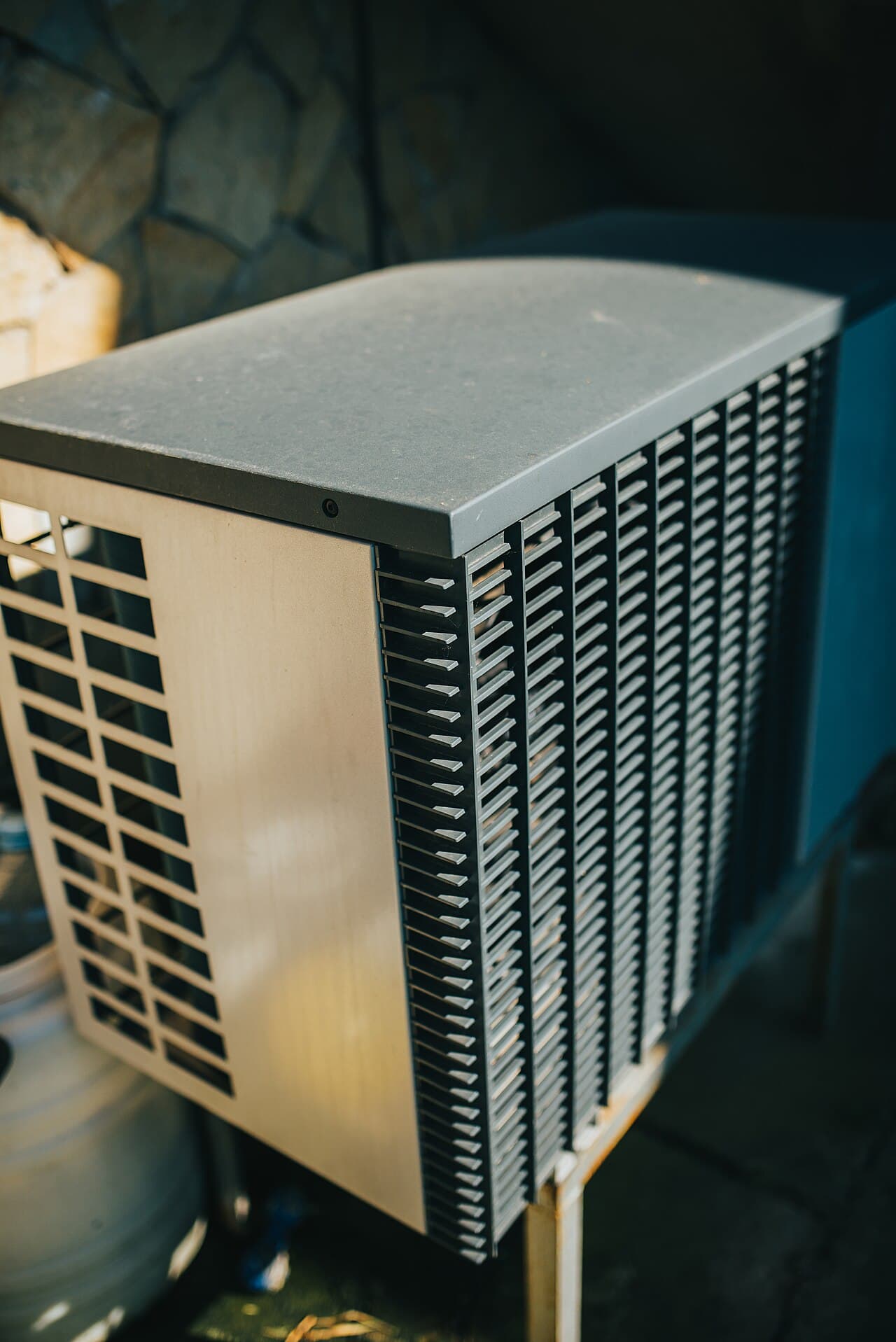
The outdoor unit. It needs open space to shed heat. Manufacturers' guidance varies. American Standard says to trim back plants within 2 to 3 feet of the unit and remove vining plants;[7] Rheem suggests a clear radius of about 4 feet.[9] The rule underneath is to follow the manufacturer's recommended clearance distances so nothing blocks airflow from the unit, and do not vent a clothes dryer within 10 feet of it, because dryer lint clings to the condensing coil.[2] Shade helps as long as it does not crowd the unit: units in direct sunlight tend to run hotter and work harder.[9] Point the mower's discharge away from the unit so clippings do not end up in the fins.
Have it serviced before the heat
ENERGY STAR's advice is to have a contractor do an annual pre-season check-up, and since contractors get busy once summer comes, schedule the cooling check in the spring.[4] A spring visit catches the problems that show up first on the hottest day:
- Dirty coils reduce the system's ability to cool your home and cause the system to run longer.[4]
- Too much or too little refrigerant will make your system less efficient.[4]
- Airflow problems can reduce your system's efficiency by up to 15 percent.[4]
The technician also checks the electrical connections, motors, controls and condensate drain.[4] All of that is work for a licensed technician. For how often and what a visit involves, see how often an air conditioner should be serviced.
Fix the house, not only the AC
If the system is serviced and still cannot keep up, look at the ducts and the house. In a typical home, about 20 to 30 percent of the air that moves through the duct system is lost to leaks, holes and poorly connected ducts.[5] Sealing and insulating ducts can improve the efficiency of a heating and cooling system by as much as 20 percent,[3] so focus first on sealing ducts that run through the attic, crawlspace, unheated basement or garage.[3]
"If your HVAC equipment is more than 10 years old or not keeping your house comfortable, have it evaluated by a professional HVAC contractor."[3] Before you replace it, address the big air leaks in the house and the duct system, because sometimes they are the real source of the problem.[3] If a replacement does come up, ask for a written load calculation rather than a size based on square footage alone.
When to call a licensed pro
Hot afternoons with long run times are common. Call a technician when the system cannot get near the setpoint on an ordinary summer day, blows warm air, shows ice on the copper lines, leaks water near the indoor unit, makes new noises, or trips its breaker. Turn it off at the thermostat while you wait if you see ice. Why an AC runs without cooling the house walks through the causes, and what to check before calling for AC repair lists the quick checks.
In Virginia, no individual may work, or offer to work, as a tradesman in heating, ventilation and air conditioning for the public for pay without a licence, unless working under the supervision of a tradesman licensed in that specialty.[10][11] Check a company on DPOR's License Lookup[12] before booking.
Getting it serviced or repaired
Loclis lists DPOR-licensed HVAC businesses with their licence number and class. Find HVAC businesses in Blacksburg or another town, see AC not cooling repairs, or read more HVAC repair answers.
If your AC is already falling behind, describe what it is doing once and licensed local HVAC businesses quote the repair.
Common questions
- What should I set my thermostat to during a heat wave?
- As high as you can while staying comfortable. The Virginia State Corporation Commission suggests 78 degrees in summer, and Bryant suggests 80 to 85 as a starting point when the house is empty. A common rule of thumb is to set it no more than 20 degrees below the outdoor temperature, so about 78 on a 98-degree day.
- Is it bad for my AC to run all afternoon on a hot day?
- Long run times on the hottest afternoons are common. What is not normal is a system that cannot get near the setpoint on an ordinary summer day, ice on the copper lines, or warm air from the vents. Those need a technician.
- Should I shade my outdoor unit?
- Shade can help, because units in direct sunlight tend to run hotter. Keep the shade from crowding the unit: the coil needs open space around it, and manufacturers' clearance guidance runs from about 2 to 4 feet. Check your unit's manual.
- Will closing vents in empty rooms help the rest of the house?
- Not if you close them completely. Partly closing vents to push more air elsewhere is fine, but shutting them off upsets the airflow balance the system was designed for.
- When is the best time to book an AC tune-up?
- Spring, before the cooling season. Contractors get busy once summer arrives, and a spring check-up lets a technician clean the coils, check the refrigerant charge and airflow, and catch worn parts before the first hot spell.
Sources
- [1] Tips for Conserving Energy, Virginia State Corporation Commission. Checked October 26, 2026.
- [2] ENERGY SERIES: What about the Air Conditioning System? (publication 2901-9001), Virginia Cooperative Extension, Virginia Tech. Checked October 26, 2026.
- [3] Heat and Cool Efficiently, ENERGY STAR, U.S. Environmental Protection Agency. Checked October 26, 2026.
- [4] Maintenance Checklist, ENERGY STAR, U.S. Environmental Protection Agency. Checked October 26, 2026.
- [5] Duct Sealing, ENERGY STAR, U.S. Environmental Protection Agency. Checked October 26, 2026.
- [6] Prepare Your HVAC System for Summer Heatwaves, Trane Residential. Checked October 26, 2026.
- [7] Debunking Air Conditioning Myths, American Standard Heating and Air Conditioning. Checked October 26, 2026.
- [8] What Temperature Should You Set Your Air Conditioner to in the Summer?, Bryant Heating & Cooling Systems. Checked October 26, 2026.
- [9] 7 Summer Air Conditioning Tips for Your Home, Rheem Manufacturing Company. Checked October 26, 2026.
- [10] Va. Code § 54.1-1129, Necessity for licensure, Code of Virginia, Virginia General Assembly. Checked October 26, 2026.
- [11] Va. Code § 54.1-1128, Definitions, Code of Virginia, Virginia General Assembly. Checked October 26, 2026.
- [12] License Lookup, Virginia Department of Professional and Occupational Regulation. Checked October 26, 2026.
Want a pro to handle it?
Describe the job once. Licensed local businesses send quotes, and you pay only when you book one.
Get a quote for HVAC Repair