Why is my AC running but not cooling the house?
When an AC runs but the house stays warm, the fan is moving air but the system is not carrying heat out. The usual causes are a fan set to On, a clogged filter, a dirty outdoor coil, an outdoor unit that has stopped, a frozen indoor coil, a refrigerant leak, leaky ducts, or a system too small for the heat. A licensed technician handles anything inside the equipment.
Free to ask. Local shops send quotes, and you pay only when you book one.
By Kasra Taheri, Founder, LoclisPublished
Researched and drafted with AI, then checked claim by claim against the sources listed below before it was published. Prices and rules change; the dates beside each source say when it was last checked.
This is a job for a licensed pro in Virginia
This page explains what the work involves, the permits, what a licensed pro does and what drives the cost. It does not give step-by-step instructions, because this work needs a licence, a permit or both, and doing it wrong can injure someone. Before you hire, check the licence on Virginia's DPOR record.
An AC that runs without cooling has a fan circulating air while the refrigeration cycle is not transferring heat out of the home.[1] The most common causes are a dirty air filter, incorrect thermostat settings or a dirty outdoor condenser coil; the more complex ones are refrigerant leaks, frozen evaporator coils and a faulty compressor.[1] The first three you can rule out yourself in a few minutes. The rest are inside the equipment and need a licensed HVAC technician.
How an air conditioner moves heat
Knowing the cycle makes the causes easier to follow. The compressor pressurizes the refrigerant, and in the outdoor unit a fan blows air over the condenser coil to release the heat outside. The refrigerant then passes through an expansion valve into the indoor evaporator coil, where it absorbs heat from the indoor air blown across it, and the cooled air goes out through the ducts.[3]
Anything that stops air moving across either coil, stops the outdoor unit, or lets refrigerant escape breaks that loop. The indoor fan keeps blowing, so the system sounds as if it is working while the house warms up.
The thermostat fan is set to On
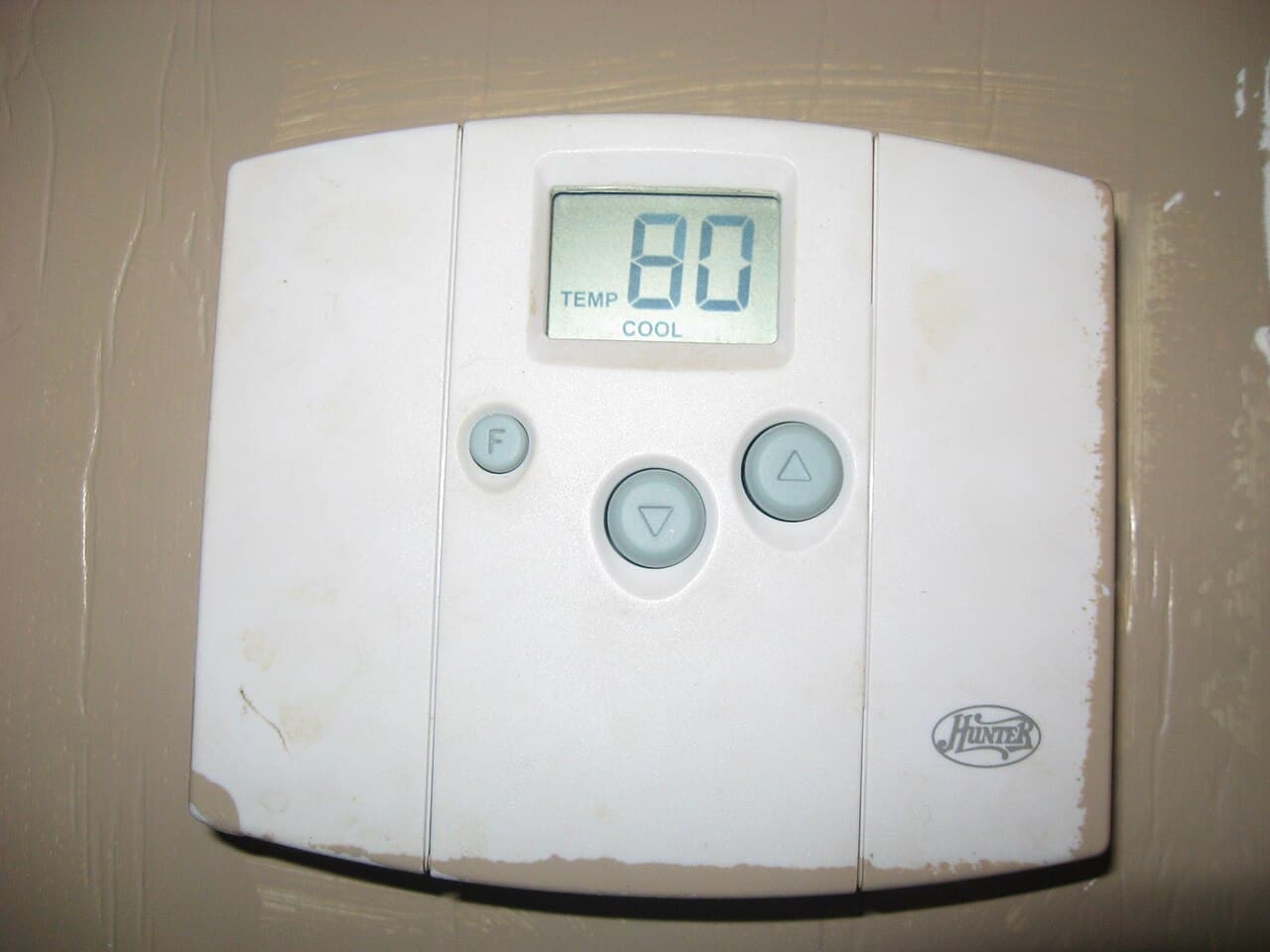
This is the simplest cause and worth checking first. If the fan is set to On, it will blow warm, unconditioned air even when the air conditioner is not running.[4] Set it to Auto and make sure the mode is Cool and the setpoint is below the room temperature. For the full list of quick checks, see what to check before calling for AC repair.
The air filter is clogged
A clogged filter blocks airflow, reducing cooling and potentially causing the system to shut down.[1] At its worst, a very dirty or misplaced air filter could restrict airflow so much that the fan continues to run but no cool air comes out of the vents.[5] Swap in a clean filter of the right size and give the system time to recover. If the coil has already frozen, it will need to thaw first.
The outdoor coil is dirty or blocked
The outdoor coil is where the heat from your house goes. Grass, leaves and dirt clog its thin fins, and a dirty coil leads to reduced efficiency, lack of cool air, or even compressor damage.[1] A clothes dryer vented within 10 feet of the outdoor unit leaves lint on the condensing coil, lowering both the system's efficiency and its service life.[7] Clearing debris from around the unit helps; a full coil cleaning is part of a technician's service.
The outdoor unit is not running
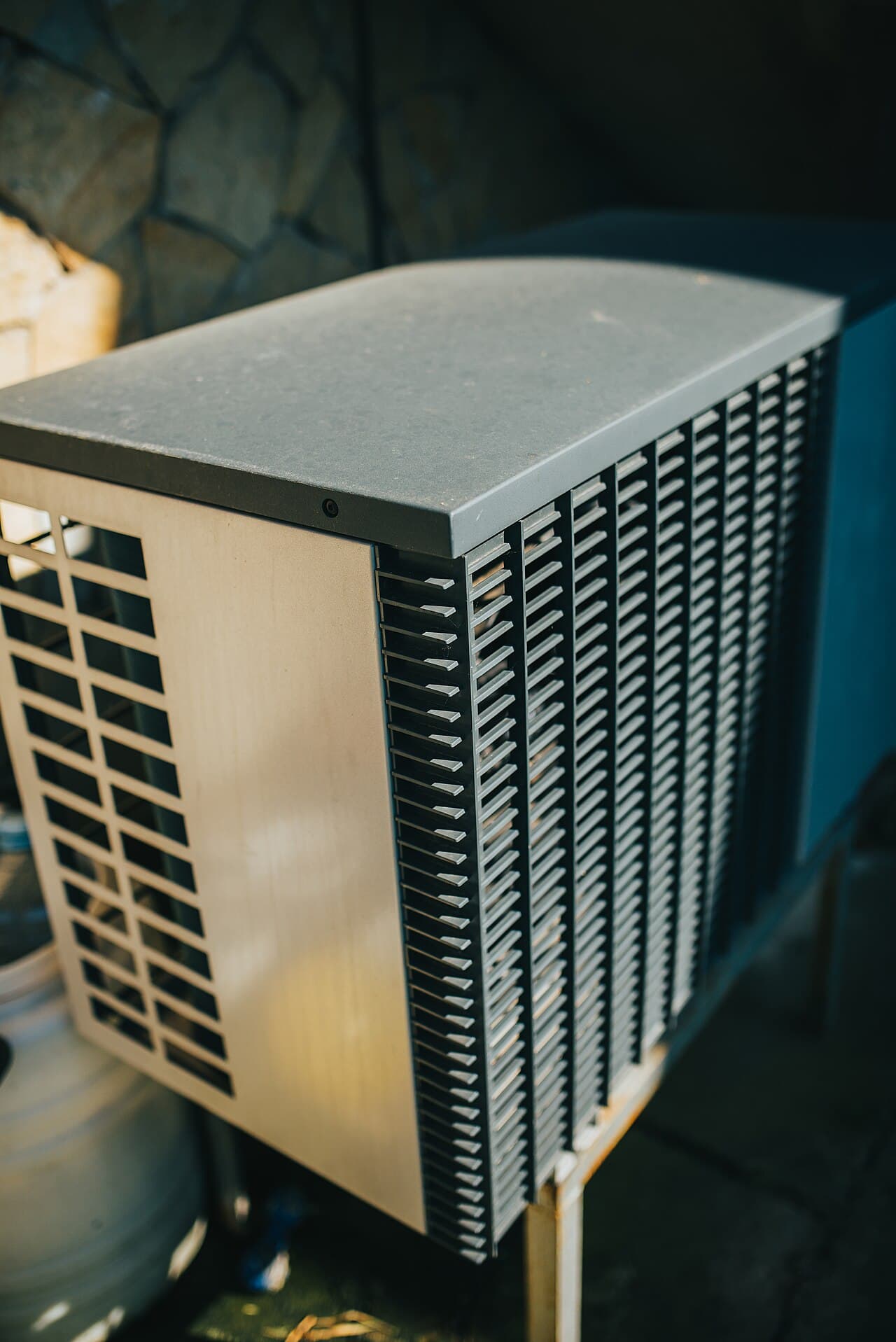
Stand by the outdoor unit while the system calls for cooling. If the indoor unit is blowing air but the outdoor unit is not running, the air will not be cooled.[3] A failed capacitor, fan motor, compressor or other electrical component can stop the outdoor unit from completing the cooling cycle.[3] "These repairs require professional diagnosis and should not be attempted by homeowners."[3] A unit that hums without its fan turning, clicks without starting or trips its breaker belongs in the same group.
The indoor coil has frozen
If the airflow is restricted or the refrigerant is low, the indoor evaporator coil can freeze and stop the cooling.[2] The signs are frost on the copper tubing, poor cooling, or more condensate draining than usual.[1] Dirt and debris such as pet hair on the evaporator coil can also make it frost over, and a frozen coil can lead to a refrigerant leak.[4]
If you see ice, "shut the system off immediately to prevent compressor damage."[2] Turn it off at the thermostat, and tell the technician what you saw. The coil sits inside the air handler and is not a homeowner repair.
Refrigerant is leaking
Low refrigerant is generally a sign of a leak rather than something an AC simply uses up.[3] The signs are weak or warm airflow, ice on the refrigerant lines, hissing sounds, or longer cooling cycles.[3] Low refrigerant can also come from incorrect charging at installation.[4]
Section 608 certification is required to recharge an air conditioner, and the EPA asks homeowners to have technicians locate and repair leaks instead of "topping off" a leaking system.[9] Avoid products sold as R-22a or 22a: R-22a has been falsely marketed as an HCFC-22 replacement; it is a flammable hydrocarbon blend and not an acceptable alternative for a home AC system.[9]
The ducts are losing the cool air
Sometimes the equipment works and the cool air never arrives. In a typical house, about 20 to 30 percent of the air that moves through the duct system is lost to leaks, holes and poorly connected ducts.[6] ENERGY STAR's signs of poor ducts are rooms that are hard to cool, stuffy rooms that never feel comfortable, ducts in an attic, crawlspace or garage, and tangled or kinked flexible ducts.[6] If the air is cool in some rooms but not in others, clogged or damaged ductwork may be sending the cool air into the attic instead of the living space.[5]
The system cannot keep up with the heat
An undersized unit will struggle to keep up as outdoor temperatures rise,[1] and even a correctly sized one has limits. A common rule of thumb is to set the thermostat no more than 20 degrees below the outdoor temperature, so on a 98-degree day that means about 78.[8] Setting the thermostat lower does not make it cool faster,[8] and every degree the thermostat is lowered increases cooling bills 3% to 5%.[7]
The opposite problem shows up as a house that is cool but damp. An oversized air conditioner will "short cycle," cooling the house too quickly to remove moisture, which leaves it cool and "clammy."[7] A load calculation based on the house's orientation, floor area, construction and the heat from lights, people and equipment, usually done to ACCA Manual J or a similar method, helps prevent the problems of an oversized or undersized system.[7] If sizing is in question, ask for one in writing before any replacement. For keeping a working system ahead of the heat, read how to keep your AC from struggling on hot days.
When to call a licensed pro
Once the thermostat, filter and vents are ruled out, turn the system off and call. Running a malfunctioning unit strains the compressor and can lead to expensive AC repairs.[1] Call right away for ice, hissing, water around the indoor unit, an outdoor unit that will not run, or a breaker that trips again.
In Virginia, no individual may work, or offer to work, as a tradesman in heating, ventilation and air conditioning for the public for pay without a licence, unless working under the supervision of a tradesman licensed in that specialty.[10][11] Check a business on DPOR's License Lookup[12] before work starts, and ask the company about Section 608 certification if the job involves refrigerant. For what the visit involves and costs, see what an AC repair technician checks first and what AC repair costs in Virginia.
Getting it fixed
Loclis lists DPOR-licensed HVAC businesses with their licence number and class. Find HVAC businesses in Blacksburg or another town, see AC not cooling repairs, or browse more HVAC repair answers.
If your AC runs but the house will not cool, describe what it is doing once and licensed local HVAC businesses quote the repair.
Common questions
- Should I turn off my AC if it is running but not cooling?
- Yes, once you have ruled out the thermostat and filter. A malfunctioning unit that keeps running strains the compressor, and with a frozen coil or a refrigerant leak, running it can cause serious damage. Turn it off at the thermostat and call a technician.
- Why is my AC running but only some rooms are warm?
- Uneven cooling can point to the ducts rather than the air conditioner: leaks, holes, crushed or disconnected runs, often in an attic or crawlspace. An HVAC technician can test and seal them. Blocked supply vents and closed registers can do the same thing in a single room.
- Is it normal for the AC to run constantly on a very hot day?
- Long run times on the hottest afternoons are common, especially if you are asking for a temperature far below the outdoor one. A system that runs all day and cannot get near the setpoint on an ordinary summer day has a fault or is too small for the house, and needs a technician.
- Can low refrigerant be fixed by adding more?
- Adding refrigerant without fixing the leak only buys time. An AC does not use refrigerant up, so low refrigerant generally means a leak or an incorrect charge at installation. Ask the technician to find and repair the leak; only Section 608-certified technicians may recharge the system.
- My house feels cool but damp. Is the AC working?
- It may be oversized. An air conditioner that is too big short-cycles, cooling the house quickly without running long enough to remove moisture, which leaves it cool and clammy. A contractor can check the sizing with a load calculation.
Sources
- [1] Why Is My AC Not Blowing Cold Air? 7 Common Causes, Carrier. Checked October 26, 2026.
- [2] Troubleshoot an Air Conditioner: 6 Steps to Fix an AC Not Working, Carrier. Checked October 26, 2026.
- [3] Why Is My AC Blowing Hot Air? Troubleshooting and Fixes, Bryant Heating & Cooling Systems. Checked October 26, 2026.
- [4] Why is My Home AC Not Blowing Cold Air?, American Standard Heating and Air Conditioning. Checked October 26, 2026.
- [5] What to do when your AC is not blowing cold air, Lennox. Checked October 26, 2026.
- [6] Duct Sealing, ENERGY STAR, U.S. Environmental Protection Agency. Checked October 26, 2026.
- [7] ENERGY SERIES: What about the Air Conditioning System? (publication 2901-9001), Virginia Cooperative Extension, Virginia Tech. Checked October 26, 2026.
- [8] Debunking Air Conditioning Myths, American Standard Heating and Air Conditioning. Checked October 26, 2026.
- [9] Homeowners and Consumers: Frequently Asked Questions, U.S. Environmental Protection Agency. Checked October 26, 2026.
- [10] Va. Code § 54.1-1129, Necessity for licensure, Code of Virginia, Virginia General Assembly. Checked October 26, 2026.
- [11] Va. Code § 54.1-1128, Definitions, Code of Virginia, Virginia General Assembly. Checked October 26, 2026.
- [12] License Lookup, Virginia Department of Professional and Occupational Regulation. Checked October 26, 2026.
Want a pro to handle it?
Describe the job once. Licensed local businesses send quotes, and you pay only when you book one.
Get a quote for HVAC Repair