What should I check before calling for AC repair?
Check the thermostat (Cool mode, fan on Auto, setpoint below room temperature), whether the system's breaker shows tripped, the air filter, the supply vents and the outdoor unit. Those cover the most common no-cooling calls. If you find ice on the lines, water around the indoor unit, hissing, or a tripped breaker, turn the system off at the thermostat and call a licensed HVAC technician.
Free to ask. Local shops send quotes, and you pay only when you book one.
By Kasra Taheri, Founder, LoclisPublished
Researched and drafted with AI, then checked claim by claim against the sources listed below before it was published. Prices and rules change; the dates beside each source say when it was last checked.
This is a job for a licensed pro in Virginia
This page explains what the work involves, the permits, what a licensed pro does and what drives the cost. It does not give step-by-step instructions, because this work needs a licence, a permit or both, and doing it wrong can injure someone. Before you hire, check the licence on Virginia's DPOR record.
Most calls about an AC that will not cool start with something you can check in ten minutes without opening any equipment. An AC that is not working is most often caused by a tripped breaker, an incorrect thermostat setting or a clogged air filter.[1] Go through the checks below, note what you find, and stop at the first sign of ice, water, hissing or a tripped breaker. Those are a technician's job.
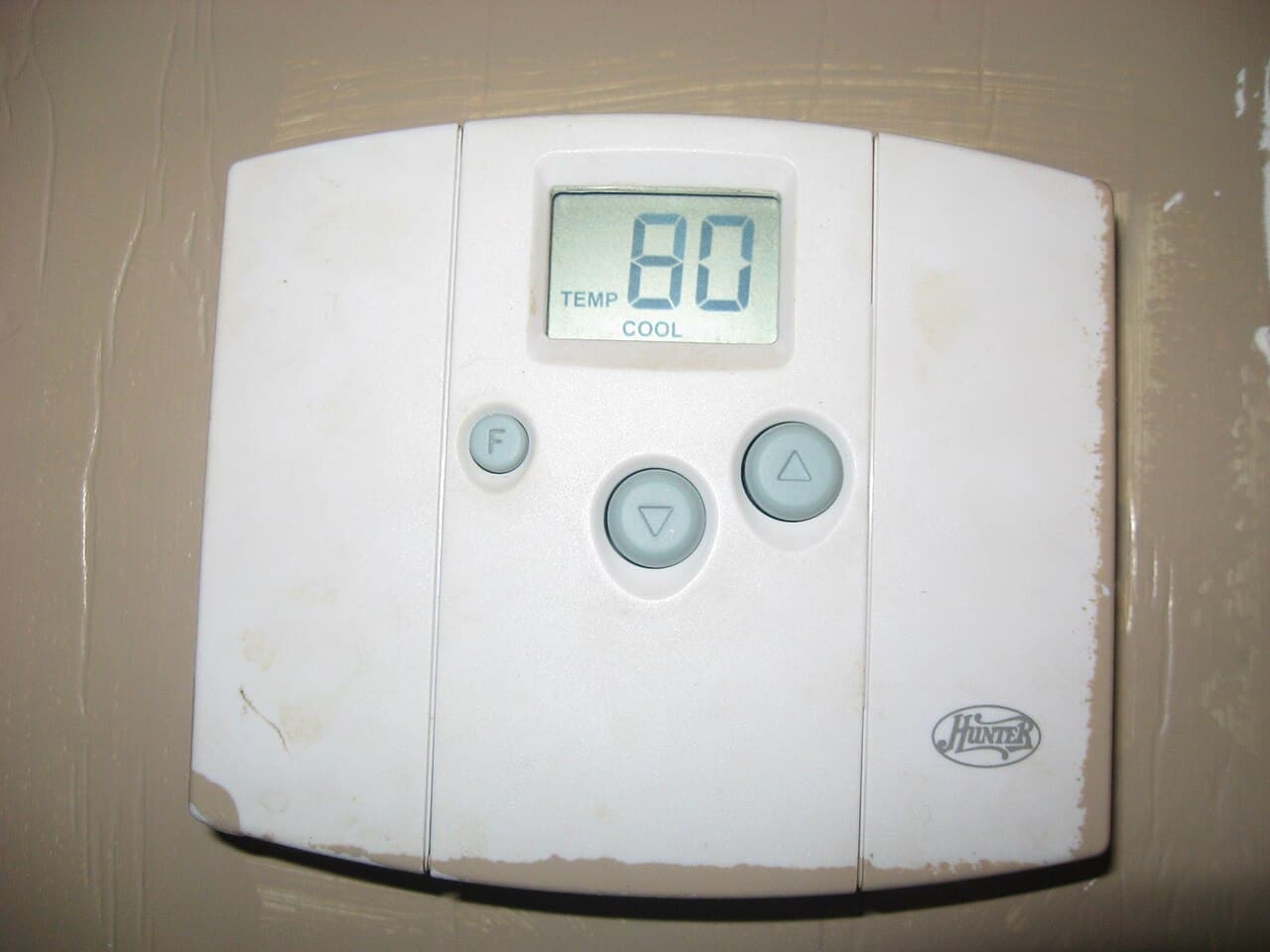
Start at the thermostat
The thermostat should be set to Cool, and the target temperature should be below the current room temperature.[2] It sounds obvious, but a mode left on Heat or Off after a cool spell, or a setpoint someone nudged up, looks exactly like a broken system.
Then look at the fan setting. If the fan is set to On, it runs constantly even when the compressor is not cooling, which can blow warm air.[1][4] Auto lets the fan run only while the system is cooling.
A few more things to rule out:
- If a battery-powered thermostat's screen is blank, the batteries need replacing.[4]
- On a programmable or smart thermostat, check that the schedule has not been overridden.[1]
- After any change, wait a few minutes for the system to start before you judge the air at the vents.
Look at the breaker, and leave it to the technician
A central air conditioner needs a dedicated circuit.[1] If nothing runs at all, the system may have lost power.[1] You can note whether a breaker is in the Off or neutral position, or a fuse has blown,[1] and tell the technician which one.
Electricity is dangerous, and the outdoor unit's capacitors, motors and compressor are high-voltage components.[1] Repeated trips can indicate an electrical or mechanical problem that needs professional service.[2] Leave the panel, and the disconnect box next to the outdoor unit, to the technician.
Look at the air filter
A very dirty or misplaced air filter could restrict airflow so much that the fan continues to run but no cool air comes out of the vents.[3]
ENERGY STAR's advice is to check the filter every month, especially in the heavy-use summer and winter months, change it if it looks dirty after a month, and change it at least every 3 months.[5] Inspecting, cleaning or changing the filter once a month is on the ENERGY STAR maintenance checklist, and a contractor can show you how.[6] If a fresh filter brings the cold air back, you have your answer. If the filter was clean, keep going.
Walk the house
Furniture, drapes and rugs over supply vents restrict airflow and reduce cooling.[2] Make sure the return grilles, the larger grilles that pull air back to the system, are not blocked either.
Pay attention to where the problem is. If the air is cool in some rooms but not in others, the cause may be clogged or damaged ductwork sending the cool air into the attic instead of the living space.[3] That points to the ducts rather than the air conditioner, and it is worth saying so when you call.
Go outside to the condenser
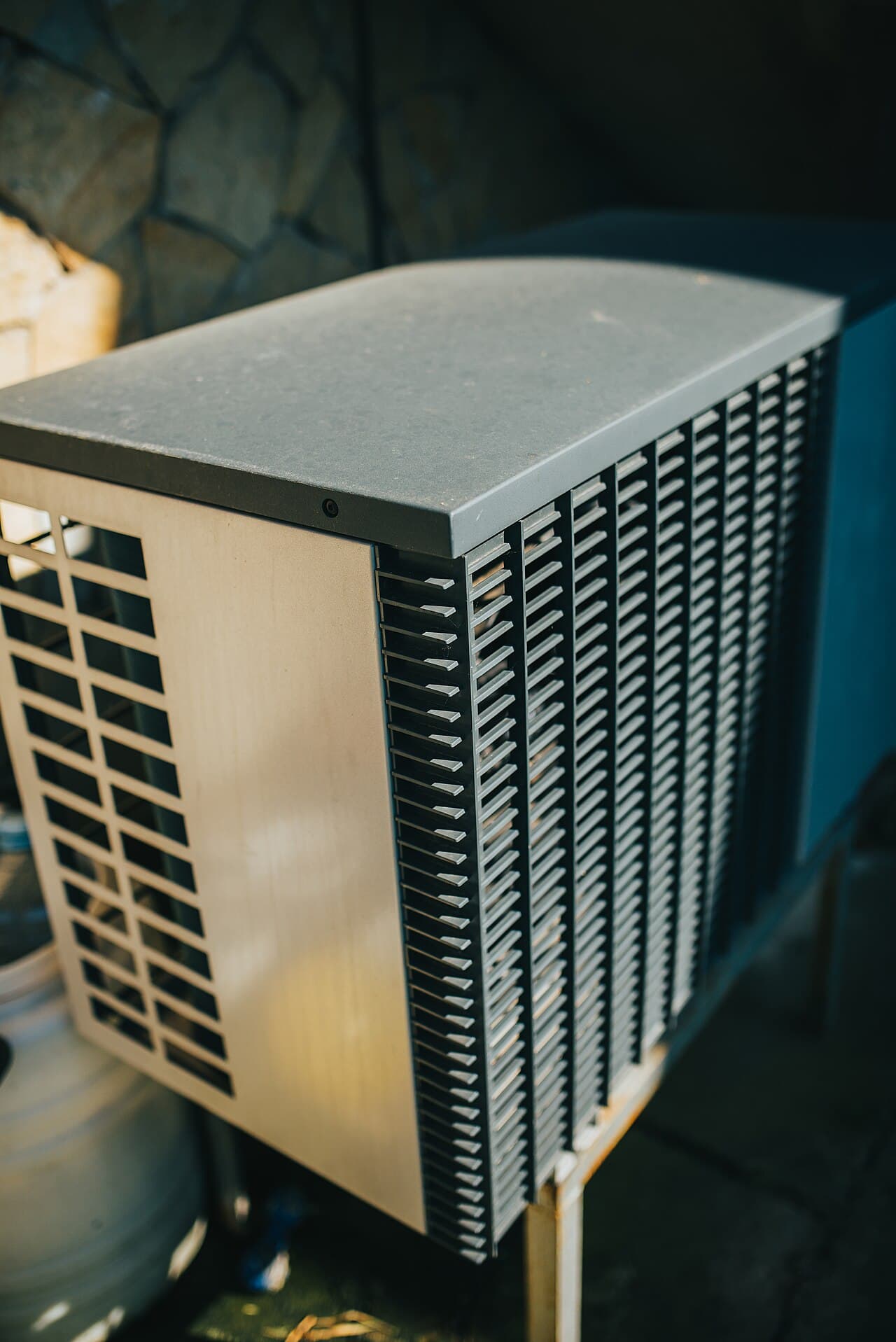
With the thermostat calling for cooling, stand by the outdoor unit. If the indoor unit is blowing air but the outdoor unit is not running, the air will not be cooled.[2] The warning signs are a fan inside the outdoor unit that is not spinning, loud or unusual noises, or a unit that does not turn on at all while the thermostat is calling for cooling.[1] Those often involve faulty capacitors, motors or compressors, which are high-voltage components;[1] look and listen, but do not open the cabinet.
Look at the coil fins around the sides too. Dirt, leaves and grass clippings on the outdoor unit interfere with heat transfer and reduce cooling performance.[2] Clearing loose leaves and cut grass away from the unit is fine; a proper coil cleaning is part of a technician's service visit.
Look for ice, water and hissing
Ice on the copper lines or the outdoor unit, or extra water draining around the indoor unit, are signs that the indoor evaporator coil has frozen, which happens when airflow is restricted or refrigerant is low.[1] If you see ice, turn the thermostat off and "shut the system off immediately to prevent compressor damage."[1]
Water near the indoor unit can also mean a blocked condensate drain. When the condensate line clogs, a float switch may shut the system down to help prevent water damage.[2] The signs are standing water, higher humidity indoors or a system that shuts down unexpectedly.[2] See clearing a clogged condensate drain line for what that involves.
A hissing noise can mean a refrigerant leak. If you suspect one, turn the AC off and call a professional; refrigerant leaks can be toxic and make you sick.[3] Refrigerant is never a homeowner job. Section 608 certification is required to recharge an air conditioner, and refrigerant for home systems is sold only to certified technicians or the companies that employ them.[7] When the technician comes, ask the technician to find and repair a leak instead of "topping off" the system.[7]
Write down what you found
A clear description helps the company send the right person with the right parts. Passing these details on can help the company guide you, and may even save a service visit.[1] Note:
- The thermostat mode, setpoint and the indoor temperature it shows.
- Whether the outdoor unit and its fan run, and any noise or smell.
- Any ice, frost or water, and where.
- Whether a breaker shows tripped, and which one.
- The make, model and age of the indoor and outdoor units, and the date of the last service.
For what happens next, read what an AC repair technician checks first, and if the system runs but the house stays warm, why an AC runs without cooling the house.
When to call a licensed pro
Call once the thermostat, filter and vents are ruled out and the house is still warm, and right away when:
- There is ice on the copper lines or the indoor coil.
- The outdoor unit is silent, hums without starting, or grinds or squeals.
- A breaker for the system has tripped or a fuse has blown.
- You hear hissing near the lines or suspect a refrigerant leak.
- Water is collecting around the indoor unit.
In Virginia, no individual may work, or offer to work, as a tradesman in heating, ventilation and air conditioning for the public for pay without a licence, unless working under the supervision of a tradesman licensed in that specialty.[8][9] Check any business on DPOR's License Lookup[10] before it starts. For refrigerant work, ask whether the technicians are Section 608-certified, and you can ask to see the certification card.[7] More on licences in whether an HVAC technician needs a licence in Virginia, and on price in what AC repair costs in Virginia.
Getting it fixed
Loclis lists DPOR-licensed HVAC businesses with their licence number and class. Look up HVAC businesses in Blacksburg or another town, see AC not cooling repairs, or read more HVAC repair answers.
When the checks are done and it still is not cooling, describe what you found once and licensed local HVAC businesses quote the repair.
Common questions
- How long should I wait after changing the thermostat before deciding the AC is broken?
- Give it a few minutes once the system starts, then feel the air at a supply vent. If the air is still warm after the thermostat, breaker and filter are ruled out, the cause is inside the equipment and needs a technician.
- What if the breaker for my air conditioner has tripped?
- Note which breaker it is and tell the technician when you call. A trip is a symptom, not the fault: it can point to an electrical or mechanical problem, and the outdoor unit's capacitor, motors and compressor are high-voltage parts. Leave the panel and the disconnect next to the outdoor unit to the technician.
- Should I keep the AC running while I wait for the technician?
- Not if you see ice on the lines, water around the indoor unit or hear hissing. Turn it off at the thermostat. Ice in particular can damage the compressor if the system keeps running. If the only problem was a dirty filter or a wrong setting and cooling has returned, it is fine to keep using it.
- Can I add refrigerant myself?
- No. Federal rules require Section 608 certification to recharge an air conditioner, and refrigerant for home systems is sold only to certified technicians. Low refrigerant usually means a leak, so the fix is to find and repair it rather than top the system off.
- What should I have ready when I call?
- The thermostat mode, setpoint and indoor temperature; whether the outdoor unit and its fan run; any ice, water, noise or smell; whether a breaker tripped; the make, model and age of both units; and the date of the last service.
Sources
- [1] Troubleshoot an Air Conditioner: 6 Steps to Fix an AC Not Working, Carrier. Checked October 26, 2026.
- [2] Why Is My AC Blowing Hot Air? Troubleshooting and Fixes, Bryant Heating & Cooling Systems. Checked October 26, 2026.
- [3] What to do when your AC is not blowing cold air, Lennox. Checked October 26, 2026.
- [4] Why is My Home AC Not Blowing Cold Air?, American Standard Heating and Air Conditioning. Checked October 26, 2026.
- [5] Heat and Cool Efficiently, ENERGY STAR, U.S. Environmental Protection Agency. Checked October 26, 2026.
- [6] Maintenance Checklist, ENERGY STAR, U.S. Environmental Protection Agency. Checked October 26, 2026.
- [7] Homeowners and Consumers: Frequently Asked Questions, U.S. Environmental Protection Agency. Checked October 26, 2026.
- [8] Va. Code § 54.1-1129, Necessity for licensure, Code of Virginia, Virginia General Assembly. Checked October 26, 2026.
- [9] Va. Code § 54.1-1128, Definitions, Code of Virginia, Virginia General Assembly. Checked October 26, 2026.
- [10] License Lookup, Virginia Department of Professional and Occupational Regulation. Checked October 26, 2026.
Want a pro to handle it?
Describe the job once. Licensed local businesses send quotes, and you pay only when you book one.
Get a quote for HVAC Repair