How do I keep a bathroom ceiling from peeling?
Get the steam out: run the bathroom fan during every shower and for a while after, keep the door closed, and keep indoor humidity under 60 percent. When you repaint, scrape off loose paint, clean off any mildew, let the ceiling dry fully, prime, and use a paint made for bathrooms.
Free to ask. Local shops send quotes, and you pay only when you book one.
By Kasra Taheri, Founder, LoclisPublished
Researched and drafted with AI, then checked claim by claim against the sources listed below before it was published. Prices and rules change; the dates beside each source say when it was last checked.
Step by step
Read when to stop and call a pro, further down this page, before you start.
Step 1: Run the fan or open a window
Run the bathroom fan or open the window when showering.[1]
Step 2: Keep the door closed
Keep the door shut during the shower so steam goes out the fan, and leave the fan running after.
Step 3: Check the fan moves air
Hold a square of tissue to the grille; if it falls, vacuum the grille and call a pro for a blocked duct.
Step 4: Watch the humidity
Aim to keep indoor humidity below 60 percent, ideally between 30 and 50 percent.[1]
Step 5: Scrape loose paint
Remove flakes by sanding or scraping before repainting; in a home built before 1978, have the paint tested first.[2]
Step 6: Clean off mildew and let it dry
Do not paint over mildew or damp surfaces; clean and dry first.[2]
Step 7: Prime
Prime bare and patched spots so the paint locks on.[2]
Step 8: Paint with a bathroom paint
Repaint the whole ceiling with a paint made for high-humidity rooms, giving each coat its full dry time.[3]
Control the moisture, then the paint stays
The paint on a bathroom ceiling peels because steam keeps getting into it, so the lasting fix is moving the moisture out of the room. Run the bathroom fan or open the window when showering.[1] EPA's advice for a bathroom that stays damp is that increasing ventilation (running a fan or opening a window) and cleaning more frequently will usually prevent mold from recurring, or at least keep the mold to a minimum.[1] The same steam that grows mildew lifts paint.
Two habits do most of the work: keep the fan running well after the shower ends, and keep the door closed during the shower so the steam goes out the fan and not into the hall. Leave it on until the mirror clears and the room feels dry; a fan on a timer switch makes that automatic.
Check that the fan actually works
A fan that spins is not necessarily a fan that moves air. Hold a single square of toilet paper against the grille with the fan on. If it does not stay put, the fan is clogged with dust or the duct is blocked, crushed or disconnected. Vacuum the grille. A weak fan over a ceiling that keeps peeling may have a blocked or disconnected duct, which is a job for a pro (see below).
Know the humidity as well. Keep indoor humidity low. If possible, keep indoor humidity below 60 percent (ideally between 30 and 50 percent) relative humidity.[1] A small humidity meter lets you see what a long shower does to the room. Condensation can be a sign of high humidity,[1] so a ceiling or mirror that drips is a warning that the fan is not keeping up.
Prepare the surface before you repaint
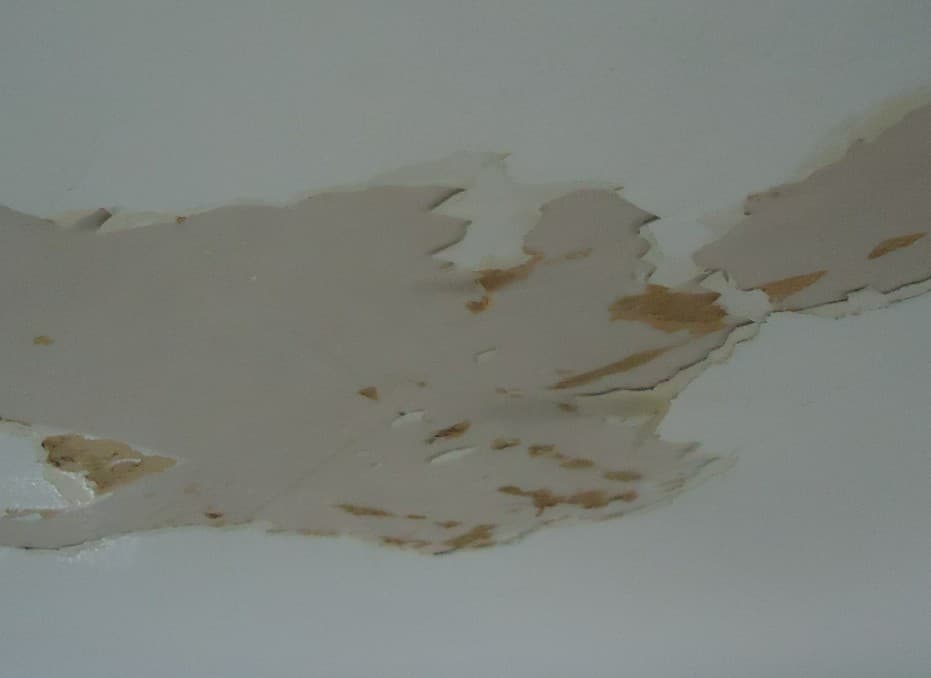
If the ceiling is already peeling, painting over it will not hold. Painting over cracked paint is a bad idea; it is important to remove any flakes from the surface via sanding or scraping before repainting.[2] Scrape loose paint back to firm edges, and feather the edges with sandpaper so the patches do not show.
Then deal with mildew. Never paint over mildew—it will grow through new paint.[2] EPA is blunt about it: do not paint or caulk moldy surfaces,[1] because paint applied over moldy surfaces is likely to peel.[1] Clean the mold and dry the surface first, and fix the water problem too, since fix plumbing leaks and other water problems as soon as possible.[1]
Let everything dry. Applying primer or paint to walls that are still damp can cause a host of issues, including blistering.[2]
Prime and choose a bathroom paint
A primer matters on a patched ceiling. Primers disguise imperfections, create a smooth surface for your paint to lock onto,[2] so prime scraped and bare spots before the topcoat. Then use a paint made for bathrooms. Benjamin Moore, for one, says that bathrooms and areas that are exposed to more moisture can be painted in a matte finish using Aura® Bath & Spa (532), which was designed to achieve exceptional durability, color retention and mildew resistance in high-humidity environments.[3] Whatever brand you pick, look on the label for a bath or mildew-resistant rating, and give each coat the full dry time before the next.
Paint the whole ceiling wall to wall. A patch painted over stays visible.
Older ceilings: test before you scrape
In an older house, scraping can release things you do not want in the air. EPA's rule is simple: if in doubt, treat the material as if it contains asbestos and leave it alone.[4] And any renovation, repair or painting project in a pre-1978 home or building that has lead-based paint can easily create dangerous lead dust.[5] Test or hire before you scrape.
Stop and call a pro if
- The ceiling is stained, soft or sagging. That is a leak from above, not steam. See how to fix a water stain on the ceiling.
- The fan is weak and the duct is out of reach. Replacing a fan, or rerouting a duct through the attic or roof, is electrical and roofing work for a licensed tradesperson.
- Mold has spread beyond a small patch or keeps returning after cleaning.
- The paint is peeling down to bare, crumbling board. The board itself may need replacing.
- The ceiling is textured and the house is old. Have it tested before it is disturbed.
Getting help in Virginia
If peeling comes with cracking, read why a ceiling cracks. To decide who to hire, read who repairs ceilings, a drywall contractor or a painter, or browse home repair answers and home repair businesses listed on Loclis from the state's DPOR register.
When you are ready, describe the ceiling once and local businesses quote it.
Common questions
- Why does the paint on my bathroom ceiling keep peeling?
- Usually steam. Humid air soaks into the paint, mildew can grow under it, and paint put on damp or moldy surface is likely to peel. EPA says paint applied over moldy surfaces is likely to peel.
- How long should I run the bathroom fan?
- Run it during the shower and for a while afterwards until the mirror clears and the room feels dry. A timer switch removes the guesswork.
- What humidity should a bathroom be?
- EPA says to keep indoor humidity below 60 percent, ideally between 30 and 50 percent relative humidity. A small humidity meter shows what a shower does to the room.
- Can I paint over mildew on the ceiling?
- No. Never paint over mildew; it will grow through new paint. EPA says do not paint or caulk moldy surfaces. Clean the mold and dry the surface first.
- Is peeling ceiling paint a sign of a leak?
- It can be. If the peeling comes with a brown stain, a soft spot or a sag, suspect a leak from the pipe or roof above rather than steam, and have it found before you repaint.
Sources
- [1] A Brief Guide to Mold, Moisture and Your Home, U.S. Environmental Protection Agency. Checked October 28, 2026.
- [2] How to Prepare Walls for Painting, Benjamin Moore. Checked October 28, 2026.
- [3] Choosing an Interior Paint Finish: Sheen and Gloss 101, Benjamin Moore. Checked October 28, 2026.
- [4] Protect Your Family from Exposures to Asbestos, U.S. Environmental Protection Agency. Checked October 28, 2026.
- [5] Lead Renovation, Repair and Painting Program, U.S. Environmental Protection Agency. Checked October 28, 2026.
Want a pro to handle it?
Describe the job once. Licensed local businesses send quotes, and you pay only when you book one.
Get a quote for Home Repair