How do I keep carpenter bees from coming back?
Take away what draws them: bare, weathered wood and old tunnels. Treat and plug every existing hole, fill cracks and nail holes, and keep exposed wood painted, since carpenter bees rarely drill into sound paint. Stain helps less. Check the same boards each spring, hang traps early in the season, and replace wood that has been tunneled for years.
Free to ask. Local shops send quotes, and you pay only when you book one.
By Kasra Taheri, Founder, LoclisUpdated
Researched and drafted with AI, then checked claim by claim against the sources listed below before it was published. Prices and rules change; the dates beside each source say when it was last checked.
Step by step
Read when to stop and call a pro, further down this page, before you start.
Step 2: Fill the head starts
Fill nail holes, splits and cracks in exposed wood with caulk or putty before you paint.[2]
Step 3: Paint bare wood
Paint unfinished wood, especially boards that have had bees before; paint works better than stain or preservative.[3]
Step 4: Check for lead before scraping
On a house built before 1978, do not scrape or sand old paint until you know it is lead-free; homes built before 1978 may have lead-based paint.[5]
Step 5: Use almond oil for natural wood
Where you want a natural finish, an application of almond oil each spring is a deterrent some extension entomologists suggest.[4]
Step 6: Hang traps in early spring
In early spring, before nesting starts, hang carpenter bee traps from low overhangs you can reach standing on the ground, such as a porch, deck or shed edge.[3]
Step 7: Close up outbuildings
Keep garage and shed doors closed while the bees are searching for nest sites in spring.[3]
Step 8: Inspect in April and May
Walk the house in April and May looking for fresh round holes and sawdust, and treat new holes right away.[2]
Step 9: Replace worn-out wood
Boards riddled with old tunnels are best replaced with painted wood or a non-wood material such as vinyl or aluminum.[2]
Carpenter bees come back to bare wood and to old tunnels, so the way to keep them away is to take both away. For prevention, Virginia Cooperative Extension's advice is to remove, treat or paint exposed wood on structures.[1] In practice that means closing every old hole properly, keeping the wood around the house painted, and checking the same few boards each spring.
Why they return to the same boards
Carpenter bees are choosy. Kentucky's entomologists note that carpenter bees prefer unpainted, weathered wood, especially softer kinds such as redwood, cedar, cypress and pine.[3] Painted or pressure-treated wood is much less likely to be attacked.[3]
They are also loyal to old nests. Maryland Extension notes that females often reuse and lengthen old tunnels, and a female often lays her eggs in the same gallery she grew up in.[2] Each spring, a female searching for a nest site in April or May will reuse an existing tunnel or bore a new one.[2] A house with open holes from last year is an invitation.
Nail holes, splinters and cracks give a bee a head start into the wood,[2] so weathered fascia, porch ceilings, deck rails and window trim are the usual targets.
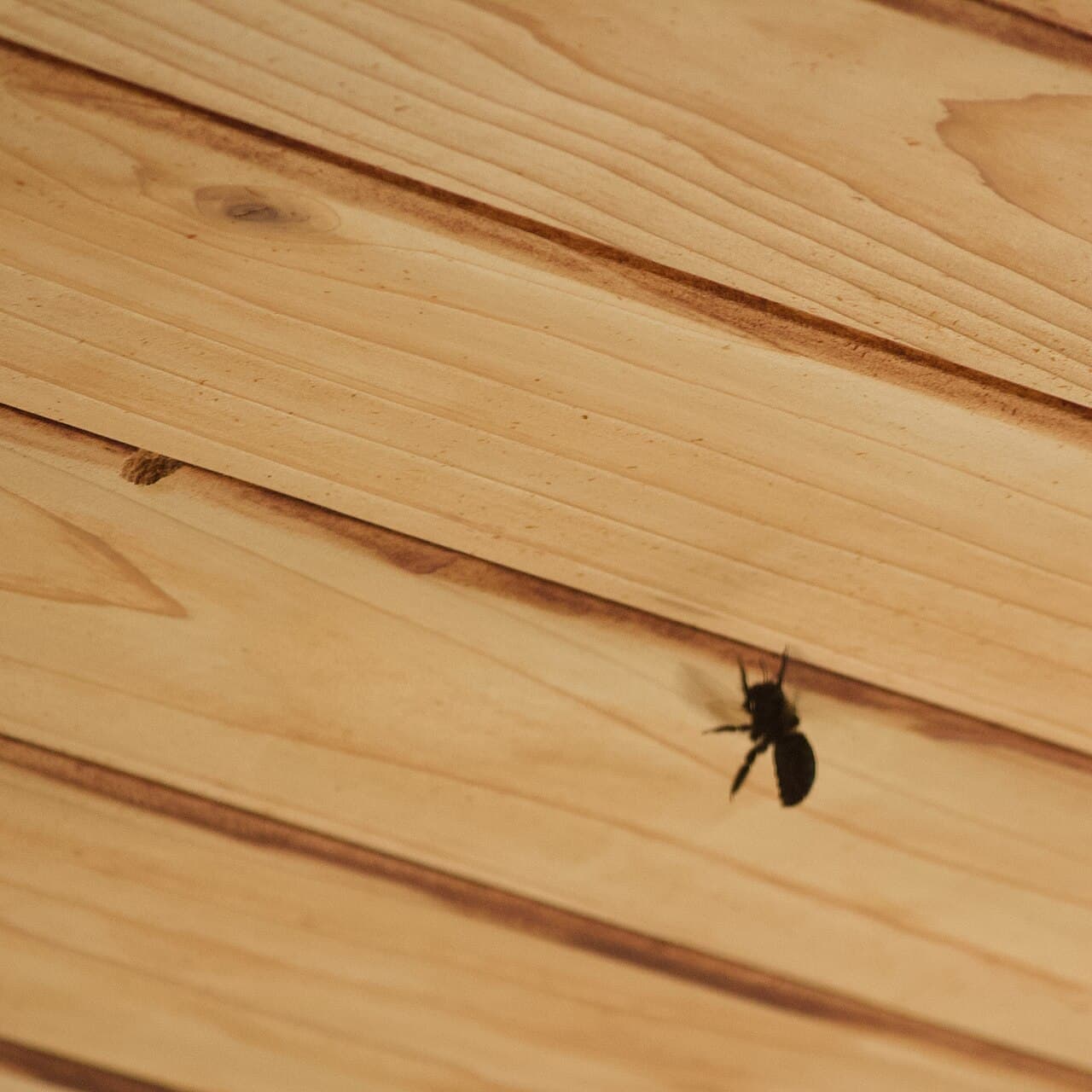
Close the old tunnels properly
Plugging an active hole without treating it first does not work. Tunnels have to be treated before they are sealed, or the bees chew through the plugs and come back out.[2] The treatment itself is covered in how to get rid of carpenter bees. Once a hole has been quiet for about a week, plug it. A wooden dowel coated with carpenter's glue, putty or another sealant also keeps out moisture and decay.[3] Tap it in, trim it flush and paint over it so the repair disappears.
Do not assume an old hole is empty because it is quiet in the cold months. Adult bees overwinter together in existing tunnels,[2][3] so an old hole may have bees in it even in the middle of winter. Treat every hole before you plug it, whatever the season. The best times to treat and repair are late summer, after the new adults emerge and before they hibernate, or early spring before nest building begins.[2]
Paint is the real fix
Kentucky's entomologists put it simply: carpenter bees usually will not tunnel into painted wood, which makes painting unfinished wood, especially wood with a history of bees, the more permanent fix.[3] Stains and preservatives are less reliable than paint, but give some repellence compared with bare wood.[3] Maryland Extension agrees that well-maintained, painted wood is rarely attacked.[2]
A few practical points:
- Prep matters. Fill cracks and nail holes before painting. A bee can still start in a gap the paint bridges over.
- Keep it up. Peeling or chalky paint on the sunny side of the house exposes bare wood again. Touch up the boards that bees have favoured before.
- Check the age of the house first. Homes built before 1978 may have lead-based paint,[5] and renovation, repair or painting work that disturbs painted surfaces in older homes may create large amounts of lead dust.[5] On an older house, do not scrape, sand or pull off painted trim until you know the paint is lead-free.
- Paint will not evict a bee. Penn State Extension notes that paint, stain and almond oil do not drive out bees already living in an established nest.[4] Treat and plug first, then paint.
- For natural wood. Penn State suggests an annual spring coat of almond oil as a deterrent for wood you want to keep natural.[4]
If you would rather hire the painting out, see exterior painting on Loclis.
Traps and decoys
Traps catch some of the females looking for nest sites. Kentucky's entomologists suggest you hang traps in early spring from eaves and overhangs at the corners of the house, porch, deck and shed.[3] Use only the overhangs you can reach standing on the ground, such as a low porch, deck or shed edge, and skip any spot that would need a ladder. Empty and rinse the bottle as it fills.
Some homeowners take the opposite approach and give the bees somewhere else to go. Penn State notes that an untreated pine or cedar board placed elsewhere in the yard can lure females away from the house.[4] Carpenter bees are native pollinators, so a decoy board by the garden can be a fair trade.
Replace wood that is past saving
When the same boards have been tunneled for years, plugging every hole stops being worth it, and woodpeckers peck out the young bees and add to the damage.[1] Replace the worst boards with primed and painted wood. For trim that is attacked every year, it can make sense to change the material: vinyl or aluminum siding and other non-wood surfaces keep carpenter bees out entirely.[2]
Spraying the whole surface is not a long-term answer either. Spraying wood surfaces with insecticide lasts only about three to four weeks,[3] so it would need repeating all season.
A simple yearly routine
- Late fall or winter: walk the house, mark every hole, and note boards that need paint. Leave the plugging until each hole has been treated.
- Early spring: treat old holes before nesting starts, plug them about a week later, paint or touch up, and hang traps where you can reach them from the ground.
- April and May: walk the house regularly looking for fresh round holes and sawdust, and treat new holes early.
- Late summer: look again as the new generation emerges, and treat and plug any new holes.
Stop and call a pro if
- The holes are high on the house, overhead, or reachable only from a ladder.
- The house was built before 1978 and the fix means scraping, sanding or replacing painted trim. For a renovation, repair or painting project in a pre-1978 home, EPA recommends that homeowners hire a lead-safe certified contractor.[6]
- Boards are soft, split or rotted, or the tunnels are in structural wood such as deck framing or posts.
- Woodpeckers have opened up long sections of trim.
- You are allergic to stings, or the insects turn out to be wasps or honey bees nesting in a wall.
Getting help on Loclis
You can browse bee and wasp removal, look up pest control around Blacksburg, or read the other pest control answers. To have damaged trim or siding replaced, describe the repair on Loclis and local businesses can quote.
Common questions
- Why do carpenter bees come back to the same spot every year?
- Because the tunnels are still there. Females reuse and lengthen old galleries, and often nest in the one they grew up in. Until the old holes are treated and plugged and the wood is painted, the same boards keep drawing bees.
- Does stain keep carpenter bees away?
- Somewhat. Kentucky's entomology department says stains and preservatives are less reliable than paint but give some repellence compared with bare wood. On boards that keep getting drilled, paint is the surer choice.
- Will painting over a hole get rid of the bees inside?
- No. Penn State Extension notes that paint, stain and almond oil do not drive out bees already in an established nest. Treat and plug the hole first, then paint.
- Is it worth spraying the whole deck or fascia?
- Usually not as a long-term plan. Kentucky's entomology department says surface sprays on wood last only about three to four weeks, so they need repeating. Paint lasts years.
- What wood do carpenter bees like least?
- Painted or pressure-treated wood is much less likely to be attacked than bare, weathered softwood such as cedar, cypress, redwood or pine. Non-wood surfaces such as vinyl or aluminum keep them out entirely.
Sources
- [1] Native and Solitary Bees in Virginia (ENTO-151NP), Virginia Cooperative Extension, Virginia Tech. Checked October 26, 2026.
- [2] Carpenter Bees, University of Maryland Extension. Checked October 26, 2026.
- [3] Carpenter Bees (Entfact 611), University of Kentucky Department of Entomology. Checked October 26, 2026.
- [4] The Eastern Carpenter Bee: Beneficial Pollinator or Unwelcome Houseguest?, Penn State Extension. Checked October 26, 2026.
- [5] Reduce the Risk of Lead Exposure at Home, U.S. Environmental Protection Agency. Checked October 27, 2026.
- [6] Lead-Safe Renovations for DIYers, U.S. Environmental Protection Agency. Checked October 27, 2026.
Want a pro to handle it?
Describe the job once. Licensed local businesses send quotes, and you pay only when you book one.
Get a quote from a local pro