Why are my garage door hinges cracking?
Cracked hinges usually mean the door is asking more of them than they were made for: loose screws that let a hinge flex, a door that binds in the track, a door that has gone out of balance, or simply years of use. Fix the cause, not only the hinge. Top and middle hinges are a home repair; the bottom corners are a pro's job.
Free to ask. Local shops send quotes, and you pay only when you book one.
By Kasra Taheri, Founder, LoclisPublished
Researched and drafted with AI, then checked claim by claim against the sources listed below before it was published. Prices and rules change; the dates beside each source say when it was last checked.
Step by step
Read when to stop and call a pro, further down this page, before you start.
Step 1: Close the door and disconnect the opener
With the door fully closed, pull the quick-release to detach the door from the opener.[2]
Step 2: Keep your hands clear
Inspect from the face of the door and keep hands and fingers clear of the section joints, where the hinges pinch.[1]
Step 3: Find every cracked or bent hinge
Note where each one is. If any is at a bottom corner or touches the bracket holding the lift cable, stop and call a pro.[1]
Step 4: Check for loose hinges
Look for screws or bolts that have backed out or hinges that rock when pressed. Tighten screws on loose hinges.[1]
Step 5: Check the door by hand
Move the door up and down by its handle. It should travel evenly and stay put when stopped part-way open.[2]
Step 6: Look at the rollers and track
Check rollers for broken wheels or bent shafts, and look for a bent track or loose track supports.[1]
Step 7: Decide what to do
If the door moves well and the cause was loose hardware, replace the cracked hinge by the one-at-a-time method. If it binds or is unbalanced, call a door technician first.[2]
The short version
A garage door hinge cracks when the load on it is more than it was made for. Four causes cover most cases: loose screws that let the hinge flex, a door that binds in its track, a door that has gone out of balance, and plain age. The cure is to find which one you have, not just to fit a new hinge. Hinges in the middle or at the top of the door are a home repair. The ones at the bottom corners are not.
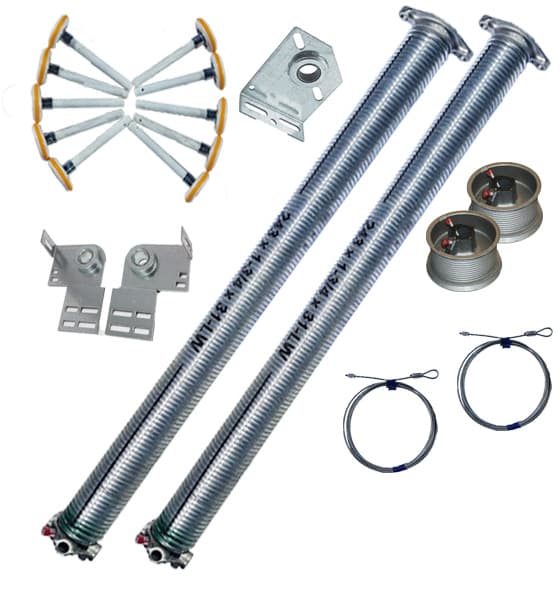
Loose hardware
A hinge is only as good as the fasteners holding it. When screws or bolts back out over years of opening and closing, the hinge starts to rock instead of holding two panels square, and a part that flexes every cycle eventually cracks. Clopay's annual maintenance list begins with the question: Check for loose or bent hinges.[1] The fix it gives is plain: Tighten screws on loose hinges.[1] Straighten or replace bent hinges.[1]
A door that binds
The rollers sit in tubes in the hinges, so any drag between roller and track is passed straight to the hinge. Clopay's installation notes warn about one cause: Do not force the track too tightly or the door will bind.[1] Others are a roller with a broken wheel or a bent shaft: Check roller for broken wheels, bent shafts, or worn out bearings.[1] And a bent track: Check for bent track. If bent, call an authorized professional dealer.[1]
A door that is out of balance
Garage doors use springs to balance them.[1] A balanced door is one that holds still part-way open. The CPSC puts it this way: A properly operating garage door will be "balanced."[2] This means that the door will stay in place when stopped in any partially‐open position.[2]
When a spring weakens, the door gets heavier to lift, and the extra effort has to go somewhere: into the opener, the track and the hinges. The CPSC is direct about what to do: If doors are not "balanced," or if they bind or stick, they should be serviced by a professional.[2]
Age and the wrong part
Hinges flex every time the door opens or closes. A cracked hinge on an old door that otherwise runs well is often just a worn part. A hinge that cracks soon after being fitted points to a mismatch. Hinges are identified by number 1, 2, 3 and higher on taller doors,[1] so a replacement should carry the same stamped number as the original. Oiling matters too: LiftMaster's yearly checklist says: Oil door rollers, bearings and hinges.[3]
Check it yourself
Do this with the door closed. With the door fully closed, pull the "quick release" mechanism to detach the garage door from the opener.[2] Look the hinges over from the face of the door, and keep hands and fingers clear of section joints, track, and other door parts,[1] since the joints are where fingers get pinched.
Then move the door by its handle. The CPSC's check is: Using the garage door handle, manually move the door up and down to check that the springs are operating properly.[2] If it is heavy, lurches or will not stay half open, stop there. The cracked hinge is a symptom and the spring is the job.
If the door moves smoothly and the cause was loose hardware, replace the cracked hinge: how to replace a broken garage door hinge covers it. No more than one hinge is to be removed from the door at any given time.[1]
Stop and call a pro if
- The cracked hinge is at a bottom corner, or sits next to the cable bracket. The brackets at the bottom corners of your garage door are under great tension.[1]
- The door is unbalanced, heavy, or binds. That points to the springs or track, and the springs are not a home job. Springs, cables, and bottom fixtures are under strong spring tension.[1] Do not attempt to loosen any fasteners on these components.[1]
- The track is bent or a roller has failed. Call an authorized professional dealer.[1]
- Several hinges are cracked at once. That is a door-wide problem. Ask for a written quote that covers repair and replacement.
Getting help in Virginia
Once the cause is clear, read how to keep garage door hinges from cracking. If the door is crooked, see why a garage door is crooked when it opens, and if the rollers are suspect, how to replace garage door rollers. Browse more garage door repair answers, or find local pros under garage door repair on Loclis.
When the repair needs a technician, describe the problem and local garage door pros will quote it. Ask for the hinge numbers and the price in writing.
Common questions
- Is a cracked garage door hinge dangerous?
- It can be. A hinge is what holds two panels together, so a cracked one can let the panels flex and the door bind or sag. Treat it as a warning to look the door over, keep clear of the section joints, and replace the hinge before it fails completely.
- Can I replace just one cracked hinge?
- Yes, if it is a middle or top hinge. Replace one at a time with the door down and locked, using the hinge with the same number as the old one. A hinge at a bottom corner is a pro's job because the bracket is under great tension.
- Why did a brand-new hinge crack?
- Most likely the cause is still there. A door that binds, is out of balance, or has loose neighbouring hinges puts the load back on the new part. A hinge of a different number than the original is another possible reason, so match the stamped number.
- Do cracked hinges mean the door needs replacing?
- Not usually. One or two cracked hinges on a door that otherwise works is a repair. Several cracked hinges together with a bent track, damaged panels or an unbalanced door is a reason to ask a technician for a written quote for repair and for replacement.
- Will oiling the hinges stop them cracking?
- It helps the moving parts, and the manufacturers call for it yearly. It does not fix a hinge that is already cracked or a door that binds, so look for the cause first.
Sources
- [1] Avante Garage Door Installation Instructions, Clopay Building Products. Checked October 28, 2026.
- [2] Non-Reversing Automatic Garage Door Openers Are a Hazard (CPSC publication 523), U.S. Consumer Product Safety Commission. Checked October 28, 2026.
- [3] LiftMaster Residential Maintenance, LiftMaster. Checked October 28, 2026.
Want a pro to handle it?
Describe the job once. Licensed local businesses send quotes, and you pay only when you book one.
Get a quote for Garage Doors