How do I keep my house from filling up with clutter again?
Give things a regular way out, not just a way in. Keep a donation box by the door, use a one-in-one-out rule for bulky things, put your locality's bulk pickup or drop-off dates on the calendar, and do a short sweep of the usual pile-up spots each month. Keep exits, windows and the space around heaters clear as a safety baseline.
Free to ask. Local shops send quotes, and you pay only when you book one.
By Kasra Taheri, Founder, LoclisPublished
Researched and drafted with AI, then checked claim by claim against the sources listed below before it was published. Prices and rules change; the dates beside each source say when it was last checked.
Step by step
Read when to stop and call a pro, further down this page, before you start.
Step 1: Set up a donation box
Keep a box or bag by the door or in the garage, and drop it off whenever it is full.
Step 2: Give incoming things one landing spot
Pick one tray or shelf for mail, packages and papers, and empty it every week.
Step 3: Use one in, one out for bulky things
When a new chair, appliance or tool comes in, decide which old one is leaving before it arrives.
Step 4: Put disposal dates on the calendar
Add your locality's bulk pickup, special pickup or household hazardous waste dates to your calendar so things leave on a schedule.
Step 5: Sweep the pile-up spots monthly
Spend a short session each month on the places clutter collects, such as the garage, basement, guest room and closet floors.
Step 6: Do not stockpile chemicals
Buy paint, cleaners and pesticides close to the amount a job needs, and take leftovers to your locality's hazardous waste drop-off.[5]
Step 7: Keep heat sources clear
Keep anything that can burn at least 3 feet from fireplaces, wood stoves, radiators, space heaters and candles.[6]
Step 8: Keep exits and windows clear
Make sure every hallway, exterior door and bedroom window can be reached and opened without moving anything.[7]
Step 9: Book help before it piles up
If a room or garage gets ahead of you, schedule a junk removal pickup for that space instead of waiting for a whole-house cleanout.
Clutter comes back when things keep arriving and nothing has a regular way out. The fix is not one big cleanout but a few habits that move things out on a schedule: a donation box that gets dropped off when it fills, a one-in-one-out rule for bulky things, your locality's bulk pickup dates on the calendar, and a short monthly sweep of the places where piles start. Keeping exits, windows and the space around heaters clear is the safety floor under all of it.
Give things a way out
Most homes have an easy way in, from deliveries, gifts and errands, and no easy way out. Build the way out first.
A standing donation box. Keep a box or bag by the door or in the garage. When something is outgrown, unused or replaced, it goes in the box, not back on a shelf. When the box is full, it goes in the car. EPA suggests selling or donating unwanted appliances, tools or clothes instead of throwing them out,[1] and notes that local churches, community centers, thrift stores, schools and nonprofit organizations may accept items such as used books, working electronics and unneeded furniture.[1]
One in, one out for bulky things. A new desk chair means the old one leaves the same week. This matters most for furniture, appliances, tools and sporting gear, which take up the most space and are the hardest to get rid of later. EPA estimated that 12.1 million tons of furniture and furnishings entered the U.S. municipal waste stream in 2018, and that 80.1 percent of it was landfilled.[2] Passing things on while they still work keeps them in use.
Borrow, share or rent the rarely used. EPA also suggests sharing large lawn and garden equipment such as tillers and chainsaws with neighbors instead of each household buying its own,[1] and cleaning and properly storing tools, toys and outdoor furniture so they last and stay out of landfills.[1]
Put disposal on the calendar
Bulky things linger because getting rid of them takes planning. Find your locality's schedule once and put it on your calendar.
Fairfax County residents whose trash the county collects get five free special pickups per fiscal year, from July 1 to June 30, for bulk items, appliances with refrigerant, brush, electronics and metal, scheduled in advance.[3] Richmond collects bulk items every other week on your trash day during your recycling week.[4] Elsewhere, look up your county, city or town's bulk pickup, special pickup or drop-off rules, or ask your private hauler. If your collector refuses things, see why the trash company won't take your bulky items.
Watch the usual pile-up spots
Clutter collects in the same places: the garage, the basement, the guest room, closet floors, the dining table and the kitchen counter by the door. A short session on those spots each month catches piles while they are small. Give incoming mail, packages and papers one landing spot and empty it weekly. A garage or basement clear-out once or twice a year, timed to a bulk pickup or a hauler visit, keeps storage areas from filling to the ceiling.
Do not store what you should not keep
Half-used paint, cleaners, pesticides, fuel and old batteries are the clutter that can hurt someone. EPA suggests buying fewer products that contain hazardous ingredients,[5] and warns that leftover household hazardous waste can be a hazard to children and pets if left around the house.[5] Buy close to what a job needs and take leftovers to your locality's household hazardous waste drop-off; see how to dispose of old paint in Virginia.
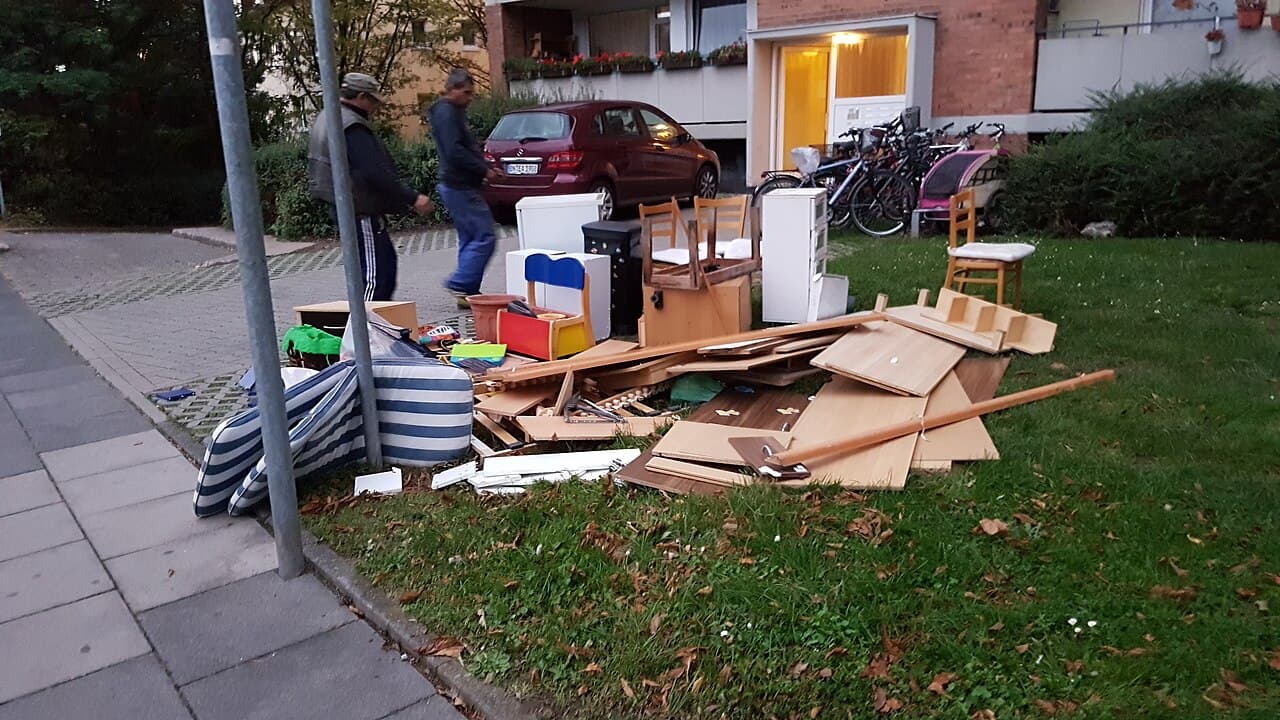
Why it matters for safety and pests
Clutter is a fire risk when it sits near heat or blocks the way out. The U.S. Fire Administration says to keep anything that can burn at least 3 feet from all heat sources, including fireplaces, wood stoves, radiators, space heaters and candles.[6] Fairfax County's code compliance office warns that blocked windows and walkways reduce the ability to escape in a fire,[7] that excessive storage may cause a structure to collapse,[7] and that a lack of maintenance may cause health risks and attract pests.[7]
Clutter also makes pest problems harder to fix. EPA lists how much clutter is available for hiding places among the factors that decide whether you can get rid of bed bugs yourself.[8] Used furniture and mattresses are worth checking before they come inside; see how to check a mattress for bed bugs.
When it is more than clutter
For some people, letting go of things is genuinely distressing, and the piles keep growing despite real effort. Fairfax County describes hoarding as the extreme and persistent collection of possessions or trash inside a dwelling that creates a dangerous living situation,[7] and its code compliance office publishes resources for residents and families. If that sounds familiar, for you or someone you care about, a doctor or your local human services office is a better first step than a dumpster.
Stop and call a pro if
- Exits, hallways or bedroom windows are blocked and you cannot clear them safely yourself.
- Floors are sagging or shelves are overloaded with heavy items such as books, paper or tools.
- You find signs of pests, mold, leaks or rot under the piles.
- The cleanout includes heavy furniture or appliances you cannot move safely, or chemicals you cannot identify.
Getting help on Loclis
Browse more junk removal and moving answers, see junk removal businesses, or find junk removal and moving businesses around Blacksburg. If a room or garage has gotten ahead of you, describe the job on Loclis and get quotes for a one-time pickup.
Common questions
- How often should I declutter?
- A short monthly sweep of the spots where things pile up, plus a bigger clear-out of the garage, basement or attic once or twice a year, keeps most homes from sliding back. Timing the big clear-out to your locality's bulk pickup makes it easier to finish.
- What should I do with furniture that is still usable?
- Sell it or donate it. EPA notes that churches, community centers, thrift stores, schools and nonprofits may accept unneeded furniture and working electronics. Some charities pick up large items.
- Is it safe to bring home used furniture?
- Look it over first, especially upholstered pieces and mattresses, which can carry bed bugs. See Loclis's guide to checking a mattress for bed bugs before it comes inside.
- Is clutter a fire hazard?
- It can be. The U.S. Fire Administration says to keep anything that can burn at least 3 feet from heat sources, and Fairfax County warns that blocked windows and walkways reduce the ability to escape in a fire.
- When should I hire a junk removal company instead of doing it myself?
- When the items are heavy, the volume is more than your car or your locality's bulk pickup can handle, or a room has gotten far enough ahead of you that it will not happen otherwise. One scheduled pickup per space is usually easier than a whole-house cleanout.
Sources
- [1] Reducing and Reusing: What You Can Do, U.S. Environmental Protection Agency. Checked October 26, 2026.
- [2] Durable Goods: Product-Specific Data, U.S. Environmental Protection Agency. Checked October 26, 2026.
- [3] Special Pickup, Fairfax County Department of Public Works and Environmental Services. Checked October 26, 2026.
- [4] Bulk and Brush, City of Richmond Department of Public Works. Checked October 26, 2026.
- [5] Household Hazardous Waste (HHW), U.S. Environmental Protection Agency. Checked October 26, 2026.
- [6] Heating Fire Safety, U.S. Fire Administration. Checked October 26, 2026.
- [7] Hoarding Disorder, Fairfax County Department of Code Compliance. Checked October 26, 2026.
- [8] Do-it-yourself Bed Bug Control, U.S. Environmental Protection Agency. Checked October 26, 2026.
Want a pro to handle it?
Describe the job once. Licensed local businesses send quotes, and you pay only when you book one.
Get a quote from a local pro