How do I dispose of old paint in Virginia?
It depends on the type. Latex (water-based) paint can usually be dried out completely and put in the household trash, as Fairfax County and the Montgomery Regional Solid Waste Authority both advise. Oil-based paint, stains, varnish and thinners go to your locality's household hazardous waste drop-off or collection event, never down a drain or into the trash while liquid.
Free to ask. Local shops send quotes, and you pay only when you book one.
By Kasra Taheri, Founder, LoclisPublished
Researched and drafted with AI, then checked claim by claim against the sources listed below before it was published. Prices and rules change; the dates beside each source say when it was last checked.
Step by step
Read when to stop and call a pro, further down this page, before you start.
Step 1: Read the label
Find out whether each can is latex (water cleanup) or oil-based (mineral spirits or paint thinner cleanup), and set the two kinds apart.
Step 2: Keep or give away what is still good
Paint that is still usable can be donated to non-profit organizations, day care facilities or a paint exchange.[2]
Step 3: Dry out small amounts of latex
Leave the lid off in a dry, ventilated spot out of reach of children and pets, or pour the paint onto newspaper so it dries faster.[1]
Step 4: Thicken larger amounts of latex
Stir in cat litter, mulch or sand until the paint will not pour, then let it dry the rest of the way.[2]
Step 5: Trash it only when solid
Put dried latex paint in the regular garbage once it is completely dry, and recycle empty cans where your program takes them.[2]
Step 6: Keep oil-based products sealed
Leave oil-based paint, stains, varnish and thinners in their original labelled containers with the lids on tight, and never combine them.[1]
Step 7: Check your locality's drop-off rules
Look up your county or city's household hazardous waste site or event, its dates, residency proof and any quantity limits.
Step 8: Pack the cans upright
Stand containers upright in a cardboard box so they cannot tip, and put any leaking can inside a larger plastic container with a lid.[1]
Step 9: Drive them safely
Carry the box in the trunk or a pickup bed, keep flammables out of direct sunlight and away from heat, and do not smoke.[1]
The answer depends on what kind of paint it is. Latex (water-based) paint can usually be dried out and put in the household trash. Oil-based paint, stains, varnish and thinners are household hazardous waste: they go to your county or city's drop-off site or collection event, sealed in their original cans. Neither kind should be poured down a drain, onto the ground or into a storm drain.
First, sort latex from oil-based
The label usually tells you. Latex and acrylic paints say they clean up with soap and water; oil-based paints, stains and varnishes call for mineral spirits or paint thinner. If a can is so old the label is gone, treat it as oil-based. Then sort the cans into three groups: paint worth keeping or giving away, latex to dry out, and oil-based products and solvents for a hazardous waste drop-off.
Latex paint: dry it, then trash it
Fairfax County tells residents to let latex paint air dry and throw the container in the trash.[1] For faster results, it suggests pouring it onto newspaper, letting it dry, and rolling the newspaper up for the trash.[1] If you cannot dry it, the county takes the container at its household hazardous waste sites at the I-66 Transfer Station and the I-95 Landfill Complex.[1]
The Montgomery Regional Solid Waste Authority, which serves Blacksburg, Christiansburg and Montgomery County, says its preferred method for latex paint is to dry it up with cat litter, mulch or sand and put it in the regular garbage once it is completely dry.[2] It notes that drying is preferred but not required, that paint cans free of paint may be recycled, and that usable paint can be donated to non-profit organizations, day care facilities or a paint exchange.[2]
A few practical points help. A thin layer at the bottom of a can dries fairly quickly with the lid off; a can that is half full can stay liquid far longer, so thicken it with litter or sand first. Dry it somewhere ventilated, out of the rain and out of reach of children and pets. It is ready when it no longer moves when you tip the can.
Oil-based paint, stains and thinners: the hazardous waste drop-off
EPA lists paints among the household products that can contain hazardous ingredients and need special care at disposal,[5] and counts pouring household hazardous waste down the drain, on the ground or into storm sewers as improper disposal.[5] Each Virginia locality runs its own program, so the rules for where, when and how much differ:
- Fairfax County. Fairfax County takes paint, paint thinner, stains, varnish and mineral spirits free of charge from county residents only, at the I-66 and I-95 sites, and may ask for proof of residency such as a driver's license or utility bill.[1] It also runs a latex-paint-only drop-off.[1]
- Richmond. Richmond's East Richmond Road Convenience Center takes paints, stains, varnish, primers, polyurethane, thinners and mineral spirits from city residents only, free, with paint limited to 20 gallons per month per household.[3]
- Loudoun County. Loudoun County typically holds eight household hazardous waste collection events from March through November at sites around the county, not at the landfill.[4] It limits each household to 15 gallons of liquid and 40 pounds of solid household waste, in liquid containers no larger than five gallons.[4]
- Montgomery County and the New River Valley. In the New River Valley, the Montgomery authority accepts paints only at its household hazardous waste events, held twice a year for Montgomery County residents.[2]
Elsewhere, search your county or city website for "household hazardous waste". Most programs list accepted items, dates and the proof of address they want.
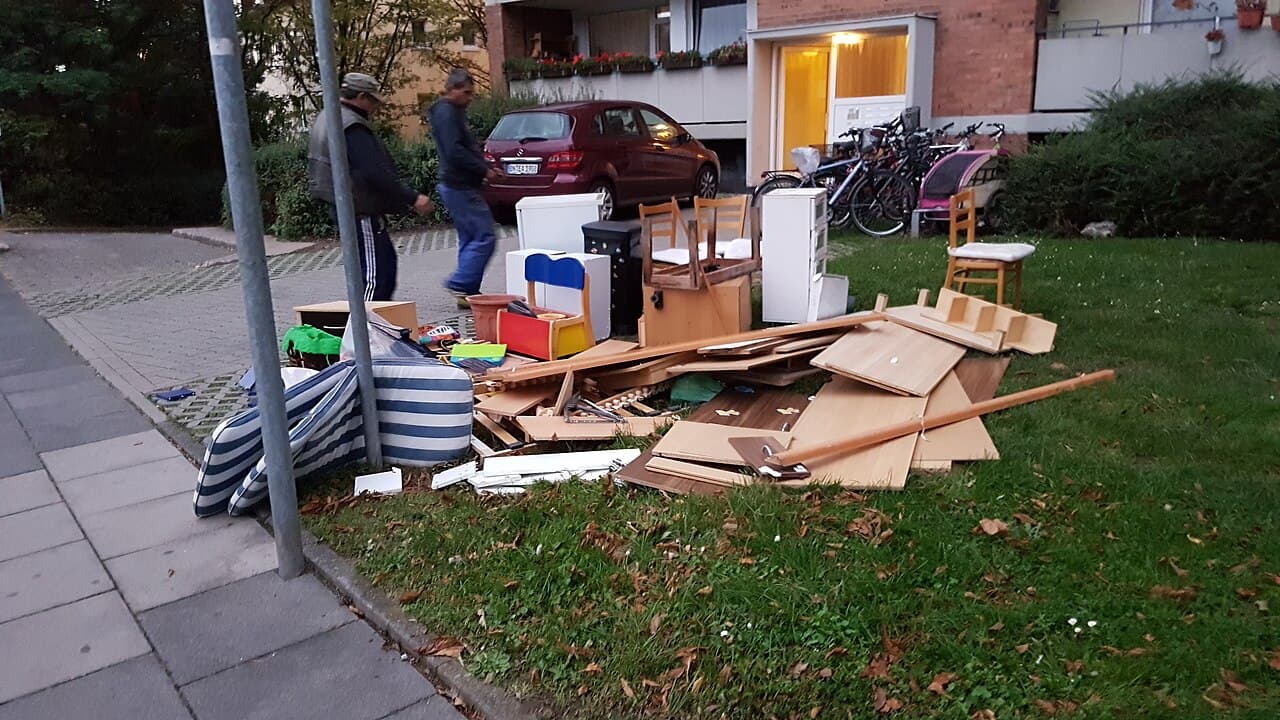
Packing and driving the cans
Fairfax County's packing rules are a good standard anywhere: keep products in their original containers, do not mix them, seal the lids tightly, and label anything that is not in its original container.[1] Set the cans upright in a cardboard box so they cannot tip, not in plastic bags, and put a leaking can inside a larger plastic container with a tight lid.[1] Carry the box in the trunk or a pickup bed, ventilate the car if it rides in the passenger compartment, and keep flammables out of direct sunlight and away from heat, sparks and flame.[1]
Never pour leftovers together to save space. EPA warns that incompatible products might react, ignite or explode when mixed, and that mixed leftovers may no longer be recyclable.[5]
Keeping less paint around next time
Most paint piles up from overbuying and from cans kept "for touch-ups" long after anyone remembers which room they match. Write the room and date on the lid, keep one small can per color, and store it somewhere that does not freeze. EPA suggests buying fewer products that contain hazardous ingredients,[5] which for paint mostly means choosing water-based products where they will do the job and buying close to the amount the project needs. Leftover deck stain and sealer follow the same rules; see how to stain a deck for the project side.
Stop and call a pro if
- Cans are rusted through, bulging or leaking. EPA says corroding containers need special handling and to call your local hazardous materials official or fire department for instructions.[5]
- You find unlabelled containers, drums or chemicals you cannot identify. Leave them closed and ask your locality's hazardous waste program.
- Paint or solvent has spilled into a storm drain, a stream or a well area. Call your locality right away.
- A whole garage, basement or estate needs clearing and paint is only part of it. A junk removal company can take the rest of the load while you handle the hazardous items, or tell you up front what it can take.
Getting it done on Loclis
Paint is one of several things haulers refuse; see what can't go in a dumpster in Virginia for the rest. Browse more junk removal and moving answers, see junk removal businesses, or find junk removal and moving businesses around Blacksburg. When the cleanout is bigger than a few cans, describe the job on Loclis and get quotes.
Common questions
- Can I put latex paint in the trash in Virginia?
- Usually, once it is completely dry. Fairfax County tells residents to air dry latex paint and throw the container in the trash, and the Montgomery Regional Solid Waste Authority prefers that latex paint be dried with cat litter, mulch or sand before it goes in the garbage. Check your own locality's rules.
- What do I do with oil-based paint?
- Take it to your county or city's household hazardous waste site or collection event. Keep it in its original can with the lid sealed, and never pour it down a drain, on the ground or into a storm drain.
- Can a junk removal company take my old paint?
- Many will not take liquid paint or solvents, because they are household hazardous waste. Ask before booking. Ask whether dried latex paint can go with the rest of a load.
- How long does latex paint take to dry in the can?
- It depends on how much is left and the weather. A thin layer dries quickly; a half-full gallon can take a long time, which is why thickening it with cat litter or sand, or spreading it on newspaper, helps.
- Do I have to live in the county to use its drop-off?
- Usually yes. Fairfax County's program is for county residents only, Richmond's East Richmond Road site is for city residents only, and the Montgomery authority's events are for Montgomery County residents. Bring proof of address.
- What about empty paint cans?
- The Montgomery authority says paint cans free of paint may be recycled, and Fairfax County lists empty containers among items that may go in the regular trash. Ask your recycling program whether it takes metal paint cans.
Sources
- [1] Household Hazardous Waste, Fairfax County Department of Public Works and Environmental Services. Checked October 26, 2026.
- [2] Disposal Guide, Montgomery Regional Solid Waste Authority. Checked October 26, 2026.
- [3] Trash Collection, City of Richmond Department of Public Works. Checked October 26, 2026.
- [4] Household Hazardous Waste, Loudoun County, Virginia. Checked October 26, 2026.
- [5] Household Hazardous Waste (HHW), U.S. Environmental Protection Agency. Checked October 26, 2026.
Want a pro to handle it?
Describe the job once. Licensed local businesses send quotes, and you pay only when you book one.
Get a quote from a local pro