How do I know if I have bats in my attic?
The surest sign is bats leaving the roofline at dusk, so watch the house from outside for half an hour after sunset. Other signs are high-pitched clicks or scratching in walls or ceilings, an unusual lingering odour, dark stains around gaps, droppings piling up in the same spot, and bats turning up inside the house more than once.
Free to ask. Local shops send quotes, and you pay only when you book one.
By Kasra Taheri, Founder, LoclisUpdated
Researched and drafted with AI, then checked claim by claim against the sources listed below before it was published. Prices and rules change; the dates beside each source say when it was last checked.
This is a job for a licensed pro in Virginia
This page explains what the work involves, the permits, what a licensed pro does and what drives the cost. It does not give step-by-step instructions, because this work needs a licence, a permit or both, and doing it wrong can injure someone. Before you hire, check the licence on Virginia's DPOR record.
The clearest way to know you have bats in the attic is to see them leave. On a summer evening, watch the outside of the house until about half an hour after sunset,[1] and look for bats dropping out of a gap at the roof edge, a gable vent or the trim. Noises, smells, stains and droppings are the other clues, and a bat found inside the house more than once is a strong hint that a colony lives somewhere in the building.
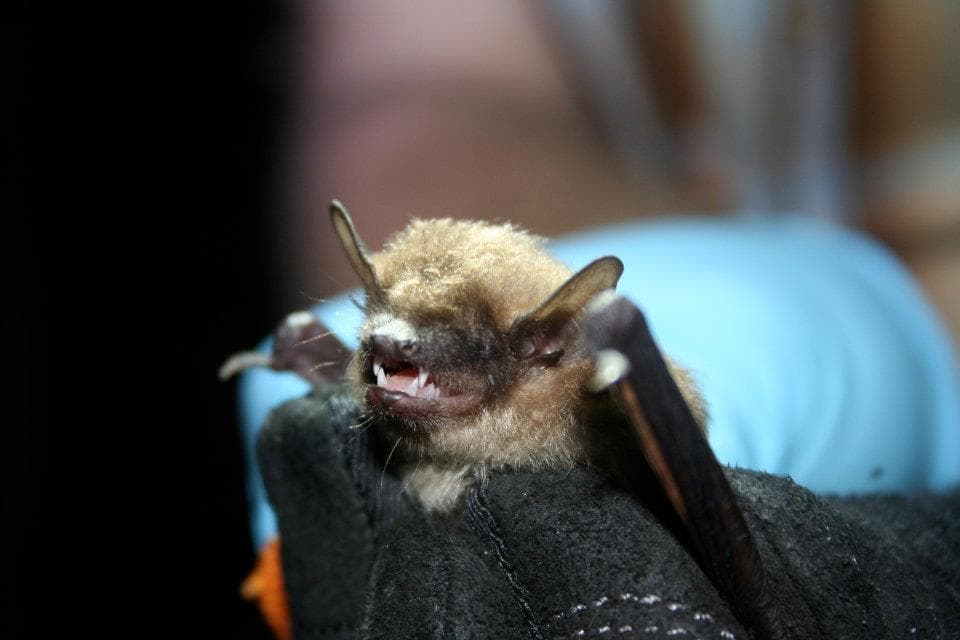
Watch the house at dusk
Bats leave the roost at dusk to feed, which is when the Virginia Department of Wildlife Resources (DWR) suggests looking for them. Montana State University Extension's guide to the same question adds detail: pick a clear night with low wind,[2] stand far enough away to see the house silhouetted against the light-blue sky,[2] and, if you can, put a family member on each side of the house. Note where the first bat appears and check the same spot the next evening, because bats may have two or more exits from a house.[2]
A steady stream from one point usually means a roost; a single bat flying past may just be feeding in the yard. Write down every exit you see; the wildlife operator will want them.
Signs from inside the house
Extension guidance lists the signs that suggest bats are living in a home:[2]
- Sounds. high-pitched clicks[2] or scratching noises around walls or ceilings.[2]
- Smell. a persistent but unusual odor[2] near a ceiling, a closet under the roof or an outside wall.
- Droppings. droppings that turn up in the same location over time,[2] for example on a windowsill, a porch floor or the ground below a gap.
- Bats indoors. finding a bat in the living space on two different occasions during the summer, or once during the winter.[2]
None of these alone proves bats. Mice and squirrels scratch too, and a single bat can blunder in through an open door. Several signs together, or a dusk watch, settle it. If you hear daytime running or chewing instead, read what animal is living in the attic.
Signs on the outside of the house
Openings bats use often show dark staining.[2] With binoculars from the ground, look for staining at the places bats get in. The extension guide's list is under roof overhangs where wood may be warped, shrunk or rotted; around loose or unscreened vents; under loose flashing; at louvers, eaves or cornices; under loose roofing or siding; around windows; around chimney pipes; and where wiring and water pipes enter the building.[2] Any joint or seam that has opened up can be enough.
Why the attic is best left to a pro
It is tempting to go up and look. If there is a colony, the attic floor may be covered in droppings, and DWR warns that bat droppings can harbor histoplasmosis spores and should be cleaned up by a professional.[1] The Virginia Department of Health names people with weakened immune systems, infants, and people aged 55 years and older[4] as more likely to become seriously ill. The department's advice is direct: "People should avoid areas with accumulations of bird or bat droppings, especially if they have weakened immune systems."[4]
Montana State University Extension's guide warns that going into the attic can disturb droppings,[2] and the protective gear it describes includes a respirator, with the condition: "Be healthy enough to wear a respirator and have training in its proper use."[2] Unless that describes you, leave the attic to the wildlife operator. The guide also warns that bats may be in the walls, and thus not visible,[2] so an attic that looks empty is not proof.
A wildlife operator's inspection covers the attic and the exterior, often with an evening watch, and ends with a list of entry points and a quote.
Which bats live in Virginia houses
The big brown bat, evening bat, little brown bat and Brazilian free-tailed bat are the four Virginia species most likely to live in a building.[1] The little brown bat is state endangered,[1] which is one reason the removal has to follow Virginia's rules: see whether it is legal to remove bats from your house.
If a bat is in the living space
Most bats are healthy. DWR says less than half of 1% of bats carry rabies,[1] but a bat indoors still needs care. DWR's permit conditions say being in the same room with a bat and not being able to rule out exposure, as with an infant, a small child or a sleeping adult, counts as a potential exposure.[5] If that applies, the Virginia Department of Health's guidance is to contain the bat and contact the local health department or animal control, which may include testing the bat for rabies.[3]
When to call a licensed pro
Call a permitted wildlife control operator once a dusk watch or the signs above point to bats. DWR runs a trapper finder tool that lists licensed trappers and Commercial Nuisance Animal Permit holders[6] by county. Ask for the company's permit and its bat training certificate. Expect the exclusion itself to wait if you call in summer: DWR's permit conditions set the bat maternity season as May 1 to August 15, inclusive,[5] when flightless young are in the roost.
If gaps need carpentry or vent repairs as part of the job, Virginia's contractor law may apply: Class C contractors are those whose single contract or project is over $1,000 but less than $30,000.[7] Check a contractor's licence before you sign. For what comes next, read how bats are removed from a house and what bat removal costs in Virginia.
Loclis lists businesses for bird and bat exclusion and pest control in Blacksburg, and all pest control answers are in one place.
Describe what you are seeing once and local businesses quote the inspection.
Common questions
- What time do bats leave the attic?
- Around dusk, when they go out to feed. DWR suggests watching the outside of the house from dusk until about half an hour after sunset to see where they come out. A clear, calm evening makes them easier to spot against the sky.
- Could the noises be something other than bats?
- Yes. Squirrels, mice and other animals also scratch in walls and ceilings. High-pitched clicks are one of the signs extension guidance links to bats, but the most reliable check is a dusk watch to see whether bats come out of the house.
- Is it safe to go into the attic to look?
- It carries a risk if there are droppings. DWR warns that bat droppings can harbor the spores that cause histoplasmosis, and the Virginia Department of Health says people should avoid areas with built-up bird or bat droppings. Montana State University Extension warns that going in can disturb droppings and that a respirator is only for someone healthy enough to wear one and trained to use it. Leave the attic inspection to the wildlife operator.
- I found one bat in the house. Does that mean there is a colony?
- Not necessarily. Extension guidance treats a bat in the living space on two separate occasions in summer, or once in winter, as a sign bats may be living in the house. Whatever the count, if the bat may have touched anyone, call the local health department first.
- I think I have bats. What happens next?
- Book an inspection with a permitted wildlife control operator. If it is between May 1 and August 15, the exclusion itself will usually wait until the young can fly, but the inspection and quote do not need to.
Sources
- [1] Problems with Bats, Virginia Department of Wildlife Resources. Checked October 26, 2026.
- [2] Are Bats in my House?, Montana State University Extension. Checked October 26, 2026.
- [3] Methods for Bat Exclusion and Capture (Virginia Guidelines for Rabies Prevention and Control), Virginia Department of Health. Checked October 26, 2026.
- [4] Histoplasmosis, Virginia Department of Health. Checked October 26, 2026.
- [5] Commercial Nuisance Animal Permit: Information Materials and Permit Conditions, Virginia Department of Wildlife Resources. Checked October 26, 2026.
- [6] Find a Licensed Trapper or Wildlife Control Specialist, Virginia Department of Wildlife Resources. Checked October 26, 2026.
- [7] Code of Virginia § 54.1-1100. Definitions, Code of Virginia. Checked October 26, 2026.
Want a pro to handle it?
Describe the job once. Licensed local businesses send quotes, and you pay only when you book one.
Get a quote from a local pro