Is it legal to remove bats from my house in Virginia?
Yes, if it is done by exclusion and at the right time. Virginia law bars poisoning bats and moving them off the property, several bat species are endangered, and exclusion is restricted in summer while young are in the roost. Since 2025, DWR-permitted wildlife operators doing bat work also need bat-specific training, unless the job is outside the maternity season with no bats in the building.
Free to ask. Local shops send quotes, and you pay only when you book one.
By Kasra Taheri, Founder, LoclisUpdated
Researched and drafted with AI, then checked claim by claim against the sources listed below before it was published. Prices and rules change; the dates beside each source say when it was last checked.
This is a job for a licensed pro in Virginia
This page explains what the work involves, the permits, what a licensed pro does and what drives the cost. It does not give step-by-step instructions, because this work needs a licence, a permit or both, and doing it wrong can injure someone. Before you hire, check the licence on Virginia's DPOR record.
Yes, getting bats out of your house is legal in Virginia, as long as it is done the lawful way: by exclusion, outside the summer pupping season, without poison and without moving the bats somewhere else. DWR, the Virginia Department of Wildlife Resources, says "The best and only good way to remove bats from a structure is to exclude the bats from the building."[1] If you hire a company, it works under a DWR wildlife permit, and since 2025 it also needs bat-specific training unless the exclusion is done outside the maternity season with no bats in the building.
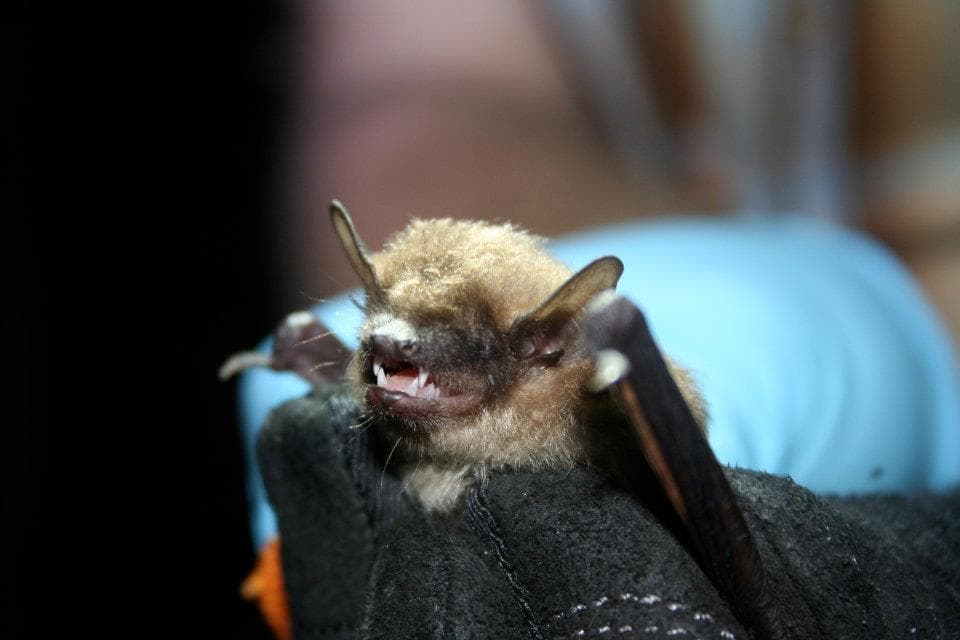
What Virginia law forbids
DWR lists two things that are illegal in Virginia. It is illegal to transport, release, or relocate a bat anywhere other than the property it was caught on,[1] and illegal to poison any animal, including a bat, other than rats and mice.[1]
Protected species add a third limit. DWR notes that three species of bats in Virginia, the Gray, Indiana and Virginia big-eared bats, are federally endangered,[1] and that the Endangered Species Act makes it a federal offense to "harass, harm, pursue, hunt, shoot, wound, kill, trap, capture, or collect, or to attempt to engage in any such conduct"[1] any endangered or threatened species. The northern long-eared bat is federally threatened, and Rafinesque's big-eared bat, the little brown bat and the tri-colored bat are state endangered.[1]
State law backs this up. The Virginia regulation on endangered species lists the little brown bat and the tri-colored bat as endangered in the Commonwealth,[2] and makes it unlawful to take, transport, process, sell, or offer for sale within the Commonwealth any threatened or endangered species of fish or wildlife except as authorized by law.[2] The little brown bat is one of the four Virginia species most likely to live in a building,[1] so you cannot assume the colony in your attic is unprotected.
What the law allows, and when
Exclusion is the lawful route because it lets the bats leave unharmed. The same regulation describes when removing little brown and tri-colored bats from a lived-in building is allowed, with a seasonal rule written in: "Between May 15 and August 31, no exclusion of bats from maternity colonies, except for human health concerns."[2] The conservation measures call for a department-permitted nuisance wildlife control operator with department-recognized certification in techniques associated with removal of bats, using exclusion devices that allow individual animals to escape.[2]
DWR's permit conditions for operators set the bat maternity season as May 1 to August 15, inclusive,[5] and say bats may not be excluded or removed from a structure during the maternity season except when no young bats are present or there is a threat to human health or safety.[5] The Virginia Department of Health's guidance is more cautious still: it says bat exclusion should be performed before April and after August.[6] In practice, the safe windows are early spring and autumn.
Can a bat ever be killed?
DWR's answer is yes, within narrow limits: "In Virginia bats are not considered a game species or a fur-bearing species. This means that a bat may be killed if it is deemed as being a nuisance to a homeowner."[1] The limits are what matter in a house.
- Not an endangered or threatened bat. Virginia's definition of a nuisance species includes species found committing or about to commit depredation upon ornamental or shade trees, agricultural crops, wildlife, livestock or other property or when concentrated in numbers and manners as to constitute a health hazard or other nuisance,[4] but the term nuisance does not include animals designated as endangered or threatened, or species protected by state or federal law.[4] DWR lists the rest of Virginia's bats as non-game protected species.[1]
- Not just for being there. DWR adds: "The mere presence of a bat does not constitute it as a nuisance."[1]
- Never with poison. Poisoning bats is illegal, as above.[1]
Even a permitted wildlife company is not authorized to capture, possess, transport, or kill state or federal threatened or endangered species.[5] Since you usually cannot tell which species is in the attic, call DWR's helpline before treating any bat as a nuisance. For a colony, DWR's own advice is exclusion.
A bat in the living space
A bat inside the house is a public health matter first. DWR's permit conditions count as a potential rabies exposure being in the same room with a bat and not being able to positively rule out exposure, as with an infant, a small child or a sleeping adult.[5] In that case VDH's guidance is to contain the bat and contact the local health department or animal control for guidance, which may include testing the bat for rabies.[6] Do not release a bat that may have touched someone until the health department has said so.
Who may do the work for pay
DWR issues a Commercial Nuisance Animal Permit to wildlife control operators.[5] The state regulation on moving wildlife names individuals operating under a commercial nuisance animal permit[3] among those deemed to be permitted to capture, temporarily hold or possess, transport, release, and when necessary humanely dispatch wildlife.[3] For bats there is an extra step: DWR's permit materials say permit holders who offer bat management or exclusion services after January 1, 2025 must, with limited exceptions, complete an additional bat-specific training course and pass its exam with at least 80%.[5] That training requirement does not apply to exclusion done outside the maternity season, provided that no bats are present in the structure while the work is done.[5]
The permit has limits too. It does not authorize the permittee to use or recommend the use of pesticides or chemical repellents;[5] that needs separate pesticide certification.[5] If a company offers to spray the attic, ask under what licence.
When to call a licensed pro
Call a permitted operator when you see bats leaving the house at dusk, find droppings in the attic, or find bats inside more than once. Ask for the Commercial Nuisance Animal Permit before work starts, and the bat training certificate if the work falls in the maternity season or bats are still inside, and ask how the company will time the exclusion around the maternity season. If the quote includes sealing and repair work, Virginia's contractor law may apply: Class C contractors are those whose single contract or project is over $1,000 but less than $30,000.[8] How to check a contractor's licence in Virginia shows the lookup.
For questions about your own situation, DWR runs a toll-free wildlife conflict helpline at 1-855-571-9003.[7] For what the work involves and costs, see how bats are removed from a house and what bat removal costs in Virginia. The wider rules for other animals are in whether you can trap and relocate wildlife in Virginia.
Loclis lists businesses for bird and bat exclusion and pest control in Blacksburg, and every pest control answer is in one place.
Describe the bat problem once and local businesses quote it.
Common questions
- Can I kill bats in my attic?
- DWR says that because bats are not game or fur-bearing species in Virginia, a bat may be killed if it is deemed a nuisance to a homeowner. The limits are narrow: endangered and threatened animals are never a nuisance under Virginia's definition, the mere presence of a bat does not make it one, and poisoning is illegal. DWR calls exclusion the best and only good way to remove bats from a building, and its helpline can answer questions about a specific case.
- Can I catch a bat and let it go in the woods?
- Not off your property. DWR says it is illegal to transport, release or relocate a bat anywhere other than the property it was caught on. A single bat in the house is a different matter: if no one may have been exposed, VDH's guidance is to let it out, and if someone may have been, to call the health department before releasing it.
- When is it legal to have bats excluded?
- Outside the summer maternity season. DWR's permit conditions define that season as May 1 to August 15 and bar exclusion in it unless no young are present or there is a threat to human health or safety. A state regulation adds a May 15 to August 31 limit for maternity colonies of little brown and tri-colored bats. VDH advises exclusion before April or after August.
- Does a bat removal company need a licence in Virginia?
- Ask for its Commercial Nuisance Animal Permit from DWR; state regulation deems people operating under that permit permitted to capture, hold, transport and release wildlife. Since January 1, 2025, permit holders offering bat work also need a bat-specific training certificate, except for exclusion done outside the maternity season with no bats in the building. If the job includes repair or sealing work over $1,000, ask about a Virginia contractor licence from DPOR as well.
- Can a wildlife company use a bat repellent spray?
- Not under its wildlife permit. DWR's permit conditions say the Commercial Nuisance Animal Permit does not authorize the use or recommendation of pesticides or chemical repellents; that needs separate certification through the Virginia Department of Agriculture and Consumer Services.
- Who can I ask about my situation?
- DWR runs a toll-free wildlife conflict helpline at 1-855-571-9003. For any possible bite or exposure, call your local health department.
Sources
- [1] Problems with Bats, Virginia Department of Wildlife Resources. Checked October 26, 2026.
- [2] 4VAC15-20-130. Endangered and threatened species; adoption of federal list; additional species enumerated, Virginia Administrative Code. Checked October 26, 2026.
- [3] 4VAC15-30-50. Possession, transportation, and release of wildlife by authorized persons, Virginia Administrative Code. Checked October 26, 2026.
- [4] Code of Virginia § 29.1-100. Definitions, Code of Virginia. Checked October 26, 2026.
- [5] Commercial Nuisance Animal Permit: Information Materials and Permit Conditions, Virginia Department of Wildlife Resources. Checked October 26, 2026.
- [6] Methods for Bat Exclusion and Capture (Virginia Guidelines for Rabies Prevention and Control), Virginia Department of Health. Checked October 26, 2026.
- [7] Help with Human-Wildlife Conflicts, Virginia Department of Wildlife Resources. Checked October 26, 2026.
- [8] Code of Virginia § 54.1-1100. Definitions, Code of Virginia. Checked October 26, 2026.
Want a pro to handle it?
Describe the job once. Licensed local businesses send quotes, and you pay only when you book one.
Get a quote from a local pro