How do I know if an old shed is worth saving?
An old shed is usually worth saving when its problems are on the surface: paint, siding, a door or roofing, with a sound floor frame, square walls and a base that has not sunk. It is usually time to tear it down when rot or termites have reached the floor frame, sills or studs, the building leans, or repairs would cost close to a new shed.
Free to ask. Local shops send quotes, and you pay only when you book one.
By Kasra Taheri, Founder, LoclisPublished
Researched and drafted with AI, then checked claim by claim against the sources listed below before it was published. Prices and rules change; the dates beside each source say when it was last checked.
This is a job for a licensed pro in Virginia
This page explains what the work involves, the permits, what a licensed pro does and what drives the cost. It does not give step-by-step instructions, because this work needs a licence, a permit or both, and doing it wrong can injure someone. Before you hire, check the licence on Virginia's DPOR record.
Start at the bottom: the floor and base
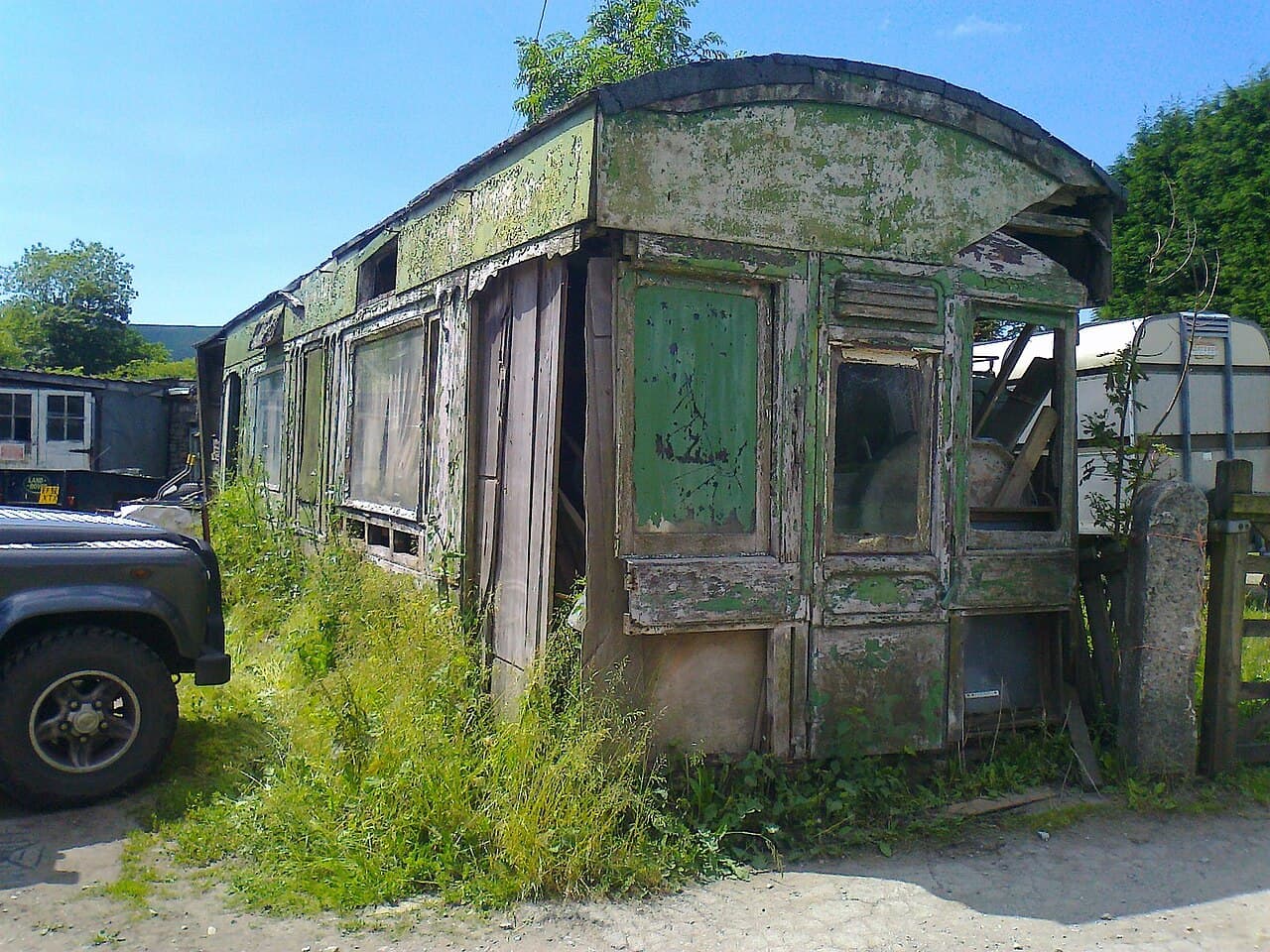
Most old sheds fail from the ground up. The USDA Forest Products Laboratory explains that serious decay occurs only when the moisture content of the wood is above the fiber saturation point, on average 30%,[1] and that dried wood reaches that point only when it is wetted by rain or condensation or is in contact with wet ground.[1] That is exactly where a shed's skids, floor joists and bottom plates sit. The same handbook recommends pressure-treated wood where wood is in contact with the ground, the highest decay hazard,[1] and many older or budget sheds were not built that way.
Look and press along the skids, the rim of the floor frame and the bottom edge of the siding. The Forest Products Laboratory describes two main kinds of decay: brown-rotted wood turns browner, can crack across the grain into cube-like pieces, shrinks, collapses and can be crushed into powder,[1] while white-rotted wood may look bleached and often feels spongy.[1] Earlier on, early decay often shows as abnormal mottling, with unnatural brown or bleached areas in the wood.[1]
A few soft floorboards are a repair. Soft skids or joists along a whole side, or a floor that bounces and dips, usually mean the base needs rebuilding, and that is most of the cost of a shed.
Check for termites
Virginia Cooperative Extension notes that wood structures in direct contact with the ground invite termite entrance.[2] The giveaway is flattened, muddy-looking mud tubes, most about the width of a pencil, running from the ground to the infested wood.[2] Termite damage hides well: termites eat the spring wood and leave the grain and outer surface intact, so the damage can go unnoticed,[2] but tapping the wood every few inches with the handle of a screwdriver can find the galleries: damaged wood sounds hollow.[2]
Active termites in a shed close to the house are a reason to call a pest control company whatever you decide about the shed.
Look up: the roof
Stains on the underside of the roof sheathing, daylight through the roof, or rafters that sag are the next thing to check. The good news is that wood kept air dry will not decay, and decay that is already there stops progressing,[1] so a leak found early often means new roofing and a sheet or two of sheathing. A roof that has leaked for years usually means rotted rafters and wall tops, which pushes the job toward replacement.
Is it still square and level?
Doors that no longer close, a visible lean, gaps opening at the corners, or a floor that slopes toward one side usually mean the base has settled or the framing has racked. A shed on blocks that have sunk can sometimes be re-levelled. A shed whose wall framing has rotted at the bottom cannot be straightened without rebuilding those walls.
What it is made of
The materials can change the decision, especially if the alternative is tearing it down.
- Treated wood. The Consumer Product Safety Commission says a residential wood structure built before 2004 that is not cedar or redwood was most likely built with CCA-treated wood.[3] The EPA does not require the removal of existing structures made with CCA-treated wood or the surrounding soil,[4] and says applying a penetrating protective coating, such as an oil- or water-based stain, on a regular basis may reduce the leaching of chemicals.[4] The EPA also says wood treated with chromated arsenicals should not be reused in products such as mulch, and CCA or other preservative-treated wood should not be burned in a residential setting.[4]
- Old paint. The EPA says buildings from before 1978 are more likely to have lead-based paint,[5] and that renovation or repair work that disturbs painted surfaces in older buildings and structures may create large amounts of lead dust.[5] Scraping and repainting a pre-1978 shed is not a casual weekend job.
- Old roofing or siding panels. Panels you cannot identify on an older shed may contain asbestos and should be tested before anyone cuts or breaks them.
Repair, replace or remove
Get a repair quote and price a new shed of the size you need before deciding. A repair that replaces framing is carpentry on a structure, so expect a contractor to quote it. A Class C licence covers single jobs over $1,000 but less than $30,000.[8]
If you replace it, check the permit rules first. Under Virginia's building code, one-story detached tool and storage sheds of 256 square feet or less do not need a building permit,[7] but local rules add to that. In Prince William County, for example, every shed needs zoning approval,[6] a building permit is needed for a shed larger than 256 square feet,[6] and even a shed under 256 square feet needs trade permits if electrical, plumbing or mechanical work is installed.[6]
If the answer is to take it down, see what tearing down a shed involves and what shed demolition costs in Virginia.
When to call a licensed pro
- Rot or termite damage reaches the skids, floor joists, sills or wall studs.
- The shed leans, the roof sags, or the floor has given way anywhere.
- It has wiring, a water line or a gas line.
- It was built before 1978 and the paint is peeling, or it has roofing or siding panels you cannot identify.
- You find mud tubes or swarming termites, especially if the shed is close to the house.
Check any contractor's licence before you sign; see how to check if a contractor is licensed in Virginia. Browse more junk removal and moving answers, see shed and structure teardown businesses, or find junk removal businesses around Blacksburg. If it is time for the shed to go, describe it on Loclis with photos of the floor, base and roof, and businesses quote on the same job.
Common questions
- Is a shed with a leaking roof worth fixing?
- Often, if the leak is caught early. Wood decays only when it stays wet, and the Forest Products Laboratory says decay already present will not progress once the wood is kept air dry. A roof that has leaked for years usually means rotted sheathing and rafters, which is when replacement starts to make more sense.
- How can I tell rot from just old, weathered wood?
- Weathered wood is grey and rough on the surface but firm underneath. Rotted wood is soft, crumbly or spongy, may break into small cubes, and often shows unnatural brown or bleached patches. Rot is most common where wood touches the ground or stays wet.
- Should I worry about an old pressure-treated shed?
- If it was built before 2004 and is not cedar or redwood, it was most likely built with CCA-treated wood. The EPA does not require existing CCA structures to be removed, but if you tear it down, the wood should not be burned or reused as mulch.[^epa-cca]
- Can I just replace the floor of a shed?
- Sometimes. If the walls and roof are sound, replacing a rotted floor frame can extend a shed's life, but it means supporting the building while the floor comes out, which is structural work for a contractor. Compare that quote with the price of a new shed on a better base.
- Do I need a permit to replace an old shed with a new one?
- It depends on the size and the locality. Virginia's building code exempts one-story sheds of 256 square feet or less from building permits, but some counties, such as Prince William, still require zoning approval for every shed, and any wiring needs its own permit.
Sources
- [1] Wood Handbook, Chapter 14: Biodeterioration of Wood, USDA Forest Service, Forest Products Laboratory. Checked October 27, 2026.
- [2] Signs of Subterranean Termite Infestation (Publication 444-501), Virginia Cooperative Extension. Checked October 27, 2026.
- [3] CCA-Pressure Treated Wood: Guidance for Outdoor Wooden Structures, U.S. Consumer Product Safety Commission. Checked October 27, 2026.
- [4] Chromated Arsenicals (CCA), U.S. Environmental Protection Agency. Checked October 27, 2026.
- [5] Reduce the Risk of Lead Exposure at Home, U.S. Environmental Protection Agency. Checked October 27, 2026.
- [6] Residential Shed, Prince William County Building Development Division. Checked October 27, 2026.
- [7] 13VAC5-63-80. Section 108 Application for permit (Virginia Uniform Statewide Building Code), Virginia General Assembly, Legislative Information System. Checked October 27, 2026.
- [8] Code of Virginia § 54.1-1100. Definitions, Virginia General Assembly, Legislative Information System. Checked October 27, 2026.
Want a pro to handle it?
Describe the job once. Licensed local businesses send quotes, and you pay only when you book one.
Get a quote from a local pro