How do I know when my pool needs resurfacing?
Resurface when the finish itself is failing: it is rough enough to scrape skin, cracked or flaking, or has lost its bond to the shell. San Diego County treats plaster cracks and chipping larger than one square foot as a reason to resurface. Rule out a leak first with a bucket test, then get a written assessment from a licensed pool contractor.
Free to ask. Local shops send quotes, and you pay only when you book one.
By Kasra Taheri, Founder, LoclisPublished
Researched and drafted with AI, then checked claim by claim against the sources listed below before it was published. Prices and rules change; the dates beside each source say when it was last checked.
Step by step
Read when to stop and call a pro, further down this page, before you start.
Step 1: Run your hand over the surface
With the pool full and clear, feel the steps and shallow-end walls from the edge or steps for roughness that scrapes skin. Do not go into an empty pool.
Step 2: Look for cracks and flaking
Walk the edge and note cracks that are widening and any chipped or flaking areas; San Diego County treats plaster cracks and chipping larger than one square foot as a reason to resurface.[1]
Step 3: Check the tile and coping
Look for missing or cracked tile along the waterline, which San Diego County says must be repaired or replaced.[1]
Step 4: Look at stains and etching
Note whether stains return in the same patches after cleaning and whether the finish looks etched, a sign of damage the Los Angeles County guide ties to roughness.[2]
Step 5: Rule out a leak
Run the evaporation bucket test; if the pool loses more water than the bucket in 24 hours, it may have a leak.[4]
Step 6: Document and get an assessment
Photograph the worst areas, write down when the problem began, and ask a licensed pool contractor for a written assessment.
Your pool needs resurfacing when the finish itself is failing: the surface feels rough enough to scrape skin, is cracking or flaking, or has lost its bond to the shell, and a patch no longer fixes it. Stains and dullness alone usually mean cleaning and water chemistry, not a new finish. First rule out a leak, because a leak is a different repair.
What a failing finish looks like
San Diego County's pool operator guide says it is time to resurface when the shell shows signs of damage that could cause cuts, scrapes or other injuries.[1] Its examples are specific. Plaster surfaces with cracks and chipping larger than one square foot call for resurfacing, and a fiberglass pool that shows any delamination must be resurfaced.[1] That is a California county's rule for public pools, but it is a useful yardstick for a backyard pool too.
Los Angeles County's public-pool inspection guide asks the same question from the inspector's side: plaster should be smooth, non-slip and free of excessive deterioration.[2] Its inspectors mark a pool as failing when the plaster is not smooth, or has extensive areas of etching or roughness, enough to be a hazard to swimmers.[2]
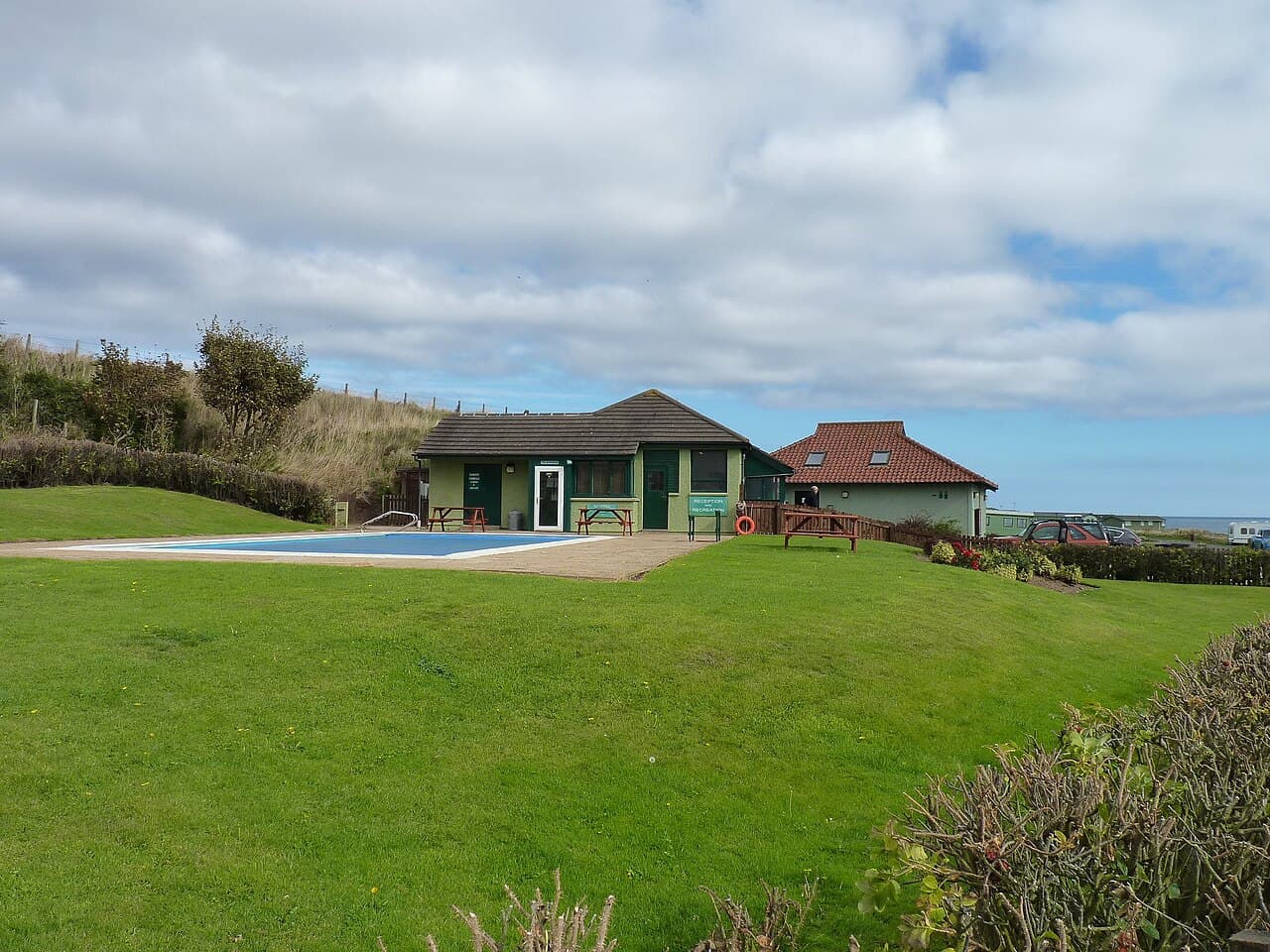
The same standard shows up closer to home. A Virginia Department of Health pool guide, compiled by the Portsmouth Health Department, says a pool surface should be an impervious material that keeps a smooth finish with no cracks or open joints and gives swimmers non-slip footing.[3]
Signs that point to resurfacing
- Rough patches. The floor or steps scratch bare feet or a swimsuit, especially in the shallow end and on steps.
- Cracks and flaking. Hairline cracks are common and often only cosmetic. Cracks that widen, chip or catch a fingernail are not.
- Hollow spots and loose finish. Pieces of finish that lift or sound hollow when tapped have lost their bond.
- Spreading stains that come back after cleaning. A finish worn open holds stains and algae, so the same patches return.
- Failed tile and coping. San Diego County adds that missing or cracked tiles must be repaired or replaced.[1]
Chemistry can cause the damage, and can fool you
San Diego County's guide shows a photo of a plaster surface with damage caused by unbalanced water chemistry.[1] The EPA's WaterSense pool guide gives the same warning: a chemical imbalance could corrode the pool and lead to structural damage.[4] If your plaster was etched by chemistry, a new finish will fail the same way unless the water is kept balanced afterwards. Tell the contractor how the water has been managed.
Rule out a leak first
If the water level keeps dropping, a worn finish may not be the cause. The EPA's guide describes an evaporation bucket test: fill a bucket, set it on a pool step or bench so at least two-thirds of it is submerged, mark the water level inside the bucket and the pool outside it, and check both after 24 hours with the pool's systems shut down.[4] If the pool loses more water than the bucket, the pool may have a leak.[4] For the full test, see how to find a leak in a pool, and read who to call to fix a leaking pool if the test fails.
Check the shell on a schedule
San Diego County's guide recommends a monthly inspection of the pool shell, including plaster, tile and coping, because it lets the operator make minor repairs instead of waiting for costly major ones.[1] A few minutes each month while the pool is full and clear is enough to catch changes early.
Stop and call a pro if
- The water is dropping and the bucket test says it is a leak. Resurfacing over a leaking shell wastes money. A pool contractor should find the leak first.
- You see cracks that open up, bulges or a shifting deck. That points to the shell or ground, not the finish.
- Pieces are coming off in your hand or the finish is cutting people. Keep swimmers out.
- You are tempted to drain the pool yourself to look. Draining an in-ground pool is something to leave to the contractor. The Portsmouth guide says in-ground pools should have hydrostatic relief valves to relieve groundwater pressure on the pool shell,[3] and the EPA tells owners to check local regulations before draining pool water into sewers or onto the property.[4] A contractor plans for both.
Getting help in Virginia
Photograph the problem areas, note when the roughness or stains began, and ask a licensed pool contractor for a written assessment. Read how much pool resurfacing costs in Virginia to budget for it and how to choose a pool resurfacing contractor before you sign. More pool guidance is in the pool and spa answers, and you can browse pool and spa services on Loclis.
When you are ready, describe the pool once and licensed local pool businesses quote it.
Common questions
- Do small cracks in pool plaster mean I need resurfacing?
- Not by themselves. Hairline cracks are common and often cosmetic. San Diego County's guide sets the line at plaster cracks and chipping larger than one square foot, and at any delamination on a fiberglass pool. Cracks that widen, flake or leak are worth a contractor's look.
- Can I tell if the finish is the problem or the pool is leaking?
- Run the EPA's bucket test. If the pool loses more water than a bucket floating in it over 24 hours, the pool may have a leak, and that needs to be found before resurfacing.
- Are stains a reason to resurface?
- Usually not on their own. Stains that return in the same spots after cleaning can mean the finish is worn open, but check water chemistry and cleaning first.
- Can I drain my pool to inspect it?
- Leave that to a contractor. In-ground pools are meant to have hydrostatic relief valves to relieve groundwater pressure on the shell, and the EPA says to check local rules before discharging pool water.
- Does my pool surface need to be smooth?
- Yes. Virginia Department of Health guidance describes a pool surface that keeps a smooth finish with no cracks or open joints and gives non-slip footing.
Sources
- [1] Swimming Pool Operator's Guide, 1st Edition, County of San Diego Department of Environmental Health, Food and Housing Division. Checked October 27, 2026.
- [2] Public Pool Inspection Guide, Los Angeles County Department of Public Health. Checked October 27, 2026.
- [3] Pool Operation and Maintenance Guide (Portsmouth Health Department, 2018), Virginia Department of Health. Checked October 27, 2026.
- [4] Jump Into Pool Water Efficiency (EPA-832-F-22-015, September 2022), U.S. Environmental Protection Agency, WaterSense. Checked October 27, 2026.
Want a pro to handle it?
Describe the job once. Licensed local businesses send quotes, and you pay only when you book one.
Get a quote from a local pro