Who should I call to fix a leaking pool?
Call a licensed pool contractor, who in Virginia can repair in-ground pools and often finds leaks too. Bring in a licensed plumber or electrician when the leak or the fix involves house plumbing or pump wiring, which the pool specialty excludes. Run a bucket test first, check the DPOR licence, and get the work in writing.
Free to ask. Local shops send quotes, and you pay only when you book one.
By Kasra Taheri, Founder, LoclisPublished
Researched and drafted with AI, then checked claim by claim against the sources listed below before it was published. Prices and rules change; the dates beside each source say when it was last checked.
Step by step
Read when to stop and call a pro, further down this page, before you start.
Step 1: Run the bucket test
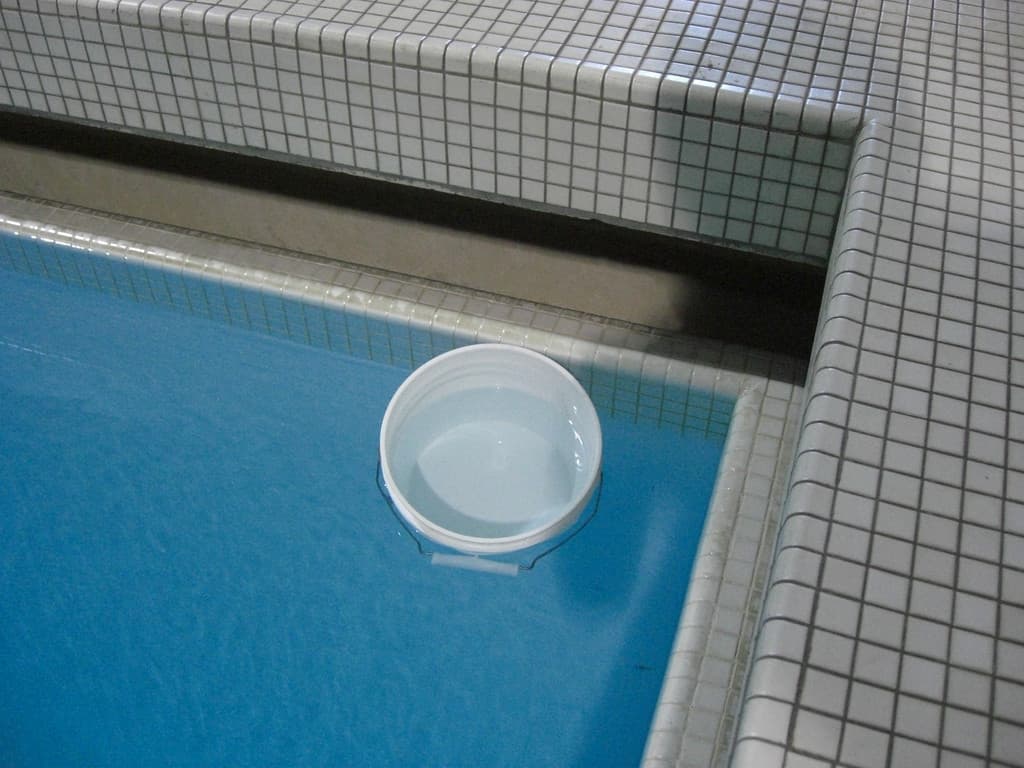
Measure your loss with the 24-hour bucket test and keep the readings.[2]
Step 2: Note the clues
Write down wet spots, air bubbles, and whether the loss changes with the pump on.
Step 3: Decide which trade
Pool liner, shell and fittings go to a pool contractor; house plumbing and wiring go to a licensed plumber or electrician.[1]
Step 4: Look up the licence
Check each company on the DPOR website; a number on a business card does not prove a valid licence.[3]
Step 5: Get a written contract
Ask for the repair, price, schedule and warranty in writing.[3]
Step 6: Ask about the permit
Ask whether your repair needs a permit and who will apply for it.
Step 7: Limit the deposit
Keep any deposit to 10% of the price or $1,000, whichever is less.[3]
Call a licensed pool contractor first. In Virginia, the swimming pool construction specialty covers the repair of in-ground pools, so that company can find the leak and fix a liner, shell, skimmer or return fitting. Bring in a licensed plumber or electrician when the leak or the fix involves house plumbing or pump wiring, because those trades are not part of the pool specialty.
Who does what
Pool contractor or pool service company. Virginia defines swimming pool construction contracting as the service that provides for the construction, repair, improvement, or removal of in-ground swimming pools.[1] The commercial and residential building contractor classifications, among others, also provide for this function.[1] This is who you want for a leak in the liner, shell, skimmer, wall fittings or the pool-side piping. Many also do leak detection.
Licensed plumber. The same definition says that no trade related plumbing, electrical, backflow, or HVAC work is included in this specialty.[1] If the leak is in the water line feeding the pool or the house side of the plumbing, ask who will hold the plumbing licence on the job.
Licensed electrician. Pump motors, lights and bonding are wiring. A pool contractor cannot do trade electrical work under the pool specialty,[1] so water near equipment wiring or a light that is leaking is an electrician's call.
A leak-detection specialist. If the bucket test says water is leaving and nobody can find where, a company that does leak detection can often locate the source before any digging. Ask what methods they use and what the report will tell you.
Before you call
Run the bucket test and keep your readings. The EPA says that if your pool is losing more than 2 inches of water per week, or 3 inches in hot, dry areas with high evaporation rates, then it is likely you have a leak,[2] and that an automatic fill should be shut off for 24 hours once every three months to test for leaks.[2] The steps are in how to find a leak in your pool. A contractor can work much faster when you can say what the test showed, where the ground is wet and whether the loss changes when the pump runs.
Check the licence
If the work you are considering is valued at $1,000 or more, a valid Virginia Contractor's License is required for the license category in which the contractor is to work.[3] The Board for Contractors warns that a license number in an advertisement or on a business card does not necessarily mean the contractor's license is valid,[3] so look the company up on the DPOR website and read any complaint history before you sign.
Licensed contractors are subject to laws designed to protect the consumer, and the Board for Contractors says hiring one gives you access to the Contractor Transaction Recovery Fund in case of improper or dishonest conduct.[3] That fund may pay claims up to $20,000 to consumers who are awarded civil court judgments.[3]
Permits
Roanoke County notes that the Virginia Uniform Statewide Building Code requires a building permit for any swimming pool that has a surface area greater than 150 square feet or is more than 24 inches deep, and that for pools it recommends that the licensed pool contractor obtain the pool permit, though the homeowner may do so.[4] Ask any contractor you are considering whether your repair needs a permit and who will apply for it.
What to ask
- Are you licensed in Virginia for pool work, and what is the licence number?
- How will you locate the leak, and what does that cost if you find nothing?
- Who handles plumbing or electrical work if it is needed?
- What is in writing: the repair, price, start and finish dates, and the warranty?
Virginia law requires all licensed contractors to provide a written contract for residential work,[3] and the Board for Contractors recommends an initial deposit of no more than 10% of the total price or $1,000, whichever is less.[3]
Stop and call a pro if
- The pool drops overnight, or the water is running somewhere you cannot see.
- You find cracks, a bulging wall or sinking ground near the pool.
- Water is near the pump, lights or breaker box. Keep clear and call a licensed electrician.
- A salesperson pressures you to sign today or asks for payment in full before work begins. Walk away and check the licence.
- You cannot find the leak after the bucket test and a look around the equipment.
Getting help in Virginia
To see what the job might cost, read how much pool leak repair costs in Virginia. For routine care, see how to clean a swimming pool, browse pool and spa answers or find local pool pros.
When you are ready, describe the leak and licensed local pros can quote it.
Common questions
- Who do I call first if my pool is losing water?
- Start with the bucket test, then call a licensed pool contractor or a leak-detection company. They can find where the water is going before anything is opened up.
- Can a pool company fix leaking pipes to my house?
- Not necessarily. Virginia's pool specialty does not include trade plumbing, electrical, backflow or HVAC work, so a licensed plumber may be needed for that part.
- Do I need a licence to hire for a pool leak repair?
- The contractor needs one for work valued at $1,000 or more, according to the Board for Contractors. Look the company up on the DPOR website first.
- Who applies for the permit?
- If one is needed, Roanoke County recommends the licensed pool contractor obtain the pool permit, though the homeowner may do so. Other localities may differ, so ask yours.
- What if the leak is in the pump wiring or light?
- Treat it as an electrical problem. Keep clear of the water and call a licensed electrician.
Sources
- [1] 18VAC50-22-30. Definitions of specialty services, Virginia Administrative Code, Virginia General Assembly. Checked October 27, 2026.
- [2] Jump Into Pool Water Efficiency (EPA-832-F-22-015, September 2022), U.S. Environmental Protection Agency, WaterSense. Checked October 27, 2026.
- [3] What You Should Know Before You Hire a Contractor, Virginia Board for Contractors, DPOR. Checked October 27, 2026.
- [4] Residential: Installing a Swimming Pool or Hot Tub, Roanoke County, Virginia, Building Safety. Checked October 27, 2026.
Want a pro to handle it?
Describe the job once. Licensed local businesses send quotes, and you pay only when you book one.
Get a quote from a local pro