How do I store a generator so it starts when I need it?
Fuel is the problem. Gasoline begins to degrade in as little as 30 days, and gas left in the carburetor can gum it up in 2 to 4 weeks. Before storage, add a stabilizer made for your fuel, run the engine about 10 minutes, then either drain the carburetor or run it dry. Store it cool, dry and clean.
Free to ask. Local shops send quotes, and you pay only when you book one.
By Kasra Taheri, Founder, LoclisPublished
Researched and drafted with AI, then checked claim by claim against the sources listed below before it was published. Prices and rules change; the dates beside each source say when it was last checked.
Step by step
Read when to stop and call a pro, further down this page, before you start.
Step 1: Unplug everything
Disconnect all appliances and cords from the generator before you start.[1]
Step 2: Add stabilizer to the fuel
Add a properly formulated fuel stabilizer to the gasoline in the tank, following the package directions.[1]
Step 3: Run it for 10 minutes
Outdoors, with the fuel valve on, run the generator for 10 minutes so the treated gasoline cycles through the fuel system and carburetor.[1]
Step 4: Let it cool
Turn the ignition switch off and let the generator cool completely before going further.[1]
Step 5: Empty the carburetor
Either drain the carburetor into a proper container using the drain bolt, or shut the fuel valve and let the engine run until it stops from fuel starvation.[1]
Step 6: Check the battery
On an electric-start model, disconnect the battery and keep it charged, following your manual.[1]
Step 7: Wipe it down
Clean dust and debris from the outside of the generator.
The short version
Stale fuel is a common reason a stored generator will not start. Gas begins to degrade in as little as 30 days which can lead to your engine's fuel system clogging and your equipment not starting the following season.[2] So storing a generator well mostly means treating the fuel and getting it out of the carburetor, then keeping the machine clean and dry.
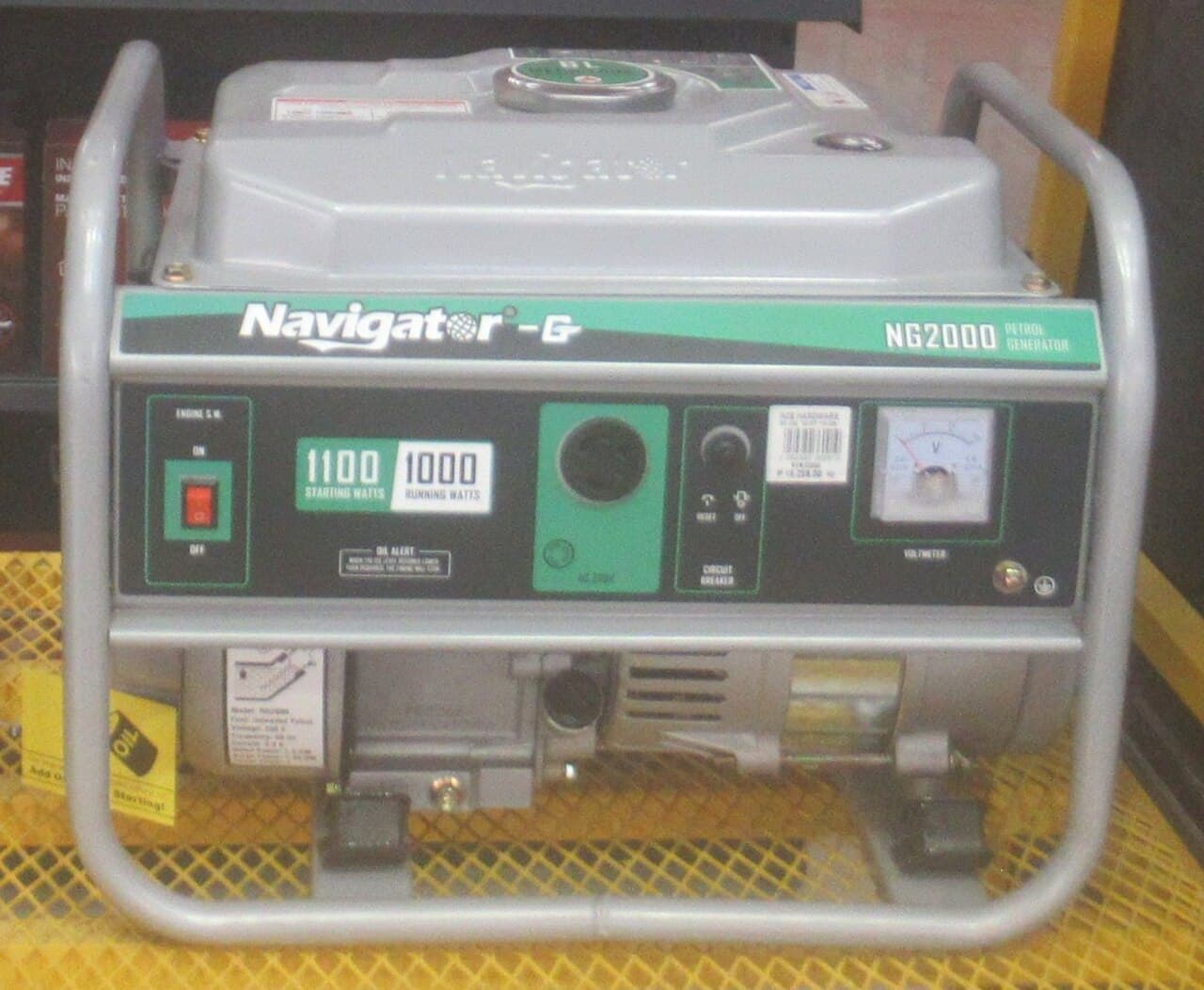
The details below follow one manufacturer's manual for a portable generator, plus Briggs & Stratton's storage guidance. Your own owner's manual comes first if it says something different.
Why stored gas causes trouble
Gasoline in the gasoline tank has a maximum shelf life of up to 1 year with the addition of properly formulated fuel stabilizers and if stored in a cool, dry place.[1] Gasoline in the carburetor, however, may gum up and clog the carburetor if it isn't used or drained within 2-4 weeks.[1] The carburetor is the weak point because its tiny passages clog first.
Ethanol makes it worse. Our engines work well with 10% or less ethanol blend gasoline, the same manual says, but these blends can eventually separate, leaving water or a watery goo in the tank, fuel valve and carburetor.[1] There are only a few suppliers of fuel stabilizer that are formulated to work with ethanol-gasoline blends.[1] Read the stabilizer label before you buy it.
Damage from the wrong fuel is also the kind a warranty may not cover: any damages or hazards caused by using improper gasoline, improperly stored gasoline, and/or improperly formulated stabilizers, are not covered by manufacturer's warranty.[1]
Two ways to store it
Treat the fuel and leave it. Briggs & Stratton's approach for its engines is to top off the tank, add an alcohol-free fuel stabilizer and ethanol treatment according to the package directions, and run the engine for a few minutes so the treated fuel circulates through the fuel system.[2] Check that this fits your generator's manual before relying on it.
Treat it, then empty the carburetor. Champion's manual does both: stabilizer in the tank, a 10-minute run, then either drain the carburetor or run it dry. Start and run the generator for 10 minutes so the treated gasoline cycles through the fuel system and carburetor.[1] After it cools, use the drain bolt on the carburetor to empty any excess gasoline from the carburetor into an appropriate container,[1] or shut the fuel valve and let the engine run until it stops from fuel starvation. Be sure to properly dispose of the drained gasoline according to local regulations or guidelines.[1]
If the generator will sit longer than a year, the manual is blunt: for storage over 1 year, the gasoline tank and carburetor must be completely drained of gasoline.[1] For shorter breaks, it is advisable to always shut off the gasoline supply, run the engine to starvation and drain the tank when the equipment is not in use for more than 30 days.[1]
Handle the fuel safely
Gasoline and gasoline vapors are highly flammable and extremely explosive.[1] Only fill or drain fuel outdoors in a well-ventilated area.[1] Always keep fuel away from sparks, open flames, pilot lights, heat and other sources of ignition.[1] Allow generators to properly cool before transport or storage.[1]
The rest of the storage checklist
- Battery. On an electric-start model, disconnect and charge the battery.[1]
- Clean it. Wipe dust, chaff and debris off the engine and frame before it goes away.
- Store it dry. Store the generator in a cool, dry place out of direct sunlight.[1]
- Never run it in the storage space. Never run a generator in the home, garage, or crawlspace.[3]
Starting it again
Check the oil, check the air filter for bugs or cobwebs, and connect the battery. Then, if the carburetor was emptied, add fresh gasoline, open the fuel valve and look for leaks. After 5 minutes check the carburetor and air filter areas for any leaking gasoline.[1] Start it outdoors with nothing plugged in.
Stop and call a pro if
- It sat for a long time with fuel in it. If the generator has been improperly stored for a long period of time with gasoline in the gasoline tank and/or carburetor, all fuel must be drained and the carburetor must be thoroughly cleaned.[1] Taking the carburetor apart is shop work.
- Fuel leaks from the carburetor, fuel line or tank after you refill. The manual says a leak means the carburetor will need to be disassembled and cleaned or replaced.[1]
- It starts but gives no power. See why a generator runs but produces no power.
- You smell gas indoors. Leave the space and ventilate it before anything else.
Getting help in Virginia
For other small-engine upkeep, see how to keep a small engine carburetor from gumming up and more small engine answers. You can also browse local handyman and repair businesses on Loclis.
When the generator needs a shop, describe the problem and local pros can quote it.
Common questions
- How long can gasoline sit in a generator?
- Not long without help. Briggs & Stratton says gas begins to degrade in as little as 30 days.[^bs-store] One generator manufacturer says gasoline in the tank can last up to 1 year with a properly formulated stabilizer in a cool, dry place, but gas in the carburetor may gum it up within 2 to 4 weeks.[^champion]
- Should I store a generator with a full tank or an empty one?
- It depends on your manual. Briggs & Stratton recommends storing with a full tank of treated fuel, which limits moisture in the tank.[^bs-store] Champion's manual has you add stabilizer, run the engine, then drain the carburetor or run it dry.[^champion] Whichever you choose, do not leave untreated gas sitting.
- Does ethanol gas hurt a stored generator?
- It can. One manufacturer notes that ethanol-gasoline blends can eventually separate, leaving water or a watery goo in the tank, fuel valve and carburetor.[^champion] Use the fuel grade your manual allows and a stabilizer made for ethanol blends.
- Is it safe to start the generator in the garage to test it?
- No. Never run a generator in the home, garage, or crawlspace, and opening doors and windows or using fans will not stop carbon monoxide building up.[^cpsc] Roll it outside, well away from windows, doors and vents.
- What if it will not start after storage?
- Old fuel in the carburetor is the usual suspect. If the generator was improperly stored for a long time with gasoline in it, all fuel must be drained and the carburetor thoroughly cleaned, which the manufacturer calls technically advanced work.[^champion] That is a shop job.
Sources
- [1] Operator's Manual Model #100538, 7500W Portable Generator, Champion Power Equipment. Checked October 28, 2026.
- [2] Storing Your Mower & Outdoor Power Equipment, Briggs & Stratton. Checked October 27, 2026.
- [3] The "Invisible" Killer: Carbon Monoxide (CPSC-464), U.S. Consumer Product Safety Commission. Checked October 27, 2026.
Want a pro to handle it?
Describe the job once. Licensed local businesses send quotes, and you pay only when you book one.
Get a quote for Small Engines