Why does my portable generator run but produce no power?
Most often a tripped circuit breaker, a tripped GFCI outlet, an overload, or a bad cord or appliance. Unplug everything, reset the breaker and the GFCI, then test one known-good device plugged straight into the generator. If there is still no output, the cause is inside the generator, which is a service-centre job.
Free to ask. Local shops send quotes, and you pay only when you book one.
By Kasra Taheri, Founder, LoclisPublished
Researched and drafted with AI, then checked claim by claim against the sources listed below before it was published. Prices and rules change; the dates beside each source say when it was last checked.
Step by step
Read when to stop and call a pro, further down this page, before you start.
Step 1: Move it outside and unload it
Run the generator outdoors, away from doors, windows and vents, and unplug every cord from it.[2]
Step 2: Stop the engine and check the oil
Shut the generator off properly, set it on level ground and confirm the oil is at the right level; the manual lists low oil as a cause of the generator not starting or shutting down.[1]
Step 3: Restart with nothing attached
Start the generator with no electrical load attached and let the engine run for several minutes to stabilize.[1]
Step 4: Reset the circuit breaker
Push the breaker button back in if it has popped out; the troubleshooting table lists an open circuit breaker as a cause of no AC output.[1]
Step 5: Press reset on the GFCI outlet
On a GFCI receptacle, press the RESET button; if the indicator light does not come back on or the GFCI cannot be reset, it must be replaced.[1]
Step 6: Test with one known-good device
Plug a lamp or tool you know works straight into the generator, with no extension cord, and turn it on.
Step 7: Add loads one at a time
Plug in and turn on the largest load first, let the engine stabilize, then add the next item.[1]
Step 8: Check cords and devices
Replace any cord that is worn, damaged or frayed, and any appliance that trips the breaker on its own.[1]
Check the simple things first
A generator that runs but gives no power is usually a protection device that has switched off, not a dead generator. The manufacturer's troubleshooting table for one 7,500-watt unit lists these causes of no AC output: a cable that is not properly connected, a defective connected device, an open circuit breaker, a faulty brush assembly, a faulty automatic voltage regulator (AVR) and loose wiring.[1] The first three you can check in ten minutes. Run it outdoors for every test: operate portable generators outdoors and away from open doors, windows, and vents.[2]
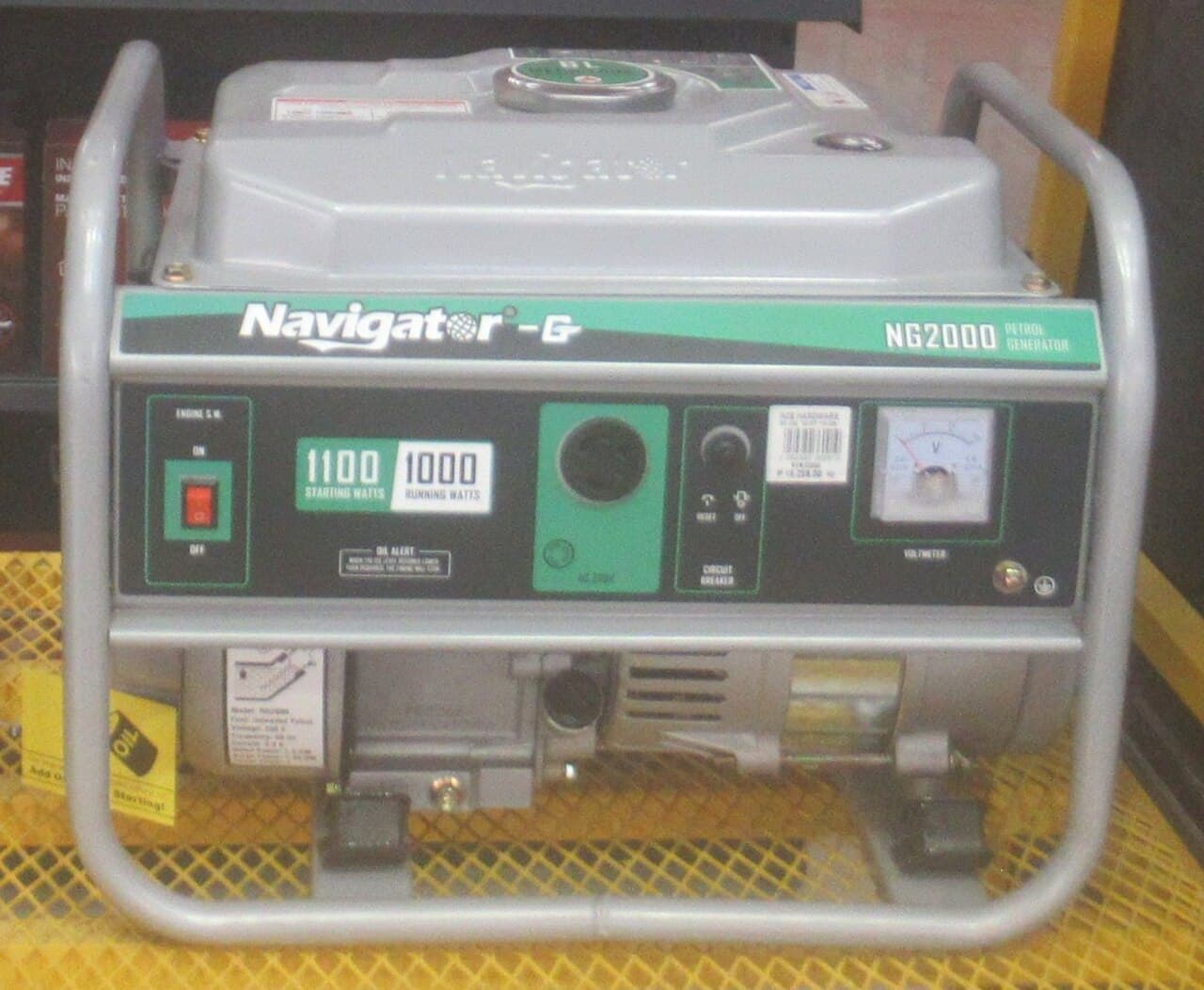
Models differ, so look at the troubleshooting table in your own owner's manual; the model number is on the nameplate.
Restart with nothing plugged in
Unplug every cord, stop the engine, and start it again with no electrical load attached.[1] Do not start or stop the generator with electrical devices plugged in and turned on.[1] The troubleshooting table lists a unit loaded during start up as a cause of a generator not starting.[1] Let the engine run for several minutes before you connect anything.
Reset the breaker and the GFCI
Look at the front panel. Many portable generators have a push-button circuit breaker that pops out when it trips; push it back in. Others have a flip-style breaker that has to be fully on. The troubleshooting table's fix for an open circuit breaker is simply "Reset circuit breaker".[1]
Then check any GFCI outlet. In the event of a ground fault, a GFCI trips automatically to stop the flow of electricity.[1] Press the RESET button on the front of the receptacle to restore the flow of electricity.[1] If the indicator light does not come back on or if the GFCI cannot be reset, it must be replaced.[1] If the GFCI trips again as soon as you plug something in, the cord or the appliance is likely the problem, usually water or damaged insulation.
A GFCI is not an overload device: GFCI does not protect against circuit overloads.[1] That is the job of the circuit breaker.
Test with one known-good device
Plug a lamp or a tool you know works directly into the generator, not through an extension cord, and switch it on. If it works, the generator is fine and the problem is the cord, the device, or the load you were trying to run. Do not use electrical cords that are worn, damaged or frayed.[1]
Is it overloaded?
Volts times amps equals watts.[1] To check your load, total the running watts of the items you plan to run, then add the highest starting wattage of any one of them.[1] Motors in refrigerators, pumps and saws pull extra power for a moment as they start. If the total is above the generator's rating, the breaker will open.
To bring a load on without tripping it, plug in and turn on the first item, with the largest load first, let the engine stabilize, then add the next item.[1]
What a repair shop looks at
If the breaker is on, the GFCI is reset and a known-good device still does not run, the fault is inside the generator. The same table lists a faulty brush assembly, a faulty AVR and loose wiring, and the fix for a faulty brush assembly is "Replace brush assembly (Service Center)".[1] These parts sit at the alternator end, and testing them needs a meter and some knowledge of how the generator is wired. Leave them to a small-engine or generator technician.
Stop and call a pro if
- The breaker or GFCI trips every time, even with nothing plugged in. The fault is inside the generator or its wiring.
- There is no output at all after you have reset the breaker and the GFCI, confirmed the oil level and tested one known-good device.
- You smell burning, see smoke, or hear the engine labour or surge when a small load is connected. Shut it down.
- You want to power the house. Do not plug the generator into any electric outlet in your home.[1] Doing so could create a connection to the utility company power lines.[1] Connection to your home's electrical system requires a listed 30A transfer switch installed by a licensed electrician.[1]
- You feel dizzy or weak while it is running. Get to fresh air immediately. Never use a portable generator inside homes, garages, crawlspaces, sheds or similar areas. Deadly levels of carbon monoxide can quickly build up in these areas and can linger for hours, even after the generator has shut off.[3]
Getting help in Virginia
If the generator needs a shop visit, read how to store a generator so it starts when you need it to keep it from happening again, or browse more small engine repair answers. Browse local handyman and repair businesses on Loclis.
When you are ready, describe the problem and local pros can quote it.
Common questions
- Why does my generator run fine but nothing works when I plug it in?
- The engine and the electrical side are separate systems. A running engine with no output usually points to an open circuit breaker, a tripped GFCI outlet, a bad cord or device, or a fault in the generator end, such as the brush assembly or the voltage regulator. Start with the breaker and GFCI, then test one known-good device.
- What does the GFCI reset button do on a portable generator?
- In the event of a ground fault, a GFCI trips automatically to stop the flow of electricity,[^champion] and the green indicator light goes out. Pressing RESET restores power. If it trips again right away, look for a wet or damaged cord or appliance first.
- Can an overloaded generator stop producing power?
- Yes. Overloading opens the circuit breaker, and the troubleshooting table lists an overload as a cause of repeated breaker tripping.[^champion] Add up the running watts of what you plan to power, plus the highest starting wattage of any one item, and stay under the generator's rating.
- Is it safe to plug the generator into a wall outlet to power the house?
- No. The manufacturer says not to plug the generator into any outlet in your home, because it could create a connection to the utility company power lines.[^champion] Plug appliances directly into the generator, or have a licensed electrician install a transfer switch.
- Can I run it in the garage with the door open to test it?
- No. Never run a generator in the home, garage or crawlspace, and opening doors and windows or using fans will not prevent carbon monoxide build-up.[^cpsc] Test it outdoors.
Sources
- [1] Operator's Manual Model #100538, 7500W Portable Generator, Champion Power Equipment. Checked October 28, 2026.
- [2] The "Invisible" Killer: Carbon Monoxide (CPSC-464), U.S. Consumer Product Safety Commission. Checked October 27, 2026.
- [3] Carbon Monoxide's Impact on Indoor Air Quality, U.S. Environmental Protection Agency. Checked October 27, 2026.
Want a pro to handle it?
Describe the job once. Licensed local businesses send quotes, and you pay only when you book one.
Get a quote for Small Engines