How do I take care of hardwood floors?
Keep grit and water off the floor, clean with a neutral-pH cleaner and a dry mop, and never use wet or steam mops. Put mats at doors and felt pads under furniture, hold humidity near 35 to 55 percent, and recoat before the finish wears through to bare wood.
Free to ask. Local shops send quotes, and you pay only when you book one.
By Kasra Taheri, Founder, LoclisPublished
Researched and drafted with AI, then checked claim by claim against the sources listed below before it was published. Prices and rules change; the dates beside each source say when it was last checked.
Step by step
Read when to stop and call a pro, further down this page, before you start.
Step 1: Sweep or dust-mop
Remove loose dirt and grit often with a soft broom, dust mop or vacuum without a beater bar.[1]
Step 2: Wipe spills at once
Clean spills with a soft cloth when they happen.[4]
Step 3: Clean with the right product
Use a neutral-pH flooring cleaner with a dry mop, and no wet or steam mops.[4]
Step 5: Fit felt pads
Put felt pads under furniture legs and replace them when they wear.[4]
Step 6: Keep humidity steady
Hold the room between 35% and 55% with a hygrometer and a humidifier or dehumidifier.[4]
Step 7: Trim pet nails and shade the sun
Keep pet nails groomed and use window treatments in the brightest hours.[1]
Step 8: Recoat when the shine fades
Hire a flooring pro to buff and recoat before the finish wears through.[2]
Keep grit off, moisture out, humidity steady
Hardwood lasts when you do four things: keep dirt off it, keep water off it, hold indoor humidity steady and protect the finish. The finish takes the wear, so care is mostly about sparing it. A little attention each week costs far less than the sanding and refinishing a neglected floor eventually needs.
The fact remains that all floors will get scratched, regardless of maintenance routine,[1] so the aim is to slow the wear, not stop it.
Cleaning routine
Sweep or dust-mop often, because grit acts like sandpaper underfoot. Bona's advice is to avoid stiff bristled brooms, wet mops and vacuums with beater bars and wheels.[1] Shaw Floors lists the same cautions: don't use wet mops or steam mops.[4]
For the occasional deeper clean, always use a neutral-ph flooring cleaner.[4] Skip the rest: don't use harsh chemicals, ammonia, or abrasive cleaners,[4] and don't use oil-based wax or polish on your hardwood.[4] Wipe up spills right away with a soft, dry cloth.
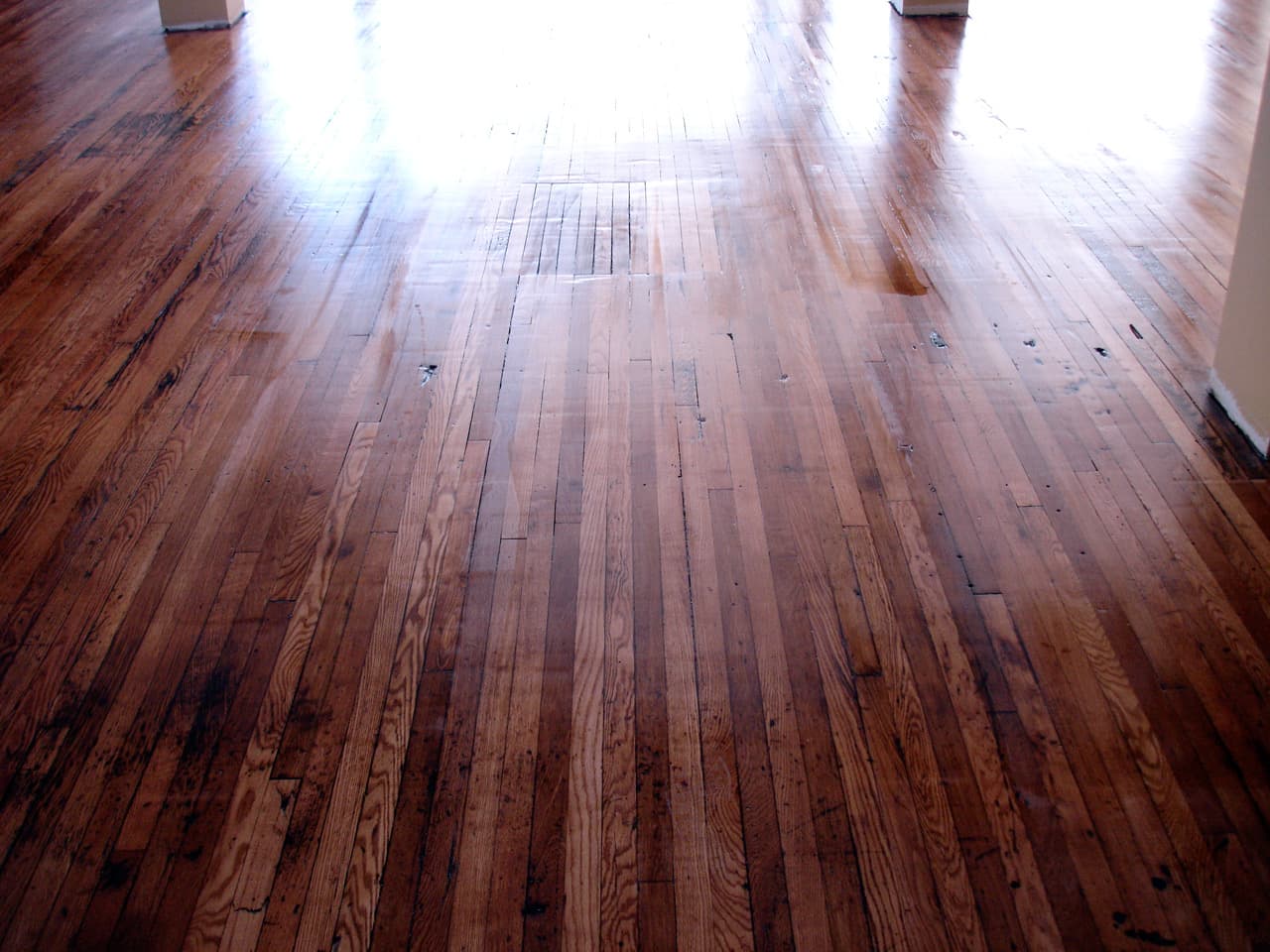
Shaw also suggests a professional cleaning anywhere from 6-18 months depending on traffic.[4]
Protect the surface
- Mats at doors. Place walk-off mats at entrances to trap dirt and moisture.[4] Avoid rubber backed mats since they can lock in moisture and damage floors.[1]
- Felt pads. Use felt pads under furniture legs to avoid scratches,[4] and lift furniture rather than dragging it.
- Shoes. High heels and sports shoes do not evenly distribute weight, making dents and pock marks a very real risk.[1]
- Pets. Make sure pet nails are properly groomed and maintained.[1]
- Sun. Protect floors from direct sunlight to prevent fading.[4] Curtains or blinds in the brightest hours help; moving rugs now and then lets the floor age evenly.
Hold humidity steady
Wood moves with the air around it, which is why Virginia floors gap in winter and can cup in a damp summer. Shaw Floors advises: maintain consistent humidity levels (35-55%) to prevent warping.[4] A hygrometer in the main room, a humidifier in the heating season and air conditioning or a dehumidifier in summer keep it there. For the winter side of the story, see why hardwood floors gap in winter.
Recoat before you have to refinish
A floor that is losing its shine is a candidate for a recoat. Recoating hardwood floors is excellent preventative maintenance and can save you money over the life of your floor.[2] It matters because refinishing hardwood floors requires the most labor and can only be done a limited number of times throughout a floor's life.[2] Catch wear while it is still in the finish, not the wood.
When the finish is worn through, see how to refinish hardwood floors, what it costs in Virginia and whether to refinish or replace.
Stop and call a pro if
- Water has soaked in and the boards are dark, cupped or soft. Dry the surface and call a flooring pro or a water-damage specialist before it spreads.
- The finish is worn through to bare wood in traffic paths. A recoat will not fix that; it needs sanding.
- Deep gouges or boards that have lifted. These need repair, not cleaning.
- You want to sand a pre-1978 home yourself. Homes built before 1978 are more likely to have lead-based paint, and EPA recommends hiring a lead-safe certified contractor for work that disturbs it.[3]
Getting help in Virginia
Browse more flooring answers or look at flooring pros on Loclis. When you want a recoat or refinish quoted, describe the floor and local flooring businesses will quote it.
Common questions
- Can I use a steam mop on hardwood floors?
- No. Shaw Floors lists it plainly: don't use wet mops or steam mops.[^shaw-hardwood]
- What is the best cleaner for hardwood?
- A neutral-pH flooring cleaner is the safe choice.[^shaw-hardwood] Avoid ammonia, abrasive cleaners and oil-based wax or polish.
- How often should hardwood floors be recoated?
- There is no single schedule; it depends on traffic and how fast the finish dulls. Recoat when the sheen fades but before the finish wears through to bare wood. A flooring pro can judge it from the floor.
- Does hardwood need a humidifier?
- Often in winter. Shaw advises a consistent 35-55% humidity to prevent warping,[^shaw-hardwood] and a humidifier is the usual way to hold it in the heating season.
- Do rugs protect or harm hardwood?
- Both, depending on the rug. Use mats and rugs where floors get the most stress, but avoid rubber backed mats since they can lock in moisture and damage floors.[^bona-prevent]
Sources
- [1] Preventing Scratches on Hardwood Floors, Bona. Checked October 27, 2026.
- [2] Recoat Hardwood Floors Guide, Bona. Checked October 27, 2026.
- [3] Lead-Safe Renovations for DIYers, U.S. Environmental Protection Agency. Checked October 27, 2026.
- [4] Hardwood Care, Shaw Floors. Checked October 27, 2026.
Want a pro to handle it?
Describe the job once. Licensed local businesses send quotes, and you pay only when you book one.
Get a quote from a local pro