How do I turn my sprinkler system back on in the spring?
Wait until the soil is frost-free about 12 inches down, check the backflow device and clear the heads, then open the main valve slowly to avoid water hammer. Run each zone by hand, watch for leaks, mist and stuck heads, check pressure is 45 to 75 psi, then set your spring schedule.
Free to ask. Local shops send quotes, and you pay only when you book one.
By Kasra Taheri, Founder, LoclisPublished
Researched and drafted with AI, then checked claim by claim against the sources listed below before it was published. Prices and rules change; the dates beside each source say when it was last checked.
Step by step
Read when to stop and call a pro, further down this page, before you start.
Step 1: Check the soil
Dig a small hole beside the lawn and confirm the soil is frost-free about 12 inches down before starting.[1]
Step 2: Look over the backflow device
Check it for visible cracks or winter freeze damage, and confirm the drain plug is tight and the valves are closed.[1] Do not open or test it yourself.
Step 3: Clear the heads
Trim grass and clear debris from around each sprinkler head so the stem can pop up, and note any cracked parts.[1]
Step 4: Check the controller
Confirm the date and time, then switch it to manual watering mode so you can run one zone at a time.[1]
Step 5: Open the main valve slowly
Open the main shut-off valve gradually so the lines pressurise without water hammer.[1]
Step 7: Check the pressure
Use a pressure gauge to confirm the system sits between 45 and 75 psi.[1]
Step 8: Set the spring schedule
Reprogram the watering days and run times for spring conditions and adjust as the weather changes.[1]
To turn a sprinkler system back on in spring, wait until the ground has thawed, look over the backflow device and valves, clear the heads, check the controller, open the main valve slowly, then run each zone by hand and watch for leaks. Rain Bird tells homeowners to "check if the soil around your lawn is completely frost-free at least 12 inches deep" before starting.[1]
Do it in that order. Most spring damage comes from rushing the water in or from skipping the walk-through that would have found a crack.
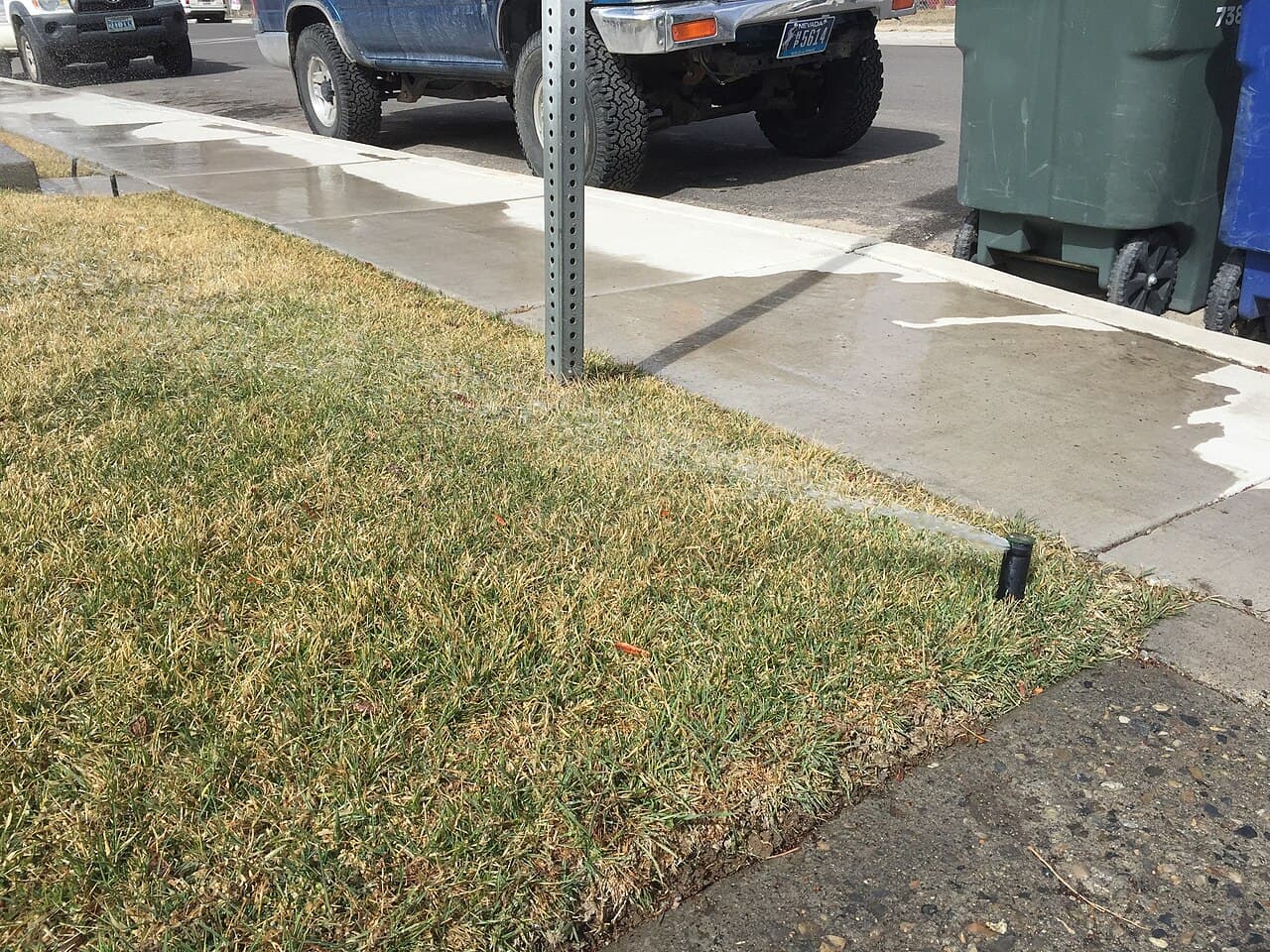
Before you touch the water
Check the ground first. Starting your system when the ground is still frozen can cause pipes to burst.[1] A shovel test beside the lawn takes a minute. If frost is still in the soil, wait; a late-March cold snap in Virginia can undo an early start.
Look at the backflow preventer. This is the assembly, often above ground near the house, that protects your drinking water from the sprinkler lines. Check for visible cracks or damage from the winter freeze. Make sure the drain plug is tight and that all valves are closed.[1] Look only; do not open, rebuild or test it yourself.
Clear the heads. Grass, sand and mulch collect around heads over winter. Trim around each one with pruning shears so the stem can pop up, and swap out anything cracked or chipped.[1]
Check the controller. Confirm the date and time are right and that any rain mode you set in fall is off. Then switch it to manual watering mode so you can run one zone at a time.[1]
Turning it on
Open the main shut-off valve a little at a time. Turning the main valve on too quickly can create “water hammer,” or a surge of high-water pressure that can damage pipes and valves.[1] Pressurizing the lines gradually also gives you a chance to hear a leak before it becomes a geyser.
Then run each zone for a minute or two. Watch for:
- Heads that stick. Look for heads that do not pop up fully or are tilted as they can unexpectedly spray to the wrong areas.[2]
- Misting. Misting could indicate water pressure that is too high or low, blocked nozzles, or bigger issues within the system.[1]
- Soggy spots. Check for water pooling on the surface; that could be a sign of an underground leak.[2]
- A valve that will not shut off. If the valves are not able to close completely, your system could slowly seep water even when it is turned off.[2]
Mark broken heads with a flag and fix them after the run; replacing a broken sprinkler head is a manageable job.
Pressure and schedule
Most automatic sprinkler systems operate best between 45-75 PSI.[1] A pressure gauge that screws onto a hose bib near the system tells you where you are. If it is far outside that range, a pro can look at the pressure regulation.
Once the zones run cleanly, set your spring watering program. Early-spring lawns need much less water than midsummer ones, and you will adjust again as the weather warms.
The backflow test
Chesterfield County's guide says the backflow prevention assembly must be inspected and tested annually, as a minimum.[3] The same guide says testers must hold a valid Tradesman Certificate as a Backflow Prevention Device Worker issued by the Virginia Department of Professional and Occupational Regulation.[3] Other localities set their own rules, so check with your water utility. Spring, after the system is running, is a convenient time to book it. See whether Virginia requires annual backflow testing.
If you shut the system down last fall, how to winterize a sprinkler system covers the other half of the cycle.
Stop and call a pro if
- The backflow device is cracked, leaking or dripping. Do not try to repair it; a certified tester or licensed contractor should.[3]
- Water surfaces in the lawn or a pipe sprays when you open the valve. Shut the main off again and treat it as a repair; a pooling patch could be an underground leak.[2]
- A zone valve will not close, or the pressure is far outside the normal range.[2][1]
- You are not comfortable testing the backflow device. Rain Bird says that while these steps can be done yourself, a professional irrigation contractor can inspect the system with a trained eye. For the backflow device specifically it says: "If you’re not comfortable testing this device yourself, consider calling in a professional."[1]
Getting help in Virginia
Browse more irrigation answers or irrigation businesses. When you want a spring visit, describe the sprinkler job once and licensed local contractors can quote it.
Common questions
- When is it safe to turn sprinklers back on in Virginia?
- When the soil around the lawn is frost-free about 12 inches deep, according to Rain Bird. Starting while the ground is frozen can cause pipes to burst, so test with a shovel instead of going by the date.
- Why open the main valve slowly?
- Opening it too quickly can create water hammer, a surge of pressure that can damage pipes and valves. Opening it gradually lets the lines fill gently.
- What pressure should a sprinkler system run at?
- Rain Bird says most automatic systems operate best between 45 and 75 psi. A gauge on a nearby hose bib will show you.
- Do I need to test the backflow preventer every spring?
- Chesterfield County requires an annual test at a minimum, by a tester holding a Virginia DPOR backflow tradesman certificate. Other localities have their own rules, so ask your water utility.
- Can I do the spring startup myself?
- Yes for the basic walk-through described here. Rain Bird says the steps can be done DIY but that a professional can test the system accurately and diagnose hard-to-spot leaks.
Sources
- [1] Is Your Sprinkler System Ready for Spring? Here's How to Get Started, Rain Bird Corporation (manufacturer). Checked October 27, 2026.
- [2] Sprinkler Spruce-Up, U.S. Environmental Protection Agency, WaterSense. Checked October 27, 2026.
- [3] A Guide to Selecting, Installing and Maintaining Backflow Preventers in Residential Irrigation Systems, Chesterfield County Utilities Department. Checked October 27, 2026.
Want a pro to handle it?
Describe the job once. Licensed local businesses send quotes, and you pay only when you book one.
Get a quote from a local pro