Is it worth paying someone to assemble furniture?
Often, for big or heavy pieces such as wardrobes, beds and dressers, for a whole room at once, and for anchoring tall furniture to wall studs. Small, simple pieces like nightstands, chairs and basic shelves are usually worth doing yourself. Decide piece by piece, and get written quotes for the same list from several businesses.
Free to ask. Local shops send quotes, and you pay only when you book one.
By Kasra Taheri, Founder, LoclisPublished
Researched and drafted with AI, then checked claim by claim against the sources listed below before it was published. Prices and rules change; the dates beside each source say when it was last checked.
Step by step
Read when to stop and call a pro, further down this page, before you start.
Step 1: Read the instructions first
Open the manual before you start and count the steps, the parts and how many people the drawings show lifting panels.
Step 2: Check the tools
Compare the tools the manual lists with what you own; a drill, a stud finder and a level are the ones people most often lack.
Step 3: Clear the space
Make sure you have a clean floor area larger than the finished piece, in the room where it will stand.
Step 4: Sort the list
Split your pieces into ones you will build yourself and ones you want built, usually the largest, heaviest and most complicated.
Step 5: Add the anchoring
Put every dresser, bookcase, wardrobe and TV stand on the list to be anchored, whoever builds it.[1]
Step 6: Write it up for quotes
List each piece with its model number and where it goes, so every business prices the same work.
Step 7: Get written quotes
Ask at least three businesses for written quotes for the same list, and ask about any quote far below the others.[6]
Often, yes, but rarely for everything. Paying pays off on the big, heavy, many-part pieces, on a whole room at once, and on anchoring tall furniture to the wall. Small, simple pieces are usually worth doing yourself. The practical answer is to decide piece by piece.
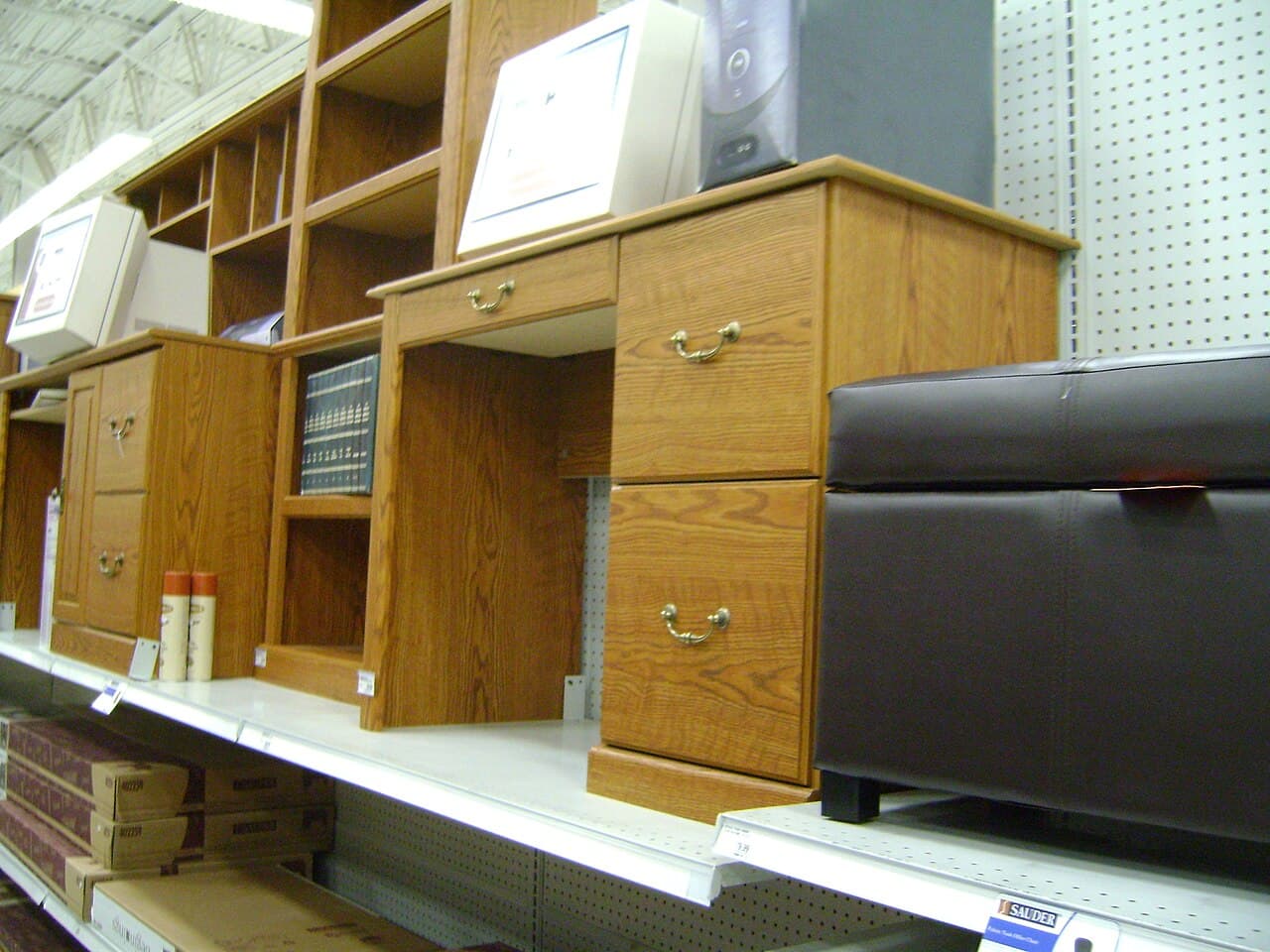
What doing it yourself actually takes
Flat-pack furniture is designed to be built at home, and a nightstand or a three-shelf bookcase is a reasonable evening's work. What catches people out on larger pieces:
- Time. A wardrobe or a bed with storage drawers can take hours for someone who has not built one before, and longer if a step goes wrong and has to be undone.
- Two people. Tall side panels and long rails need someone to hold them square while the other fastens them.
- Space. You need a clear floor larger than the finished piece, in the room where it will stand.
- The material. Particleboard is the predominant material in ready-to-assemble furniture.[3] The Forest Products Laboratory notes that care must be taken when tightening screws in particleboard to avoid stripping the threads,[4] and that a modest tightening of screws in many cases is an effective compromise between holding strength and stripped threads.[4] A power driver set too high is the usual way a hole gets ruined.
Anchoring is where help pays off most
Tall furniture should be fastened to the wall, and this is the step people most often skip. In a 2018 Consumer Reports national survey cited by the Consumer Product Safety Commission, only 10 percent of people with a dresser at home had anchored it.[1] Among the barriers CPSC lists are not knowing what anchoring hardware to use or how to install it.[1]
Anchoring hardware usually relies on a wood screw driven into a stud, which means a stud finder, a drill, a screwdriver and several minutes of time.[2] It is the part of the job where experience matters most, and supervision is not a substitute. As CPSC put it about the dresser tip-over deaths it reviewed: "None of the fatal incidents occurred when the child was under direct adult supervision."[1] See how to anchor furniture to the wall if you want to do it yourself.
When paying is usually worth it
- Big or heavy pieces: wardrobes and closet systems, bed frames, bunk beds, tall dressers and desks with hutches.
- A whole room or a move-in, when the time saved is days rather than hours.
- Furniture going up stairs or into a tight room where it has to be built in place.
- Anchoring dressers, bookcases and TV furniture, especially in homes with young children.
- Rebuilding after a move, when pieces have been taken apart once and the holes are already worn.
- When lifting, kneeling or working on a ladder is hard for you.
When doing it yourself makes sense
- Small pieces with few parts: nightstands, chairs, stools, simple shelves.
- You have the tools the manual lists, a helper for anything tall, and an afternoon to spare.
- You are comfortable finding a stud and anchoring the piece, or you will hire that part out on its own.
A common middle path is to build the small pieces yourself and pay for the wardrobe, the bed and the anchoring in one visit. What furniture assembly costs in Virginia explains how businesses price it.
Hiring well
Virginia's Board for Contractors advises homeowners to get at least three written bids or estimates[6] for the same work and warns: "Beware of any bid substantially lower than the others."[6] Give every business the same list with model numbers and say which pieces need anchoring.
The licence question depends on what is in the job. Virginia's contractor law covers construction, repair or improvement of a building or structure permanently attached to real property, and other improvements to real property,[5] and a contractor taking on a single contract worth over $1,000 needs at least a Class C licence.[5] Freestanding furniture does not change the house, but built-in shelving, wall cabinets and closet systems can. When they are part of a job over $1,000, ask for the licence number and check it. Hiring a licensed contractor makes you eligible for compensation from the Contractor Transaction Recovery Fund in case of improper or dishonest conduct.[6]
Stop and call a pro if
- A piece has to be fastened to plaster, brick or metal studs and you are not sure what will hold.
- You want a TV mounted on the wall with power or cables run inside it; that brings in a licensed electrician.
- A panel cracks, a pre-drilled hole crumbles or a cam lock spins without tightening, and the piece is tall or will hold weight.
- The finished piece rocks or leans and you cannot get it level and anchored. See why flat-pack furniture wobbles.
You can browse assembly and mounting services, find handyman businesses around Blacksburg, or read the other handyman answers. When you are ready, describe the job on Loclis once and local businesses will quote it.
Common questions
- Which furniture is most worth paying to have assembled?
- Wardrobes and closet systems, bed frames and bunk beds, large dressers and desks with drawers or a hutch. They have the most parts, need two people to lift panels, and need to be anchored or squared up properly to stay sturdy.
- Is flat-pack furniture hard to assemble?
- Small pieces usually are not: the instructions are pictures, the hardware is counted out and a hex key is included. The trouble comes with size, weight and patience. Particleboard does not forgive overtightened screws, and a stripped hole is harder to fix than to avoid.
- Should I still anchor furniture I built myself?
- Yes. Dressers, bookcases, wardrobes and TV stands should be fastened to a wall stud whoever built them. If anchoring is the part you are unsure of, it is a short job to hire out on its own.
- Does a furniture assembler need a licence in Virginia?
- Putting together freestanding furniture does not change the house itself. When the job includes improvements to the property, such as built-in shelving or wall cabinets, and a single contract is over $1,000, Virginia's contractor licensing law applies. Ask, and check the licence on DPOR's lookup.
- Will paying someone void the furniture's warranty?
- That depends on the maker's warranty terms, so read them. Keep the instructions and the receipt for the assembly work with the furniture's paperwork.
Sources
- [1] Safety Standard for Clothing Storage Units, final rule (87 FR 72598, November 25, 2022), U.S. Consumer Product Safety Commission, Federal Register. Checked October 27, 2026.
- [2] Preliminary Evaluation of Anchoring Furniture and Televisions Without Tools (CPSC/EXHR/TR-15/001, May 2015), U.S. Consumer Product Safety Commission. Checked October 27, 2026.
- [3] Wood Handbook, Chapter 11: Wood-Based Composite Materials (FPL-GTR-190), USDA Forest Service, Forest Products Laboratory. Checked October 27, 2026.
- [4] Wood Handbook, Chapter 8: Fastenings (FPL-GTR-190), USDA Forest Service, Forest Products Laboratory. Checked October 27, 2026.
- [5] Va. Code § 54.1-1100, Definitions (Contractors), Code of Virginia, Virginia General Assembly. Checked October 27, 2026.
- [6] What You Should Know Before You Hire a Contractor, Virginia Board for Contractors, DPOR. Checked October 27, 2026.
Want a pro to handle it?
Describe the job once. Licensed local businesses send quotes, and you pay only when you book one.
Get a quote from a local pro