Why does my flat-pack furniture wobble after assembly?
Usually one of four things: the floor is uneven or carpeted, a cam lock was not turned far enough to pull its joint tight, the back panel is loose or missing so the frame racks out of square, or a screw has stripped its hole in the particleboard. Check them in that order; most wobbles are fixed without taking the piece apart.
Free to ask. Local shops send quotes, and you pay only when you book one.
By Kasra Taheri, Founder, LoclisPublished
Researched and drafted with AI, then checked claim by claim against the sources listed below before it was published. Prices and rules change; the dates beside each source say when it was last checked.
Step by step
Read when to stop and call a pro, further down this page, before you start.
Step 1: Empty it
Take out the drawers or clear the shelves so you can move the piece and see how it sits on its own.
Step 2: Test the floor
Set the piece on a hard, level spot; if the wobble disappears, the floor or carpet is the cause, not the furniture.
Step 3: Level it in place
Back in position, turn any adjustable feet or slip a thin shim under the low corner until it no longer rocks.
Step 4: Turn every cam lock
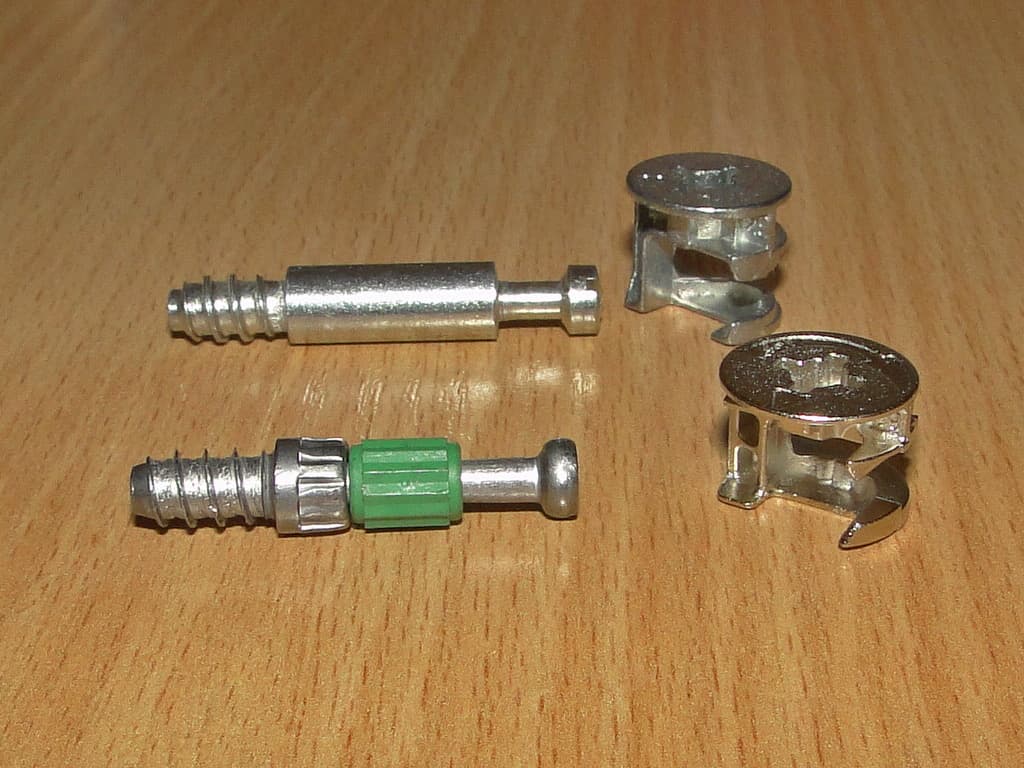
Turn each round cam with a screwdriver until it pulls its bolt snug, checking that the bolt head sits inside the cam's slot.
Step 5: Check the back panel
Make sure the thin back panel is fully seated in its grooves and every nail or screw the instructions call for is in place.
Step 6: Square the frame
Measure both diagonals of the front; if they differ, push the frame square before fastening the back panel again.
Step 7: Snug the screws gently
Tighten loose screws by hand with modest force, since screws in particleboard strip their threads when overtightened.[1]
Step 8: Repair a stripped hole
Fill a stripped hole with wood glue and a snug wooden dowel or toothpicks, let it dry fully, then drive the screw again.
Step 9: Anchor tall pieces
Fasten dressers, bookcases and wardrobes to a wall stud even after the wobble is fixed.[5]
Most wobbly flat-pack furniture has one of four problems: an uneven or carpeted floor, a cam lock that is not fully turned, a back panel that is loose or missing, or a screw that has stripped its hole. Check them in that order. Most wobbles are fixed in a few minutes without taking the piece apart, and the ones that are not usually trace back to a damaged panel.
1. The floor, not the furniture
Before you blame the build, set the empty piece on a hard, level spot such as a kitchen floor. If it sits solid there, the problem is where it stands.
Older houses often have floors that slope or dip, and a piece that rocks on two diagonal corners is usually sitting on a high spot. Carpet is the other common cause. The Consumer Product Safety Commission found that carpet, which is common in bedrooms, decreases a dresser's stability,[4] and in its testing carpet affected a dresser's tipping point about as much as tilting it forward 0.8 to 3 degrees on a hard, level floor.[4]
The fix is adjustable feet, felt or plastic shims under the low corner, or a thin board under the front edge on thick carpet. A piece that leans forward should also be anchored, not just shimmed.
2. Cam locks that are not fully turned
Most flat-pack joints use a cam lock: a threaded bolt screwed into one panel and a round metal cam in the other. Turning the cam hooks the bolt's head and pulls the two panels together. If the cam is only part way round, or the bolt head missed the cam's slot, that joint is loose and the whole frame moves.
Go round the piece with a screwdriver and turn every cam until it is snug. If one spins without tightening, back it off, check the bolt head is inside the slot and the cam's open side faces the bolt, and turn again.
3. A loose or missing back panel
The thin hardboard back looks like a dust cover, but on most bookcases, wardrobes and dressers it is what keeps the frame square. Without it, or with it only half fastened, the frame racks side to side like a parallelogram.
Check that the panel sits fully in its grooves and that every nail or screw is in. If the frame has gone out of square, measure both diagonals of the front: when they match, the frame is square. Fasten the back with the frame square, not before.
4. Stripped screw holes
Particleboard is the predominant material in ready-to-assemble furniture,[2] and it is less forgiving than solid wood. The Forest Products Laboratory warns that care must be taken when tightening screws in particleboard to avoid stripping the threads,[1] and notes that a modest tightening of screws in many cases is an effective compromise between holding strength and stripped threads.[1] A cordless driver on a high setting is the usual culprit.
A screw that turns and turns without pulling tight has stripped its hole. Glue a snug wooden dowel or a few toothpicks into the hole, let it dry fully, trim it flush and drive the screw again by hand.
Other causes
- Missing dowels or glue. Wooden dowels line up the panels and help stiffen the joints. A piece built without all of them can feel loose even with every cam tight.
- Water damage. According to the Wood Handbook, most panels made from particles swell in thickness when they get wet, and that swelling does not go back down.[2] A swollen bottom edge from a mopped floor, a leak or a damp basement leaves joints that no longer close.
- Seasonal movement. "Wood in service is always undergoing slight changes in moisture content."[3] The Wood Handbook adds that changes from daily humidity swings are usually small, while seasonal changes are gradual but of more concern.[3] A piece built in a humid August may feel looser by January. Going round the hardware as the seasons change fixes most of it; see how to keep assembled furniture from loosening.
- Overloading. Shelves and drawers loaded past what the instructions allow sag and pull joints apart. Keep heavy things low.
Anchor it when you are done
Fixing the wobble does not make a tall piece safe from tipping. CPSC's advice is simple: "Anchor furniture to the wall or the floor."[5] See how to anchor furniture to the wall.
Stop and call a pro if
- A panel has swollen, cracked or crumbled around a cam lock or screw, so the joint can no longer pull tight.
- A tall or heavy piece leans and you cannot level it and fasten it to a stud.
- The floor itself feels soft, bouncy or sags near the piece; that is a floor problem, not a furniture one.
- Several joints have failed at once on a piece that holds weight, such as a loft bed, bunk bed or loaded bookcase.
A handyman who does assembly can usually rebuild a racked piece, repair stripped holes and anchor it in one visit; see whether it is worth paying someone. You can also browse assembly and mounting services, find handyman businesses around Blacksburg, or read the other handyman answers.
To have a wobbly piece fixed, describe the job on Loclis and local businesses will quote it.
Common questions
- Why does my bookcase sway side to side?
- Side-to-side sway is usually racking: the frame is leaning into a parallelogram because the back panel is loose, missing or was fastened while the frame was out of square. Square the frame by measuring the diagonals, then fasten the back panel with every nail or screw the instructions call for.
- Why does my dresser rock front to back?
- Usually the floor. Thick carpet or a floor that slopes lets the piece settle forward onto its front edge. Adjust the feet or shim the front, and anchor the dresser to a wall stud, because a piece that leans forward is easier to tip.
- Can I glue flat-pack furniture to stop the wobble?
- Wood glue in the dowel holes during assembly stiffens many pieces, but it makes the piece hard to take apart for a move. Glue is most useful for repairing a stripped screw hole with a wooden dowel or toothpicks.
- The cam lock just spins. What now?
- A cam that spins without tightening usually means the bolt head is not inside the cam's slot, the cam is facing the wrong way, or the panel around it has crumbled. Back the cam off, reseat the bolt and turn again. If the particleboard around the hole has broken out, the panel needs repair or replacement.
- Is a wobbly dresser dangerous?
- A wobbly dresser that leans forward is less stable than one standing square, and dressers can tip onto children. Fix the wobble and anchor the piece to a wall stud.
Sources
- [1] Wood Handbook, Chapter 8: Fastenings (FPL-GTR-190), USDA Forest Service, Forest Products Laboratory. Checked October 27, 2026.
- [2] Wood Handbook, Chapter 11: Wood-Based Composite Materials (FPL-GTR-190), USDA Forest Service, Forest Products Laboratory. Checked October 27, 2026.
- [3] Wood Handbook, Chapter 13: Drying and Control of Moisture Content and Dimensional Changes (FPL-GTR-190), USDA Forest Service, Forest Products Laboratory. Checked October 27, 2026.
- [4] Safety Standard for Clothing Storage Units, final rule (87 FR 72598, November 25, 2022), U.S. Consumer Product Safety Commission, Federal Register. Checked October 27, 2026.
- [5] Anchor It and Protect a Child (Publication 5004), U.S. Consumer Product Safety Commission. Checked October 27, 2026.
Want a pro to handle it?
Describe the job once. Licensed local businesses send quotes, and you pay only when you book one.
Get a quote from a local pro