Is my pool leaking or just evaporating?
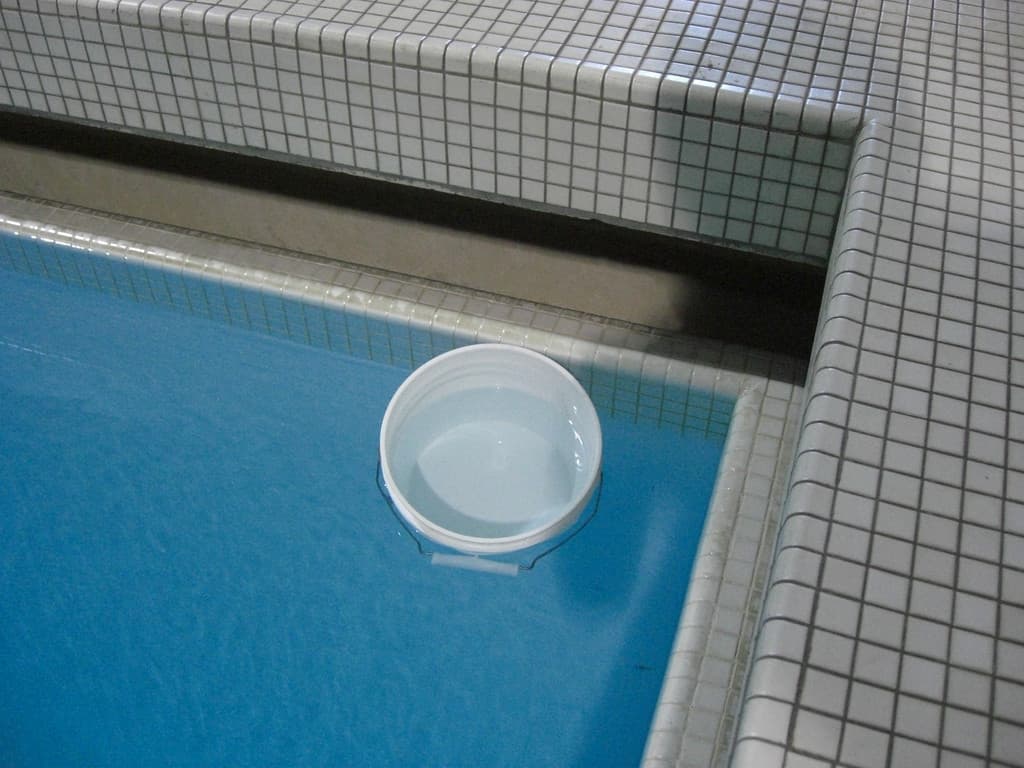
Compare your pool with a bucket. Switch off the pump, cleaner and automatic fill on a calm day, float a bucket of water on a step, mark both levels and wait 24 hours. If the pool dropped more than the bucket, it may be leaking. Losing more than 2 inches a week, or 3 in hot, dry areas, likely means a leak.
Free to ask. Local shops send quotes, and you pay only when you book one.
By Kasra Taheri, Founder, LoclisPublished
Researched and drafted with AI, then checked claim by claim against the sources listed below before it was published. Prices and rules change; the dates beside each source say when it was last checked.
Step by step
Read when to stop and call a pro, further down this page, before you start.
Step 1: Note the starting level
Mark the pool water level at the skimmer or tile, and write down the date and the weather.
Step 2: Stop the extras
Shut down the filtration system, pool cleaner and automatic fill, and keep the pool closed for 24 hours.[1]
Step 3: Float a bucket
Fill a 2.5- to 5-gallon bucket to about 1 inch from the top and set it on a step so that at least two-thirds is submerged.[1]
Step 4: Mark both levels
Mark the bucket water level and the still pool water level with tape or a marker.[1]
Step 5: Wait and re-measure
Leave everything alone for 24 hours, then record both levels again.[1]
Step 6: Compare the losses
If pool water loss is greater than bucket water loss, the pool may have a leak.[1]
Step 7: Track a normal week
Over a week of normal use, add water by hand instead of automatically and note how much the level drops.[1]
Compare the pool with a bucket
Evaporation lowers a pool's water level every day, so a falling level alone does not prove a leak. The reliable way to tell the two apart is a bucket test: the bucket loses water only to evaporation, so any extra drop in the pool is water going somewhere else.
Evaporation is one of the leading causes of water loss in residential pools.[1] The rate depends on a number of variables, including temperature, humidity, and wind speed.[1] Higher temperature water evaporates more quickly,[1] so a warm, windy, dry week takes the most. The EPA estimates that an uncovered 500-square-foot swimming pool could lose between 12,000 and 31,000 gallons of water per year due to evaporation.[1]
Run the bucket test
Pick a day without rain or heavy wind. Shut down all pool systems (filtration systems, pool cleaners, automatic fills, etc.) and close the pool for 24 hours.[1] Then fill a 2.5- to 5-gallon bucket to about 1 inch from the top and set the bucket in the pool (on a bench or step) so that at least two-thirds of the bucket is submerged in the pool, with the bucket water level a little higher than the pool level.[1]
Mark the bucket level and the still pool level with tape or a marker, leave both for a day, and measure again. If pool water loss is greater than bucket water loss, the pool may have a leak.[1] If they match, evaporation is the likely cause. Tampa's water department lets the test run for 24 to 72 hours,[3] which helps with a slow leak. For the full method with the equipment checks, see how to find a leak in a pool.
Read the weekly number
The EPA's rule of thumb for a normal week: if your pool is losing more than 2 inches of water per week, or 3 inches in hot, dry areas with high evaporation rates, then it is likely you have a leak.[1] Measure over a week with the fill off. You can also add water manually, rather than automatically, to be aware of your pool's weekly water loss.[1]
The size of that number is real money. It takes about 600 gallons to fill up an average pool by 2 inches.[3]
Other causes of a falling level
Not every drop is evaporation or a leak. Water can also be lost to splashing and "drag out," which is the water that is removed as a person exits a pool.[1] Fountains and waterfalls are another: the turbulence they add to the pool surface increases evaporation and can also result in water lost to wind or splashing.[1] Heavy use, a party weekend or a water feature left running all night can explain a drop the bucket test would not call a leak, so repeat the test on a quiet day.
Rain, backwashing the filter and draining water to lower the level also change the numbers. Write down what happened each day.
Look for clues around the pool
A leak often leaves evidence. Wet spots around the pool, or air bubbles in the water return pipeline or in the pump strainer, can also be signs of leakage.[1] Leaks can be found in the pool liner, the pump seal, pool piping, the pool-to-pipe connection, pool edges, and in pipe joints.[1] Look at the equipment pad, the ground along the plumbing runs and any soggy or sunken patch of yard.
A cover is a useful check as well as a saving. When in use, solid pool covers can reduce evaporation by more than 90 percent.[1] The EPA's pool page says that using a pool cover can prevent up to 95 percent of pool water evaporation.[2] If the level keeps falling quickly under a good cover, evaporation is not the main cause.
Stop and call a pro if
- The pool loses more than the bucket, test after test. Small leaks can quickly turn into big leaks if they go unattended.[1]
- The bucket test is inconclusive and the level still drops by more than 2 inches a week.
- Wet or sinking ground shows up near the pool or the equipment pad.
- Cracks, a shifting deck or a gap at the skimmer appear, or the pool loses water faster with the pump on.
- Water or damp ground near electrical equipment or a light. Stay out of the water and away from the equipment, and have a licensed pro look.
Getting help in Virginia
Once the test says leak, who to call to fix a leaking pool explains which trade fits, and what pool leak repair costs in Virginia covers the pricing. Browse all pool and spa answers or look at local pool pros.
When you are ready, describe the leak and licensed local pros can quote it.
Common questions
- How much water does a pool normally lose to evaporation?
- It depends on temperature, humidity and wind, and on how big the pool is. The EPA estimates that an uncovered 500-square-foot pool could lose between 12,000 and 31,000 gallons a year to evaporation depending on climate. A week of ordinary loss is usually modest; the EPA's leak threshold is more than 2 inches a week, or 3 in hot, dry areas.
- Does the bucket test work for an above-ground pool?
- Yes, as long as the bucket can sit on a step or ledge with at least two-thirds submerged. If you cannot set it that way, a floating bucket weighted with a little water in the bottom is the usual workaround. The comparison is the same: pool loss against bucket loss.
- The pool lost the same as the bucket. Am I in the clear?
- For that day, yes: matching losses point to evaporation, not a leak. Some leaks only show when the pump is running or the water is above a certain level, so repeat the test with the pump on, and keep an eye on the weekly drop.
- Can an automatic fill hide a leak?
- Yes. It tops the pool up quietly, so the level never looks low. The EPA suggests adding water by hand so you notice the weekly loss, and shutting the automatic fill off for 24 hours every three months to test.
- How much water is 2 inches?
- The City of Tampa's water department says it takes about 600 gallons to fill an average pool by 2 inches, which is why a steady loss of that size shows up on a water bill.
Sources
- [1] Jump Into Pool Water Efficiency (EPA-832-F-22-015, September 2022), U.S. Environmental Protection Agency, WaterSense. Checked October 28, 2026.
- [2] Pool Water Efficiency, U.S. Environmental Protection Agency, WaterSense. Checked October 28, 2026.
- [3] How to Check for Leaks, City of Tampa Water Department. Checked October 28, 2026.
Want a pro to handle it?
Describe the job once. Licensed local businesses send quotes, and you pay only when you book one.
Get a quote from a local pro