How do I keep my pool from leaking?
You cannot make a pool leak-proof, but you can prevent the common causes and catch the rest early. Keep the chemicals balanced, drain the equipment and piping before freezing weather, test the automatic fill every three months, watch the weekly water loss, and keep the level where it will not slosh over. Fix small leaks before they grow.
Free to ask. Local shops send quotes, and you pay only when you book one.
By Kasra Taheri, Founder, LoclisPublished
Researched and drafted with AI, then checked claim by claim against the sources listed below before it was published. Prices and rules change; the dates beside each source say when it was last checked.
Step by step
Read when to stop and call a pro, further down this page, before you start.
Step 1: Keep the chemistry balanced
Test the water regularly and correct imbalances, because a chemical imbalance could corrode the pool and lead to structural damage.[1]
Step 2: Track weekly loss
Add water by hand now and then, or note the level each week, so you know your normal weekly drop.[1]
Step 3: Test the automatic fill
Once every three months, shut the automatic fill off for 24 hours to test for leaks.[1]
Step 4: Check the fill valve
Plug the overflow drain and watch whether the pool level rises; if it does, the fill valve may be stuck open and needs repair or replacement.[1]
Step 5: Walk the equipment
Look at the pump seal, strainer, piping joints and ground nearby for drips, wet spots or air bubbles in the strainer.[1]
Step 6: Keep a sensible level
Maintain 4 inches of freeboard, and consider plugging the overflow drain when the pool is being used.[1]
Step 7: Protect it from freezing
Before cold weather, winterize the pool and drain water from filters, pumps, heaters and piping.[1]
Step 8: Use a cover
Put a cover on whenever the pool is not in use to cut evaporation, which also makes real leaks easier to spot.[1]
Prevent the common causes, then catch the rest early
No pool is leak-proof, so the aim is two things: avoid the damage that causes leaks, and notice a leak while it is small. Annual water loss from pool leaks is difficult to quantify, as leaks can often go unnoticed for extended periods of time,[1] and small leaks can quickly turn into big leaks if they go unattended.[1]
Leaks can be found in the pool liner, the pump seal, pool piping, the pool-to-pipe connection, pool edges, and in pipe joints.[1] The habits below cover those places.
Keep the water balanced
Balancing chemicals is important, as a chemical imbalance could corrode the pool and lead to structural damage.[1] Test on a regular schedule and correct drift early rather than shocking a pool back from green. The routine is covered in how to balance pool chemicals.
Protect it from winter
In cooler climates, freezing is the most avoidable cause. Winterize your pool by cleaning the pool water and all parts of the pool, balancing out pool chemicals, and adding winterization chemicals such as shock and algaecide.[1] It is also important to drain water from equipment such as filters, pumps, heaters, and piping, as freezing water can cause cracks, which can later cause leaks.[1]
Do the draining when you close the pool, not after the first cold snap. If you are unsure which lines need blowing out, ask a pool company to do the closing. See when to close a pool in Virginia.
Test the automatic fill
An automatic fill keeps the level steady, which is exactly why it can hide a leak. If you have an automatic refill for your pool, then once every three months, the automatic fill should be shut off for 24 hours to test for leaks.[1]
Automatic fill valves can sometimes malfunction and send water to a pool's overflow drain.[1] Periodically confirm your fill valve is shutting off properly by plugging the overflow drain and monitoring if the pool level is rising. If it is, your fill valve may be stuck in the open position and should be repaired or replaced.[1] Tampa's water department adds that you should make sure to check this device periodically, even after a power outage or power surge, to make sure it's working properly.[2]
Keep an eye on the numbers
You can also add water manually, rather than automatically, to be aware of your pool's weekly water loss.[1] Installing a water meter can help you actively monitor water consumption and identify potential leaks.[1] Know your usual weekly drop, and treat a change as the signal. The EPA's benchmark: if your pool is losing more than 2 inches of water per week, or 3 inches in hot, dry areas with high evaporation rates, then it is likely you have a leak.[1] When the number looks off, follow how to find a leak in a pool or the quicker check in is my pool leaking or evaporating.
Wet spots around the pool, or air bubbles in the water return pipeline or in the pump strainer, can also be signs of leakage.[1] Make a quick walk around the equipment pad part of your weekly skim.
Mind the water level and the cover
Maintain 4 inches of freeboard, or the distance from the level of the pool water to the top of the overflow or pool deck, to prevent water overflowing when there is activity in the pool. Also consider plugging the overflow drain(s) when the pool is being used.[1]
A cover does not stop leaks, but when in use, solid pool covers can reduce evaporation by more than 90 percent.[1] That removes the biggest cause of a falling level, so a real leak stands out.
Stop and call a pro if
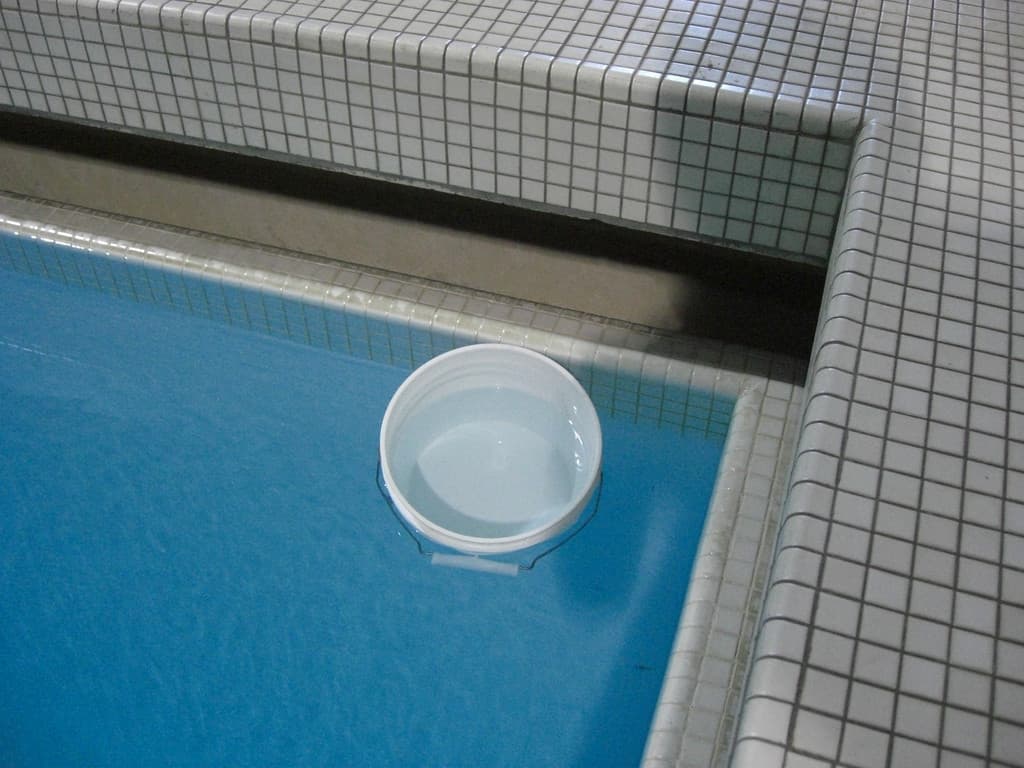
- The weekly loss is over the EPA's benchmark and the bucket test says the pool is losing more than the bucket.
- Wet or sunken ground appears near the pool, the equipment or the plumbing runs.
- The shell or deck has cracked, or a skimmer or return fitting has pulled away.
- Water is near pool electrical equipment or lights. Keep out of the water and have a licensed pro look.
- A fill valve will not shut off and you cannot replace it with a simple swap.
Getting help in Virginia
If you find a leak, read who to call to fix a leaking pool and what pool leak repair costs in Virginia. Browse more pool and spa answers or find local pool pros.
When you are ready, describe the leak and licensed local pros can quote it.
Common questions
- What causes most pool leaks?
- The EPA lists where leaks turn up: the pool liner, the pump seal, pool piping, the pool-to-pipe connection, pool edges and pipe joints. Freezing water in equipment and piping can crack it, and a chemical imbalance can corrode a pool, so winterizing and water balance are the two preventive habits that matter most.
- How often should I test for a leak?
- Watch the weekly loss all season, and if you have an automatic refill, shut it off for 24 hours once every three months, as the EPA advises. Run the bucket test whenever the level seems to be falling faster than usual.
- Does an automatic fill valve cause leaks?
- It does not cause a leak in the shell, but it can hide one by topping up the water, or waste water itself if it sticks open and sends water to the overflow drain. The EPA suggests plugging the overflow drain occasionally to confirm the pool level is not rising.
- Can I patch a leak myself?
- Maintenance and finding the leak are reasonable homeowner jobs. Repairing plumbing under the deck, a cracked shell or anything near pool electrical equipment is work for a licensed pro; see who to call in the answer linked below.
- Will a pool cover prevent leaks?
- No. A cover does not stop a leak, but when in use solid covers can reduce evaporation by more than 90 percent, so a level that still falls under a cover is easier to recognise as a leak.
Sources
- [1] Jump Into Pool Water Efficiency (EPA-832-F-22-015, September 2022), U.S. Environmental Protection Agency, WaterSense. Checked October 28, 2026.
- [2] How to Check for Leaks, City of Tampa Water Department. Checked October 28, 2026.
Want a pro to handle it?
Describe the job once. Licensed local businesses send quotes, and you pay only when you book one.
Get a quote from a local pro