Should I hire a mason or a general contractor for brick repairs?
For repointing, replacing bricks or rebuilding a small section, hire a mason directly, since the skill of the person on the wall matters most. For work valued at $1,000 or more, check the company has a Virginia contractor's licence covering masonry. Bring in a general contractor when the brick repair is part of a bigger job, and a structural engineer first when cracks suggest the wall or foundation is moving.
Free to ask. Local shops send quotes, and you pay only when you book one.
By Kasra Taheri, Founder, LoclisUpdated
Researched and drafted with AI, then checked claim by claim against the sources listed below before it was published. Prices and rules change; the dates beside each source say when it was last checked.
Step by step
Read when to stop and call a pro, further down this page, before you start.
Step 1: Name the problem
Photograph the damage and write down whether it is failing mortar, broken bricks, cracks, bulging or a leak, and where on the house it is.
Step 2: Decide who looks first
If cracks run through bricks, step across the wall, keep widening or sit with sticking doors and windows, ask a licensed professional engineer to look before any mason prices the repair.[5]
Step 3: Match the trade to the job
Ask masons to quote masonry-only work, and a general contractor when the repair also involves framing, windows, roofing or other trades.
Step 5: Ask about the crew
Ask who will do the repointing, how long they have done it, and for the addresses of a few finished jobs on similar brick.[7]
Step 6: Get three written quotes
Ask at least three licensed companies to quote the same described work in writing, with the mortar type and removal method named.[8]
Step 7: Agree a sample area
On a larger job, have the mason do a small test area first and write into the contract that the rest must match it.[7]
Step 8: Sign a written contract
Get a written contract, keep the deposit to no more than 10% or $1,000, whichever is less, and never pay cash.[8]
For most brick repairs, hire a mason. Repointing, replacing cracked or spalled bricks and rebuilding a small section of wall are masonry work, and what decides how well it turns out is the skill of the person on the wall. A general contractor makes sense when the brick repair is one part of a larger job. And when the cracks suggest something is moving, the first call is to a licensed structural engineer, not to either.
What Virginia licenses
Virginia's Board for Contractors has a masonry specialty. Its definition covers the installation of brick, concrete block, stone and other masonry units, and includes grout, caulking, tuck pointing, sand blasting, mortar washing and parging.[1] The same rule says the CBC, RBC and H/H classifications and the HIC and CIC specialties also provide for this function,[1] so a licensed residential building or home improvement contractor can also do brick work on a house.
The home improvement specialty covers repairs or improvements to dwellings and townhouses,[1] and a residential building contractor's work on dwellings includes construction, remodeling, repair, improvement, removal, or demolition;[2] the residential licence does not provide for electrical, plumbing, HVAC, or gas fitting services,[2] which need their own licensed trades.
Virginia's contractor law is plain on the basic rule: "No person shall engage in, or offer to engage in, contracting work in the Commonwealth unless he has been licensed under the provisions of this chapter."[4] The licence class depends on the size of the work. Class C covers construction, removal, repair or improvement work where a single contract or project is over $1,000 but less than $30,000, or where the contractor's total work within any 12-month period is less than $250,000;[3] Class B starts at $30,000 and Class A at $150,000 for a single contract.[3] For homeowners, DPOR's consumer guide puts it this way: if the work is valued at $1,000 or more, a valid Virginia contractor's licence is required for the category of work the contractor is to do.[8] The guide also warns: "A license number in an advertisement or on a business card does not necessarily mean the contractor’s license is valid."[8] Check every company on DPOR's License Lookup.[9]
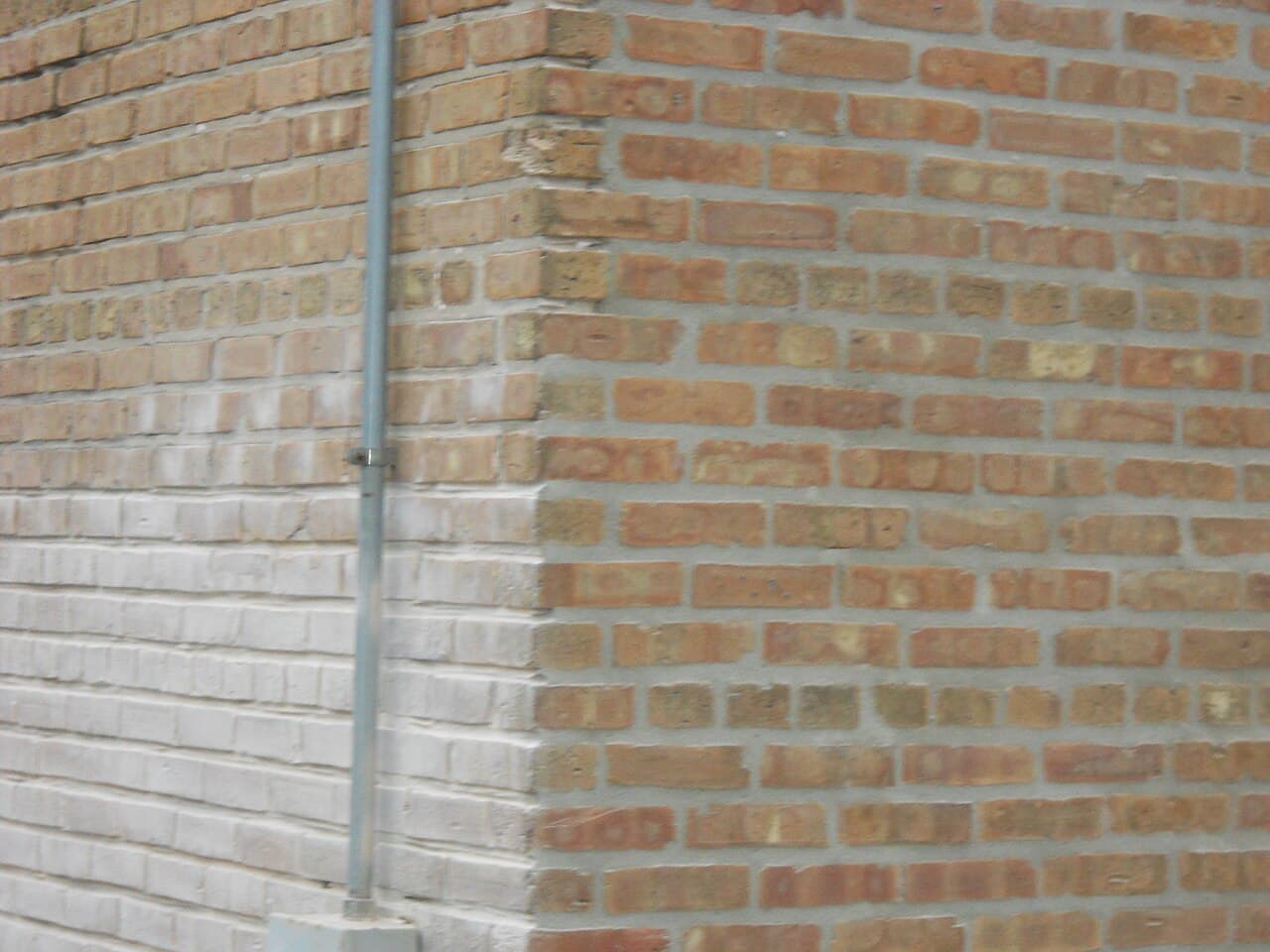
When a mason is the right hire
Hire a masonry contractor directly when the job is masonry and nothing else: worn or missing mortar, a few broken bricks, a garden wall, steps, a loose cap. You talk to the people doing the work, and you avoid paying a second company's margin.
Pick the person, not just the company. A mason who is fast at laying new brick is not automatically good at repointing, which is slow, careful work with a soft, matched mortar. The National Park Service suggests that you ask owners of recently repointed buildings for recommendations,[7] and for historic buildings it suggests requiring masons with a minimum of five years' experience with repointing historic masonry buildings.[7] For a house, ask how long the crew has done repointing and go look at a couple of finished jobs on brick like yours.
When a general contractor is the right hire
A general contractor earns their fee when the brick repair is tangled up with other trades: a rotted window frame behind cracked brick, a porch roof to rebuild, flashing and siding to replace, or water damage inside. They schedule the trades, pull any permits and answer for the whole job. Expect them to hire a masonry subcontractor for the brick itself, and ask who that will be.
When an engineer comes first
Some cracks are not a masonry problem. Cracks that run through bricks, step diagonally across the wall, keep widening, or come with bulging brick or rusting lintels can point to movement in the foundation or structure, and the Park Service lists structural settlement cracks[6] among the ways weather gets into a wall. Under Virginia law, a person must hold a valid licence before practising engineering[5] that involves evaluating improvements to real property, so look for a licensed professional engineer. The engineer finds the cause and specifies the fix; a mason or contractor then does the work. See why brick walls crack for what the patterns usually mean.
Hiring well, whoever you pick
Virginia's Board for Contractors advises homeowners to get at least three written bids or estimates,[8] and Virginia law requires all licensed contractors to provide a written contract for residential work.[8] Its tips are to limit the deposit to 10% or $1,000, whichever is less, and never pay cash.[8]
Hiring licensed matters later, too. The Contractor Transaction Recovery Fund is open only if you hired a licensed contractor,[8][10] and only after winning a court judgment against a licensed contractor for improper or dishonest conduct;[10] DPOR notes that the term does not include mere breach of contract.[10] For costs, see what repointing costs in Virginia.
Stop and call a pro if
- Cracks run through bricks, step across the wall, or are wider than about 2 mm.
- Brick is bulging, leaning or separating from the house.
- The work is on a chimney or above what you can reach from the ground.
- Water is getting inside and nobody has found where from.
Finding a mason on Loclis
Loclis lists DPOR-licensed businesses from the state register with their licence number, class and a link to DPOR's lookup. You can look up masonry and hardscaping businesses around Blacksburg, browse concrete and masonry services, read the other exterior answers, or describe the brick repair once and let licensed local businesses quote it. For a small section you can reach from the ground, see how to repoint old brick mortar.
Common questions
- Does a mason need a licence in Virginia?
- Virginia's contractor law requires a licence for contracting work, and DPOR's consumer guide says work valued at $1,000 or more needs a valid contractor's licence for the kind of work being done. Masonry is its own specialty under the Board for Contractors' rules, and residential building and home improvement licences also cover it. Check the licence on DPOR's lookup, not the number on a card or truck.
- Is a general contractor more expensive?
- It can be, because a general contractor often hires a masonry subcontractor and adds a margin for managing the job. That margin buys coordination, which is worth paying for when several trades are involved and not when the whole job is masonry.
- When do I need a structural engineer instead?
- When the cracks point to movement: cracks wider than about 2 mm, cracks running through several bricks, stair-step or diagonal cracks, brick bulging out of the wall, or rusting lintels. A licensed professional engineer finds the cause and specifies the repair, and a mason or contractor then does it.
- What should I ask a mason before hiring?
- Ask what mortar type they will use and why, how they will match the colour and sand, whether they rake joints out by hand or with a grinder and how they control the dust, how long they have done repointing, and for addresses of finished jobs on similar brick.
- Can a handyman repoint my brick?
- For work valued at $1,000 or more, DPOR's consumer guide says the person needs a valid Virginia contractor's licence for that kind of work, and the Board for Contractors lists tuck pointing under its masonry specialty. For a smaller job, check with DPOR before assuming no licence is needed. Either way, skill is the real question: repointing is a craft of its own, so ask to see similar work first.
Sources
- [1] 18VAC50-22-30, Definitions of specialty services (Board for Contractors Regulations), Virginia Administrative Code, Virginia General Assembly. Checked October 26, 2026.
- [2] 18VAC50-22-20, Definitions of license classifications (Board for Contractors Regulations), Virginia Administrative Code, Virginia General Assembly. Checked October 26, 2026.
- [3] Va. Code § 54.1-1100, Definitions (Contractors), Code of Virginia, Virginia General Assembly. Checked October 26, 2026.
- [4] Va. Code § 54.1-1103, Necessity for license (Contractors), Code of Virginia, Virginia General Assembly. Checked October 27, 2026.
- [5] Va. Code § 54.1-406, License required (Architects, Engineers, Surveyors), Code of Virginia, Virginia General Assembly. Checked October 26, 2026.
- [6] Preservation Brief 39: Holding the Line, Controlling Unwanted Moisture in Historic Buildings, National Park Service, U.S. Department of the Interior. Checked October 26, 2026.
- [7] Preservation Brief 2: Repointing Mortar Joints in Historic Masonry Buildings, National Park Service, U.S. Department of the Interior. Checked October 26, 2026.
- [8] What You Should Know Before You Hire a Contractor, Virginia Board for Contractors, DPOR. Checked October 26, 2026.
- [9] License Lookup, Virginia Department of Professional and Occupational Regulation. Checked October 26, 2026.
- [10] Contractor Transaction Recovery Fund, Virginia Department of Professional and Occupational Regulation. Checked October 26, 2026.
Want a pro to handle it?
Describe the job once. Licensed local businesses send quotes, and you pay only when you book one.
Get a quote for Roofing