Why is my brick wall cracking?
Brick walls crack when something moves and the brick cannot: the brick itself expanding with heat and moisture, a foundation settling, a steel lintel sagging or rusting over a window, or water getting in. The shape and place of the crack usually tell you which. Wide, stair-step, tapering or growing cracks are a job for an engineer.
Free to ask. Local shops send quotes, and you pay only when you book one.
By Kasra Taheri, Founder, LoclisPublished
Researched and drafted with AI, then checked claim by claim against the sources listed below before it was published. Prices and rules change; the dates beside each source say when it was last checked.
Step by step
Read when to stop and call a pro, further down this page, before you start.
Step 1: Photograph it with a scale
Take a straight-on photo of each crack with a ruler or tape measure held beside it, and note the date and which wall it is on.
Step 2: Measure the width
Measure the widest point and write it down; a crack you can slide a coin into, or that is wider than a few millimetres, is one to show an engineer.
Step 3: Note the pattern
Write down whether it steps through the joints, runs straight up, tapers from wide to nothing, or cuts through the bricks themselves.
Step 4: Mark the ends
Make a small pencil tick and date at each end of the crack so you can see later whether it has grown longer.
Step 5: Check it through the seasons
Recheck the width and the end marks every month or two for a year, so you can tell a crack that is still growing from one that has stopped.
Step 6: Follow the water
Look for overflowing gutters, downspouts emptying at the wall and soil sloping toward the house near the crack, and fix those first.[2]
Step 7: Look above openings
From the ground, look at the steel lintels over windows and doors for rust, sagging or brick pushed out around them.[2]
Step 8: Check inside
See whether there is a matching crack inside, or doors and windows nearby that have started to stick, and add it to your notes.
Step 9: Hold off on filling it
Do not fill or caulk a crack until you know its cause, because new mortar over an active crack often reopens and hides the evidence.
A brick wall cracks when something moves and the brickwork cannot move with it. The usual causes are the brick expanding and shrinking with heat and moisture where there is no joint to take it, a foundation settling unevenly, a steel lintel over a window sagging or rusting, and water working into the wall. Most cracks are not an emergency, but some are, and the pattern of the crack is the most useful clue to which kind you have.
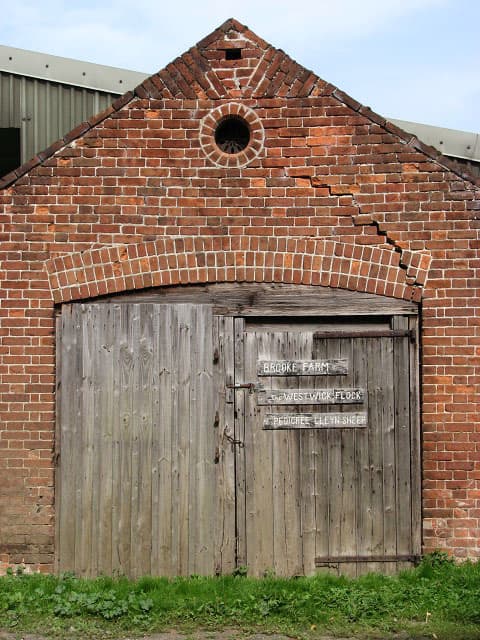
What the crack pattern usually means
Stair-step or diagonal cracks low on the wall. A crack that steps through the mortar joints, wider at one end, usually follows uneven settlement of the foundation. The National Park Service lists structural settlement cracks[2] among the ways weather gets into a wall. Soil that stays wet beside the foundation makes settlement worse.
Cracks that taper. A crack that is wide at one end and fades to nothing at the other means one part of the wall has dropped or sagged relative to the rest, either with the foundation or with something carrying the brick.
Cracks above windows and doors. The steel lintel that carries the brick over an opening can be too small and sag, or it can rust and swell and push the brick up and out. Look for orange staining and brick lifting along the top of the opening; the Park Service names rust and corrosion stains on metal elements[2] as a sign of moisture trouble.
Vertical cracks near corners and between openings. Long brick walls grow and shrink with temperature and moisture. Newer walls have expansion joints to take that movement; older walls and long runs without enough of them crack at the weak points instead, usually near a corner or between windows. The Park Service describes the same principle for mortar: stresses within a wall caused by expansion, contraction, moisture migration, or settlement must be accommodated in some manner.[1]
Cracks through the bricks after repointing. A mortar stronger than the brick will not give, so stresses are relieved through the bricks instead, cracking and spalling them.[1] The Park Service notes that a break in the bond between mortar and brick is easier to fix by repointing than a crack through the brick.[1] Hard repair mortar on soft, old brick is a common culprit.
When a crack is a structural warning
A crack deserves an engineer when it is wide enough to slide a coin into, runs through bricks as well as joints, steps across much of the wall, tapers, keeps getting longer or wider between your checks, or comes with bulging brick, a rusting lintel, or doors and windows that have started to stick.
Under Virginia law, a person must hold a valid licence before practising engineering[3] that evaluates existing improvements to real property, so hire a licensed professional engineer for this. Virginia's building code also requires a permit for installations or alterations involving any structural component,[4] so a structural repair is usually a permitted job for a licensed contractor, not a weekend project.
When a crack can wait
Hairline cracks in the mortar alone, with no pattern and no growth, are common, especially on brick veneer walls built to shed water. Watch them, deal with any water nearby, and repoint once the mortar is eroding too; see how to repoint old brick mortar.
Deal with the water
Water feeds most of these problems. The National Park Service notes that a heavy rain of 2 inches an hour can send 200 gallons of water out of a house's downspouts in one hour,[2] and its fixes are sloping the ground away from the foundation, carrying downspout water well away from the building, and reducing splash-back onto foundation walls.[2] If gutters overflow onto the cracked wall, see why gutters overflow.
Stop and call a pro if
- A crack is wider than about 2 mm, runs through bricks, steps across the wall or tapers.
- A crack is growing between your checks, or reopens after it was filled.
- Brick is bulging, leaning or pulling away from the house, or a lintel is rusting and lifting brick.
- The crack is on a chimney, or high on the wall where you cannot see it well from the ground.
- Doors and windows near the crack have started sticking.
Getting help on Loclis
For who to call, see whether to hire a mason or a general contractor. You can look up masonry and hardscaping businesses around Blacksburg, browse concrete and masonry services, read the other exterior answers, or describe the cracked wall once and let licensed local businesses quote the repair.
Common questions
- Is a stair-step crack in brick serious?
- It can be. A crack that steps diagonally through the mortar joints is a common sign of foundation settlement, which the National Park Service lists among the causes of cracks that let weather into a wall. A short, hairline step crack that does not grow may be old movement; a wide or growing one needs an engineer.
- Are hairline cracks in mortar normal?
- Small hairline cracks in the mortar are common and do not always need immediate repair, especially on brick veneer walls designed to drain water. Watch them, fix any water source nearby, and repoint when the mortar is also eroding or water is getting in.
- Can I just fill the crack with caulk or mortar?
- Not until you know why it cracked. Filling an active crack does not stop the movement, so the crack usually comes back, and it hides the evidence an engineer would use. Once the cause is fixed, cracked mortar joints can be repointed with a mortar softer than the brick.
- Why is the crack above my window?
- Usually because of the steel lintel that carries the brick over the opening. A lintel that is too small sags and leaves a crack that is widest at the steel and tapers away; a rusting lintel swells and pushes the brick. Both need a mason or engineer to look at the lintel itself.
- Who should I call about a cracked brick wall?
- For wide, stair-step, tapering, through-brick or growing cracks, or bulging brick, start with a licensed professional engineer, who finds the cause and specifies the repair. For hairline mortar cracks with no movement, a mason who does repointing is the right call.
Sources
- [1] Preservation Brief 2: Repointing Mortar Joints in Historic Masonry Buildings, National Park Service, U.S. Department of the Interior. Checked October 26, 2026.
- [2] Preservation Brief 39: Holding the Line, Controlling Unwanted Moisture in Historic Buildings, National Park Service, U.S. Department of the Interior. Checked October 26, 2026.
- [3] Va. Code § 54.1-406, License required (Architects, Engineers, Surveyors), Code of Virginia, Virginia General Assembly. Checked October 26, 2026.
- [4] 13VAC5-63-80, Section 108 Application for permit (Virginia Uniform Statewide Building Code), Virginia Administrative Code, Virginia General Assembly. Checked October 26, 2026.
Want a pro to handle it?
Describe the job once. Licensed local businesses send quotes, and you pay only when you book one.
Get a quote for Roofing