Should I seal exterior brick?
Usually not. Sound brick with good mortar, working gutters and intact caulk resists rain without a sealer, and the wrong coating can trap water and salts that spall the brick. Fix those first. If water still soaks through months later, a breathable siloxane or silane water repellent on the problem area only may help; avoid film-forming sealers and paint-like coatings.
Free to ask. Local shops send quotes, and you pay only when you book one.
By Kasra Taheri, Founder, LoclisPublished
Researched and drafted with AI, then checked claim by claim against the sources listed below before it was published. Prices and rules change; the dates beside each source say when it was last checked.
Step by step
Read when to stop and call a pro, further down this page, before you start.
Step 1: Inspect each season
Walk around the house each season and note eroded mortar, spalled or cracked brick, white deposits, stains and damp patches.[2]
Step 2: Keep water off the wall
Clear gutters, extend downspouts away from the foundation and keep soil sloping away from the house.[2]
Step 3: Renew failed caulk
Replace cracked or shrunken caulk where brick meets windows, doors and trim with a sealant made for exterior masonry joints, following the label.[2]
Step 4: Cut vines, do not pull them
Cut ivy at the base, wait for the tendrils on the wall to dry out over a few weeks, then scrub them off with a stiff fiber brush.
Step 5: Repoint failing joints
Repoint eroded or crumbling mortar you can reach from the ground with a mortar no harder than the old one, before thinking about any coating.[2]
Step 6: Wait and watch
After repairs, wait several months and see whether the damp patches or leaks have stopped before you decide a repellent is needed.[1]
Step 7: Choose a breathable repellent
If you still need one, pick a breathable, penetrating water repellent of the siloxane or silane type, not a film-forming or waterproof coating, and check the product label for use on brick.[1]
Step 8: Try a small patch
Apply it first to a small, out-of-the-way area to check that it does not darken the brick or leave a sheen.[1]
Step 9: Treat only the problem area
Apply it to a dry wall, only on the area that is letting water in, following the product label for coverage and coats.[1]
Usually, no. Brick that is properly built and kept in repair keeps rain out without a sealer, and the wrong coating can do more harm than the water it was meant to stop. The National Park Service's guidance says that in most instances, a water-repellent coating is not necessary if a building is watertight.[1] What brick needs instead is maintenance: sound mortar, working gutters and intact caulk.
Where the water really comes from
When a brick wall lets water in, the brick is rarely the problem. The National Park Service says: "Water penetration to the interior of a masonry building is seldom due to porous masonry, but results from poor or deferred maintenance."[1] The usual culprits are leaking roofs, clogged or deteriorated gutters and downspouts, missing mortar, and cracks and open joints around doors and windows.[1] Fix those and most damp walls dry out. For gutters that spill onto the wall, see why gutters overflow.
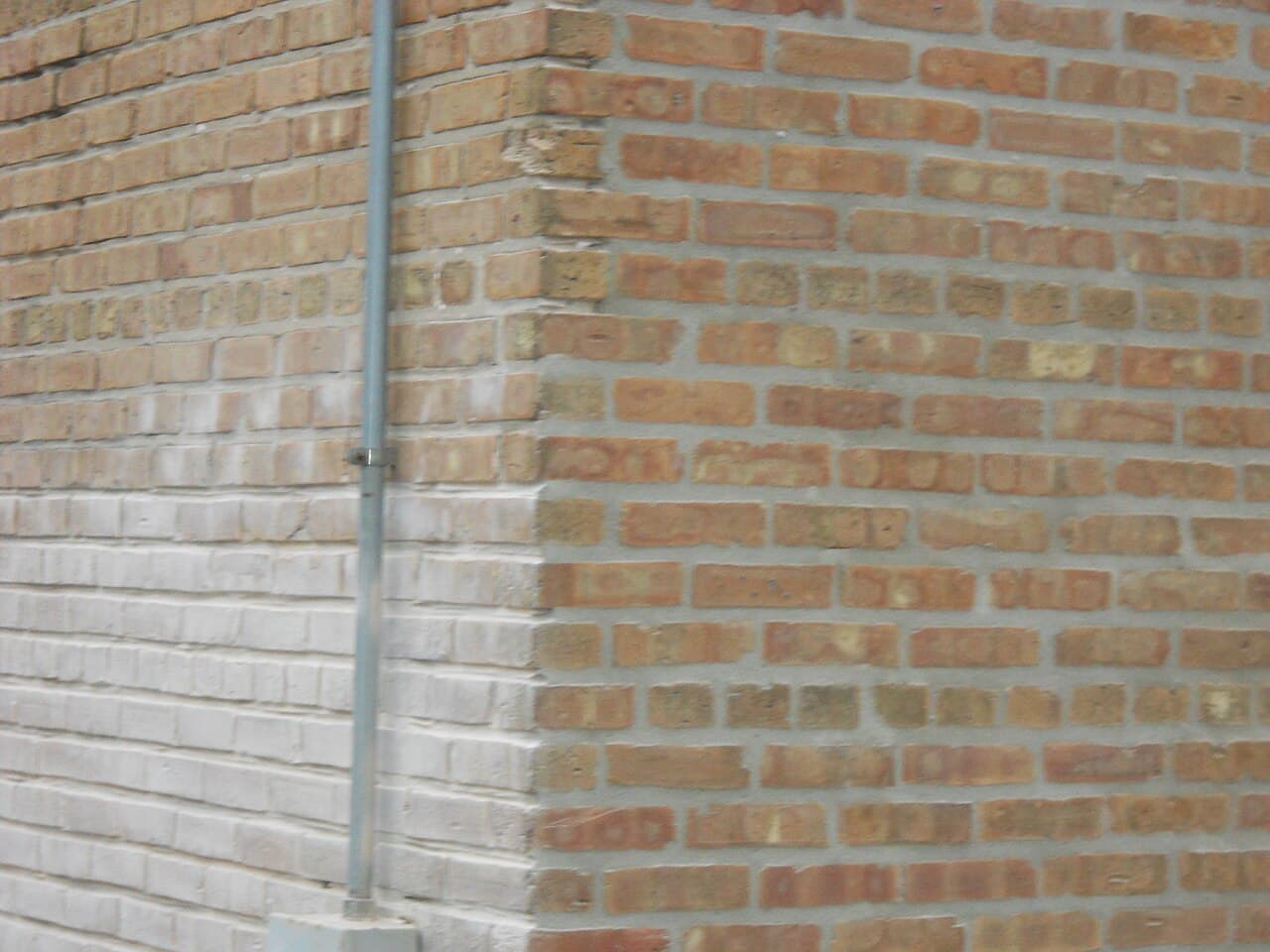
Sealer, repellent or waterproof coating
These are different products, and the labels blur them. In the Park Service's terms, water-repellent coatings, often called sealers although they should not seal, keep liquid water out but let water vapor pass.[1] "Waterproof coatings seal the surface from liquid water and from water vapor",[1] and include elastomeric paints and bituminous coatings; the Park Service says they should almost never be applied above grade to historic masonry buildings.[1]
Why sealing can backfire
Brick walls stay healthy by drying out. A coating that slows drying traps water and the salts it carries. The Park Service notes that even modern breathable repellents still reduce how much vapor the brick passes, and water that condenses inside the wall cannot get out through the coating.[1] The earliest repellents, the Park Service notes, tended to form a film on the surface,[1] and a film that holds water in is the worst case in a wall that freezes and thaws.
Timing and moisture matter too. The Park Service says a water-repellent coating should never be applied to a damp wall,[1] and on a wall with rising damp from the ground a coating can push it higher up the wall.[1] Salts are a further risk: the Park Service says repellents can be especially damaging if applied to masonry that contains salts, because they limit the flow of moisture through the masonry.[1]
Repairs that come first
A water repellent is no substitute for the usual repairs: renewing failed sealant, repointing cracked or disintegrated mortar joints, and replacing spalled or cracked bricks. The Park Service says to allow a reasonable period of time after the building has been made watertight and has dried out completely before judging whether moisture is still getting through,[1] because the repairs often solve the problem. See how to repoint old brick mortar and, for cracks, why brick walls crack.
When a repellent can make sense
There are real cases. The Park Service points to soft, underfired brick from the 18th and early 19th centuries[1] that has become too porous, and to walls that still take in moisture after repairs have made them watertight and dried out. It says even then to treat selected areas, not the whole building, and to decide with an architectural conservator.
If you do use one, the rules are short. Most modern repellents are water-based and formulated from modified siloxanes, silanes and other alkoxysilanes, or metallic stearates,[1] and unlike the earlier film-forming coatings they penetrate the surface slightly and are almost invisible when properly applied. Choose one that stays vapor permeable, read the manufacturer's label for the brick type and any weather limits, and do not use a waterproof coating on a wall that needs to dry.
Expect to redo it eventually, and the Park Service warns that if they are truly invisible, it can be hard to tell when they have stopped working.[1] On testing, it notes that a small test patch will not tell you whether it is breathable, but it will show whether it is visible or changes the look of the brick.[1]
Older houses and historic districts
On an older house, treat a water repellent as close to permanent; the Park Service notes that water-repellent coatings can be very difficult, if not impossible, to remove if they fail or discolor.[1] Painting is a separate question, and in a historic district it can need review. Martinsville's historic district guidelines state: "Painting masonry is not recommended (with the exception of stucco), but will be reviewed on an individual basis."[3] Ask your city or county before coating or painting brick in a local district.
A maintenance routine that works better
The Park Service's routine for walls is to repair damaged surface materials and repoint masonry with appropriately formulated mortar,[2] which starts with looking at the wall through the seasons to see how it behaves in different weather. Clean dirt and algae with low-pressure water and a natural- or synthetic-bristled scrub brush[1] rather than a pressure washer or acid. Keep gutters and downspouts clear, keep soil and mulch sloping away from the wall, renew failed caulk, and repoint joints as they wear.
Stop and call a pro if
- The area you want to treat is a chimney or anything above what you can reach from the ground.
- Water is coming inside, or plaster and paint inside are damp or flaking.
- Brick faces are flaking or popping off, or a white tide line is rising up the wall from the ground.
- The house is in a local historic district.
Getting help on Loclis
You can browse concrete and masonry services, look up masonry and hardscaping businesses around Blacksburg, read the other exterior answers, or describe the brick repair once and let licensed local businesses quote it.
Common questions
- Does brick need to be sealed to be waterproof?
- No. Brick walls are not meant to be watertight on their face. Solid walls rely on sound mortar and on drying out between rains, and brick veneer walls let some water through and drain it out behind the brick through flashing and weep holes. Keeping those working matters more than any coating.
- What is the difference between a sealer and a water repellent?
- A water repellent soaks into the brick and keeps liquid water out while letting water vapor escape. A true sealer or waterproof coating forms a film that blocks both, which can trap moisture in the wall. Many products sold as brick sealers are one or the other, so read the label for the actual chemistry.
- Will sealing brick stop efflorescence?
- Not reliably. A repellent can reduce how much water the brick takes in, which may reduce the white salt deposits, but if salts still come through a coated wall they can be very hard to remove, and salts trapped under a less breathable coating can damage the brick.
- Can I paint brick instead?
- Paint is a film and changes how the wall dries. Martinsville's historic district guidelines, for example, say painting masonry is not recommended, because brick and mortar hold moisture that paint traps, and painted masonry needs more upkeep. If your house is in a local historic district, ask the locality before painting.
- Should I seal my brick chimney?
- Chimneys are one of the exposed spots where a breathable repellent can make sense, but they are also roof work. Have a chimney professional check the crown, cap, flashing and mortar first, since those are the usual leak points, and let them apply any repellent.
- How do I clean brick without damaging it?
- Start with the gentlest method: low-pressure water and a natural or nylon bristle brush. Avoid high-pressure washing, sandblasting and strong acids, which can etch the brick and wash out mortar. Test any cleaner in an inconspicuous spot first.
Sources
- [1] Preservation Brief 1: Assessing Cleaning and Water-Repellent Treatments for Historic Masonry Buildings, National Park Service, U.S. Department of the Interior. Checked October 26, 2026.
- [2] Preservation Brief 39: Holding the Line, Controlling Unwanted Moisture in Historic Buildings, National Park Service, U.S. Department of the Interior. Checked October 26, 2026.
- [3] Historic District Guidelines (updated August 2021), City of Martinsville, Virginia. Checked October 26, 2026.
Want a pro to handle it?
Describe the job once. Licensed local businesses send quotes, and you pay only when you book one.
Get a quote for Roofing