Should I hire movers or just loading help?
Hire loading help when the move is short, you are comfortable driving a rental truck, and most of the load is boxes and ordinary furniture. Hire a full moving company when you do not want to drive, the move is long, or you are moving heavy specialty items. A mover that hauls your goods for pay in Virginia needs DMV authority unless exempt; a loading crew does not drive them.
Free to ask. Local shops send quotes, and you pay only when you book one.
By Kasra Taheri, Founder, LoclisPublished
Researched and drafted with AI, then checked claim by claim against the sources listed below before it was published. Prices and rules change; the dates beside each source say when it was last checked.
Step by step
Read when to stop and call a pro, further down this page, before you start.
Step 1: List what is moving
Write down the rooms, the rough number of boxes, and every heavy or awkward piece such as appliances, a piano, a safe or a sleeper sofa.
Step 2: Check the distance and the route
Note the road miles between the two addresses, whether the move crosses a state line, and any stairs, elevators or long carries at each end.
Step 3: Decide who drives
Be honest about whether you or someone you trust can drive and park a loaded box truck in both neighbourhoods.
Step 4: Price the do-it-yourself version
Add up the truck rental, mileage, fuel, rental coverage, pads and dollies, and the loading crew's hours at both ends.
Step 5: Get a full-service quote on the same list
Send the same inventory to one or two moving companies and ask for a written estimate with crew size, hours, travel and coverage.
Step 6: Ask the loading crew about insurance
Ask whether the crew carries liability insurance for damage to your home and belongings and workers' compensation for its workers.
Step 7: Ask a mover about DMV authority
Ask a moving company whether it holds a Virginia DMV permit or certificate of fitness, or why it is exempt.
Step 8: Book both halves together
If you choose loading help, book the truck first, then book crews for loading and unloading at times that match the pickup and the drive.
Hire loading help when the move is short, you can drive a rental truck with confidence, and the load is mostly boxes and ordinary furniture. Hire a full moving company when you do not want to drive, the move is long, the home is large, or you have heavy specialty items. The difference is not only price: it is who drives your belongings, who carries the risk on the road, and which Virginia rules protect you.
What each option covers
A full-service moving company brings the truck, the crew and the driver. It loads, drives, unloads and, if you pay for it, packs. Because it carries your goods for pay, it is regulated. Virginia law makes it unlawful to operate, offer, advertise or arrange to transport property for compensation as a motor carrier without first getting a permit or certificate of fitness from DMV.[1]
Loading help, sometimes sold as labour-only moving, is a crew that carries and packs the truck you rented, and often a second crew that unloads it at the other end. You drive. The Code defines a household goods carrier as one that undertakes to transport household goods by motor vehicle for compensation,[2] and a crew that only loads your truck is not transporting anything. That puts the questions to ask somewhere else: insurance and workers, not DMV authority.
When loading help makes sense
- The move is short and simple. Across town or to the next county, with easy parking at both ends.
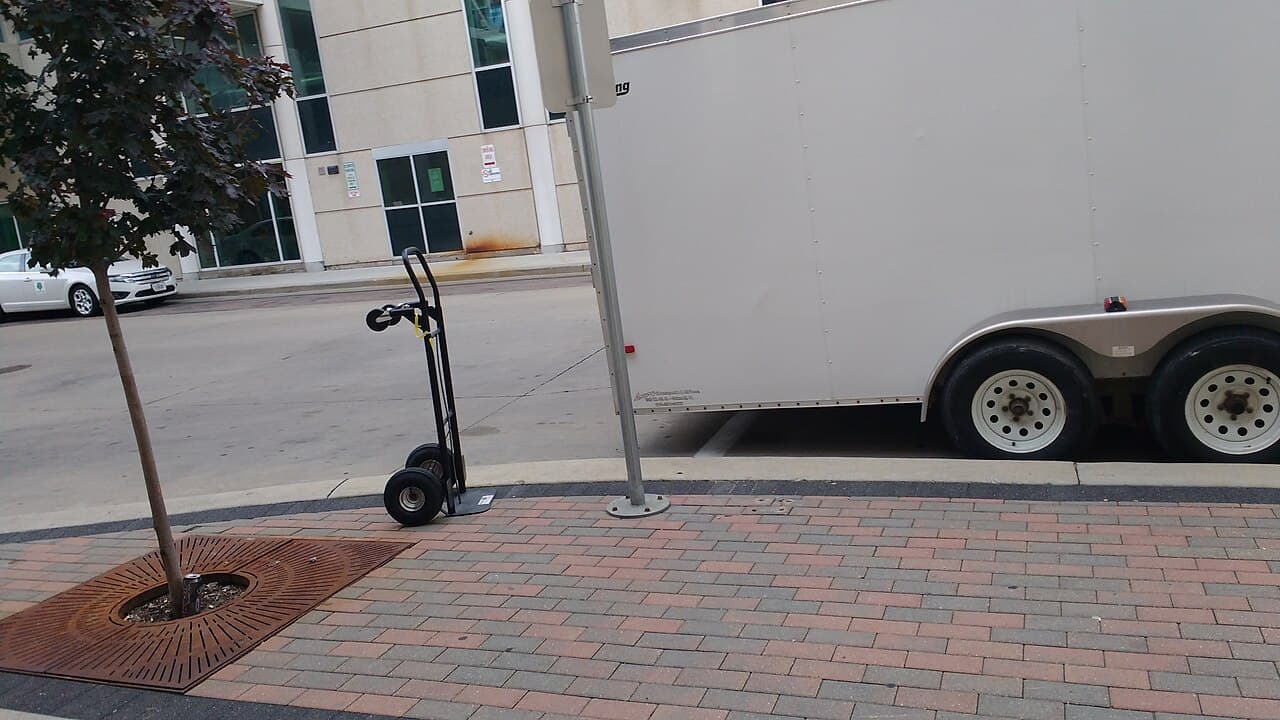
- You are comfortable driving a box truck. A loaded truck is taller, longer and slower to stop than anything most people drive. The clearance height of a 26-foot U-Haul truck is 12 feet,[8] which rules out many parking garages and drive-throughs.
- You can do some of the work. Packing yourself and paying a crew only for the heavy lifting is where the savings come from.
- Timing is flexible. You coordinate the truck pickup, the loading crew, the drive and the unloading crew yourself.
Check the truck before you book. In Virginia, a single vehicle with a gross vehicle weight rating of 26,001 pounds or more is a Class B commercial vehicle,[6] so read the rating on the truck and ask the rental counter if you are unsure.
When a full moving company is worth it
- You do not want to drive. Long drives, city parking and a loaded truck in bad weather are real risks.
- Heavy or specialty items. Pianos, gun safes, large aquariums and pool tables need equipment and experience.
- A large home. Coordinating two crews and a truck for a four-bedroom house is a full day of logistics.
- You want the carrier's legal obligations. A mover that hauls your goods has duties a loading crew does not, set out below.
Small operators with a pickup or cargo van may be exempt from DMV authority. DMV does not require operating authority for vehicles that deliver property within the boundaries of the same Virginia city or town where it was picked up,[3] or for carriers that operate only passenger cars and vehicles with a gross vehicle weight rating of 10,000 pounds or less.[3] Ask any mover which authority it holds or why it is exempt; see whether movers need a licence in Virginia.
Who carries the risk
With a moving company, the truck, the driving and the goods in transit are the company's responsibility under its agreement and coverage. If something is lost or broken, DMV's rules for property carriers say a carrier that receives a written claim must acknowledge it in writing within 30 days,[4] and within 120 days pay it, decline it in writing or make a firm written settlement offer.[4] It may not shorten the time you have to file a claim to less than 30 days or the time to file a suit to less than two years.[4] Read insurance claims in ads with care: a household goods carrier may not advertise that "all loads are insured" unless it has filed tariffs with DMV assuming complete liability.[5]
With loading help, you carry more of the risk. The truck is yours for the day, and so is any accident on the road. U-Haul says major credit cards do not cover rental trucks or trailers,[7] and that most auto insurance policies do not cover a large moving truck, and to check with your insurance agent.[7] Price the rental company's damage coverage into your comparison.
Ask the loading crew what insurance it carries for damage to your belongings and your home. Ask about its workers, too. Virginia's workers' compensation law does not cover employees of a business that regularly has fewer than three employees in the same business in Virginia, unless they choose to be covered.[9] It also leaves out casual employees.[9] A crew that cannot tell you how its workers are covered is worth a second thought before it carries a dresser down your stairs.
How to decide
Price both versions on the same inventory. For loading help, add the truck, mileage, fuel, coverage, pads and dollies, and both crew bookings. For a full mover, get a written estimate with crew size, hours, travel and coverage. For what moves the numbers, see how much moving helpers cost per hour in Virginia and how much local movers cost in Virginia. If you go the loading-help route, how to load a moving truck so nothing breaks covers the packing order.
Stop and call a pro if
- The move includes a piano, a gun safe, a hot tub or anything that needs rigging or a crane.
- The move crosses a state line. Ask each mover how it handles interstate moves before you book.
- Nobody in your group can safely drive and park a loaded box truck.
- A gas range or gas dryer has to be disconnected. That is a job for a licensed pro, not the loading crew.
Finding help on Loclis
On Loclis you describe the job once, businesses quote, and contact details are shared only after you book. Browse more junk removal and moving answers, see loading and unloading crews or local moving companies, or describe your move and get quotes.
Common questions
- Is loading help always cheaper than movers?
- Often for a small, short move, but not always. Once you add the truck rental, mileage, fuel, rental coverage, supplies and two crew bookings, a full-service mover can come close, especially for a large home. Price both versions on the same inventory before deciding.
- Does a loading crew need a DMV permit in Virginia?
- The DMV permit rules are about transporting property for compensation. A crew that only loads and unloads a truck you rented and drive yourself is not hauling your goods, so ask it about insurance instead. If the crew also brings a truck and carries your things, it is acting as a carrier and should hold DMV authority unless an exemption applies.
- Do I need a commercial licence to drive a rental moving truck?
- In Virginia, a single vehicle with a gross vehicle weight rating of 26,001 pounds or more is a Class B commercial vehicle. Check the rating on the truck you rent and ask the rental counter if you are unsure.
- Who pays if the loading crew breaks something?
- Whatever the crew's insurance and your written agreement say. Ask before booking what the crew carries for damage to your belongings and your home, and get the answer in writing. Your own homeowners or renters policy may also respond; ask your agent.
- Can I hire movers for just the heavy pieces?
- Yes. Many people pack and move boxes themselves and book a crew for an hour or two to load the appliances and large furniture. Say exactly which pieces when you ask for a quote, including stairs and any disassembly.
Sources
- [1] Va. Code § 46.2-2108.2, Operating without permit or certificate unlawful, Code of Virginia, Virginia General Assembly. Checked October 27, 2026.
- [2] Va. Code § 46.2-2100, Definitions, Code of Virginia, Virginia General Assembly. Checked October 27, 2026.
- [3] Exempt Operations, Virginia Department of Motor Vehicles. Checked October 27, 2026.
- [4] Property Carrier, Virginia Department of Motor Vehicles. Checked October 27, 2026.
- [5] Va. Code § 46.2-2162, Carrier liability, Code of Virginia, Virginia General Assembly. Checked October 27, 2026.
- [6] CDL Classifications, Endorsements and Restrictions, Virginia Department of Motor Vehicles. Checked October 27, 2026.
- [7] Do I Really Need U-Haul Insurance?, U-Haul. Checked October 27, 2026.
- [8] Overhead Clearance Height for a 26-ft U-Haul Moving Truck, U-Haul. Checked October 27, 2026.
- [9] Va. Code § 65.2-101, Definitions, Code of Virginia, Virginia General Assembly. Checked October 27, 2026.
Want a pro to handle it?
Describe the job once. Licensed local businesses send quotes, and you pay only when you book one.
Get a quote from a local pro