Should I repair my sprinkler system or replace it?
Repair it when the damage is local: heads, nozzles, a joint, a valve or a controller. Most parts can be swapped in place, and water-saving heads and nozzles fit existing fittings. Consider replacement when failures are spread across many zones or the layout no longer matches the yard. Get a repair bid and a replacement bid from licensed contractors, and compare.
Free to ask. Local shops send quotes, and you pay only when you book one.
By Kasra Taheri, Founder, LoclisPublished
Researched and drafted with AI, then checked claim by claim against the sources listed below before it was published. Prices and rules change; the dates beside each source say when it was last checked.
Step by step
Read when to stop and call a pro, further down this page, before you start.
Step 1: Walk every zone
Run the zones one at a time and flag every broken, tilted or leaking head and every pooling spot.[1]
Step 2: Sort the problems
Write the list in three groups: heads and nozzles, valves and joints, and anything system-wide such as low pressure, dead zones or an old controller.
Step 3: Count the zones affected
If most problems sit in one or two zones, repair is likely enough; if they are spread across the whole yard, ask for a replacement bid too.
Step 4: Find the backflow assembly
Locate the backflow assembly, and find the date of its last test report, because testing and overhaul are separate costs from the sprinkler work.[4]
Step 5: Check the licences
Look up every bidder on DPOR's license lookup.[8]
Step 6: Ask for two bids
Ask at least three contractors for a repair price and a price to replace the failing section, using the same description of the yard.[7]
Step 7: Compare scope, not totals
Compare parts, backflow work, permits, restoration and warranty line by line before you choose.
Repair a sprinkler system when the damage is local, and look at replacement when it is not. Broken heads, clogged nozzles, a leaking joint, a sticking valve and an outdated controller can all be fixed or swapped without tearing the system out. Replacement earns a bid when problems are spread across many zones, when you keep digging to chase leaks, or when the layout no longer suits the yard.
Why repair is usually the first answer
Most parts of a system are modular. Rain Bird, a head manufacturer, says that when you replace nozzles or sprinklers there are many water-saving models to choose from, any of which will fit the stems and underground fittings of your current sprinklers.[3] You can modernize in pieces without a new system.
The case for fixing instead of living with problems is waste. EPA says homes with clock timer controlled irrigation systems use about 50 percent more water outdoors than homes without irrigation systems,[1] and that cracks in pipes can lead to costly leaks, and broken sprinkler heads can waste water and money.[1]
What is usually a repair
Heads and nozzles. The classic local fix. Replacing a broken head is a small job and does not usually touch the buried pipe.
Joints and fittings. EPA says leaks can occur at the joints between sprinklers and the piping,[1] and that is a repair at that joint, not a reason to replace everything.
Valves. EPA notes that if the valves are not able to close completely, your system could slowly seep water even when it is turned off.[1] A valve is replaced as a part, a zone at a time.
The controller. EPA says replacing a standard clock-based controller with a WaterSense labeled irrigation controller can save an average home up to 15,000 gallons of water annually.[2] That is an upgrade, not a reason to replace pipe and heads that still work.
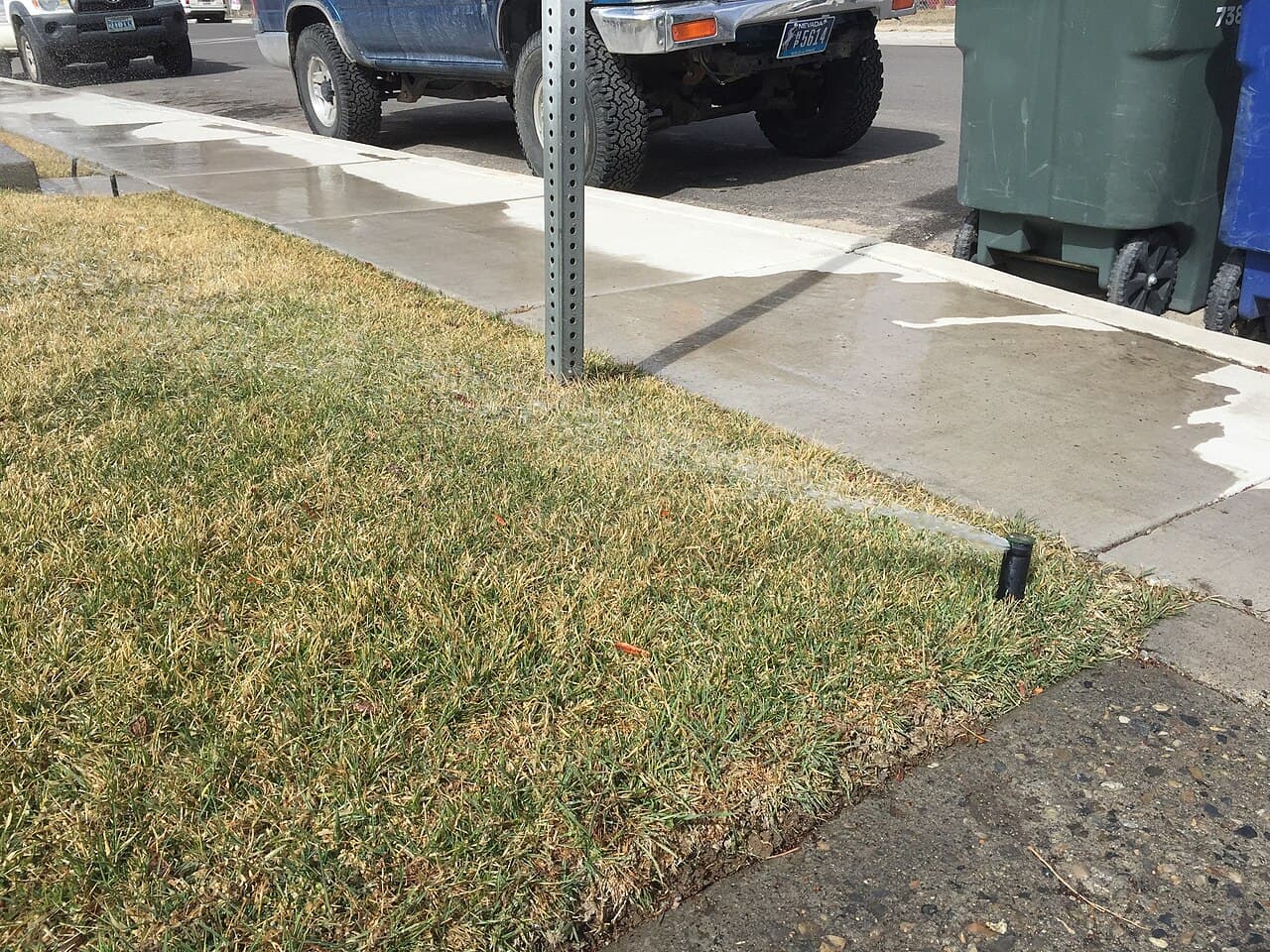
When replacement deserves a bid
Nobody publishes an official age or percentage at which a system should be replaced, so treat these as signs, not rules.
- Problems everywhere. Leaks, dead zones and failing valves in most zones, not one or two.
- Repeat digging. The same lines opening up again and again because of aged or poorly installed pipe.
- The yard changed. New beds, a new patio or a pool mean heads no longer cover the right areas, and re-routing may cost as much as a new layout.
- Coverage you cannot fix. Dry spots and overspray that adjusting heads does not cure.
A replacement is a new installation, with the permit and backflow requirements in what installing an in-ground sprinkler system involves and the cost drivers in sprinkler repair.
Do not skip the backflow assembly
Whichever way you go, the backflow assembly matters. Chesterfield County says it must be tested upon installation, after repair, when relocated, and annually as a minimum, and that some types should be overhauled (replacement of internal parts as a minimum) every five years.[4] Fairfax County says if an assembly "fails" testing, it must be repaired or replaced, and re-tested,[5] and that you must obtain either a Commercial or Residential Plumbing Permit in all instances of installation, whether as new construction or replacement, and even when you are replacing "Like for Like".[5] An old assembly that fails is a good moment to price the whole system.
Getting bids that answer the question
Virginia's contractor regulations describe landscape irrigation contracting as the installation, repair, improvement, or removal of irrigation sprinkler systems or outdoor sprinkler systems.[6] DPOR says that if the work you are considering is valued at $1,000 or more, a valid Virginia Contractor’s License is required for the license category in which the contractor is to work.[7] Look the licence up in DPOR's license lookup first.
DPOR's guidance is to solicit at least three bids for the work you need, and not to automatically accept the lowest.[7] Ask each contractor to price a repair of the failing parts and a replacement of the affected section on the same description, so you can see what the extra money buys.
Using the steps on this page
The steps at the top help you gather information and compare bids. They do not ask you to open valves or pipe.
Stop and call a pro if
- Water runs with every zone off. That is a valve, a leak in a pressurized line or the main, not a head.
- The backflow assembly is leaking, damaged or failed its test. In Fairfax County, replacing it requires a plumbing permit.[5]
- Pipe has failed in more than one place.
- A bid is $1,000 or more and the bidder is not on DPOR's lookup.[8]
Getting help in Virginia
Browse more irrigation answers or irrigation businesses.
When you are ready, describe the sprinkler problem once and licensed local contractors can quote a repair or a replacement.
Common questions
- Is it worth repairing an old sprinkler system?
- Usually, if the problems are isolated. Heads, nozzles, joints, valves and the controller can be replaced without replacing the whole system, and Rain Bird says water-saving models will fit the stems and underground fittings of current sprinklers.
- When does replacing the system make sense?
- When failures are spread across many zones, when repeated digging is needed to chase leaks, or when the yard has changed so much that the heads no longer cover it. A replacement bid next to a repair bid shows you the difference.
- Can I just upgrade the controller?
- Often. EPA says replacing a standard clock-based controller with a WaterSense labeled irrigation controller can save an average home up to 15,000 gallons of water annually.
- Does a repair or replacement need a permit?
- Backflow work does. Fairfax County says replacing the assembly needs a plumbing permit even like for like. Other localities set their own rules, so ask your local building department.
- Who can legally do this work?
- Virginia defines landscape irrigation contracting as the installation, repair, improvement, or removal of irrigation sprinkler systems or outdoor sprinkler systems, and for work worth $1,000 or more the contractor must hold a Virginia licence in the right category.
Sources
- [1] Sprinkler Spruce-Up, U.S. Environmental Protection Agency, WaterSense. Checked October 27, 2026.
- [2] WaterSense Labeled Controllers, U.S. Environmental Protection Agency, WaterSense. Checked October 27, 2026.
- [3] 3 Simple Repairs and Upgrades for Your Pop-Up Sprinklers This Spring, Rain Bird Corporation (manufacturer). Checked October 27, 2026.
- [4] A Guide to Selecting, Installing and Maintaining Backflow Preventers in Residential Irrigation Systems, Chesterfield County Utilities Department. Checked October 27, 2026.
- [5] Cross Connection Control and Backflow Prevention Program, Fairfax County Land Development Services. Checked October 27, 2026.
- [6] 18VAC50-22-30. Definitions of specialty services (Board for Contractors Regulations), Virginia Administrative Code, Virginia General Assembly. Checked October 27, 2026.
- [7] What You Should Know Before You Hire a Contractor, Virginia Board for Contractors, DPOR. Checked October 27, 2026.
- [8] License Lookup, Virginia Department of Professional and Occupational Regulation. Checked October 27, 2026.
Want a pro to handle it?
Describe the job once. Licensed local businesses send quotes, and you pay only when you book one.
Get a quote from a local pro