Why is my outside AC unit not running?
An outdoor AC unit that will not run usually has one of four problems: the thermostat is not calling for cooling, it has lost power at the breaker, a float switch has shut it down over a clogged drain, or a part such as a capacitor, relay, fan motor or compressor has failed. The first three you can check; the rest need a licensed technician.
Free to ask. Local shops send quotes, and you pay only when you book one.
By Kasra Taheri, Founder, LoclisPublished
Researched and drafted with AI, then checked claim by claim against the sources listed below before it was published. Prices and rules change; the dates beside each source say when it was last checked.
This is a job for a licensed pro in Virginia
This page explains what the work involves, the permits, what a licensed pro does and what drives the cost. It does not give step-by-step instructions, because this work needs a licence, a permit or both, and doing it wrong can injure someone. Before you hire, check the licence on Virginia's DPOR record.
When the indoor fan runs but the outdoor unit sits silent, the cause is usually one of a few things: the thermostat is not calling for cooling, the unit has lost power, a safety switch has shut it down, or a part inside it has failed. The first three show up from inside the house. Anything inside the outdoor cabinet is a job for a licensed HVAC technician.
First, confirm what is and is not running
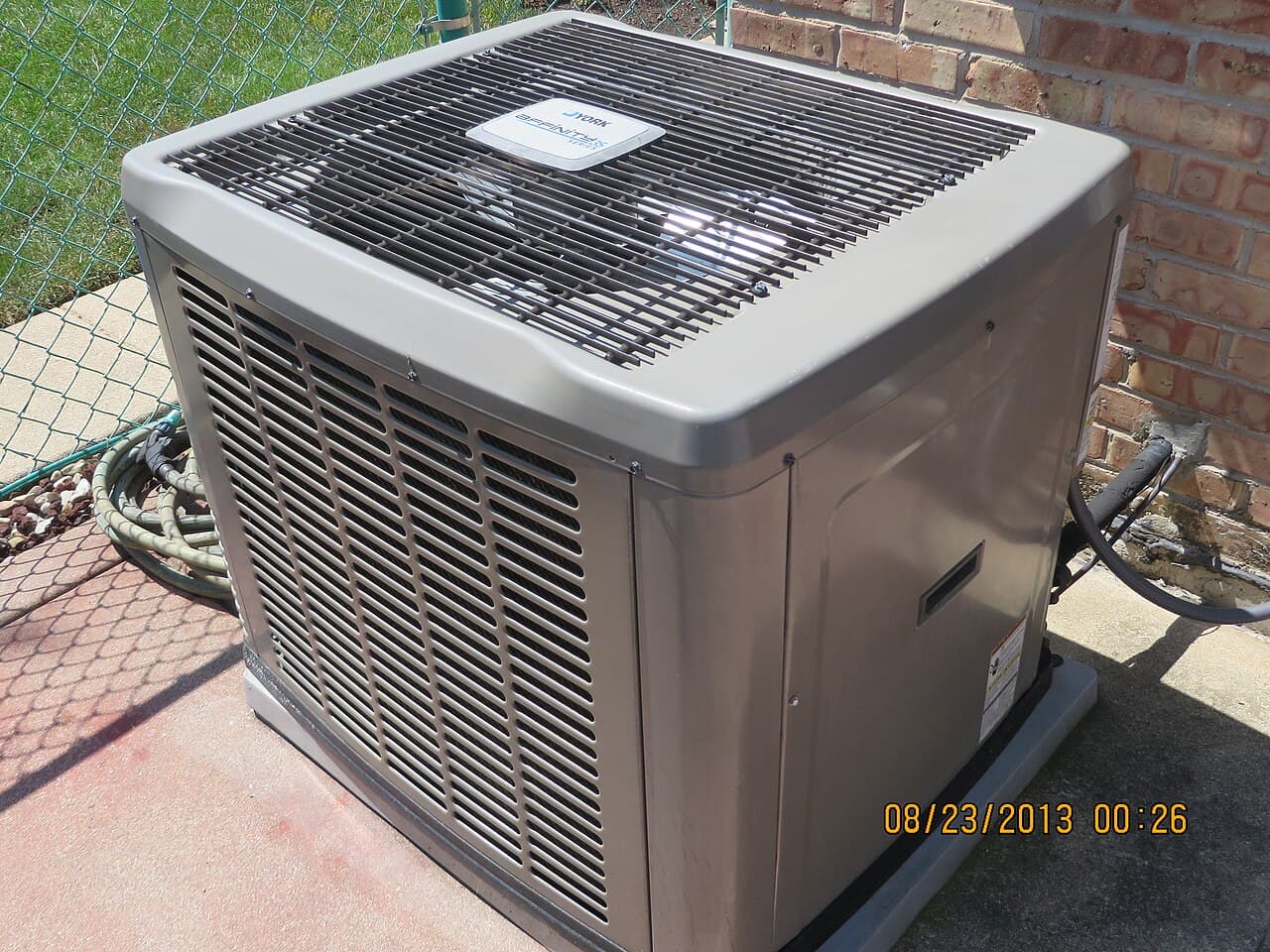
Most homes have a split system with two fans: a blower indoors and a condenser fan outdoors that pulls air through the outdoor coil.[1] The condenser fan is visible from the top of the unit, so it is easy to see whether it is turning.[1] If the indoor unit is blowing air but the outdoor unit isn't running, the air won't be cooled.[2]
Listen as well as look. A unit that hums or clicks without its fan turning is getting a signal but failing to start, which points to the parts described below.
The thermostat is not calling for cooling
This catches people out. Trane lists it first: the thermostat has to be set to Cool with a set temperature lower than the current indoor temperature.[3] On a programmable thermostat, a schedule can tell the AC not to run,[1] and a blank display may simply mean the thermostat needs new batteries.[4]
The unit has no power
An air conditioner needs a lot of power to start up[3] and should be on its own circuit,[1] so a tripped breaker in the electrical panel is a common cause. Treat a tripped AC breaker as a symptom, not just a nuisance. If a breaker trips again, do not keep resetting it, because repeated trips can point to an electrical or mechanical problem that needs professional service.[2] Trane goes further: a breaker that tripped did so because of an issue with the AC unit, and switching it back on without finding out why could damage the system.[3] A power surge after a storm can also trip it.[4]
A safety switch has shut it down
Some systems have a float switch on the indoor condensate drain. One technician quoted by Bryant names a clogged drain line that triggers the float switch as one of the most common issues: when the drain backs up, the unit shuts down.[2] Water in the pan under the indoor unit or a wet drain line points to this cause, and clearing a stubborn clog is a reasonable service call.
A capacitor or relay has failed
After a clogged drain, the same technician names failed outdoor components such as a capacitor or fan motor as the next most common problems.[2] A capacitor supplies the power that starts and runs the motors; if the AC will not start, or starts with a low humming sound and then shuts down, a faulty run capacitor is a likely cause.[1] Carrier lists the capacitor, the relay switch or a motor as electrical failures that can stop the fan or compressor.[5]
Capacitors hold an electrical charge, which is why Trane says to call a professional and not to try replacing one yourself.[1] The same goes for loose wiring inside the cabinet, which can keep the compressor from starting; only a trained HVAC technician should touch the wiring on the unit, for safety and to keep the warranty valid.[3]
The fan motor or a fan blade has failed
If everything else seems to work but the outdoor fan blades are not spinning at all, the fan motor has most likely burned out and needs replacing.[1] Blades that rotate slowly are another sign.[1] A broken blade makes an unusual noise because it is out of balance or striking other parts; if you see one, keep the system off and call for service.[1]
The compressor has failed
The compressor pressurizes and circulates the refrigerant; without it there is no cooling.[3] With proper maintenance it generally lasts the life of the system, but years of wear can end in a complete breakdown, and only an HVAC professional can confirm it.[3] A failed compressor is where the repair-or-replace question comes up; see whether to replace the whole system or just the condenser.
The unit is overheating or iced up
Shrubs, fences or debris too close to the unit can trap heat and make the system overheat.[5] Landscaping and debris close to the cabinet are worth a look; keeping the outdoor unit clear covers how much room it needs. Ice on the refrigerant lines is a reason to turn the system off to prevent compressor damage and call a professional, because refrigerant handling requires certification.[2]
When to call a licensed pro
Call once the thermostat, breaker and drain are ruled out, and right away for a breaker that trips twice, a burning smell, a humming unit that will not start, a broken fan blade or ice on the lines. Turn the system off at the thermostat while you wait. Running a struggling unit can turn a small repair into a bigger one.
Diagnosing and replacing capacitors, relays, fan motors and compressors is licensed work in Virginia: a tradesman includes an individual who does heating, ventilation and air conditioning work for the general public for compensation,[9] and no individual may work or offer to work as a tradesman without a licence, unless supervised by a tradesman licensed in that specialty.[6] Check a business on DPOR's License Lookup[7] before work starts. If refrigerant is involved, attaching gauges, adding or removing refrigerant and adding or removing components all require EPA Section 608 certification.[8]
For the checks to run before you call, see what to check before calling for AC repair; for prices, see what AC repair costs in Virginia.
Loclis lists DPOR-licensed HVAC businesses with their licence number and class. Find HVAC businesses in Blacksburg, browse condenser repair, or read more HVAC repair answers.
If your outdoor unit will not run, describe what it is doing once and licensed local HVAC businesses quote the repair.
Common questions
- Why does my outside AC unit hum but not turn on?
- A hum without the fan turning usually means the unit is getting the signal to start but a motor cannot. Trane names a faulty run capacitor as a common cause when the AC will not start or starts with a low hum and shuts down. Turn the system off and call a technician; capacitors hold a charge and are not a homeowner repair.
- Why is the outdoor fan not spinning while the compressor runs?
- That usually points to the condenser fan motor or its capacitor. Without the fan the unit cannot shed its heat, so turn the system off at the thermostat and call for service rather than letting it run.
- Should I reset the breaker for my AC?
- Check whether it has tripped. If it trips again after being reset, Bryant says not to keep resetting it, and Trane cautions that turning a tripped AC breaker back on without knowing why could damage the system. A repeat trip is a call for a licensed technician.
- Can a clogged drain stop the outside unit?
- Yes, on systems with a float switch. When the condensate drain backs up, the switch shuts the system down so the pan does not overflow. Clearing the drain usually lets it restart; a drain that keeps clogging needs service.
- Is it safe to keep running the AC if only the indoor fan works?
- There is little point, because the air will not be cooled, and if the outdoor unit is struggling or iced up, running it risks the compressor. Set the thermostat to off, or to fan only if you just want air movement, until a technician has looked at it.
Sources
- [1] AC Fan Not Working? Reasons Why It Stopped Spinning, Trane Residential. Checked October 26, 2026.
- [2] Why Is My AC Blowing Hot Air? Troubleshooting and Fixes, Bryant Heating & Cooling Systems. Checked October 26, 2026.
- [3] Central AC Compressor Not Turning On? Find Out Why, Trane Residential. Checked October 26, 2026.
- [4] Air Conditioner Troubleshooting, Trane Residential. Checked October 26, 2026.
- [5] What Is an AC Condenser?, Carrier. Checked October 26, 2026.
- [6] Va. Code § 54.1-1129, Necessity for license (tradesmen), Code of Virginia, Virginia General Assembly. Checked October 26, 2026.
- [7] License Lookup, Virginia Department of Professional and Occupational Regulation. Checked October 26, 2026.
- [8] Homeowners and Consumers: Frequently Asked Questions, U.S. Environmental Protection Agency. Checked October 26, 2026.
- [9] Va. Code § 54.1-1128, Definitions, Code of Virginia, Virginia General Assembly. Checked October 26, 2026.
Want a pro to handle it?
Describe the job once. Licensed local businesses send quotes, and you pay only when you book one.
Get a quote for HVAC Repair