What does an AC repair technician check first?
A technician usually starts with what you noticed, then rules out the simple causes that only look like a breakdown: the thermostat's mode and fan settings, a clogged air filter and power to the outdoor unit. After that come the electrical parts, motors, coils and drain, and last the refrigerant charge, which only an EPA Section 608 certified technician may test.
Free to ask. Local shops send quotes, and you pay only when you book one.
By Kasra Taheri, Founder, LoclisPublished
Researched and drafted with AI, then checked claim by claim against the sources listed below before it was published. Prices and rules change; the dates beside each source say when it was last checked.
This is a job for a licensed pro in Virginia
This page explains what the work involves, the permits, what a licensed pro does and what drives the cost. It does not give step-by-step instructions, because this work needs a licence, a permit or both, and doing it wrong can injure someone. Before you hire, check the licence on Virginia's DPOR record.
A good AC diagnosis works from the outside in. Before a technician opens a panel or connects gauges, they want to know what you saw and heard, and they rule out the problems that only look like a failed air conditioner. Carrier's troubleshooting guide says an AC that is not working "is most often caused by a tripped breaker, incorrect thermostat setting, or a clogged air filter".[1] The expensive parts, and the refrigerant, come later.
Knowing the order helps you in two ways: you can have the right information ready, and you can tell whether a visit was a real diagnosis or a guess.
What the technician asks you first
Expect questions before tools. Is the system blowing warm air, blowing no air, or not starting at all? Is the outdoor unit running? Is there ice on the copper lines or water near the indoor unit? Did a breaker trip? Any new noise or smell?
An HVAC business owner quoted in Carrier's troubleshooting guide notes that telling your service provider what you have seen, such as a dirty filter, an outdoor unit that is not running, a very dirty outdoor unit or ice on the system, can help them guide you and may even save a service visit.[1] ENERGY STAR also suggests you know the model of your current system and its maintenance history before you call.[5]
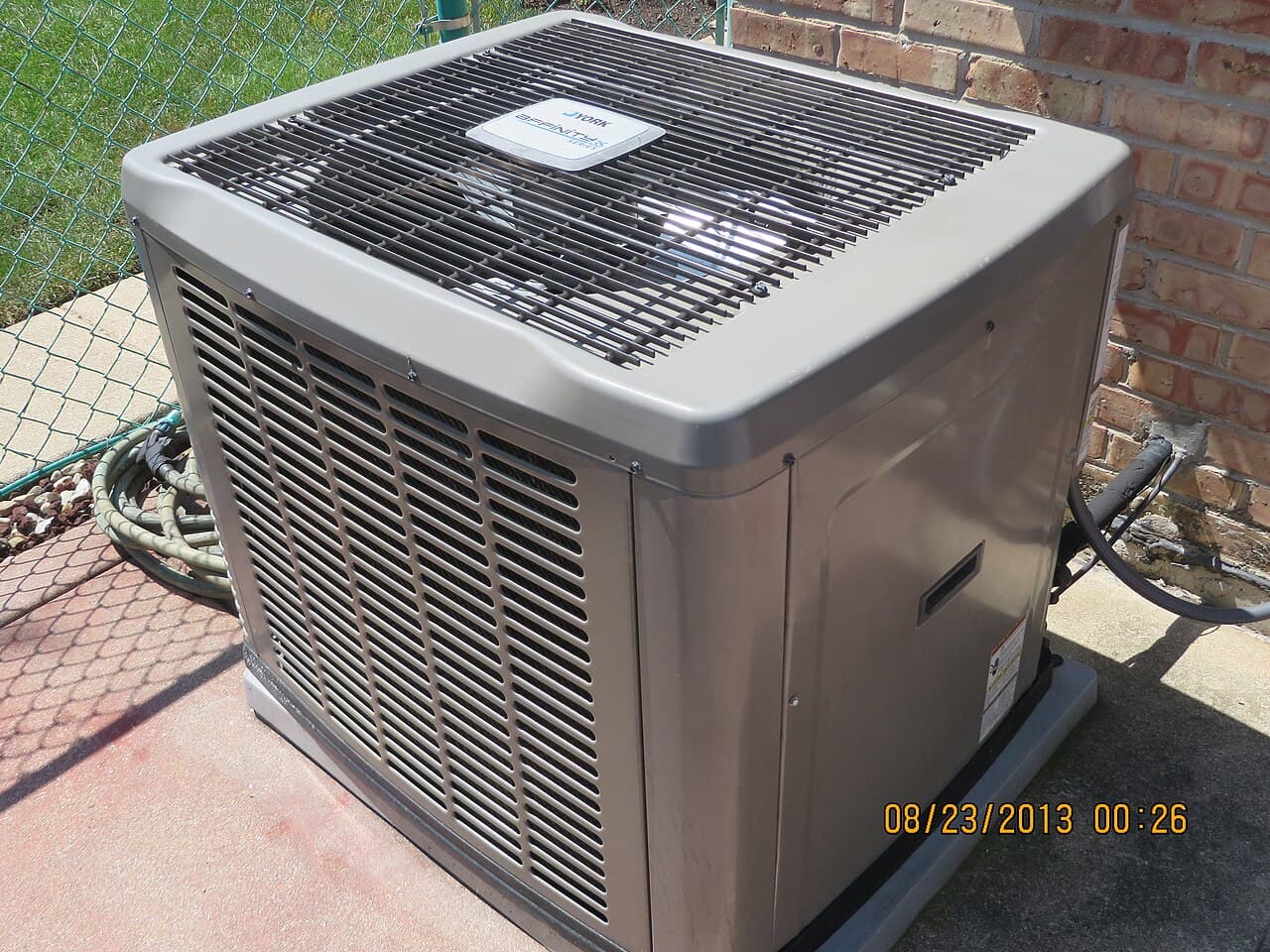
It also helps to know the refrigerant. The refrigerant a central air conditioner uses is typically listed on its nameplate, which is usually on the outdoor condenser.[6] An older system on R-22 changes the repair conversation, as the refrigerant section below explains.
The simple causes come off the list first
The thermostat. The technician confirms the system is set to cool and the set temperature is below the room temperature. The fan setting matters too. With the fan set to "On", the fan runs constantly even when the compressor isn't cooling, which can blow warm air.[1]
The air filter. Carrier calls a clogged filter a leading cause of performance problems.[1] A badly blocked filter starves the indoor coil of air, which can lead to the next problem on the list.
Power. A central air conditioner needs a dedicated circuit,[1] and a technician checks that both the indoor and outdoor units have power. A breaker that trips again right after it is reset points to a deeper electrical fault.[1]
The condensate drain. Cooling pulls water out of the air. When a clogged condensate line backs up, a float switch may shut the system down to help prevent water damage.[3] A system that stops without warning on a humid day often gets its drain checked early. Loclis has a separate guide to clearing a clogged condensate drain line.
Ice. If airflow is restricted or refrigerant is low, the indoor evaporator coil can freeze and stop the cooling.[1] Carrier's advice is to shut the system off when you see ice, to prevent compressor damage.[1] A technician will want the ice gone before taking readings, because a frozen coil hides the real numbers.
Then the equipment itself
Once the easy causes are ruled out, the visit looks much like the inside of a full check-up. ENERGY STAR's checklist for a typical visit includes tightening electrical connections and measuring voltage and current on motors, checking the system's controls, and checking the starting cycle so that the system starts, operates and shuts off properly.[4] For cooling it adds cleaning the evaporator and condenser coils, checking the refrigerant level and adjusting it if necessary, and cleaning and adjusting the blower.[4] Airflow is worth the time: airflow problems can reduce a system's efficiency by up to 15 percent.[4]
The outdoor unit holds the parts that fail most often on a repair call. A failing capacitor may make the system struggle to start, hum loudly, or shut off repeatedly before it finishes a cooling cycle.[2] Hard starting, loud clicking at startup or repeated breaker trips may point to the compressor or its electrical parts, and squealing or grinding may mean a fan motor or its bearings are wearing out.[2]
These checks happen with the cabinet open and meters on live circuits, which is why they are not homeowner work. Bryant warns that air conditioners contain lethal high-voltage electricity that can remain stored even after power has been disconnected.[2] In its words: "Safe homeowner troubleshooting ends before opening the equipment cabinet."[2]
Refrigerant comes last, and only with certification
Federal rules say technicians who maintain, service, repair, or dispose of equipment that could release ozone depleting refrigerants into the atmosphere must be certified under Section 608 of the Clean Air Act.[7] EPA counts even attaching or detaching hoses and gauges among the activities that need that certification.[6]
A careful technician checks refrigerant after airflow, because a dirty filter or coil can make the charge look wrong when it is not. If the charge really is low, the question is why. An air conditioner does not use up refrigerant, so low refrigerant generally means a leak.[3] EPA asks homeowners to have technicians locate and repair leaks instead of "topping off" a leaking system.[6] A visit that adds refrigerant without looking for the leak usually means another call later.
An older system needs one more conversation if it runs on HCFC-22, which is often referred to as "R-22".[6] As of January 1, 2020, no new HCFC-22 is made or imported in the United States, but used HCFC-22 cleaned up to the same specifications as new refrigerant is still available.[6] EPA does not require homeowners to replace their existing equipment.[6] There are no "drop in" replacements for HCFC-22, so a technician who repairs a leak will most often charge HCFC-22 back into the system as part of that repair.[6] On an older R-22 system, it is reasonable to ask for the repair price and a replacement estimate side by side.
What you should leave with
At the end of a diagnostic visit you should know what failed, how the technician confirmed it, and what the fix costs. ENERGY STAR's hiring advice is to "Get written, itemized estimates".[5] Virginia's Board for Contractors requires anyone engaged in residential contracting, which its rules define as construction, removal, repair, or improvements to single-family or multiple-family residential buildings, to use a legible written contract clearly specifying the terms and conditions of the work.[10] The contract must be signed by both the consumer and the licensee or the licensee's agent before work starts or payments are accepted.[10] Subcontractors and those who engage in routine maintenance or service contracts are excluded from that rule.[10] Ask for the findings and the price in writing before approving the work, and for a repair beyond routine service, expect a signed contract before the technician starts. For what drives that price, see what AC repair costs in Virginia.
When to call a licensed pro
Call once the thermostat and filter are ruled out and the system still is not cooling, and right away when:
- A breaker trips again after it is reset.
- You see ice on the copper lines or the indoor coil.
- Water is collecting around the indoor unit, or the system shuts itself off.
- You hear grinding, squealing or loud humming from the outdoor unit, or smell burning from the vents.
Virginia's Code says no individual may work as a tradesman, which includes heating, ventilation and air conditioning work for the public for pay, without a licence, unless working under the supervision of a tradesman licensed in that specialty.[8][9] You can check a business or a technician on DPOR's License Lookup.[11] For more on the licence itself, see whether an HVAC technician needs a licence in Virginia.
Finding a technician in Virginia
Loclis lists DPOR-licensed HVAC businesses with their licence number and class. Look up HVAC businesses in Blacksburg or another town, browse heating and cooling services, or read more heating and cooling answers.
If your air conditioner is not cooling, describe the problem once and licensed local HVAC businesses quote it.
Common questions
- Why does the technician ask about the thermostat and filter before opening the unit?
- Because those are among the most common causes. Carrier says an AC that is not working is most often caused by a tripped breaker, an incorrect thermostat setting or a clogged air filter. Ruling them out first saves time and avoids paying for parts the system does not need.
- Should the technician add refrigerant on the first visit?
- Only after finding out why it is low. Low refrigerant is generally a sign of a leak, and EPA asks homeowners to have technicians locate and repair leaks instead of topping off a leaking system. Connecting gauges to check the charge is itself work that requires EPA Section 608 certification.
- What should I have ready before the technician arrives?
- The make and model of the indoor and outdoor units, when the system was last serviced, and what you noticed: warm air, no air, ice on the lines, water near the indoor unit, a noise or a smell, and whether a breaker tripped. ENERGY STAR suggests knowing the model and maintenance history before you call.
- Can I check the capacitor myself to save a visit?
- No. Bryant warns that air conditioners contain lethal high-voltage electricity that can remain stored even after power has been disconnected, and that safe homeowner troubleshooting ends before opening the equipment cabinet. Capacitor, contactor and compressor testing is work for a licensed HVAC technician.
- Does the technician need a Virginia licence for a repair call?
- Yes. Under Va. Code § 54.1-1129, anyone doing HVAC work for the public for pay must hold a tradesman licence or work under the supervision of a tradesman licensed in that specialty. You can look up a business or tradesman on DPOR's License Lookup.
Sources
- [1] Troubleshoot an Air Conditioner: 6 Steps to Fix an AC Not Working, Carrier. Checked October 26, 2026.
- [2] How to Repair and Troubleshoot Your AC, Bryant. Checked October 26, 2026.
- [3] Why Is My AC Blowing Hot Air?, Bryant. Checked October 26, 2026.
- [4] Maintenance Checklist, ENERGY STAR, U.S. Environmental Protection Agency. Checked October 26, 2026.
- [5] 10 Tips for Hiring a Heating and Cooling Contractor, ENERGY STAR, U.S. Environmental Protection Agency. Checked October 26, 2026.
- [6] Homeowners and Consumers: Frequently Asked Questions, U.S. Environmental Protection Agency. Checked October 26, 2026.
- [7] Section 608 Technician Certification, U.S. Environmental Protection Agency. Checked October 26, 2026.
- [8] Va. Code § 54.1-1129, Necessity for licensure, Code of Virginia, Virginia General Assembly. Checked October 26, 2026.
- [9] Va. Code § 54.1-1128, Definitions, Code of Virginia, Virginia General Assembly. Checked October 26, 2026.
- [10] 18VAC50-22-260, Filing of charges; prohibited acts, Virginia Administrative Code, Board for Contractors. Checked October 26, 2026.
- [11] License Lookup, Virginia Department of Professional and Occupational Regulation. Checked October 26, 2026.
Want a pro to handle it?
Describe the job once. Licensed local businesses send quotes, and you pay only when you book one.
Get a quote for HVAC Repair