What does a boiler technician check when there is no heat?
A technician works from the simple causes to the serious ones: whether the thermostat is calling for heat and the boiler has power, what error code and pressure it shows, whether the circulator is moving water or air is trapped, whether the burner lights and holds a steady flame, and whether the venting, condensate drain and gas supply are clear.
Free to ask. Local shops send quotes, and you pay only when you book one.
By Kasra Taheri, Founder, LoclisUpdated
Researched and drafted with AI, then checked claim by claim against the sources listed below before it was published. Prices and rules change; the dates beside each source say when it was last checked.
This is a job for a licensed pro in Virginia
This page explains what the work involves, the permits, what a licensed pro does and what drives the cost. It does not give step-by-step instructions, because this work needs a licence, a permit or both, and doing it wrong can injure someone. Before you hire, check the licence on Virginia's DPOR record.
A boiler technician answering a no-heat call works from the cheap, common causes to the expensive, rare ones. First they confirm the boiler is being asked for heat and has power. Then they read its error code and pressure, check that water is circulating, watch the burner light and hold a flame, and check the venting and fuel supply. The goal is to find the one part or setting that broke the chain, rather than replace parts on a guess.
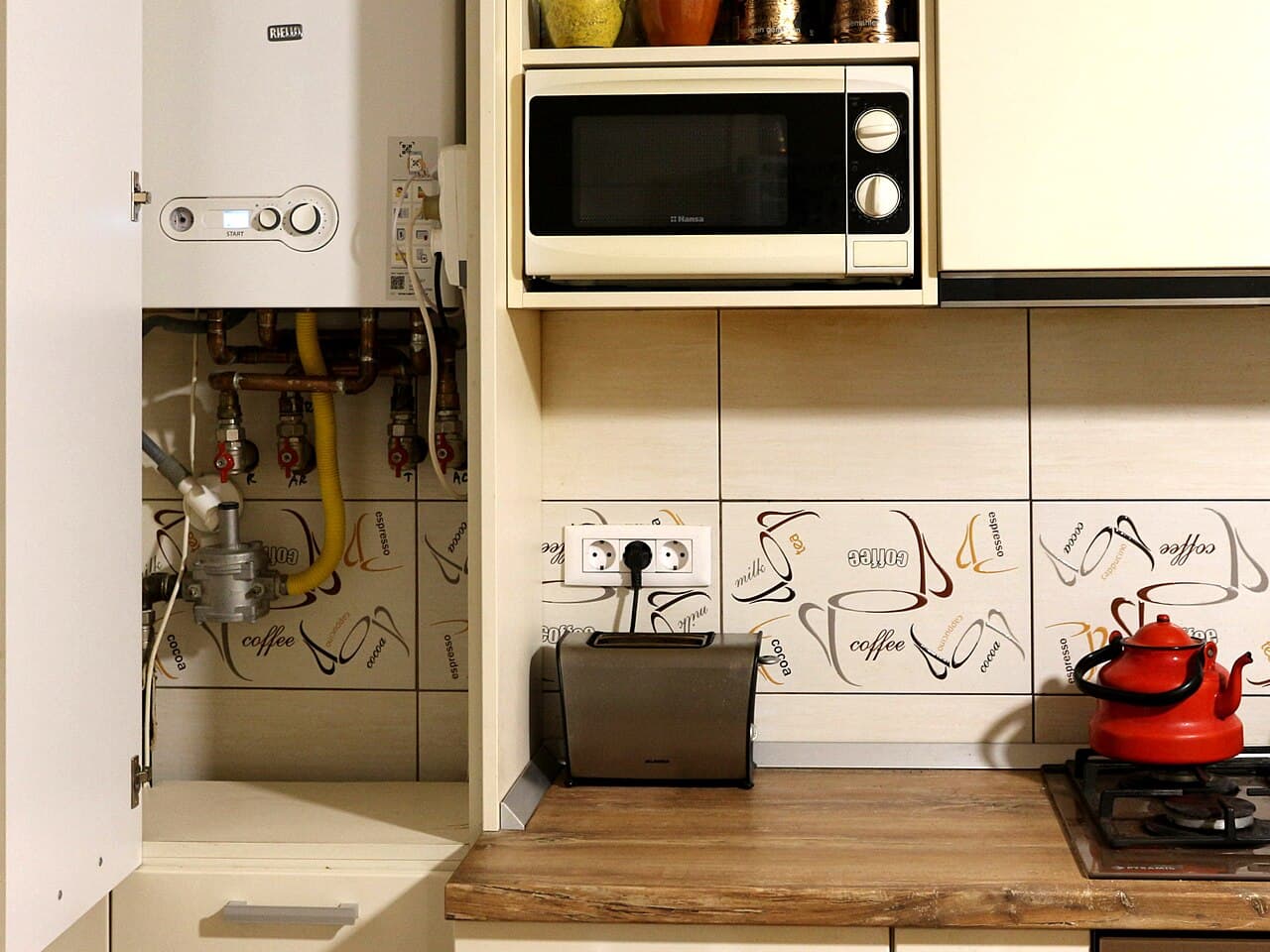
What a hot-water boiler has to do to make heat
It helps to know the sequence the technician is testing. When the house cools off, a control tells the boiler to start, the pump begins circulating water and the burner ignites to heat it[2]. Hot water flows out to radiators, baseboard or floor tubing and comes back cooler. A no-heat problem is a break somewhere in that chain: no call for heat, no circulation, no flame, or a safety control that has shut the boiler down. The check runs in roughly that order.
The checks, from simplest to most serious
The call for heat and the controls
The first questions are the ones a boiler's own troubleshooting chart asks: whether the temperature setting is too low, whether the boiler has power or is sitting in standby, and whether it is busy heating domestic hot water, because while it heats hot water the heating side does not work[1]. The technician then confirms the thermostat is actually signalling the boiler, and in a zoned house, which zones are calling. If one zone is cold and the others are warm, the trouble is usually that zone's valve, pump or thermostat rather than the boiler itself.
The error code and the pressure gauge
Modern boilers report what stopped them. On one Navien boiler, for example, E003 means ignition failure, E012 flame loss, E110 an exhaust blockage, E302 low water pressure and E777 that the low water cutoff has tripped[1]. Codes differ by brand, so the technician reads them against that model's manual, and checks the boiler's error history where it keeps one.
Water pressure comes next. For that Navien model, the cold fill pressure must be at least 6 psi, and pressure that rises too high as the boiler heats up can point to an expansion tank that is waterlogged or undersized[1]. Low pressure usually means a leak or a valve weeping somewhere; our guide to why a boiler loses pressure covers the usual suspects.
Circulation and air
A boiler can fire perfectly and still leave the house cold if water is not moving. Trapped air can make a boiler overheat or keep its pumps from circulating water[2]. The technician checks that the circulator runs and actually moves water, that zone valves open, that isolation valves are open, and that air vents and air separators are working.
Ignition and flame
If the boiler is calling and circulating but not firing, attention turns to the burner: the ignition and flame rod, which are cleaned and repositioned, the flame itself, which should be stable and uniform, and the flame signal the control reads[1]. When the boiler tries to light and fails, the error chart points to the same area: on that Navien model, the action the chart gives for an E003 ignition failure is to check the gas supply valve and igniter[1].
Venting, air intake and condensate
Combustion needs a clear path in and out. If the boiler's air intake filter clogs with dust or lint, the boiler stops running and shows an error code[1]. On a condensing boiler the technician also checks the condensate trap and the flue and air lines for blockage or leaks[1]. A plugged condensate drain or a vent blocked by a nest or leaves can shut a boiler down while every other part is fine.
Fuel and combustion
Finally comes the fuel side: gas or oil connections, gas pressure, burner combustion and the heat exchanger[4]. A dirty burner or a cracked heat exchanger makes the burner run improperly, and either one leaves the equipment less safe and less efficient.[4] This is where a technician uses a combustion analyzer and a manometer, and where the work clearly belongs to a licensed pro.
What you can note before the technician arrives
You can save diagnostic time without touching the equipment: write down the make and model from the label, any error code on the display, and the pressure gauge reading; note whether every room is cold or only some; and say whether hot water still works. A front-panel reset is in many user manuals. If resetting does not clear the problem, the manual's advice is to contact an authorized technician or licensed professional.[1] Boiler makers generally expect that. Weil-McLain, for instance, does not send its own technicians and relies on independent heating professionals to install, maintain and troubleshoot its boilers[3].
Safety comes before heat
If you smell gas, do not try to light any appliance, do not touch electric switches or use a phone in the building, and call your gas supplier from a neighbor's phone, or the fire department if you cannot reach the supplier[1]. Carbon monoxide is odorless and colorless, and worn or poorly adjusted boilers and furnaces, and blocked, disconnected or leaking flues, are among its sources[5]. If a CO alarm goes off, EPA's advice is to get anyone with symptoms out of the house immediately and seek medical attention; if no one has symptoms, ventilate the home with fresh air, turn off all potential sources of CO and have a qualified technician inspect your fuel-burning appliances and chimneys[6].
When to call a licensed pro
Call as soon as a reset does not hold, the pressure is outside its normal range, the boiler shows a flame, venting or overheat code, you see water around it, or anything smells wrong. Virginia's tradesman rules define HVAC work as including the installation, alteration, repair, or maintenance of "steam and hot water heating systems, boilers"[8], and no one may work as a tradesman unless licensed, though a person working under the supervision of a licensed tradesman in that specialty does not need a licence of their own[9]. The business itself is licensed as a contractor too: Virginia's smallest class, Class C, covers a single contract or project worth over $1,000 but less than $30,000[7]. Before you hire, check the business and its technician on DPOR's License Lookup[10].
For what a visit and the usual repairs cost, see how much boiler repair costs in Virginia, and for keeping the next no-heat call away, how often a boiler should be serviced. You can browse more HVAC repair answers or find licensed heating and cooling businesses in Blacksburg.
If your boiler is cold now, describe the problem once and get quotes from licensed boiler technicians.
Common questions
- Can I reset my boiler myself before calling?
- Many boilers have one on the front panel. Navien's NHB-H manual, for example, says to press the Back button to reset the boiler when an error message appears, and if resetting does not solve the problem, to use its troubleshooting chart or contact an authorized technician or licensed professional. Write down the error code before you reset: it is the clue the technician needs.
- What should I tell the technician when I call?
- The boiler's make and model, any error code on the display, the pressure gauge reading, whether every zone is cold or only some, whether you still have hot water, and anything unusual you noticed, such as noises, water on the floor or a smell.
- Why do I have hot water but no heat?
- On a combi boiler or a boiler with an indirect water heater, the heating side pauses while the boiler makes hot water, so a long hot-water demand can look like no heat. If heat never comes back, the fault is more often on the heating side: a zone valve, a circulator, the thermostat or air in the heating loop.
- Is it dangerous to keep running a boiler that keeps locking out?
- A lockout means a control has stopped the boiler, and on one Navien model the error codes behind it include ignition failure, flame loss, an exhaust blockage and low water pressure. When a reset does not clear it, the manual's advice is to contact an authorized technician or licensed professional, so call one. If you smell gas, call your gas supplier from a neighbor's phone, not from inside. If a carbon monoxide alarm goes off, EPA advises getting anyone with symptoms out of the house and seeking medical attention.
- Who is allowed to repair a boiler in Virginia?
- Boiler repair is HVAC work under Virginia's tradesman rules, so it is done by a licensed tradesman or someone working under a licensed tradesman's supervision. The business is licensed as a contractor as well; the smallest class, Class C, covers a single contract or project worth over $1,000 but less than $30,000. You can confirm both on DPOR's License Lookup.
Sources
- [3] Boiler FAQs & Common Questions, Weil-McLain. Checked October 26, 2026.
- [4] Maintenance Checklist, ENERGY STAR, U.S. Environmental Protection Agency. Checked October 26, 2026.
- [5] Carbon Monoxide's Impact on Indoor Air Quality, U.S. Environmental Protection Agency. Checked October 26, 2026.
- [6] Protect Your Family and Yourself from Carbon Monoxide Poisoning, U.S. Environmental Protection Agency. Checked October 27, 2026.
- [7] Va. Code § 54.1-1100, Definitions, Code of Virginia, Virginia General Assembly. Checked October 26, 2026.
- [8] 18VAC50-30-10, Definitions (Tradesman Rules and Regulations), Virginia Administrative Code, Virginia General Assembly. Checked October 26, 2026.
- [9] Va. Code § 54.1-1129, Necessity for licensure, Code of Virginia, Virginia General Assembly. Checked October 26, 2026.
- [10] License Lookup, Virginia Department of Professional and Occupational Regulation. Checked October 26, 2026.
Want a pro to handle it?
Describe the job once. Licensed local businesses send quotes, and you pay only when you book one.
Get a quote for HVAC Repair