What does a heat pump repair visit involve?
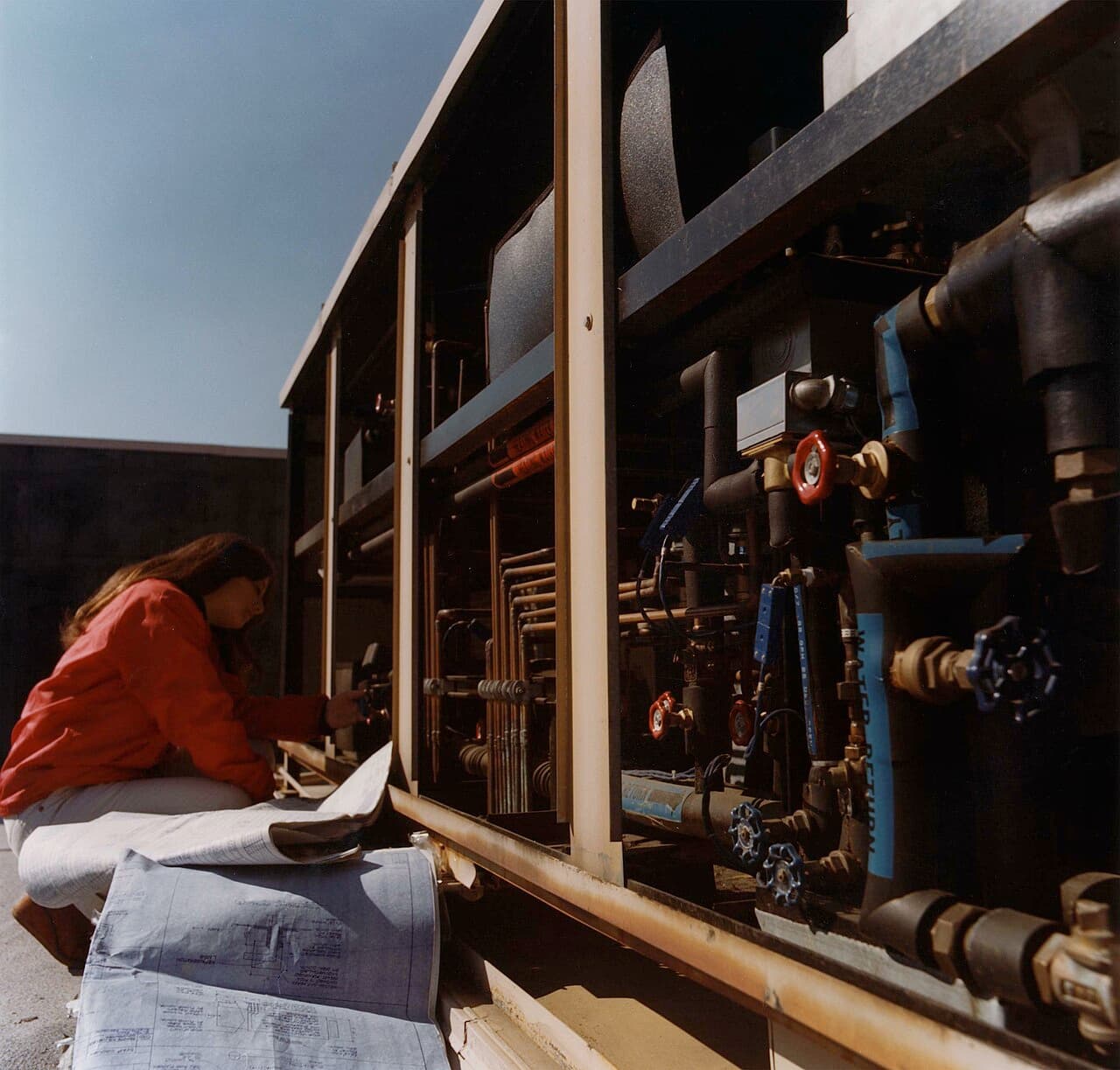
A repair visit has three parts. The technician confirms what the system is doing wrong, tests it from the thermostat through the indoor unit to the outdoor unit until the faulty part turns up, then explains the fault and quotes the repair before doing it. Most faults trace to controls, electrical parts, airflow, refrigerant or the defrost system, and that work is licensed in Virginia.
Free to ask. Local shops send quotes, and you pay only when you book one.
By Kasra Taheri, Founder, LoclisUpdated
Researched and drafted with AI, then checked claim by claim against the sources listed below before it was published. Prices and rules change; the dates beside each source say when it was last checked.
This is a job for a licensed pro in Virginia
This page explains what the work involves, the permits, what a licensed pro does and what drives the cost. It does not give step-by-step instructions, because this work needs a licence, a permit or both, and doing it wrong can injure someone. Before you hire, check the licence on Virginia's DPOR record.
A heat pump repair visit usually has three parts. The technician confirms what the system is doing wrong, tests it in order from the thermostat to the outdoor unit until the faulty part turns up, then explains the fault and gives you a price before doing the work. Most faults trace back to the controls, an electrical part, airflow, the refrigerant circuit or the defrost system.
Before anyone comes out
Manufacturers suggest a few basic checks first, and they sometimes save the call. Carrier's pre-call list covers the thermostat mode and setting, the air filter, the breaker and the space around the outdoor unit, with two firm limits: "If a breaker trips repeatedly, don't keep resetting it—contact a qualified HVAC professional."[1] And: "Don't attempt to remove panels or work on internal components."[1]
When you book, describe the symptom as exactly as you can: blowing cool air, running nonstop, iced over, not starting, short cycling, a new noise, and when it began. Note any code or light on the thermostat, the make and model from the outdoor unit's label, and roughly how old the system is. That helps the technician bring the right parts. On some connected Trane systems, a dealer given remote access can diagnose the problem before sending a technician and arrive with the correct parts[4].
What the technician checks
A good diagnosis moves from the cheap, common causes to the expensive, rare ones. The order varies with the symptom, but the ground covered is much the same.
The complaint and the controls
The technician first confirms the thermostat is calling for heat or cooling in the right mode, then watches the system start. ENERGY STAR's list for a proper check-up includes checking "the starting cycle of the equipment to assure the system starts, operates, and shuts off properly"[5]. A system that will not start, or starts and stops quickly, points the search toward controls and power.
Power and electrical parts
A heat pump that hums but will not run, or will not come on at all, often has an electrical fault. Carrier says a dealer "can check for issues with the contactor or capacitor and damaged or loose wiring connections"[1], and its service checklist includes inspecting the run capacitor for bulging, unusual markings, or discoloration[2]. The indoor and outdoor units are on separate breakers[1], so power is checked at both. This matters beyond comfort: faulty electrical connections can cause unsafe operation of your system and reduce the life of major components[5].
Airflow, indoors and out
Next comes airflow: the filter, the blower in the air handler, the indoor coil and the condensate drain, then the outdoor coil and fan. Carrier explains that in the outdoor unit the fan draws air through the coil, and a defective fan motor means little or no airflow, which can cause the coil to freeze over[1]. ENERGY STAR notes that airflow problems can reduce your system's efficiency by up to 15 percent[5].
The refrigerant circuit
If power and airflow check out, the technician measures the system's pressures and temperatures to judge the refrigerant charge. Carrier's checklist puts it plainly: "Check refrigerant charge levels, inspect for leaks, and verify proper airflow."[2] Low refrigerant usually means a leak somewhere, and EPA asks homeowners to request that technicians locate and repair leaks instead of "topping off" a leaking system[6].
This is the clearest line between homeowner and pro. Under federal rules, Section 608 certification is required to recharge appliances[6]. The same goes for any work that could reasonably be expected to violate the integrity of the refrigerant circuit, such as attaching or detaching hoses and gauges, adding or removing refrigerant or cutting the refrigerant line[6]. Refrigerant for stationary appliances is only sold to certified technicians or the companies that employ them[6].
Defrost and the reversing valve
These parts are what make a heat pump different from an air conditioner. On Trane's systems the defrost control has two sensors, one reading the outdoor temperature and one reading the coil temperature[3]. Carrier's service checklist includes checking the reversing valve, testing the defrost cycle, and checking the auxiliary heat and heating in defrost mode[2]. Ice that is not going away or is growing can come from faulty defrost controls or a faulty sensor, as well as low refrigerant[3]; see why a heat pump is covered in ice.
Noises
New sounds get their own look. Trane treats banging, screeching, rattling, buzzing, grinding or gurgling as noises that call for a professional, because finding the cause usually means examining parts of the system and the electrical work[3].
The diagnosis, the quote and the repair
Expect a fee for the visit itself. In a guide Trane published in August 2024 and updated in February 2026, it put that fee at $50-200, adding that many companies will tell you the fee over the phone, and some apply it toward the repair if you hire them to fix the problem[4].
Once the fault is found, the technician should show or tell you what failed, why, and what it costs to fix before starting. "In many HVAC repair situations, the repair doesn't mean fixing a part - it means replacing it."[4] Small parts such as capacitors and contactors are often on the truck; a compressor, coil or circuit board may need ordering. If the system is still under warranty, a manufacturer's warranty may cover certain replacement parts, but unless you have an extended warranty or a separate labor warranty with the installer, you may pay full price for the labor[4].
After the repair, the technician normally runs the system through a full cycle to confirm it heats or cools as it should. Ask for an invoice that names the part replaced and what was measured.
For a bigger job, get the price in writing first. Virginia's Board for Contractors requires a legible written contract for residential contracting, though it excludes those who engage in routine maintenance or service contracts[7]. A written quote for a compressor or coil should still show the contractor's name, address, license number, class of license, and classifications or specialty services[7]. For typical prices by part, see how much common heat pump repairs cost in Virginia, and if the unit is getting on in years, how old is too old for a heat pump.
When to call a licensed pro
Call once the basic checks are done and the problem is still there, or right away if a breaker keeps tripping, the outdoor unit stays iced, you hear grinding or banging, or you smell something burning. Heat pump repair is licensed work in Virginia: no individual may work as a tradesman unless licensed, and the Code defines a tradesman as anyone who does electrical, plumbing or heating, ventilation and air conditioning work for the general public for compensation[8][9]. Someone working under the supervision of a tradesman licensed in that specialty does not need a licence of their own[8]. Virginia law also says no person may engage in, or offer to engage in, contracting work unless licensed under the contractor chapter of the Code[11]. The smallest contractor class, Class C, covers a single contract or project over $1,000 but less than $30,000, or a total of less than $250,000 of such work in any 12-month period[10]. Before you book, look up both the HVAC tradesman licence and the business's contractor licence on DPOR's License Lookup[12].
To keep the next visit away, read how often a heat pump should be serviced. You can browse more HVAC repair answers, see heat pump services, or find licensed HVAC businesses in Blacksburg.
Describe what your heat pump is doing and licensed local HVAC businesses quote the repair.
Common questions
- How long does a heat pump repair visit take?
- It depends on the fault. A common part the technician carries can often be fitted the same visit, while a refrigerant leak search, a compressor or a coil takes longer and may need a part ordered and a second visit. Ask when you book how the business charges for time.
- Do I need to be home for the repair?
- Usually yes, at least at the start and the end. The technician needs to reach the indoor unit and thermostat as well as the outdoor unit, and you will want to hear the diagnosis and approve the price before work begins.
- Can the technician just add refrigerant?
- Adding refrigerant without finding the leak only buys time. EPA asks homeowners to request that technicians locate and repair leaks rather than top off a leaking system. Ask what the technician found, where the leak is, and what fixing it would cost.
- What should I check before I call?
- The thermostat mode and setting, the air filter, whether a breaker has tripped, and whether snow, leaves or shrubs are crowding the outdoor unit. Do not keep resetting a breaker that trips again, and do not take panels off the unit.
- Who is allowed to repair a heat pump in Virginia?
- Heat pump repair is HVAC work, so in Virginia it is done by a licensed HVAC tradesman or someone working under one's supervision, and no one may engage in contracting work without a contractor licence. Both Virginia licences, the HVAC tradesman licence and the contractor licence, can be checked on DPOR's License Lookup. Anyone handling refrigerant also needs EPA Section 608 certification, a federal credential rather than a DPOR licence, so ask about it separately; EPA says you can ask a technician to show you the certification card.
Sources
- [1] Heat Pump Troubleshooting Guide, Carrier. Checked October 26, 2026.
- [2] Heat Pump Service & Maintenance Tips, Carrier. Checked October 26, 2026.
- [3] Heat Pump Troubleshooting: Diagnosing Common Issues, Trane. Checked October 26, 2026.
- [4] Average Heat Pump Repair Cost, Trane. Checked October 26, 2026.
- [5] Maintenance Checklist, ENERGY STAR, U.S. Environmental Protection Agency. Checked October 26, 2026.
- [6] Homeowners and Consumers: Frequently Asked Questions, U.S. Environmental Protection Agency. Checked October 26, 2026.
- [7] 18VAC50-22-260, Filing of charges; prohibited acts, Virginia Administrative Code, Virginia General Assembly. Checked October 26, 2026.
- [8] Va. Code § 54.1-1129, Necessity for licensure, Code of Virginia, Virginia General Assembly. Checked October 26, 2026.
- [9] Va. Code § 54.1-1128, Definitions, Code of Virginia, Virginia General Assembly. Checked October 26, 2026.
- [10] Va. Code § 54.1-1100, Definitions, Code of Virginia, Virginia General Assembly. Checked October 26, 2026.
- [11] Va. Code § 54.1-1103, Necessity for license, Code of Virginia, Virginia General Assembly. Checked October 27, 2026.
- [12] License Lookup, Virginia Department of Professional and Occupational Regulation. Checked October 26, 2026.
Want a pro to handle it?
Describe the job once. Licensed local businesses send quotes, and you pay only when you book one.
Get a quote for HVAC Repair