Why is my heat pump covered in ice?
A thin layer of frost is normal in cold, damp weather, and the heat pump clears it with a short defrost cycle. A unit encased in ice is not normal. The usual causes are blocked airflow, water dripping onto the unit from a gutter, a failed defrost control or sensor, a bad outdoor fan motor, or low refrigerant from a leak, and most of those need a licensed technician.
Free to ask. Local shops send quotes, and you pay only when you book one.
By Kasra Taheri, Founder, LoclisUpdated
Researched and drafted with AI, then checked claim by claim against the sources listed below before it was published. Prices and rules change; the dates beside each source say when it was last checked.
This is a job for a licensed pro in Virginia
This page explains what the work involves, the permits, what a licensed pro does and what drives the cost. It does not give step-by-step instructions, because this work needs a licence, a permit or both, and doing it wrong can injure someone. Before you hire, check the licence on Virginia's DPOR record.
Some frost on a heat pump is normal in winter, and the unit melts it off with a short defrost cycle. A heat pump that is encased in ice, or iced up in summer, has a problem. The usual causes are blocked airflow, water dripping onto the unit, a failed defrost control or sensor, a bad outdoor fan motor, or low refrigerant from a leak. Most of those are repairs for a licensed technician.
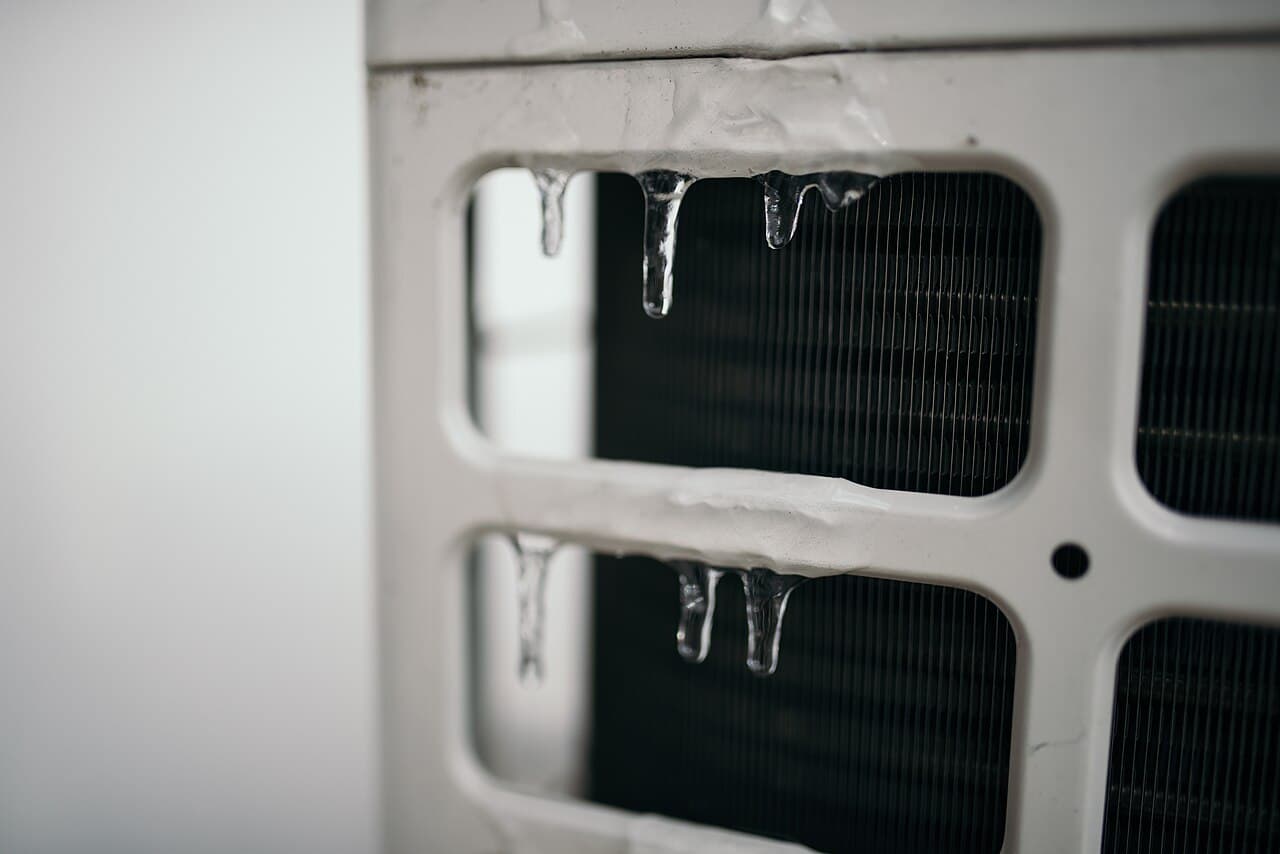
Why a heat pump frosts up at all
In heating mode, the outdoor coil pulls heat out of the outside air, so it runs colder than the air around it. "Your heat pump's outdoor coil is typically 10 to 20 degrees colder than the air outside, so the unit freezing over can happen even if the temperature isn't below freezing."[1] Moisture in the air settles on the cold coil and freezes. That is why frost shows up on raw, damp mornings, not only in a hard freeze.
The heat pump deals with this itself. On Trane's systems the defrost control uses two sensors, one for the outdoor temperature and one for the coil temperature, and a microprocessor control picks the defrost cycle that clears the coil[1]. In cold, humid weather a heat pump should automatically defrost itself every 30 to 90 minutes[4]. A typical defrost cycle lasts about 5–10 minutes, although the exact timing varies by system and outdoor conditions.[2]
Normal frost or a real problem
Thin frost is expected: "A light, thin layer of frost—generally less than 1/4 inch—is normal during winter operation and should clear during the unit's automatic defrost cycle."[2] Heavy ice is not: "Ice buildup thicker than 1/4 inch, a solid coating of ice, or ice that does not clear during defrost is not normal and requires attention."[2] Ice in cooling season is a different matter altogether: "A frozen coil during the summer months is also suspicious."[2]
The usual causes of heavy ice
Blocked airflow. Dirty or clogged air filters inside the house, or leaves, debris or snow around the outdoor unit, starve the coil of air and let it get cold enough to ice over[4]. It is also the cause most often within a homeowner's reach: a dirty filter is a simple fix[4], and so is a unit kept clear.
Water dripping onto the unit. In winter, water from melting snow or ice can leak onto the coil and then freeze, for example from a leaky gutter[2]. A unit sitting under a roof edge or a broken downspout can build ice faster than defrost can clear it. If the unit's drain pan or drain line is clogged, water pools around it and refreezes[4].
A failed defrost control or sensor. If the defrost control board, timer or sensor fails, ice keeps building without melting, and this is one of the most common reasons for severe freeze-ups[4]. The telltale sign is a unit that never seems to go into defrost.
A bad outdoor fan motor. In the outdoor unit the fan draws air through the coil, and a defective fan motor means little or no airflow, which can cause the coil to freeze over[2]. If the coil is icing and the fan is not turning, this is a strong suspect.
Low refrigerant. If your system is low on refrigerant, it can't produce enough heat to melt ice buildup during winter[2]. When refrigerant levels drop because of a leak, the coils get too cold and ice forms quickly[4], so the real repair is finding and fixing the leak. Low refrigerant also reduces heating performance and can damage your compressor if not fixed[4].
Other parts and weather. A malfunctioning reversing valve[4] can also leave the coil iced. And prolonged periods of freezing rain, sleet, or heavy wet snow can overwhelm the defrost system[4].
What to do first
Judge the ice before anything else. If ice is more than 1/4 inch thick or does not clear during a normal defrost cycle, in any season, turn off the system and contact a qualified HVAC professional[2]. A frozen unit cannot heat and may suffer severe damage if left running[3]. The simple way to stop it is to switch the heat pump to "off" at the thermostat, which stops the system from running and prevents potential damage[4].
With lighter icing that looks to be clearing, wait a few hours without doing anything to see if the ice melts and the unit defrosts itself[1]. Natural thawing typically takes 2-4 hours when temperatures are above freezing, and longer in colder weather[4].
The house still needs heat while the outdoor unit thaws. Using the emergency heat setting lets the outdoor unit thaw while keeping the house warm[4]. Most systems rely on a backup heating element until the unit thaws, which is less efficient than normal heat pump operation[4], so expect a higher running cost.
From the house, check the air filter and look at what surrounds the unit. Keep at least 24 inches of clear space around the heat pump, while following the clearance requirements for your specific model[2]. Clear snow away from the unit after storms without piling it against the sides, and brush light snow off the top with a broom, never a sharp tool[4].
Leave the ice itself alone. "Never try to chip ice from the coil."[2] Never pour hot water on the unit, as the sudden temperature change can crack components[4], and remember that using tools to remove ice can damage the delicate coils, fins, and fan blades[4]. Do not take panels off the unit either.
When to call a licensed pro
Call a technician right away if the unit refreezes quickly after thawing, ice forms only on one side or in unusual patterns, refrigerant lines are covered in ice, the outdoor fan isn't spinning even after the ice melts, you hear grinding, squealing, or banging noises from the unit, or the defrost cycle never kicks in after several hours of running[4]. If ice doesn't melt within 6-8 hours or refreezes quickly, call a technician[4]. Trying to fix these problems yourself can void your warranty and lead to more expensive repairs[4].
Defrost boards, sensors, fan motors, reversing valves and refrigerant leaks are licensed work. Federal rules say technicians who maintain, service, repair, or dispose of equipment that could release ozone depleting refrigerants into the atmosphere must be certified[5], and under Virginia law no individual may work as a tradesman unless licensed, and the Code defines a tradesman as anyone who does electrical, plumbing or heating, ventilation and air conditioning work for the general public for compensation[6][7]. Check the business on DPOR's License Lookup[8]. To see what the technician will test, read what a heat pump repair visit involves, and for prices by part, how much common heat pump repairs cost in Virginia.
Keeping it from icing again
To keep it from happening again, change filters on schedule, keep the outdoor unit clear year-round, make sure gutters and downspouts don't drain onto or near the heat pump[4], and consider a snow guard over the top only, never covering the sides, which blocks airflow[4]. Regular professional service checks the defrost controls before winter; see how to keep a heat pump running well in winter and why a heat pump blows cool air in winter.
You can browse more HVAC repair answers, see heat pump services, or find licensed HVAC businesses in Blacksburg.
Describe what your heat pump is doing and licensed local HVAC businesses quote the repair.
Common questions
- Is it normal for my heat pump to have frost on it in winter?
- Yes. A thin layer of frost on the outdoor coil is normal in cold, damp weather, and the heat pump clears it with an automatic defrost cycle. Carrier treats frost under about 1/4 inch that clears during defrost as normal, and thicker ice or ice that stays as a problem.
- How long should a frozen heat pump take to thaw?
- If the ice is thicker than about 1/4 inch or does not clear during defrost, do not wait: turn the system off and call a technician. Lighter icing usually thaws on its own; Lennox says natural thawing typically takes 2 to 4 hours when it is above freezing outside, and longer in colder weather. If it has not melted within 6 to 8 hours, or it comes straight back, call a technician.
- Can I pour warm water on the ice or chip it off?
- No. Lennox warns that hot water can crack components through sudden temperature change, and Carrier says never to chip ice from the coil. Tools can damage the coil, fins and fan blades. Let it thaw on its own, or turn the system off and call a technician.
- Is it safe to run my heat pump while it is iced over?
- Not for long. Carrier says a frozen unit cannot heat and may suffer severe damage if left running. If the ice is thick or does not clear during defrost, Carrier's advice is to turn the system off and call a qualified HVAC professional. Emergency heat can keep the house warm meanwhile.
- Why is my heat pump icing up in summer?
- In cooling mode, ice on the coil is a warning sign rather than normal frost. Carrier names low refrigerant and clogged filters as common causes, and the fix for low refrigerant is finding the leak, which is licensed work.
Sources
- [1] Heat Pump Troubleshooting: Diagnosing Common Issues, Trane. Checked October 26, 2026.
- [2] Heat Pump Troubleshooting Guide, Carrier. Checked October 26, 2026.
- [3] Heat Pump Service & Maintenance Tips, Carrier. Checked October 26, 2026.
- [4] What to Do If Your Heat Pump Is Frozen?, Lennox. Checked October 26, 2026.
- [5] Section 608 Technician Certification, U.S. Environmental Protection Agency. Checked October 26, 2026.
- [6] Va. Code § 54.1-1129, Necessity for licensure, Code of Virginia, Virginia General Assembly. Checked October 26, 2026.
- [7] Va. Code § 54.1-1128, Definitions, Code of Virginia, Virginia General Assembly. Checked October 26, 2026.
- [8] License Lookup, Virginia Department of Professional and Occupational Regulation. Checked October 26, 2026.
Want a pro to handle it?
Describe the job once. Licensed local businesses send quotes, and you pay only when you book one.
Get a quote for HVAC Repair