What does a home electrical inspection include?
That depends on which inspection you mean. A permit inspection by your city or county checks new electrical work before walls are closed and again at the end. A Virginia home inspection reports on the visible system, from the service drop and panel to outlets, GFCIs and smoke alarms. An electrician's safety evaluation looks for defects and prices the repairs.
Free to ask. Local shops send quotes, and you pay only when you book one.
By Kasra Taheri, Founder, LoclisPublished
Researched and drafted with AI, then checked claim by claim against the sources listed below before it was published. Prices and rules change; the dates beside each source say when it was last checked.
This is a job for a licensed pro in Virginia
This page explains what the work involves, the permits, what a licensed pro does and what drives the cost. It does not give step-by-step instructions, because this work needs a licence, a permit or both, and doing it wrong can injure someone. Before you hire, check the licence on Virginia's DPOR record.
"Electrical inspection" means three different things, and each one looks at something different:
- A permit inspection by your city or county building official, on new or changed wiring.
- A home inspection by a licensed Virginia home inspector, usually when you are buying a house.
- A safety evaluation by a licensed electrician, when you want to know what is wrong and what it will cost to fix.
The permit inspection: is new work built to code?
When an electrician pulls a permit, the building official inspects the work at set stages. Virginia's Uniform Statewide Building Code lists the minimum inspections, and for wiring that means inspection of electrical, mechanical and plumbing materials, equipment, and systems prior to concealment,[5] which is the rough-in inspection with the walls still open, followed by a final inspection to confirm defective work has been corrected and the work complies with the code.[5] The building official may require the electrical service to be energized before the final inspection.[5]
The result comes in writing. The building official either approves the work in writing or gives the permit holder written notice of defective work, and the defects have to be corrected and reinspected before any work goes on that would hide them.[5] The permit holder also does the legwork: any ladder or test equipment needed for the inspection is supplied by the permit holder.[5]
A permit inspection only covers the work on the permit. It is not a review of the rest of the house.
The home inspection: what a Virginia inspector must report
It is unlawful for anyone without a Virginia home inspector licence to perform a home inspection,[4] and the state sets what the report must cover. For the electrical system, unless the contract limits it, the inspector inspects and describes these readily accessible components and visible defects:[1]
- The service: service drop; service entrance conductors, cables and raceways; service equipment and main disconnects; service grounding.
- The panels: the interior components of service panels and subpanels, including feeders.
- The wiring and protection: conductors and overcurrent protection devices (breakers and fuses).
- The devices: installed lighting fixtures, switches and receptacles.
- Shock protection: ground fault circuit interrupters (GFCIs).
- Fire protection: the presence or absence of smoke alarms and carbon monoxide detectors.
- Wiring type: the presence of solid conductor aluminum branch circuit wiring.
- Arc fault protection: arc fault interrupters (AFCIs), which are noted if installed but not tested if equipment is attached to them.
On top of that, readily accessible smoke alarms are checked for good working order,[1] which under the rules means the alarm is securely attached, not physically damaged, and its test function works.[3]
What a home inspection leaves out
"Readily accessible" has a narrow meaning in the regulations: "available for access without requiring moving or removing of any obstacles."[3] Wiring inside finished walls, behind stored boxes or under insulation is often outside it.
The contract you sign must also say that the inspection does not include a review for compliance with the Uniform Statewide Building Code or other codes.[2] It may exclude, among other things, the remaining life of a system, the causes of a condition, and the methods, materials or costs of corrections.[2] Anything that could not be inspected must be named in the report with the reason.[1] Read that section of the report closely; it tells you where the inspector could not see.
The electrician's evaluation: what is wrong and what it costs
When a home inspection flags something, or the house simply has old wiring, the next step is a licensed electrician. The U.S. Consumer Product Safety Commission recommends that a safety inspection be done by a qualified electrician or a licensed electrical inspector, and it says that finding specific defects and repairing them are jobs for qualified electrical professionals.[9]
An electrician's evaluation is a service call priced by the business, so ask beforehand what it covers. Useful questions:
- Will they open the main panel and any subpanels, and check the breaker or fuse sizes against the wire they protect?
- Will they test GFCI and AFCI protection and check grounding?
- Will they look in the attic, basement or crawl space where cable runs are visible?
- Will you get a written list of findings, with each repair priced separately?
Wiring type matters in the evaluation. The CPSC notes that cables installed between 1965 and the mid 1970s may contain aluminum wiring, and that failing aluminum connections "seldom provide easily detected warning signs."[10] If your house is from that period, ask the electrician to look for it specifically. For houses older still, see whether knob-and-tube wiring is a problem when buying a house.
What you can look at before anyone comes
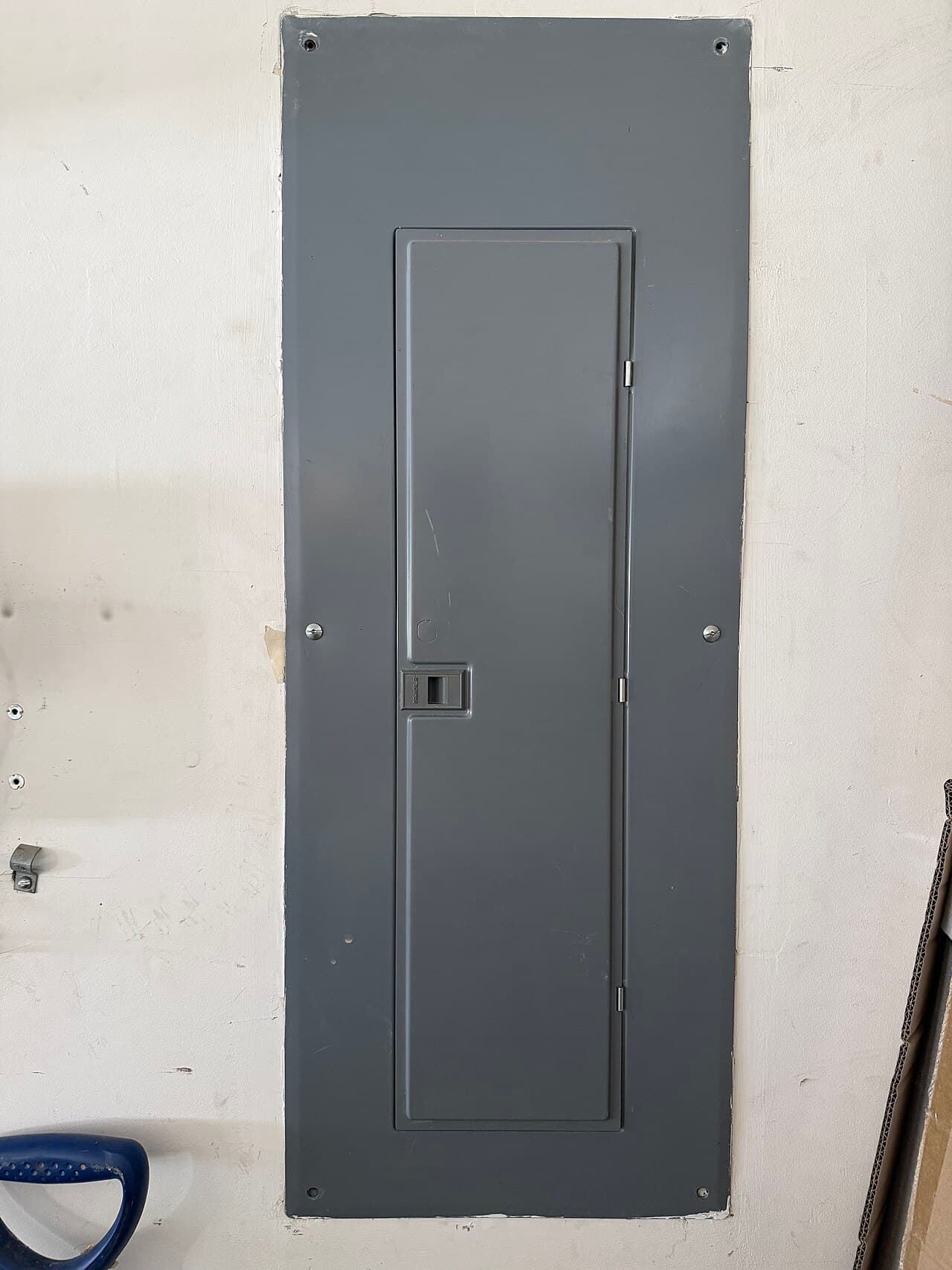
You can find out when the system was last inspected without touching anything inside the panel. The CPSC suggests you look on the panel door and cover for a label or tag with a date and a signature or initials; if there are several, the most recent is likely the last inspection.[9] It is also clear that removing the service-panel cover is a job for a qualified electrician.[9]
Make a note of warning signs to tell whoever inspects. The CPSC's list includes switch plates or outlet covers that are "hot-painful to touch or discolored from heat" (warm alone is not the warning), and lights that dim or flicker, fuses or breakers that need replacing or resetting often, sizzling or buzzing sounds, and an odor of hot insulation.[9] Our list of signs a house needs rewiring covers these in more detail.
When to call a licensed pro
Not every item on an inspection report needs an electrician, but repairs to the wiring itself are trade work. Virginia law defines a tradesman as anyone who works "for the general public for compensation" in the electrical, plumbing or HVAC trades,[7] and no individual may do that work unless licensed.[6] So an electrician you pay to make a repair must hold a Virginia licence.
Whether the repair also gets a county or city inspection depends on the job. Under the building code, a permit is needed before installations or alterations involving electric wiring.[8] But in the residential groups the code lists, replacing general use switches, dimmers, 125-volt 15- or 20-amp receptacles, light fixtures and ceiling fans is exempt from a permit and its inspections.[8] Ask the electrician whether your repair will be permitted, and if it is, ask for a copy of the approval.
Call an electrician promptly, rather than waiting for a scheduled inspection, if you see sparks or bright flashes, smell hot insulation, or get a shock from a fixture or appliance; the CPSC warns that any shock, "even a mild tingle," may be a warning of danger.[9] Before you hire, check the electrician's licence on DPOR's record.
Find an electrician
Browse Loclis electrical services, find electricians in Blacksburg, or read more electrical answers.
Describe what you want inspected or fixed and licensed local electricians quote it.
Common questions
- Does a home inspector open the electrical panel?
- Virginia's home inspection rules list the interior components of service panels and subpanels among the items the inspector must inspect and describe, unless the contract limits it. If the inspector could not inspect something, the report has to say so and explain why.
- Will a home inspection tell me whether the wiring meets code?
- No. A Virginia home inspection contract must state that the inspection does not include a review for compliance with the Uniform Statewide Building Code or other codes. Code compliance is what the local building official checks on permitted work.
- What does the county inspector look at on a permitted electrical job?
- The building code's minimum inspections include electrical materials, equipment and systems before they are concealed, and a final inspection. The inspector either approves the work in writing or gives written notice of defective work, which must be fixed and reinspected before it is covered up.
- Is a home inspection the same as an electrician's evaluation?
- No. A home inspection is a visual look at readily accessible parts of the whole house, and it may exclude the causes of a problem and the cost of fixing it. An electrician can trace a defect, say what the repair involves and quote it.
- How can I tell when my panel was last inspected?
- The CPSC suggests looking on the panel door and cover for a label or tag with a date and a signature or initials; the most recent date is likely the last inspection. Do not take the panel cover off yourself.
Sources
- [1] 18VAC15-40-130, Home inspection report, Virginia Administrative Code, Legislative Information System. Checked October 26, 2026.
- [2] 18VAC15-40-120, Home inspection contract, Virginia Administrative Code, Legislative Information System. Checked October 26, 2026.
- [3] 18VAC15-40-10, Definitions (Home Inspector Licensing Regulations), Virginia Administrative Code, Legislative Information System. Checked October 26, 2026.
- [4] 18VAC15-40-20, Necessity for licensure, Virginia Administrative Code, Legislative Information System. Checked October 26, 2026.
- [5] 13VAC5-63-130, Virginia Uniform Statewide Building Code, Section 113 Inspections, Virginia Administrative Code, Legislative Information System. Checked October 26, 2026.
- [6] Code of Virginia § 54.1-1129, Necessity for licensure, Code of Virginia, Legislative Information System. Checked October 26, 2026.
- [7] Code of Virginia § 54.1-1128, Definitions, Code of Virginia, Legislative Information System. Checked October 26, 2026.
- [8] 13VAC5-63-80, Virginia Uniform Statewide Building Code, Section 108 Application for permit, Virginia Administrative Code, Legislative Information System. Checked October 26, 2026.
- [9] CPSC Guide to Home Wiring Hazards (Publication 518), U.S. Consumer Product Safety Commission. Checked October 26, 2026.
- [10] Repairing Aluminum Wiring (Publication 516), U.S. Consumer Product Safety Commission. Checked October 26, 2026.
Want a pro to handle it?
Describe the job once. Licensed local businesses send quotes, and you pay only when you book one.
Get a quote for Electrical Repair