What fails a home electrical inspection most often?
No statewide figures rank which electrical problems fail most often. Accomack County's list of common reasons its residential inspections fail includes work not ready when requested and the rough or final electrical inspection not done or approved. For existing wiring, the CPSC's list of hazards covers oversized fuses or breakers, overheating, damaged insulation, extension cords used as wiring and shocks.
Free to ask. Local shops send quotes, and you pay only when you book one.
By Kasra Taheri, Founder, LoclisPublished
Researched and drafted with AI, then checked claim by claim against the sources listed below before it was published. Prices and rules change; the dates beside each source say when it was last checked.
This is a job for a licensed pro in Virginia
This page explains what the work involves, the permits, what a licensed pro does and what drives the cost. It does not give step-by-step instructions, because this work needs a licence, a permit or both, and doing it wrong can injure someone. Before you hire, check the licence on Virginia's DPOR record.
Two kinds of inspection, two kinds of failure. A permit inspection of new work is approved or rejected. A home inspection or electrician's evaluation of existing wiring does not pass or fail, but it writes up defects. No published statewide figures say which problems come up most often, so this page sets out one county's list of common reasons for failure and the federal list of wiring hazards. Neither is a ranking.
Permit inspections: what gets work rejected
Virginia does not publish a statewide count of why inspections fail, because each city and county inspects its own permits. Accomack County publishes a list of the common reasons residential inspections fail there,[1] organised by construction stage from footings to the final inspection. It gives no counts or order of frequency, and it is written around new houses.
"Not ready for inspection when requested" is the first item at every stage.[1] On the electrical side, the list includes:
- "Rough electrical inspection not conducted or not approved",[1] listed under the framing and rough-in stage.
- "Final electrical inspection not conducted or approved"[1] when the house is up for its final.
- "Smoke detectors are not interconnected"[1] at the final.
Its final-stage list also has two that catch homeowners out: "Could not gain entry inside because the house was locked"[1] and "Previous code violations exist, which have not been satisfactorily resolved".[1]
Why the timing matters so much
The statewide building code sets the order. Its minimum inspections include inspection of electrical, mechanical and plumbing materials, equipment, and systems prior to concealment,[2] so wiring has to stay open to view until it has been inspected. When work is rejected, the defects have to be corrected and reinspected before any work goes on that would hide them.[2] Drywall over unapproved wiring may have to come off.
Local paperwork rules add their own failures. In Fairfax County, a Master Electrician must provide an Electrical Underground Certification for underground work the county did not inspect, and failing to do so may result in a failed final inspection and a re-inspection fee.[3] Prince George County's fee schedule describes its re-inspection fee as charged when work is not ready, not accessible, or corrections are not made.[4]
If you get a rejection notice and do not understand it, ask for the code section. Under the building code, at the permit holder's request, the notice must name the section of the building code each defect is based on.[2]
Existing wiring: what inspectors write up
On an older house, the findings come from the condition of the system. The U.S. Consumer Product Safety Commission's guide to home wiring hazards lists warning signs of wiring hazards, and several of them overlap with what a Virginia home inspector must look at. It does not say how often each one turns up.
Oversized fuses or breakers. The CPSC calls this an overrated panel: fuses or circuit breakers rated at higher currents than their branch circuits can carry.[6] It warns that 25-amp or larger fuses or breakers on 15- or 20-amp lighting and outlet circuits allow overloading that can lead to fire.[6] It can happen when someone replaces a fuse that keeps blowing with a larger one.[6]
Signs of heat. Switch plates, outlet covers, cords and plugs that are hot to the touch or discoloured from heat are on the CPSC's warning list, along with an odor of hot insulation.[6]
Damaged insulation and makeshift wiring. The CPSC lists cut, broken or cracked insulation,[6] and extension cords used to extend the home wiring for a long period.[6] An inspector will note both.
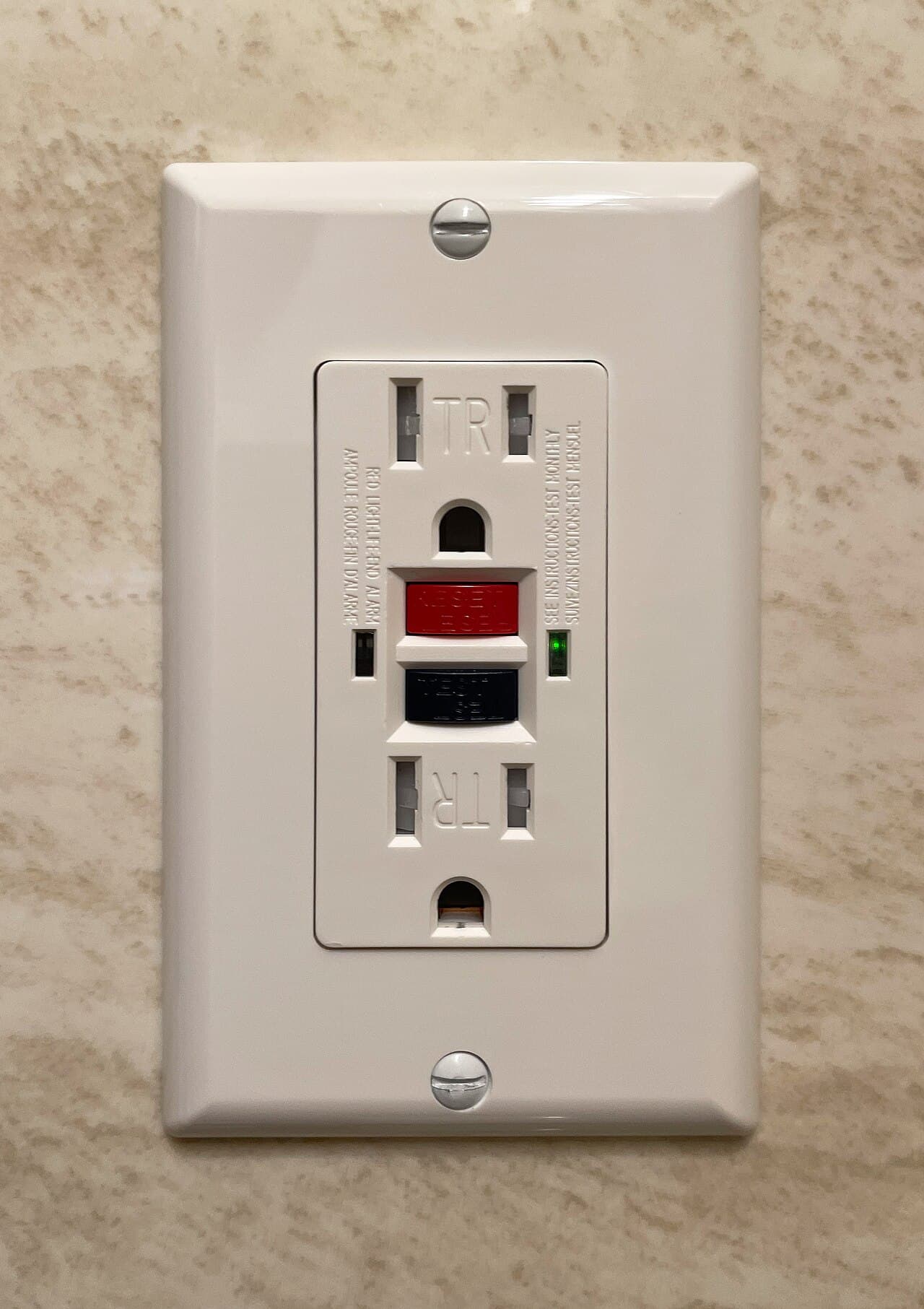
Missing or failed GFCI protection. Ground fault circuit interrupters are on the Virginia home inspection list,[5] and a device can look fine and not work: the CPSC notes that GFCIs can fail without showing any sign of failure.[7] In an older house, kitchen, bathroom, garage and outdoor outlets may have no GFCI protection at all.
Aluminum branch wiring. Virginia home inspectors must report the presence of solid conductor aluminum branch circuit wiring.[5] The CPSC's concern is the connections: failing aluminum-wired connections and splices have been reported to overheat without any prior warning.[8]
Smoke alarms. The report has to say whether readily accessible smoke alarms are in good working order.[5] Missing, dead or painted-over alarms are an easy finding.
For older wiring types, see whether knob-and-tube wiring is a problem when buying a house and the signs a house needs rewiring.
When to call a licensed pro
Not every item on these lists is an electrician's job: a locked door or a job that was not ready is sorted out by whoever holds the permit. For wiring defects, hire a licensed electrician. Virginia law defines a tradesman as anyone who works "for the general public for compensation" in the electrical, plumbing or HVAC trades,[9] and no individual may do that work unless licensed.[11]
Whether a repair needs its own permit depends on the job. The building code requires a permit before installations or alterations involving electric wiring, but it exempts replacing general use switches, dimmers, 125-volt 15- or 20-amp receptacles, light fixtures and ceiling fans in the residential groups it lists.[10] Ask the electrician to quote each finding separately, to say which need a permit, and to include re-inspection in the price if their work fails.
If the write-up mentions heat damage, a burning smell or shocks, treat it as urgent rather than something to fix before closing; the CPSC warns that any shock, "even a mild tingle," may be a warning of danger.[6] Our guide to what a home electrical inspection includes explains what each kind of inspection covers, and you can check an electrician's licence before you hire.
Get it fixed
Browse Loclis electrical services, find electricians in Blacksburg, or read more electrical answers.
Describe the inspection findings you need fixed and licensed local electricians quote the repairs.
Common questions
- Is there an official list of the most common electrical inspection failures in Virginia?
- No statewide list or count is published. Each locality runs its own inspections. Accomack County publishes its common reasons for residential inspection failures, and on the electrical side they include work not ready, the rough or final electrical inspection not done or not approved, and smoke detectors not interconnected.
- Can a house fail a home inspection?
- Not in the pass-or-fail sense. A Virginia home inspection is a written report of the condition of readily accessible components and visible defects. It is the building official's inspection of permitted work that approves or rejects.
- What happens after a failed permit inspection?
- The building official gives written notice of the defective work. It has to be corrected and reinspected before anything is done that would hide it, and many localities charge a re-inspection fee. At the permit holder's request, the notice must cite the building code section behind each defect.
- Why would an inspector flag a breaker that works fine?
- Because a working breaker can still be the wrong size. The CPSC warns that 25-amp or larger fuses or breakers on 15- or 20-amp lighting and outlet circuits allow overloading that can lead to fire. The breaker or fuse can hold while the wire it protects is overloaded.
- Who fixes the items on the list?
- It depends on the item. Access and scheduling problems are for whoever holds the permit to sort out. For wiring defects, an electrician you hire must hold a Virginia licence. Whether the repair needs its own permit depends on the job, because the building code exempts like-for-like replacement of ordinary switches, receptacles, light fixtures and ceiling fans in homes.
Sources
- [1] Inspection Failures: Common Reasons for Residential Inspection Failures, Accomack County, Virginia, Building Permits & Code Inspections. Checked October 26, 2026.
- [2] 13VAC5-63-130, Virginia Uniform Statewide Building Code, Section 113 Inspections, Virginia Administrative Code, Legislative Information System. Checked October 26, 2026.
- [3] Electrical Underground Certification (ECERT), Fairfax County, Virginia, Land Development Services. Checked October 26, 2026.
- [4] Building Inspections Fee Schedule, Prince George County, Virginia, Building Inspections. Checked October 26, 2026.
- [5] 18VAC15-40-130, Home inspection report, Virginia Administrative Code, Legislative Information System. Checked October 26, 2026.
- [6] CPSC Guide to Home Wiring Hazards (Publication 518), U.S. Consumer Product Safety Commission. Checked October 26, 2026.
- [7] Home Electrical Safety Checklist (Publication 513), U.S. Consumer Product Safety Commission. Checked October 26, 2026.
- [8] Repairing Aluminum Wiring (Publication 516), U.S. Consumer Product Safety Commission. Checked October 26, 2026.
- [9] Code of Virginia § 54.1-1128, Definitions, Code of Virginia, Legislative Information System. Checked October 26, 2026.
- [10] 13VAC5-63-80, Virginia Uniform Statewide Building Code, Section 108 Application for permit, Virginia Administrative Code, Legislative Information System. Checked October 26, 2026.
- [11] Code of Virginia § 54.1-1129, Necessity for licensure, Code of Virginia, Legislative Information System. Checked October 26, 2026.
Want a pro to handle it?
Describe the job once. Licensed local businesses send quotes, and you pay only when you book one.
Get a quote for Electrical Repair